
Losing your phone—even for a few minutes—can be frustrating. Whether it’s buried under couch cushions, left in another room, or slipped out of your pocket during a busy day, the panic that follows is real. The good news: there are fast, reliable ways to locate your device without tearing your space apart. From built-in tools to smart habits, this guide covers practical strategies that work across Android and iOS platforms, helping you recover your phone in seconds, not hours.
Use Built-In Find My Device Features
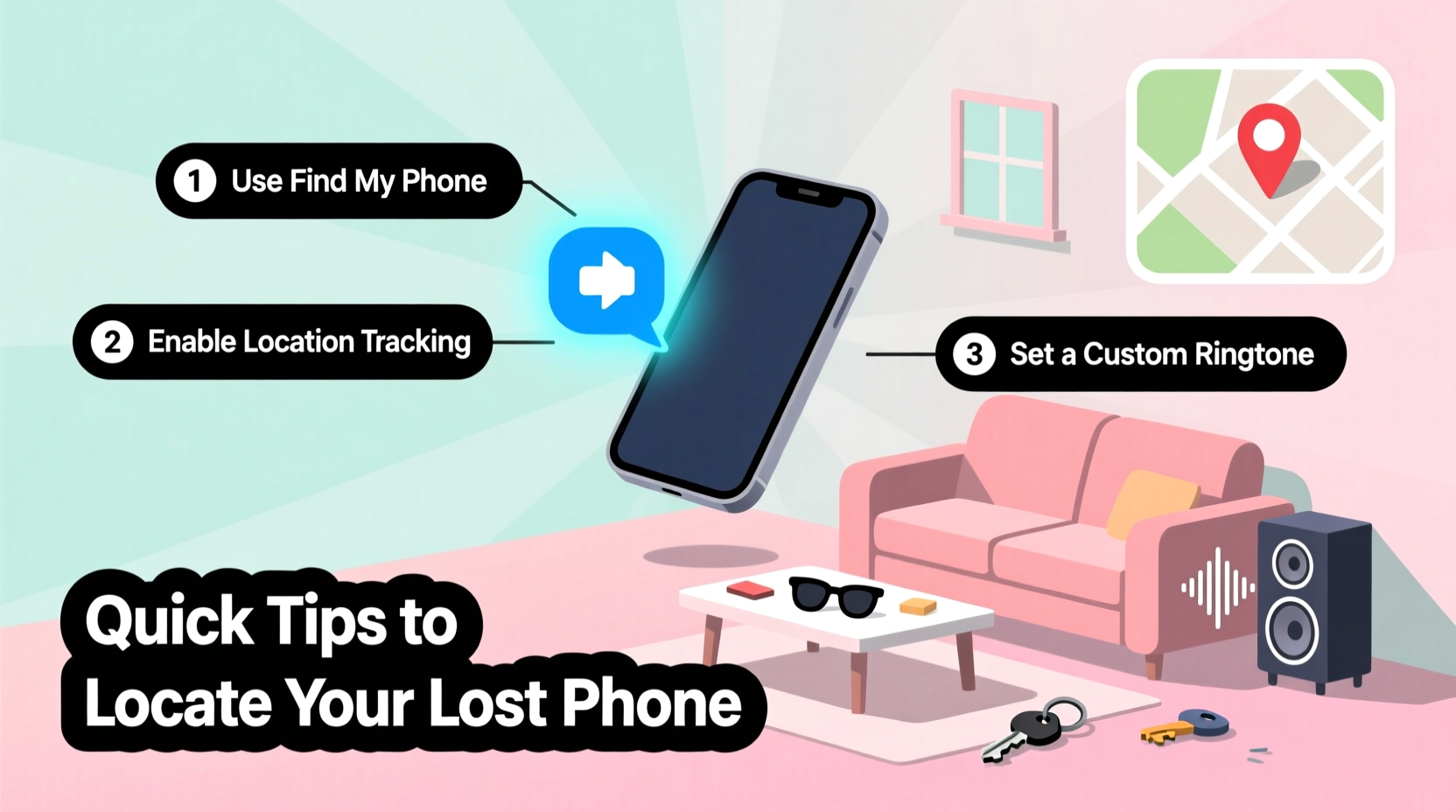
Both major mobile operating systems offer powerful tracking tools that can pinpoint your phone’s location—even if it’s offline or on silent. These services use GPS, Wi-Fi, and Bluetooth to determine where your device last connected.
For iPhone users: Apple’s “Find My” network leverages end-to-end encryption and crowd-sourced Bluetooth signals to help locate devices. If your iPhone is nearby but out of sight, you can trigger a loud ring—even if it’s set to silent.
For Android users: Google’s “Find My Device” allows remote locking, ringing, and location tracking. It also supports offline finding through Bluetooth scanning by nearby devices.
Step-by-Step: Locate Your Phone Remotely
- Open a web browser on another device (laptop, tablet, friend’s phone).
- Go to findmy.apple.com (iPhone) or google.com/android/find (Android).
- Sign in with your Apple ID or Google account.
- Select your missing device from the list.
- Choose “Play Sound” to make it ring at full volume for five minutes.
- If unavailable, view its last known location on the map.
“Over 70% of misplaced phones are found within 15 feet of their owner. Using remote sound features cuts search time by more than half.” — Dr. Alan Torres, Human-Device Interaction Researcher, MIT Media Lab
Leverage Voice Assistants and Smart Home Devices
If you have smart speakers or voice assistants at home, they can act as instant phone locators. Simply ask them to call your phone, even if you don’t remember which model you own.
- Alexa: Say, “Alexa, call my phone,” and your paired Android or iPhone will ring—even on silent.
- Google Assistant: Use commands like “Hey Google, find my phone” or “Call my mobile.”
- Siri (with Apple Watch): Ask, “Hey Siri, ping my iPhone,” and it will emit a tone.
This method works best when your phone is within Bluetooth range of the assistant-enabled device. However, if your phone is powered off or disconnected, the system will report its last known connection point.
Mini Case Study: Recovering a Phone in a Crowded Apartment
Jessica, a freelance designer in Chicago, often works from her couch. One evening, after a video call, she couldn’t find her iPhone. She’d turned off notifications and placed it between cushions without realizing. Frustrated, she asked her Echo Dot to call her phone. Despite being on silent, the device rang loudly thanks to Alexa’s override feature. She retrieved it within 30 seconds—saving her from disassembling the entire sofa.
Create a Proximity-Based Ring System
Some third-party apps enhance standard locating tools by adding proximity alerts and customizable triggers. These are especially useful for people who frequently misplace their phones in large homes or offices.
| App | Platform | Key Feature | Best For |
|---|---|---|---|
| Tile | iOS & Android | Bluetooth tracker + app integration | Attaching physical tags to phones or cases |
| Chipolo | iOS & Android | Loud ring (120dB), community find | Noisy environments |
| Prey Anti-Theft | Android-focused | Remote photo capture, geofencing | Security-conscious users |
Attach a small Bluetooth tracker to your phone case or keychain. When you lose your phone, open the app and trigger a ring. Conversely, some apps let you make your *phone* ring when you lose the *tag*, creating a two-way find system.
Adopt Daily Habits That Prevent Loss
The fastest way to find your phone is to never lose it in the first place. Small behavioral changes significantly reduce the chances of misplacement.
Checklist: Phone-Friendly Daily Routines
- Designate one spot at home for your phone (e.g., entryway tray).
- Use a brightly colored or textured case for easier spotting.
- Enable haptic feedback and screen flash for calls (helps notice missed rings).
- Turn on “Notify when left behind” in Google Maps or Find My (iOS 15+).
- Carry a backup charging cable in your bag to avoid detaching your phone unnecessarily.
One study by the University of Michigan found that individuals who assigned a consistent storage location for personal items reduced loss incidents by 68% over six months.
Frequently Asked Questions
What if my phone is turned off or dead?
Both Find My (Apple) and Find My Device (Google) store the last known location before shutdown. On iOS, supported models can still broadcast via Bluetooth using the Find My network, even when powered down. For Android, some newer devices support similar low-power tracking.
Can I find my phone if Location Services was disabled?
Limited options exist. Without location access, remote tracking won’t work. However, if you used Wi-Fi recently, the router’s connected devices list may show your phone’s name or IP address, indicating it’s nearby and possibly connected.
Is it safe to use third-party tracking apps?
Stick to well-reviewed apps from official stores. Avoid granting unnecessary permissions like SMS access or admin controls unless required. Tile and Chipolo are widely trusted and audited for data privacy.
Conclusion: Turn Panic Into Precision
Finding your phone doesn’t have to mean retracing every step or calling your number from a neighbor’s device. With the right tools enabled and habits in place, recovery takes seconds. Whether you rely on built-in features, smart speakers, or Bluetooth trackers, the key is preparation. Most people only think about locating their phone after it’s gone—don’t wait until then to act.




 浙公网安备
33010002000092号
浙公网安备
33010002000092号 浙B2-20120091-4
Comments
No comments yet. Why don't you start the discussion?