
A constantly running toilet isn't just annoying—it can waste up to 200 gallons of water per day, according to the U.S. Environmental Protection Agency. That adds up quickly on your water bill and harms the environment. The good news? Most causes of a running toilet are simple mechanical issues you can diagnose and repair yourself in under an hour. With basic tools and a little know-how, you can silence that flush cycle for good—without spending a dime on a plumber.
Understanding How a Toilet Works
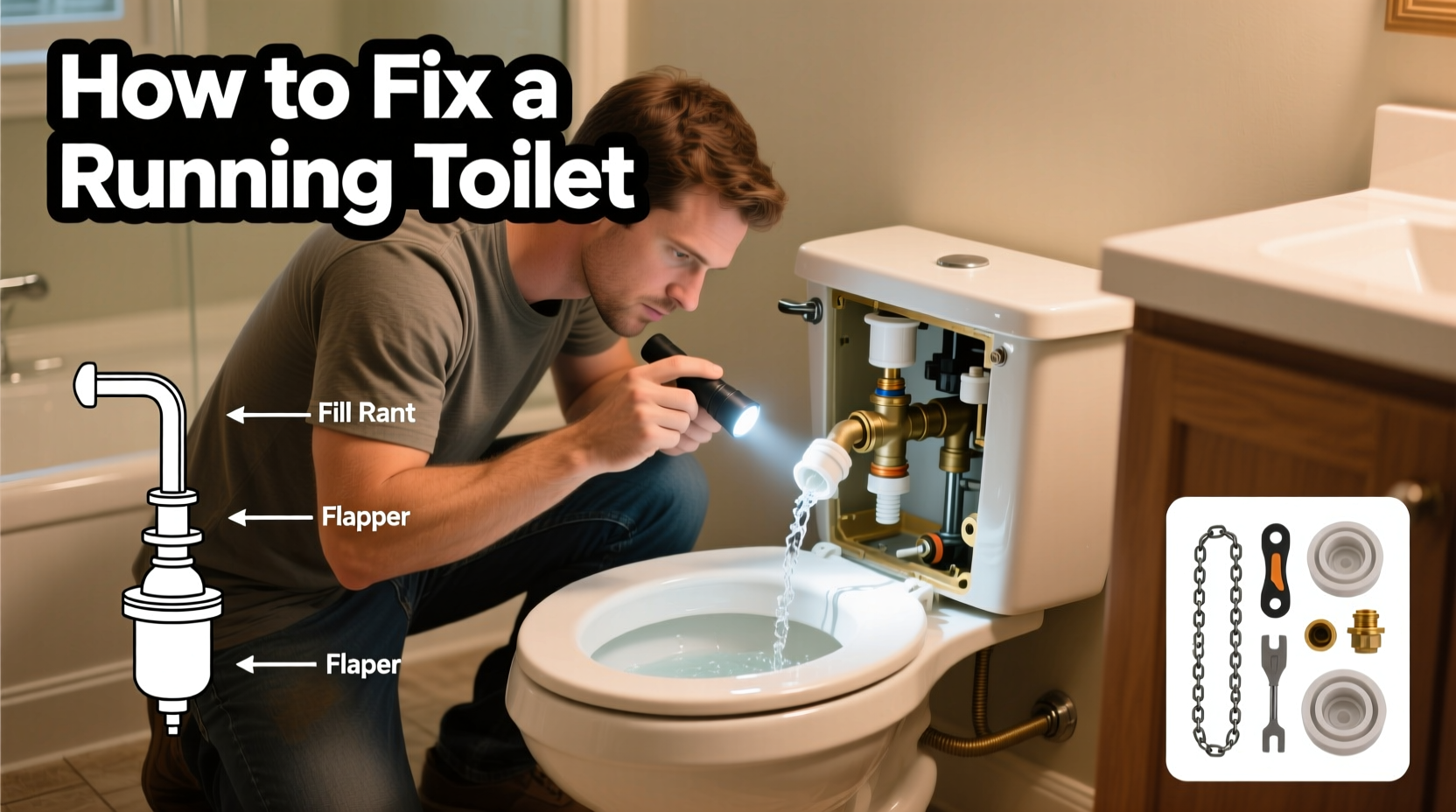
Before diving into repairs, it helps to understand the core components inside your toilet tank. A standard gravity-flush toilet relies on three main parts: the fill valve, the flapper, and the flush valve. When you press the handle, a chain lifts the flapper, allowing water to rush from the tank into the bowl. Once the tank empties, the float drops, signaling the fill valve to refill the tank. When the water reaches the proper level, the float rises and shuts off the fill valve.
If any part fails—such as a worn flapper, misaligned float, or corroded overflow tube—the tank may never seal properly, causing water to continuously leak into the bowl. This constant flow triggers the fill valve to cycle on and off, creating the familiar \"running\" sound.
“Over 90% of running toilets are caused by internal tank components that can be replaced in minutes with basic tools.” — Mark Reynolds, Master Plumber and Home Repair Instructor
Step-by-Step Guide to Diagnose and Fix a Running Toilet
The key to fixing a running toilet is systematic troubleshooting. Follow this sequence to identify and resolve the issue efficiently.
- Turn off the water supply: Locate the shutoff valve near the base of the toilet. Turn it clockwise until tight. Flush the toilet to empty the tank.
- Inspect the flapper: Check if the flapper (the rubber seal at the bottom of the tank) is cracked, warped, or covered in mineral deposits. If so, it won’t create a watertight seal.
- Test the flapper chain: Ensure the chain has about ½ inch of slack. Too tight, and it prevents the flapper from closing; too loose, and it won’t lift fully.
- Check the water level: Water should sit about 1 inch below the top of the overflow tube. If higher, it will constantly drain into the tube.
- Examine the float mechanism: For ball floats, adjust the screw or clip on the arm. For cup-style floats, squeeze the clip and slide the float up or down the rod.
- Inspect the fill valve: Listen for hissing after the tank fills. A faulty fill valve may not shut off completely.
- Look for leaks around the overflow tube: If water flows into the tube even when the tank is full, the fill valve or float likely needs adjustment or replacement.
Common Causes and Their Fixes
Most running toilet problems fall into one of five categories. Here’s how to address each:
1. Worn or Misaligned Flapper
The flapper is the most frequent culprit. Over time, rubber deteriorates and loses its ability to seal. Even slight warping can allow water to seep through.
- Replace the flapper with a universal model matching your flush valve size (usually 2” or 3”).
- Ensure the new flapper sits flat and aligns perfectly with the valve seat.
- Replace every 3–5 years as preventive maintenance.
2. Improper Water Level
If the water level is too high, it spills into the overflow tube. If too low, the toilet won’t flush effectively.
- Adjust the float: For older ballcocks, bend the brass arm slightly downward. For modern fluidmaster-style valves, turn the adjustment screw counterclockwise to lower the water level.
- Mark the correct level with a waterproof marker for future reference.
3. Faulty Fill Valve
A fill valve that doesn’t shut off creates a constant trickle or refill cycle. You’ll hear a humming or hissing sound even when the toilet hasn’t been flushed.
- Clean sediment from the valve inlet using a vinegar soak.
- If cleaning doesn’t help, replace the entire fill valve. Most kits include instructions and take 15 minutes to install.
4. Chain Issues
The chain connecting the flush handle to the flapper must have minimal slack. If tangled or too long, it can prevent the flapper from seating properly.
- Reattach the chain to a different hole on the lever for optimal tension.
- Use a small S-hook to fine-tune the connection point.
5. Mineral Buildup on Valve Seat
Hard water leaves calcium and lime deposits on the flush valve seat, preventing a tight seal—even with a new flapper.
- Turn off the water and drain the tank.
- Use fine steel wool or a plastic scrub pad to gently clean the seat. Avoid metal tools that could scratch porcelain.
- Wipe clean and reinstall the flapper.
Troubleshooting Table: Symptoms and Solutions
| Symptom | Likely Cause | Solution |
|---|---|---|
| Toilet runs every few minutes | Leaky flapper or dirty valve seat | Replace flapper and clean seat |
| Constant trickling sound | Fill valve not shutting off | Adjust float or replace fill valve |
| Water rising above overflow tube | Float set too high | Lower float level |
| Toilet cycles on randomly | Faulty fill valve or pressure fluctuations | Replace fill valve |
| Weak flush followed by running | Low water level or partial clog | Adjust float and check trapway |
Mini Case Study: Sarah’s Midnight Toilet Fix
Sarah woke up at 2 a.m. to the sound of her guest bathroom toilet running. She’d ignored it for weeks, but now the noise was unbearable. Instead of calling a plumber, she decided to investigate.
She removed the tank lid and saw water flowing into the overflow tube. Using the food coloring test, she confirmed a silent leak into the bowl. After turning off the water, she inspected the flapper and found it covered in greenish slime—a sign of algae buildup from stagnant water.
She replaced the $8 flapper, adjusted the chain, and turned the water back on. The toilet filled quietly and stopped exactly at the right level. Total time: 25 minutes. By fixing it herself, Sarah saved over $150 in service fees and cut her monthly water bill by nearly $20.
Expert Maintenance Checklist
Prevent future problems with this quarterly maintenance checklist:
- ✔ Inspect the flapper for wear or warping
- ✔ Clean mineral deposits from the valve seat
- ✔ Check chain tension and alignment
- ✔ Verify water level is 1 inch below overflow tube
- ✔ Test fill valve operation after flush
- ✔ Flush with dye to detect hidden leaks
- ✔ Replace internal components every 3–5 years
Frequently Asked Questions
Can I use vinegar to clean toilet tank parts?
Yes. White vinegar safely dissolves mineral buildup. Soak the flapper, fill valve cap, and other removable parts for 30 minutes. Rinse thoroughly before reassembly. Avoid leaving vinegar in the tank for extended periods, as it may degrade rubber seals over time.
Why does my toilet run after I flush it once?
This usually means the flapper isn’t closing completely. It could be due to a chain that’s too tight, a flapper that’s not seated right, or debris caught under the seal. If the tank continues to run more than two minutes after flushing, inspect the flapper and float mechanism.
How much does it cost to fix a running toilet myself?
Most repairs cost between $5 and $25. A flapper averages $7–$12, and a fill valve kit runs $15–$25. Both are available at hardware stores and online. Compare that to an average plumber call-out fee of $150–$250, and DIY makes financial sense for most homeowners.
Final Thoughts: Take Control of Your Home’s Plumbing
A running toilet is rarely a true emergency, but it’s a problem that compounds over time. What starts as a minor annoyance becomes a costly leak. The solution doesn’t require special skills—just attention to detail and a willingness to open the tank and look inside.
Modern toilet components are designed for easy replacement. Manufacturers like Fluidmaster and Korky provide universal-fit parts with clear instructions. In most cases, you’ll have the issue resolved faster than it takes for a plumber to arrive.
By mastering this simple repair, you gain more than a quiet bathroom. You build confidence in handling household systems, reduce water waste, and protect your wallet. Don’t wait for the drip to become a flood—fix it today.




 浙公网安备
33010002000092号
浙公网安备
33010002000092号 浙B2-20120091-4
Comments
No comments yet. Why don't you start the discussion?