
A zipper that suddenly separates can be more than just annoying—it can render a favorite jacket, backpack, or pair of pants unusable. Many people assume the only solution is to replace the entire zipper or take it to a tailor. But in many cases, the issue isn’t with the slider itself but rather its alignment or tension. With a few basic tools and some careful manipulation, you can often restore function to a separated zipper without removing or replacing the slider.
This guide walks through practical, tested methods to diagnose and correct zipper separation by adjusting the slider mechanism. Whether you're dealing with a coat zipper that won't stay closed or a tent zipper that keeps popping open, these fixes can save your gear and avoid unnecessary expense.
Understanding Why Zippers Separate
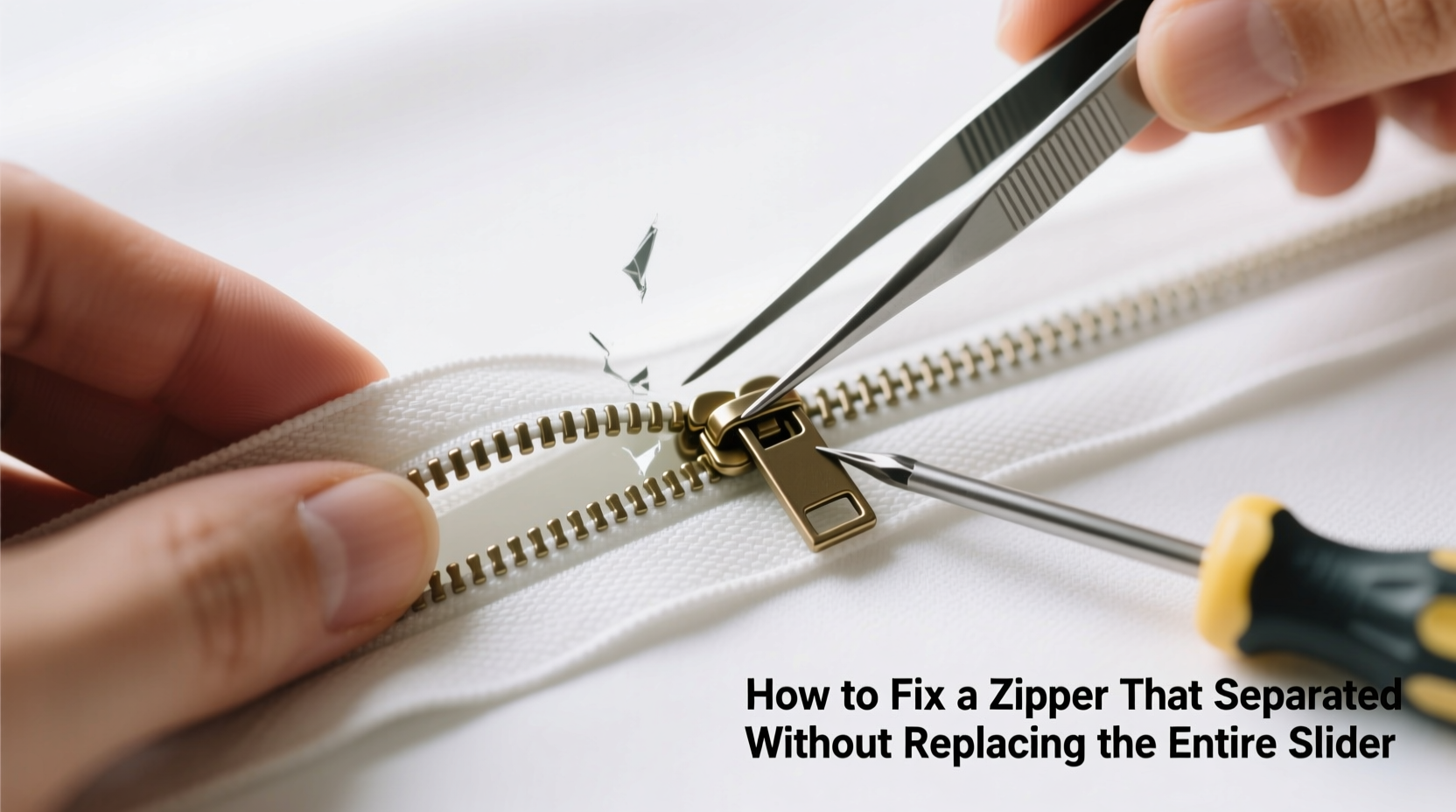
Zippers work by interlocking two rows of teeth or coils via a slider that pulls them together. When the slider fails to maintain proper grip or alignment, the zipper separates under minimal tension. This doesn’t always mean the slider is broken—often, it’s simply misaligned or worn enough to lose tension.
Common causes of zipper separation include:
- Worn slider: Over time, the internal mechanism wears down and loses clamping force.
- Misalignment of the slider: The slider may tilt or shift off-center, preventing full engagement.
- Loose tape (fabric edges): If the fabric on either side of the zipper stretches, the teeth don’t meet properly.
- Damaged or bent teeth/coils: A single deformed tooth can prevent the slider from closing fully.
The good news is that minor issues—especially those related to slider tension or alignment—can often be corrected manually.
Step-by-Step Guide to Fixing a Separated Zipper
Follow this systematic approach to repair a separating zipper without replacing the slider. Most of these steps require only household items like pliers, a flat surface, and a bit of patience.
- Inspect the Zipper Closely
Lay the item flat and examine the entire length of the zipper. Look for:- Bent, missing, or frayed teeth
- Twisted or uneven zipper tapes
- Visible gaps when the zipper is closed
- Close the Zipper Fully
Make sure the zipper is completely zipped. If it won’t close all the way, identify where it jams. Gently work past resistance—if forced, stop to avoid further damage. - Check Slider Alignment
View the slider from above and the side. It should sit squarely over the two tracks. If it leans to one side, that could be why the teeth aren’t meshing properly. - Apply Gentle Pressure with Pliers
Using smooth-jawed needle-nose pliers (or wrap regular pliers in tape to avoid scratching), grip the sides of the slider body—not the pull tab. Squeeze the slider slightly from both sides to increase inward pressure on the teeth.
Do this incrementally: one gentle squeeze at a time, then test the zipper. The goal is to compress the slider just enough to improve grip without deforming it. - Adjust the Bottom Stop (If Accessible)
The bottom stop prevents the slider from coming off the track. In some cases, loosening or repositioning it allows you to realign the slider before crimping it back.
Use pliers to carefully bend the bottom metal stop upward slightly, slide the mechanism into better alignment, then press it back down securely. - Test After Each Adjustment
After every small tweak, zip and unzip slowly. Check whether the separation has improved. Over-tightening can make the slider hard to move or damage the teeth.
When the Pull Tab Is Misaligned
Sometimes the pull tab itself is crooked, which forces the slider to tilt. Use pliers to gently straighten the tab so it runs parallel to the zipper chain. This small correction can significantly improve tracking and closure integrity.
“Most zipper failures I see in outdoor gear come down to poor slider tension, not broken parts. A quick compression fix restores function 70% of the time.” — Daniel Reeves, Outdoor Equipment Technician
Do’s and Don’ts of Zipper Repair
| Do’s | Don’ts |
|---|---|
| Use needle-nose pliers with taped jaws to avoid scratches | Don’t use excessive force when squeezing the slider |
| Work slowly and test after each adjustment | Don’t attempt repairs if the teeth are severely damaged |
| Lubricate the zipper with a graphite pencil or silicone stick before adjusting | Don’t heat the slider with a flame—it can melt plastic components |
| Clean debris from the zipper path with a soft brush | Don’t ignore recurring separation—it may worsen quickly |
Real Example: Fixing a Winter Jacket Zipper
Consider Sarah, an avid hiker who noticed her insulated jacket’s main zipper kept opening near the chest during treks. She didn’t want to replace the entire zipper due to the complex stitching involved.
At home, she inspected the zipper and found no broken teeth. The slider appeared slightly skewed. Using a pair of pliers wrapped in masking tape, she applied light pressure to compress the slider body. After three small adjustments and testing each time, the zipper stayed securely closed—even when tugging on the fabric.
The fix took less than ten minutes and cost nothing. By maintaining even pressure and avoiding aggressive bending, she preserved the integrity of the original hardware while restoring full functionality.
Alternative Methods for Non-Metal Zippers
Coil zippers (common in jackets, tents, and sleeping bags) behave differently from metal ones. Their flexibility means they’re prone to twisting rather than breaking. Here’s how to handle them:
- Re-thread the Slider: If the slider came off entirely, you can often reinsert both coil ends into the slider channel and ease it upward manually.
- Use a Needle to Align Coils: For stubborn misalignments, insert a fine needle between the coils to guide them back into position before zipping.
- Heat Method (With Caution): Some nylon sliders can be slightly reshaped using a hairdryer to warm the plastic, then gently squeezed to restore tension. Avoid overheating.
Note: These techniques work best on high-quality coil zippers. Cheaply made ones may lack durability for repeated fixes.
Prevent Future Separation
Once you’ve fixed the zipper, take steps to prevent recurrence:
- Always pull the zipper straight up and down, not diagonally, to reduce lateral stress.
- Avoid overloading pockets or garments that strain the zipper when stretched.
- Store items with zippers partially open to relieve constant tension on the slider.
- Periodically inspect zippers for early signs of wear or looseness.
“Prevention is cheaper than repair. A zipper adjusted at the first sign of slippage lasts years longer.” — Maria Lin, Textile Repair Specialist
Quick Checklist: How to Fix a Separated Zipper
- ✅ Inspect the zipper for visible damage or misalignment
- ✅ Clean the teeth and lubricate with a dry lubricant (e.g., graphite)
- ✅ Close the zipper fully and observe where separation occurs
- ✅ Use needle-nose pliers to gently compress the slider sides
- ✅ Test movement after each adjustment
- ✅ Straighten the pull tab if it’s causing tilt
- ✅ Re-crimp the bottom stop if needed for alignment
- ✅ Avoid forcing the slider if resistance persists
Frequently Asked Questions
Can I fix a zipper that keeps separating without tools?
Minor misalignments can sometimes be corrected by hand. Try flexing the slider gently between your fingers to reshape it slightly. However, precise adjustments usually require pliers for consistent pressure.
What if the slider feels loose but the zipper still closes?
A loose-feeling slider is an early warning sign. Even if it currently works, it’s likely to fail soon. Perform a preventive adjustment now to extend its life and avoid sudden failure in cold or wet conditions.
Is it worth fixing an old zipper?
In most cases, yes—especially on high-value items like coats, luggage, or outdoor gear. A successful slider adjustment preserves the original design and avoids the labor and risk of full replacement.
Conclusion: Save Your Gear With Smart Fixes
A separating zipper doesn’t have to mean the end of a trusted jacket, bag, or piece of camping equipment. Often, the root cause lies in a slackened or misaligned slider—one that can be restored with careful hand pressure and attention to detail. By understanding how zippers function and applying targeted adjustments, you preserve both functionality and craftsmanship.
These fixes are fast, low-cost, and environmentally responsible—extending the life of your belongings instead of discarding them. Next time a zipper starts acting up, reach for your pliers before your wallet. With practice, you’ll develop a feel for just how much pressure is needed, turning what seemed like a broken item into a fully functional one again.




 浙公网安备
33010002000092号
浙公网安备
33010002000092号 浙B2-20120091-4
Comments
No comments yet. Why don't you start the discussion?