
In compact living environments—from studio apartments to dorm rooms and tiny homes—every inch of space counts. Cluttered drawers and overstuffed closets don’t just waste valuable real estate; they make daily routines stressful. Enter the KonMari Method, developed by organizing consultant Marie Kondo. More than just a tidying system, it’s a philosophy that transforms how we interact with our belongings. At its core is a revolutionary way of folding clothes: upright folding. This technique allows garments to stand vertically in drawers, making them fully visible and accessible without disturbing the rest. When applied consistently, this method can free up drawer space, reduce laundry frequency, and bring lasting order to even the most cramped wardrobes.
The Philosophy Behind Upright Folding
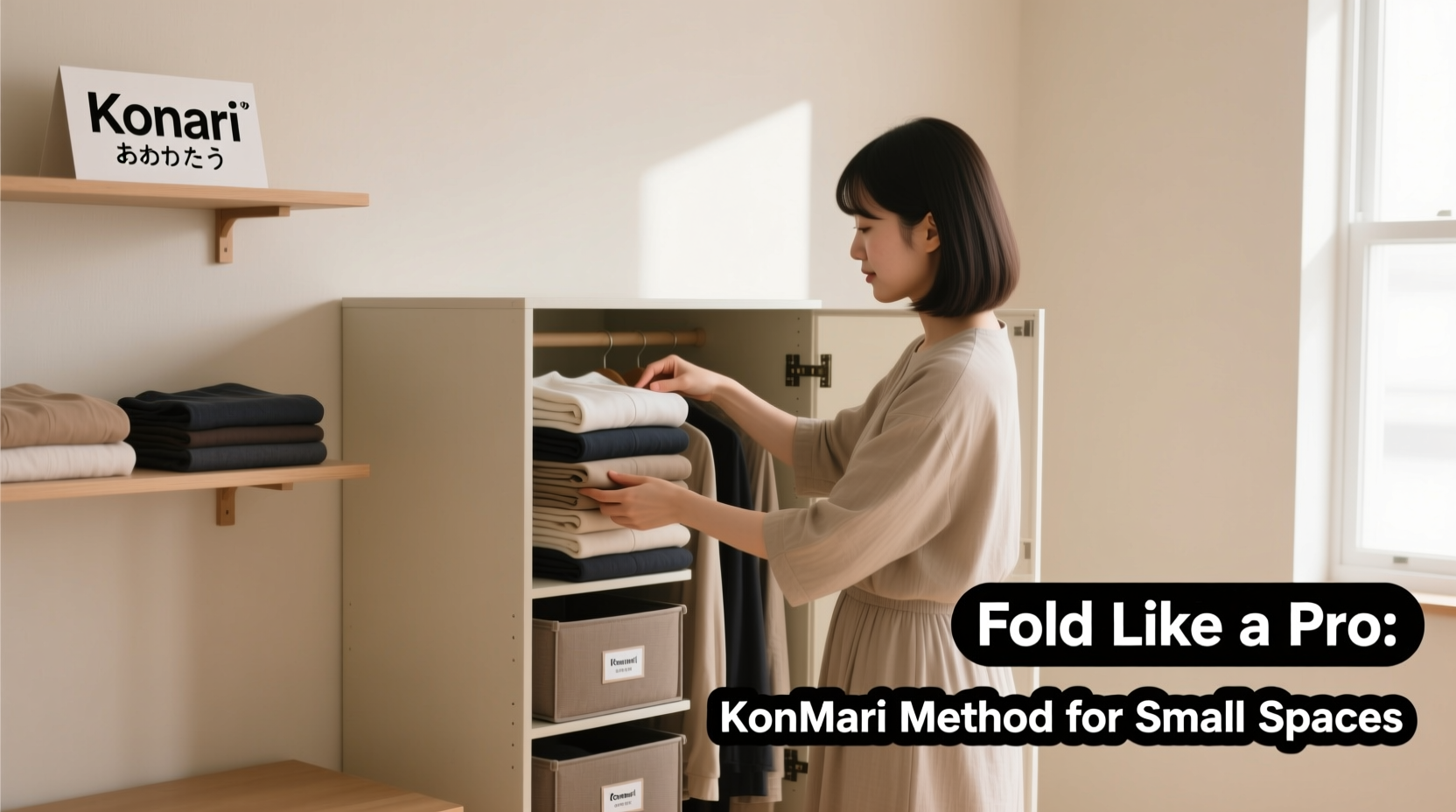
The KonMari Method isn't about perfection—it's about intentionality. Before folding begins, Marie Kondo emphasizes one critical step: sorting by category and keeping only what “sparks joy.” This emotional filter helps eliminate excess and ensures that every item you store earns its place. Once you've curated your wardrobe, the folding process becomes meaningful. Unlike traditional stacking, which buries clothing beneath layers, upright folding treats each piece as an individual entity. You see everything at once, so nothing gets forgotten. This visibility encourages mindful use and reduces over-purchasing.
Kondo’s approach also redefines storage. Drawers become display units, not dumping grounds. The vertical orientation mimics books on a shelf—neat, orderly, and easy to browse. This shift from horizontal to vertical organization is especially powerful in small spaces where floor area and closet depth are limited. By maximizing drawer efficiency, you reduce reliance on bulky furniture and free up floor space for other uses.
“Clothes folded upright are easier to handle, maintain their shape better, and remain visible. You’re less likely to forget about them or damage them through rough handling.” — Marie Kondo, *The Life-Changing Magic of Tidying Up*
Step-by-Step Guide to the KonMari Fold
Folding clothes the KonMari way follows a consistent sequence that works across most garment types. With practice, it takes under 30 seconds per item. Here’s how to do it:
- Lay the garment flat on a clean, smooth surface—bed, table, or floor. Smooth out wrinkles.
- Fold sleeves inward. For shirts and tops, fold each side seam toward the center so the sleeves lie flat along the body.
- Divide horizontally into thirds. First, fold the bottom third upward (about one-third of the length). Then fold the top third down over it, creating a compact rectangle.
- Stand it upright. Place the folded item vertically in your drawer, with the closed edge facing up. Arrange similar items side by side, like files in a cabinet.
This technique works best with cotton, linen, and knit fabrics—T-shirts, pajamas, underwear, socks, and casual pants. Stiffer materials like denim may require slight adjustments but still benefit from the upright principle.
Category-Specific Folding Techniques
While the basic fold applies broadly, certain garments need tailored approaches to maintain shape and function.
T-Shirts and Casual Tops
The standard KonMari fold excels here. Lay flat, fold sleeves in, then fold in thirds. Cotton tees hold the shape well and look uniform when stored together. Group by color or frequency of use for visual harmony.
Pants and Jeans
For slacks, chinos, or jeans, lay flat and fold lengthwise down the center. Then fold into thirds vertically. Avoid folding at the knee—this creates creases. Instead, aim for a smooth roll from hem to waistband. Store upright in deep drawers or bins.
Socks and Underwear
Roll, don’t ball. Pair socks together, then roll from toe to cuff. Underwear should be folded into small rectangles and stood on edge. This prevents stretching and keeps elastic intact. Store in small compartments or divided trays.
Dress Shirts and Delicates
These are typically hung, but if drawer storage is necessary, fold carefully. After folding sleeves in, fold sides to center, then fold into a narrow rectangle. Wrap in tissue paper if needed to prevent friction. Limit stacking—keep no more than two layers high.
Thick Sweaters and Knits
Never hang heavy knits—they stretch. Fold gently using the same third-fold method, but avoid pressing too tightly. Store in breathable cotton bins rather than plastic. Rotate seasonally to prevent compression.
| Garment Type | Best Fold Method | Storage Tip |
|---|---|---|
| T-Shirts | Standard KonMari (thirds) | Arrange by color in shallow drawers |
| Pants | Lengthwise + vertical thirds | Use deep bins or pull-out organizers |
| Socks | Paired roll | Store in compartmentalized trays |
| Underwear | Flat rectangle fold | Stack no more than 5 high |
| Sweaters | Gentle third fold | Avoid plastic; use breathable fabric bins |
Optimizing Small Spaces with KonMari Organization
Living in a small space demands smart systems. The KonMari fold isn’t just about neatness—it’s a spatial strategy. By standing clothes upright, you turn deep drawers into efficient storage zones. A single drawer that once held 10 stacked shirts can now accommodate 15–20 folded items, all visible and accessible.
Consider retrofitting existing furniture. Install drawer dividers made of bamboo or cardboard to create dedicated sections for each category. Label them subtly—e.g., “White Tees,” “Workout Socks”—to reinforce habit formation. If you lack drawers, use open-top boxes or baskets on shelves. The key is maintaining verticality and separation by type.
Another advantage: reduced laundry load. When you see exactly how many shirts or pairs of socks you own, you’re less likely to over-wear favorites or buy duplicates. This awareness leads to longer garment life and fewer wash cycles—ideal for preserving fabric and saving water.
Real-Life Example: Transforming a Studio Apartment Wardrobe
Jamie, a graphic designer in Brooklyn, lived in a 350-square-foot studio where her closet doubled as a kitchen pantry. Her clothes spilled from a single dresser and a hanging rail, making mornings chaotic. After watching a KonMari tutorial, she spent a Sunday sorting by category. She kept only 40% of her original wardrobe—donating the rest to a local shelter.
She refolded everything using the upright method, grouping items by type and color. She added three fabric bins inside a low shelf unit, labeling them “Teens,” “Long Sleeves,” and “Loungewear.” Within a week, she noticed changes: she wasn’t rebuying black socks because she could finally see them, and her laundry frequency dropped by half. “It’s like my clothes got promoted,” she said. “They’re not buried anymore. I actually enjoy opening my drawer.”
Common Mistakes to Avoid
- Folding too tightly: Over-pressing can create permanent creases, especially in delicate fabrics.
- Mixing categories: Don’t store socks with shirts. Each type belongs in its own zone for clarity.
- Ignoring drawer depth: If a drawer is too deep, items at the back get lost. Use dividers or stack boxes to adjust depth.
- Skipping the joy check: Folding everything without first curating leads to organized clutter—still wasteful.
- Using plastic bins long-term: They trap moisture and degrade natural fibers. Opt for breathable materials like cotton, linen, or unfinished wood.
Essential Checklist for KonMari Success
- Sort clothes by category (tops, pants, socks, etc.)
- Keep only items that spark joy or serve a clear purpose
- Clear and clean drawers before refolding
- Practice the standard KonMari fold on a flat surface
- Fold all items of one category at once for consistency
- Store upright, side by side, in designated zones
- Add dividers or trays if needed for structure
- Review and refresh folds monthly to maintain order
Frequently Asked Questions
Can I use the KonMari fold for children’s clothing?
Absolutely. In fact, it’s ideal for kids’ fast-growing wardrobes. The upright view helps parents quickly identify what fits and what doesn’t. Use colorful bins labeled by size or season to simplify rotation.
What if I don’t have drawers?
No problem. Open shelves, cubbies, or stackable fabric bins work well. The goal is visibility and vertical storage. Place labels on front edges so contents remain identifiable even from a distance.
Does this method work for large or plus-size clothing?
Yes. The fold scales with garment size. Larger items may require slightly wider storage zones, but the principle remains: fold to stand, store to see. Use deeper bins or adjustable dividers to accommodate volume.
Final Thoughts: A Lasting System, Not a One-Time Task
The KonMari folding method is more than a neat trick—it’s a sustainable system for managing possessions in constrained environments. It turns disorganization into clarity, excess into intention, and frustration into ease. In small spaces, where every decision about storage carries weight, this method offers both practical and psychological relief. You stop fighting your wardrobe and start trusting it.
Adopting this practice doesn’t require perfection. Start with one drawer. Fold five T-shirts. See how they stand. Notice the difference when you can grab what you need without digging. That small victory builds momentum. Over time, the habit reshapes not just your drawers, but your relationship with consumption, care, and space itself.




 浙公网安备
33010002000092号
浙公网安备
33010002000092号 浙B2-20120091-4
Comments
No comments yet. Why don't you start the discussion?