
Folding fitted sheets has long been considered one of the most frustrating household tasks. Unlike flat sheets or pillowcases, their elastic edges and irregular shape make them prone to twisting, bunching, and ending up in messy heaps at the back of the linen closet. But it doesn’t have to be this way. With a consistent, step-by-step technique, you can fold fitted sheets neatly—every single time. This guide breaks down a reliable method used by professional organizers and laundry experts, so you can achieve crisp, compact folds that save space and keep your storage looking tidy.
Why Fitted Sheets Are So Hard to Fold
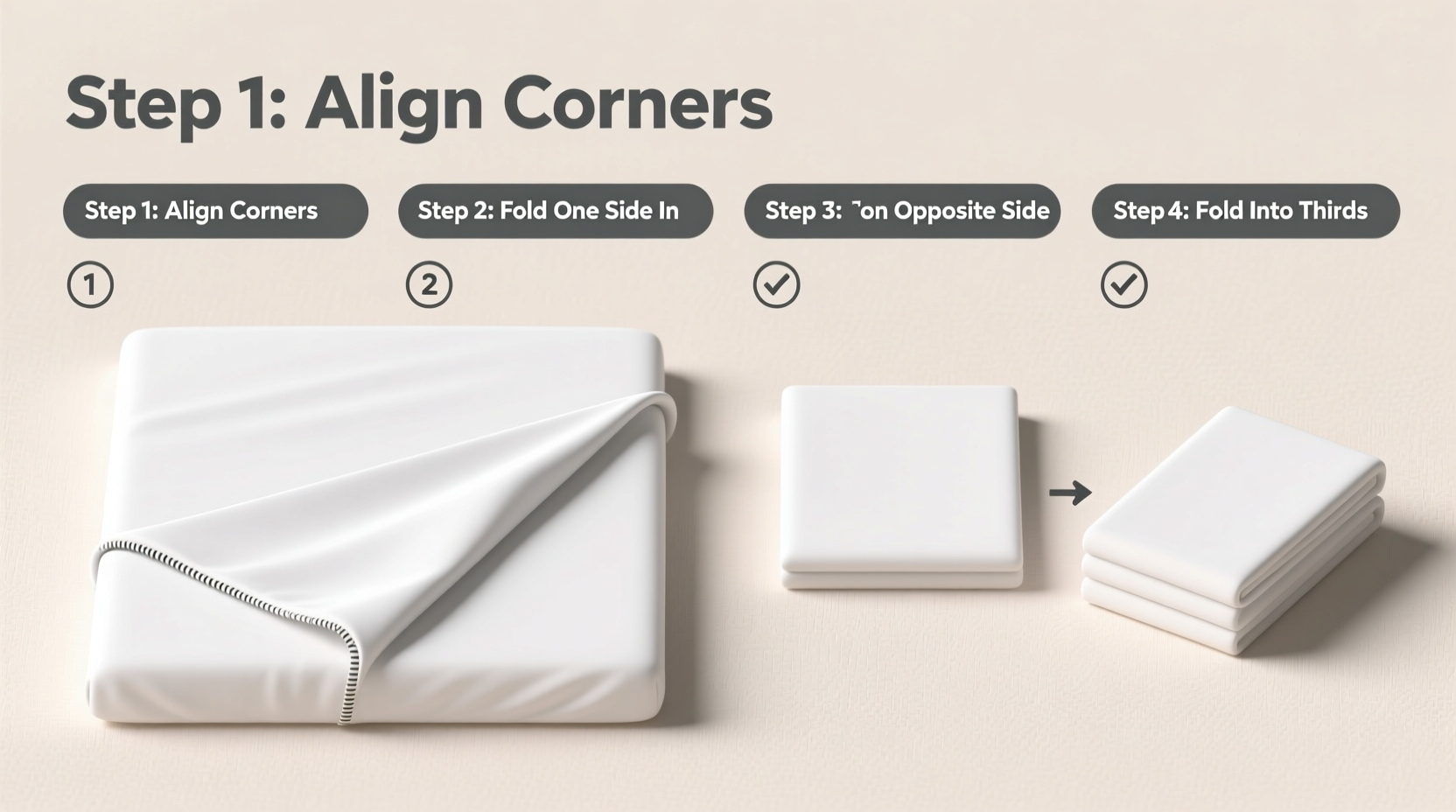
The challenge with fitted sheets lies in their design. They’re meant to stretch over mattress corners, which means they have curved hems and elasticized edges. When removed from the bed, these features cause the fabric to curl and resist flat folding. Without a structured approach, people often resort to balling them up or folding them haphazardly, leading to clutter and difficulty matching sets later.
Moreover, the psychological barrier plays a role. Many people avoid folding fitted sheets altogether because they’ve had repeated failures. But the truth is, success isn’t about strength or dexterity—it’s about technique. Once you learn the right steps, the process becomes intuitive and almost meditative.
“Mastering the fold of a fitted sheet is like learning a small life skill that pays off in daily peace of mind. A well-folded linen closet reduces decision fatigue and makes changing beds effortless.” — Sarah Lin, Professional Home Organizer & Author of *The Orderly Home*
A Step-by-Step Guide to Folding Fitted Sheets Neatly
The following method works for standard, queen, and king-sized fitted sheets. While it may feel awkward the first time, repetition builds muscle memory. Follow these steps carefully for consistently neat results:
- Hold the sheet inside out. Pick up the fitted sheet and turn it so the elastic edges face outward and the fabric interior is visible. This helps align the corners more easily and hides any minor creases on the outer side.
- Locate two adjacent corners. Pinch the top-left and top-right corners of one short end (the head of the bed) between your fingers. Bring them together so they nest, right sides touching. The elastic should naturally tuck inward.
- Flip one corner over the other. Take one corner and flip it over the opposite corner like turning down a cuff. This secures the two corners together and prevents them from slipping apart.
- Repeat with the bottom corners. Move to the foot end of the sheet and locate the remaining two corners. Pinch them together and flip one over the other just as before. Now all four corners are paired and secured.
- Lay the sheet flat on a surface. Place the sheet on a bed, table, or clean floor with the two paired corners at the top and bottom. Smooth out any wrinkles with your hands.
- Fold in the sides. Bring the left and right edges toward the center, creating a rectangular shape. Tuck any excess fabric inward to maintain symmetry.
- Fold lengthwise in thirds or halves. Depending on the size of the sheet, fold the bottom third up, then the top third down—like folding a business letter. For smaller sheets, a simple half-fold may suffice.
- Smooth and store. Run your hands over the final fold to remove air pockets. Store the sheet vertically or stacked with its matching set.
Common Mistakes That Ruin the Fold
Even with the correct sequence, small errors can derail the outcome. Here are the most frequent missteps and how to avoid them:
| Mistake | Why It’s a Problem | Solution |
|---|---|---|
| Folding while distracted | Leads to uneven edges and missed corners | Dedicate 2 minutes to focus—treat it like a mini mindfulness exercise |
| Not securing corners properly | Corners come undone, causing unraveling | Ensure each pair is flipped over itself firmly |
| Trying to fold on an uneven surface | Wrinkles form, alignment fails | Use a flat, hard surface like a dining table or ironing board |
| Skipping the smoothing step | Trapped air creates bulk | Press firmly after each fold to flatten layers |
| Storing damp sheets | Causes mildew and musty odors | Ensure complete dryness before folding and storing |
Real-Life Example: How One Family Transformed Their Linen Closet
The Thompson family of four had a chaotic linen closet. Sheets were stuffed into bins, mismatched, and often wrinkled. Twice a month, someone would pull out a fitted sheet only to find it tangled or lost under towels. After watching a quick tutorial based on this method, Emily Thompson decided to reorganize the entire storage system.
She gathered all her bedding, sorted by size and set, and applied the folding technique to each fitted sheet. She labeled bins with masking tape and stored folded sets together. Within a week, her husband commented that changing beds was now “strangely satisfying.” More importantly, their children began putting away laundry correctly after being shown the same method. What started as a personal win turned into a household habit.
Emily noted, “It took me three tries to get it right, but now I can do it with my eyes closed. The difference in our closet is night and day.”
Checklist: Master Your Fitted Sheet Fold
Use this checklist each time you fold a fitted sheet until the process becomes second nature:
- ✅ Remove the sheet from the dryer promptly
- ✅ Turn the sheet inside out
- ✅ Match and secure the top two corners
- ✅ Flip one corner over the other to lock in place
- ✅ Repeat with the bottom two corners
- ✅ Lay flat on a smooth surface
- ✅ Smooth out wrinkles with hands
- ✅ Fold sides inward to create a rectangle
- ✅ Fold lengthwise into thirds or halves
- ✅ Press down to flatten the final bundle
- ✅ Store with matching flat sheet and pillowcases
Frequently Asked Questions
Can this method work with deep-pocket or extra-thick fitted sheets?
Absolutely. The technique remains the same regardless of pocket depth. Thicker materials may require a bit more effort when smoothing, but the corner-matching principle applies universally. If the sheet resists lying flat, gently stretch it across the table before beginning the fold.
What if I can’t find the corners easily?
If the elastic is tucked deeply into the hem, run your fingers along the edge to feel for the seam junctions. Corners are typically reinforced with double stitching. You can also hold the sheet up to a light source—corners will appear slightly darker due to extra fabric layers.
Is it better to fold or roll fitted sheets?
Folding is generally preferred for storage because it preserves fabric integrity and fits neatly into shelves. Rolling can create permanent creases and takes up more visual space. However, rolling may be useful for travel packing where compression is key. For home use, folding wins for consistency and presentation.
Expert Insight: Why Neat Folding Matters Beyond Appearance
Professional organizers emphasize that folding isn’t just about aesthetics—it’s a form of preventive maintenance. Wrinkles and creases left unattended can weaken fabric fibers over time, especially in cotton blends. Proper folding distributes stress evenly and minimizes friction between layers.
“Every time you fold a sheet neatly, you’re not just organizing—you’re extending the lifespan of your linens. It’s a small act with cumulative benefits.” — Marcus Hale, Textile Preservation Specialist, National Home Care Institute
Additionally, neatly folded sheets make inventory management easier. You can quickly identify missing pieces, rotate older sets, and maintain seasonal swaps without rummaging through piles. This level of control supports a more sustainable lifestyle by reducing unnecessary replacements.
Final Thoughts: Turn a Challenging Chore into a Satisfying Routine
Folding fitted sheets neatly isn’t a magical talent reserved for perfectionists or hotel staff. It’s a teachable, repeatable process that anyone can master with patience and practice. The method outlined here removes guesswork and gives you a clear roadmap to success. Whether you're managing a household, living alone, or helping aging parents organize their home, this skill brings tangible order to everyday life.
Start with one sheet. Try the steps slowly. Don’t worry if the first attempt looks lopsided—refold it and compare. By the third try, you’ll likely notice improvement. Soon, folding fitted sheets will become automatic, freeing up mental space and transforming a dreaded task into a moment of quiet accomplishment.




 浙公网安备
33010002000092号
浙公网安备
33010002000092号 浙B2-20120091-4
Comments
No comments yet. Why don't you start the discussion?