
Folding fitted sheets has long been considered one of the great domestic mysteries—right up there with untangling necklaces or perfectly timing Thanksgiving dinner. Unlike flat sheets or pillowcases, fitted sheets come with elastic edges, uneven corners, and a tendency to flop into chaotic heaps no matter how many times you try to tidy them. But the truth is, it doesn’t have to be this way. With the right technique, a little patience, and consistent practice, you can fold fitted sheets neatly and store them in a way that keeps your linen closet looking like something out of a home catalog.
The goal isn't just aesthetics—it's functionality. Neatly folded fitted sheets are easier to access, take up less space, and reduce the risk of mildew or wrinkles caused by being crammed into overstuffed drawers. Whether you're organizing a household, prepping for guests, or simply aiming to bring order to your bedroom linens, mastering this skill pays off in both time and peace of mind.
The Problem with Fitted Sheets
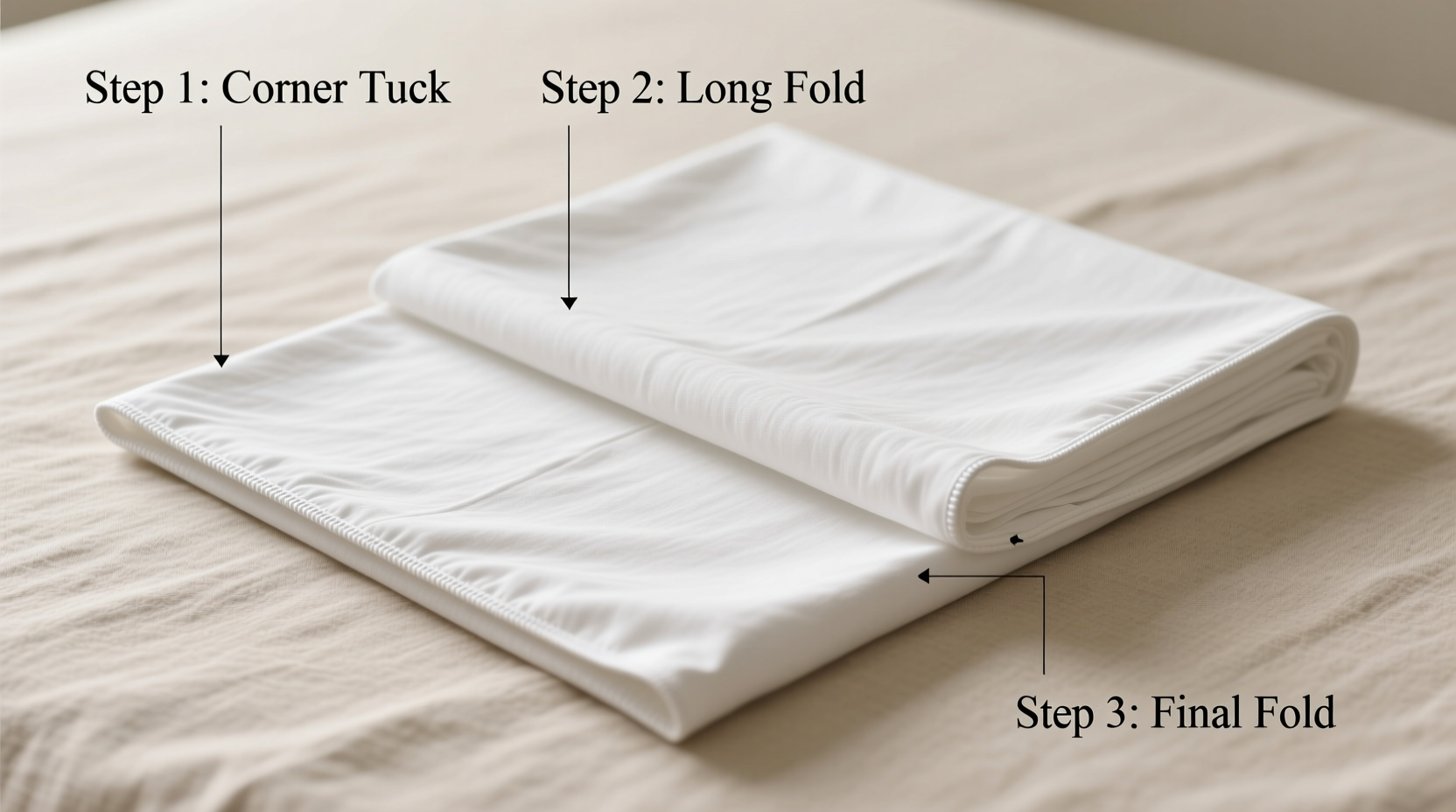
Fitted sheets resist conventional folding because of their shape. They’re designed to stretch over mattress corners, which means they lack symmetry and rigidity. When tossed loosely into a pile, they trap air, snag on other linens, and create visual clutter. Most people either ball them up, stuff them awkwardly into shelves, or give up entirely and leave them unfolded at the bottom of the drawer.
This disorganization leads to several practical issues:
- Wasted space: Crumpled sheets take up more room than necessary.
- Dust accumulation: Loose fabric collects lint and allergens.
- Mismatched sets: Without proper folding, matching top and bottom sheets becomes guesswork.
- Increased wrinkling: Poor storage often means ironing before use.
But none of these outcomes are inevitable. The solution lies not in avoiding fitted sheets altogether, but in learning how to handle them correctly from wash day to storage.
Step-by-Step Guide: How to Fold a Fitted Sheet Neatly
The following method is widely recommended by professional organizers, hotel housekeeping staff, and textile experts. It transforms the unruly shape of a fitted sheet into a compact, rectangular fold that stacks cleanly alongside flat sheets and pillowcases.
- Start with a clean, dry sheet. Ensure the fitted sheet is completely dry before folding. Dampness can lead to mildew, especially when stored tightly. Lay it on a large, flat surface—such as a bed or table—with the elastic side facing down. This orientation hides the bunched edges and creates a smoother outer layer.
- Identify the corners. Pinch two adjacent corners of one short end (the head of the bed side). Tuck one corner inside the other so the right sides of the fabric face each other. Hold them together firmly between your fingers.
- Repeat with the opposite end. Move to the other short end of the sheet and do the same—pinch the two corners and tuck one inside the other. You should now have two paired corners in each hand, with the middle of the sheet draping between them.
- Flip one set inside out. Take one pair of tucked corners and flip them over so they enclose the other pair. At this point, all four corners are nested together, and the elastic edges are hidden inside the bundle.
- Lay the sheet flat again. Place the bundled sheet back onto your surface. Smooth it gently with your hands. The elastic edges should now be concealed, and the sheet will resemble a loose rectangle.
- Fold lengthwise. Bring one long edge toward the center, then repeat with the opposite side. This creates a narrower strip, minimizing bulk.
- Fold crosswise into a square. Starting from one end, fold the sheet in thirds or quarters, depending on its size. Each fold should align neatly to maintain a uniform shape.
- Store immediately. Once folded, place the sheet in your linen closet or stack it with its matching set. For best results, store it with the corresponding flat sheet and pillowcases.
Expert Insight: Why Proper Folding Matters
Folding may seem like a minor chore, but its impact on fabric longevity and household efficiency is significant. According to Marissa Blumenthal, a certified home organization consultant and author of The Minimal Linen Closet, “How you store your linens directly affects their lifespan. A neatly folded fitted sheet avoids stress points, reduces friction with other textiles, and allows for better air circulation.”
“Hotels don’t waste time on messy storage. They fold fitted sheets this way for a reason—it’s scalable, consistent, and protects the investment in high-thread-count bedding.” — Marissa Blumenthal, Home Organization Expert
She also emphasizes that consistency matters more than perfection. “You don’t need museum-level precision. Just aim for repetition. Every time you fold the same way, you train your habits and make retrieval easier.”
Checklist: Folding & Storing Fitted Sheets Like a Pro
Use this checklist to ensure every fitted sheet is folded and stored effectively:
- ☐ Wash and fully dry the sheet before folding
- ☐ Work on a large, flat surface (bed or dining table)
- ☐ Orient the sheet with elastic side down
- ☐ Pair and tuck corners in sequence
- ☐ Nest all four corners together neatly
- ☐ Smooth out wrinkles before final folds
- ☐ Fold lengthwise, then crosswise into a compact rectangle
- ☐ Store with matching flat sheet and pillowcases
- ☐ Rotate stock regularly to prevent creasing
- ☐ Keep linen closet cool, dry, and well-ventilated
Do’s and Don’ts of Fitted Sheet Storage
| Do’s | Don’ts |
|---|---|
| Fold consistently using the same method. Repetition builds habit and improves results over time. | Ball up or twist the sheet. This creates deep creases and makes matching sets harder. |
| Store in breathable cotton bags or open bins. Allows airflow and prevents moisture buildup. | Use plastic bins long-term. Traps humidity and can cause musty odors. |
| Keep matching sets together. Fold the fitted sheet with its flat sheet and roll or stack with pillowcases. | Separate components randomly. Leads to mismatched linens and frustration. |
| Rotate your linens seasonally. Prevents overuse of favorites and underuse of others. | Overstuff shelves. Causes misshapen folds and makes retrieval difficult. |
Real Example: From Chaos to Calm – A Linen Closet Transformation
Sarah, a mother of three in Portland, Oregon, used to dread opening her linen closet. “It looked like a tornado hit,” she recalls. “I’d pull out a fitted sheet only to find it tangled with a towel or missing its match. I’d spend ten minutes just trying to find the right queen-sized set.”
After watching a folding tutorial online, she decided to dedicate one Sunday morning to reorganizing her entire linen collection. She pulled everything out, washed what needed refreshing, and applied the corner-tucking method to each fitted sheet. She then grouped each set—fitted sheet, flat sheet, and pillowcases—and stacked them vertically on the shelf like files in a cabinet.
“The difference was immediate,” she says. “Now I can see every set at a glance. My kids can even help put laundry away because it’s so straightforward. And honestly, it feels good to open that closet now. It’s calm. Organized. Like the rest of my life could be too.”
Frequently Asked Questions
Can I fold a king-sized fitted sheet the same way?
Yes, the method works for all sizes. Larger sheets may require a bigger workspace and slightly deeper folds, but the principle remains identical: tuck corners, nest pairs, smooth, and fold into a rectangle.
What if my fitted sheet has deep pockets or extra elastic?
Deep-pocket sheets follow the same folding logic. The key is ensuring all elastic edges are turned inward during the corner-nesting phase. You may need to adjust your grip slightly, but the outcome is the same.
Should I iron the sheet before folding?
Ironing isn’t necessary unless you prefer crisp linens. If you do, use a medium heat setting and focus on smoothing the center panel before beginning the fold. However, most modern cotton blends and percale weaves hold up well without ironing.
Alternative Methods Worth Trying
While the corner-tucking method is the gold standard, some people find success with variations:
- The Roll-Up Method: After nesting the corners, roll the sheet tightly from one end to the other. Ideal for travel or small spaces.
- The Envelope Fold: After creating a rectangle, fold the sides inward and tuck one end into the other like a letter. Keeps the shape secure and looks polished.
- Storage with Flat Sheet Inside: Fold the flat sheet first, then wrap the fitted sheet around it. Ensures sets stay together and adds structure.
No single method is universally “best”—choose the one that fits your lifestyle, storage space, and dexterity. The goal is consistency, not conformity.
Conclusion: Turn a Small Habit Into Lasting Order
Folding fitted sheets neatly isn’t about achieving perfection—it’s about building a sustainable system. Every time you take a few extra seconds to fold properly, you invest in long-term clarity and convenience. Over time, this small act compounds into a more organized home, reduced decision fatigue, and greater confidence in your daily routines.
You don’t need special tools or training. Just a flat surface, a clean sheet, and willingness to try. Practice the method once, twice, maybe three times. Soon, it will feel automatic. And when you open your linen closet to find整齐 rows of matching sets, you’ll realize that sometimes, the smallest changes bring the most satisfaction.




 浙公网安备
33010002000092号
浙公网安备
33010002000092号 浙B2-20120091-4
Comments
No comments yet. Why don't you start the discussion?