
Starting a profitable business begins with a single idea — but not just any idea. The most successful ventures emerge from concepts rooted in real needs, market gaps, and sustainable value. Yet many aspiring entrepreneurs struggle to move beyond inspiration to execution. The key isn’t waiting for a eureka moment; it’s cultivating a mindset and process that consistently produces viable, scalable ideas.
Generating business ideas that lead to profitability requires more than creativity. It demands observation, validation, and strategic thinking. Below are proven methods to uncover opportunities, refine them into actionable plans, and increase the odds of building something people will pay for.
Observe Real-World Problems Like a Detective
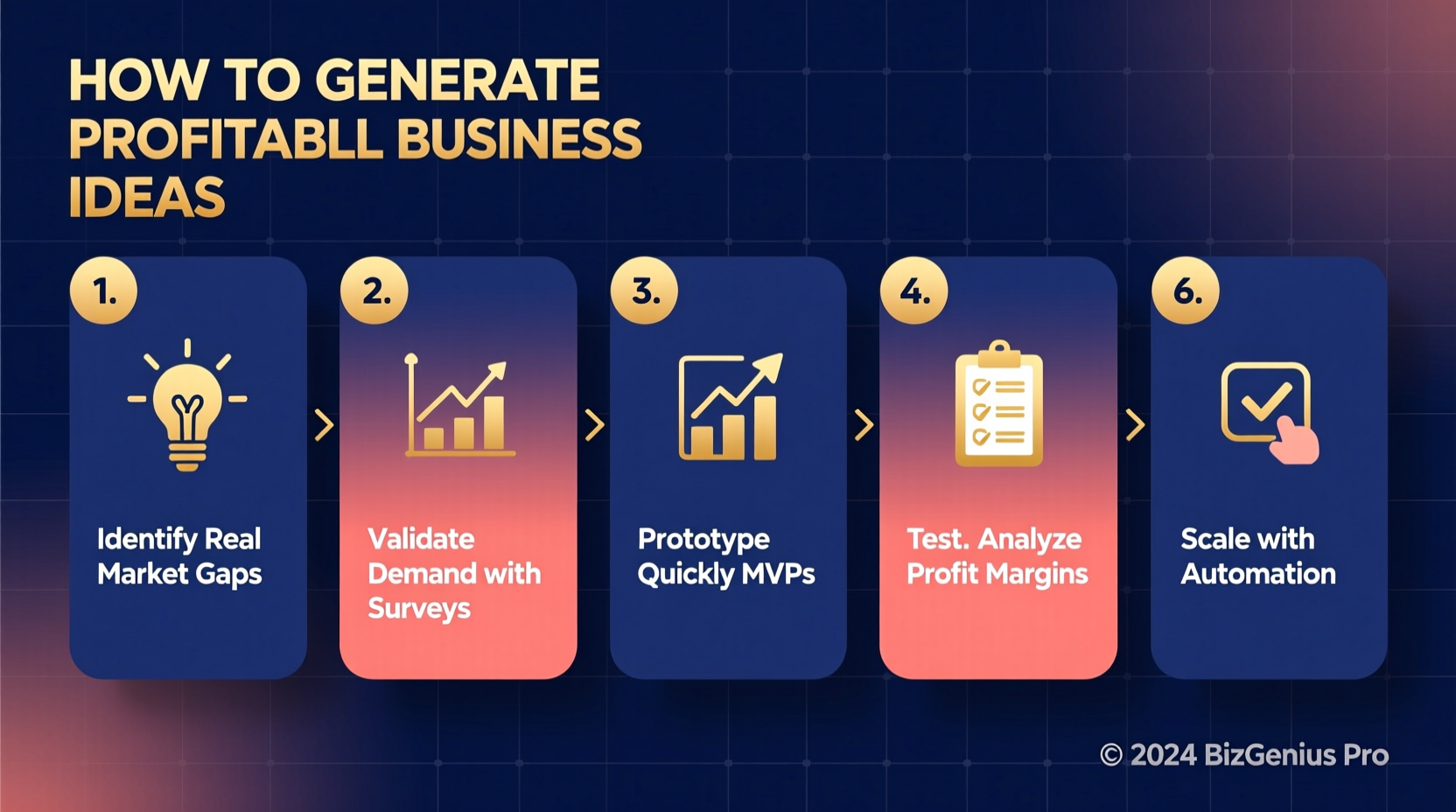
The best business ideas often come from everyday frustrations — inefficiencies in services, outdated processes, or unmet customer needs. Instead of brainstorming in isolation, shift your focus outward. Spend time observing how people live, work, and spend money. Ask: Where do people sigh, complain, or waste time?
For example, before meal kit services existed, busy professionals struggled with grocery shopping and recipe planning. Companies like HelloFresh identified this pain point and turned it into a multi-billion-dollar industry. The insight wasn’t born in a boardroom — it came from understanding real behavior.
Leverage Your Skills and Passions Strategically
Your expertise and interests are not just hobbies — they’re potential goldmines. Profitable businesses often start when someone solves a problem within their niche. If you're skilled in web design, notice what small businesses in your area lack online. If you love fitness, consider how beginners struggle with consistency and accountability.
The intersection of passion, skill, and market demand is where sustainable ventures grow. But don’t assume your interest automatically translates to profit. Validate by asking: Are people already paying for solutions in this space? Is there room for improvement?
“Your unique combination of experiences makes you the ideal person to solve a problem no one else sees clearly.” — Sahil Bloom, entrepreneur and growth strategist
Use the Problem-Solution Fit Framework
Not all problems are worth solving. To filter ideas effectively, apply the Problem-Solution Fit model. This involves three steps:
- Identify the problem — Be specific. “People hate cooking” is too vague. “Working parents spend 2+ hours weekly deciding meals” is measurable.
- Assess urgency and frequency — Is the problem urgent (e.g., broken phone repair) or occasional (e.g., vacation planning)? High-frequency, urgent issues attract repeat customers.
- Evaluate willingness to pay — Would people spend money now to fix it? Conduct quick surveys or interviews to test this.
If a problem scores high on urgency, repetition, and payment intent, it’s likely worth pursuing.
Mini Case Study: From Side Hustle to $2M in Revenue
Julia, a former teacher, noticed her friends constantly asked for help organizing homeschool schedules. She started offering custom planners via Google Sheets for $15. Within three months, she had 500 sales. She then built a simple web app automating the process, added templates, and launched a subscription model. Two years later, her company generates over $2 million annually by solving a niche but growing need.
Her success didn’t rely on invention — it came from spotting a recurring problem in a passionate community and scaling the solution.
Validate Ideas Before Building Anything
Too many entrepreneurs build products only to find no one wants them. Avoid this trap by validating early. You don’t need funding or a prototype — just evidence of interest.
Effective validation tactics include:
- Creating a landing page with a “Buy Now” button (even if the product isn’t ready)
- Running low-cost ads to measure click-through and sign-up rates
- Conducting 10–15 customer interviews with target users
- Selling a pre-order or minimum viable offer manually
If 30% or more of your test audience expresses strong interest or pays upfront, you have traction.
| Validation Method | Cost | Time Required | Reliability |
|---|---|---|---|
| Landing Page + Ads | $50–$200 | 1–3 days | High |
| Customer Interviews | Free | 1 week | Very High |
| Social Media Polls | Free | 1–2 days | Moderate |
| Paid Pre-orders | Variable | 1–2 weeks | Very High |
Apply Idea Generation Techniques Systematically
Creativity can be trained. Use structured methods to spark ideas consistently:
1. The “Jobs to Be Done” Approach
Instead of focusing on products, ask: What “job” is the customer hiring a product to do? For example, someone doesn’t buy a drill — they “hire” it to make a hole. Understanding deeper motivations reveals innovation opportunities.
2. Market Gap Analysis
Study competitors in a sector. Look for weak reviews, slow service, or missing features. If multiple customers complain about poor customer support in a SaaS tool, consider launching a competitor with white-glove service as a differentiator.
3. Trend Mapping
Monitor cultural, technological, and economic shifts. Remote work created demand for home office gear, virtual team-building tools, and co-living spaces. Staying ahead of trends helps you anticipate needs before they become mainstream.
4. Reverse Brainstorming
Ask: How could we make this experience worse? Then reverse the answers. For instance, “Make checkout take 10 steps” becomes “Simplify checkout to one click.” This reveals friction points to eliminate.
Checklist: Turning Ideas Into Action
Follow this checklist to move from idea to validated opportunity:
- Write down 10 problems you’ve experienced or observed recently
- Pick the top 3 that affect a large group and occur frequently
- Research existing solutions — are they effective, expensive, or outdated?
- Talk to at least 5 people facing the problem — confirm it bothers them
- Create a simple offer (e.g., service, digital product, consultation)
- Test demand with a landing page, ad, or direct outreach
- Iterate based on feedback before investing heavily
Frequently Asked Questions
How do I know if my idea is profitable?
Profitability depends on demand, pricing power, and cost structure. Start by estimating customer acquisition cost and lifetime value. If you can acquire customers for less than they’ll spend over time, the model is potentially profitable. Test assumptions early with small experiments.
What if someone else already has this idea?
Competition isn’t failure — it’s validation. Most markets allow room for better execution, niche targeting, or improved customer experience. Focus on doing it differently or serving an underserved segment. Being first isn’t as important as being trusted.
Can I start without technical skills or capital?
Absolutely. Many profitable ventures begin as service-based models or manual workflows. Use no-code tools like Bubble, Webflow, or Zapier to prototype. Bootstrap by charging early customers to fund development. Profitability often starts long before perfection.
Conclusion: Start Small, Think Big
Profitable business ideas don’t require genius — they require curiosity, persistence, and action. The most successful founders aren’t the ones with the flashiest ideas; they’re the ones who listen closely, test quickly, and adapt relentlessly.
You don’t need permission to begin. Identify a real problem, validate demand, and deliver value — even in the simplest form. Every major company was once a single idea tested in a garage, a spreadsheet, or a conversation.




 浙公网安备
33010002000092号
浙公网安备
33010002000092号 浙B2-20120091-4
Comments
No comments yet. Why don't you start the discussion?