
Studio Ghibli isn’t just a film studio—it’s a portal to worlds shaped by imagination, emotion, and environmental reverence. For newcomers, the breadth of its catalog can feel overwhelming. With over 20 feature films spanning decades, each rich in visual poetry and thematic depth, knowing where to start is half the journey. Unlike conventional animation studios that prioritize spectacle or comedy, Ghibli crafts stories that linger—quietly profound, emotionally resonant, and visually breathtaking. The good news? You don’t need prior knowledge to fall under its spell. What you do need is a thoughtful entry point and a willingness to embrace wonder.
Understand What Makes Studio Ghibli Unique
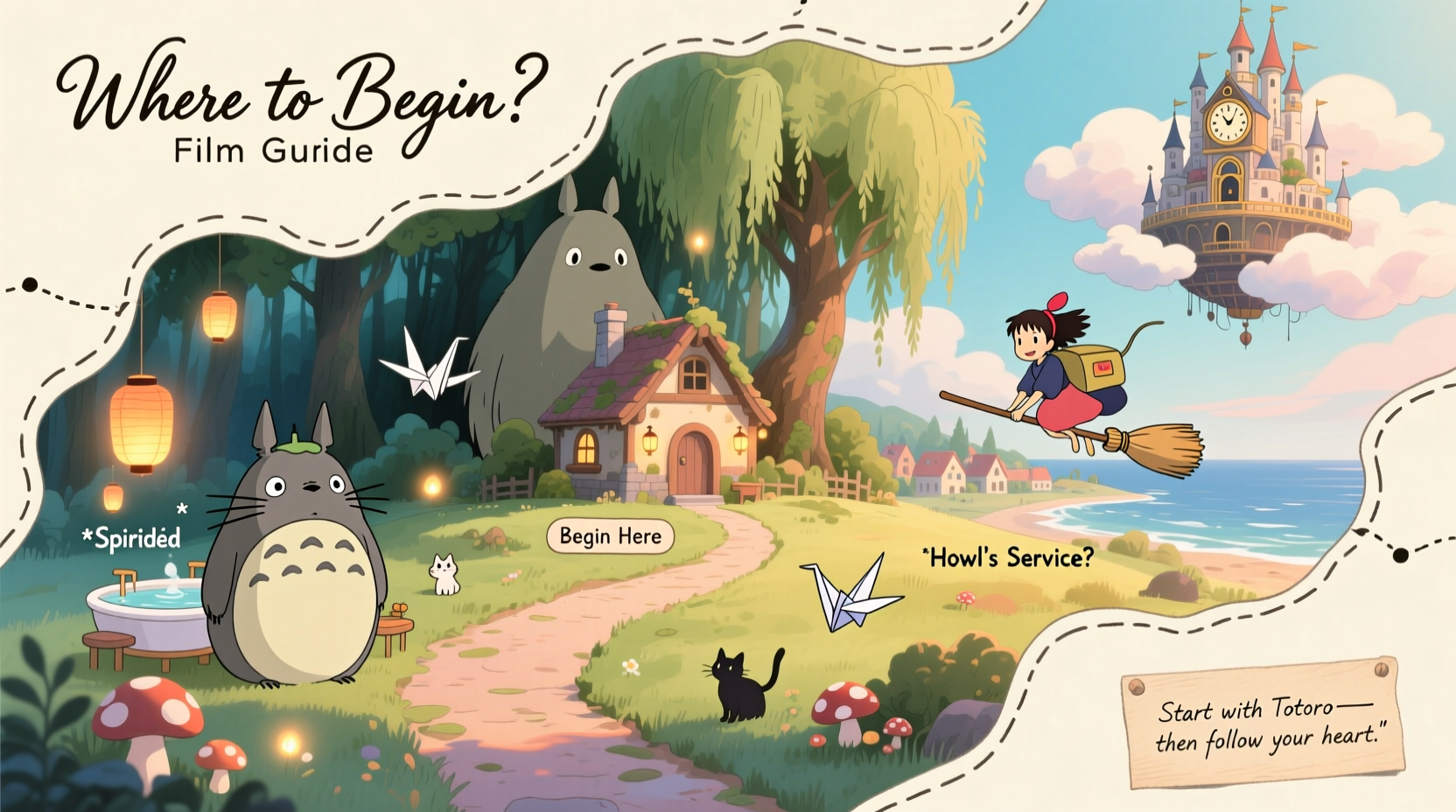
Before diving into specific titles, it helps to grasp the core philosophy behind Studio Ghibli’s storytelling. Founded in 1985 by Hayao Miyazaki, Isao Takahata, and Toshio Suzuki, the studio emerged from a desire to create animated films that treated children with respect and adults with nuance. Their works reject simplistic moral binaries, instead portraying characters who grow through empathy, loss, curiosity, and resilience.
Ghibli films often explore:
- The delicate balance between humanity and nature
- The quiet strength of young protagonists, especially girls
- Themes of war, memory, and industrialization
- Everyday magic woven into ordinary life
- A deep appreciation for food, seasons, and domestic rituals
This isn’t escapism for the sake of distraction—it’s escapism with purpose. As film critic Helen McCarthy observed:
“Ghibli doesn’t ask you to escape reality; it asks you to see reality more clearly through the lens of fantasy.” — Helen McCarthy, Author of *Hayao Miyazaki: Master of Japanese Animation*
Understanding this ethos prepares viewers to appreciate not just the visuals, but the emotional intelligence embedded in every frame.
Where to Begin: A Curated Entry Path
Jumping straight into *Princess Mononoke* or *The Tale of the Princess Kaguya* might overwhelm a newcomer. These are masterpieces, yes—but they’re also dense, thematically heavy, and steeped in cultural context. Instead, ease into the Ghibli universe with films that balance accessibility with artistic brilliance.
Step-by-Step Viewing Timeline for Newcomers
- My Neighbor Totoro (1988) – A gentle, joyful introduction to Ghibli’s whimsy and heart.
- Kiki’s Delivery Service (1989) – A coming-of-age story about independence and self-doubt.
- Spirited Away (2001) – The most acclaimed Ghibli film, blending surrealism with emotional growth.
- Howl’s Moving Castle (2004) – A fantastical anti-war romance with striking visuals.
- Ponyo (2008) – Visually stunning and emotionally warm, ideal for family viewing.
Starting with *My Neighbor Totoro* allows viewers to absorb Ghibli’s tone without narrative complexity. It’s a film about two sisters adjusting to rural life while encountering forest spirits—a metaphor for childhood imagination and coping with parental illness. Its lack of a traditional villain makes it an ideal gateway: conflict arises not from evil, but from fear, misunderstanding, and change.
Essential Ghibli Films by Theme
Once you’ve completed the beginner path, explore deeper based on your interests. Ghibli’s filmography offers distinct thematic lanes, each revealing different facets of the studio’s soul.
| Theme | Film | Why It Matters |
|---|---|---|
| Childhood Wonder | My Neighbor Totoro | Celebrates innocence, nature, and unseen magic in everyday life. |
| Coming of Age | Kiki’s Delivery Service | Explores self-reliance, creative blocks, and finding one’s place. |
| Spiritual Journey | Spirited Away | A dreamlike odyssey through a spirit world testing courage and identity. |
| Environmental Critique | Princess Mononoke | Complex portrayal of man vs. nature, with no easy answers. |
| War & Pacifism | Grave of the Fireflies | Devastating account of WWII’s human cost on civilians. |
| Domestic Life & Memory | Only Yesterday | Subtle exploration of adulthood, gender roles, and nostalgia. |
| Flying & Freedom | The Wind Rises | Miyazaki’s reflective, fictionalized biography of an aircraft designer. |
Note: While *Grave of the Fireflies* is often grouped with Ghibli’s works, it was produced by Studio Ghibli but directed by Isao Takahata and stands apart in tone—unrelentingly tragic. It’s best approached after building emotional familiarity with the studio’s other works.
Common Mistakes to Avoid as a New Viewer
Newcomers often approach Ghibli films expecting fast-paced plots or clear-cut resolutions. That expectation can lead to frustration. To fully appreciate these films, avoid the following pitfalls:
- Expecting Western-style narrative structure – Ghibli films often meander. Scenes exist not to advance plot, but to build mood, character, or atmosphere.
- Skipping the quiet moments – Some of the most powerful scenes involve silence: a character eating a meal, watching rain, or walking through a field. These are intentional acts of presence.
- Dismissing the art as “just for kids” – While accessible to children, Ghibli films engage with adult themes like grief, aging, and ecological collapse.
- Watching only the English dub first – While notable actors like Christian Bale and Florence Pugh have voiced roles, the original Japanese performances are often more restrained and authentic.
- Rushing through multiple films in one sitting – Ghibli works benefit from reflection. Let each film breathe before moving to the next.
Real Example: Sarah’s Ghibli Journey
Sarah, a 29-year-old graphic designer from Portland, had always associated animation with children’s entertainment. She avoided Ghibli for years, assuming it was “cute but shallow.” Then, during a period of burnout, a friend insisted she watch *My Neighbor Totoro*. Skeptical, she agreed.
She didn’t expect to cry during the scene where Satsuki screams into the void, thinking her sister has vanished. The rawness of childhood fear, expressed without melodrama, struck her deeply. Over the next six weeks, she followed the beginner path. By the time she reached *Spirited Away*, she was captivated—not just by the imagery, but by how Chihiro’s transformation mirrored her own need for resilience.
“I realized these films weren’t about escaping adulthood,” she said. “They were about remembering what matters: kindness, attention to detail, and the courage to keep going when you’re scared.” Today, Sarah hosts monthly Ghibli nights with friends and uses stills from the films as inspiration for her design work.
Checklist: Your First Month with Studio Ghibli
Follow this actionable plan to build a meaningful connection with Ghibli’s filmography:
- ☐ Watch My Neighbor Totoro without distractions—no phone, no multitasking.
- ☐ Choose between subbed or dubbed version (try both if curious).
- ☐ Watch one Ghibli film per week—pace yourself.
- ☐ Keep a viewing journal: note emotions, favorite scenes, questions.
- ☐ Research the historical or cultural context of each film (e.g., postwar Japan, Shinto beliefs).
- ☐ Discuss at least one film with a friend or online community.
- ☐ Revisit your favorite scene and analyze why it moved you.
This structured approach transforms passive viewing into active engagement, helping you internalize the films’ deeper messages.
FAQ: Common Questions from New Viewers
Is Studio Ghibli only for children?
No. While many films feature child protagonists and are suitable for younger audiences, the themes—loss, identity, environmental ethics—are universally relevant. Films like *The Wind Rises* and *Only Yesterday* are explicitly aimed at adult sensibilities.
Do I need to watch the films in release order?
Not necessarily. While there are recurring motifs (cats, flight, strong female leads), Ghibli films are standalone stories. However, watching in thematic or recommended order—as outlined above—helps build emotional and aesthetic familiarity.
Are all Studio Ghibli films directed by Hayao Miyazaki?
No. While Miyazaki is the most famous director, co-founder Isao Takahata directed critically acclaimed works like *Grave of the Fireflies* and *The Tale of the Princess Kaguya*. Other directors, like Hiromasa Yonebayashi (*Arrietty*, *When Marnie Was There*), have also contributed significant films.
Deepening Your Appreciation
After completing the initial five-film path, consider exploring beyond the most popular titles. Films like *Only Yesterday* (1991)—rarely discussed outside Japan—offer quiet, introspective narratives about womanhood and memory. *From Up on Poppy Hill* (2011) examines post-war Japanese identity through teenage romance and urban renewal.
You might also explore supplementary materials:
- “The Kingdom of Dreams and Madness” – A documentary offering behind-the-scenes insight into Miyazaki’s final years before retirement.
- Ghibli Museum in Mitaka, Japan – Though not accessible to all, its official books and short films (like *Mei and the Kittenbus*) extend the universe.
- Miyazaki’s manga – His decade-long serialization of *Nausicaä of the Valley of the Wind* contains richer world-building than the film adaptation.
These resources deepen understanding of Ghibli’s craftsmanship and the painstaking hand-drawn animation process that defines its aesthetic.
Conclusion: Begin Your Journey with Open Eyes
Getting into Studio Ghibli isn’t about checking off a list of acclaimed films. It’s about opening yourself to a different way of seeing—the wind in the trees, the steam rising from a bowl of ramen, the quiet bravery of a child stepping into the unknown. Start with *My Neighbor Totoro*, let yourself be disarmed by its simplicity, and allow the rest to unfold naturally. Each film is a gift wrapped in watercolor skies and whispered truths.




 浙公网安备
33010002000092号
浙公网安备
33010002000092号 浙B2-20120091-4
Comments
No comments yet. Why don't you start the discussion?