
Spilling red wine on a beige rug is one of those heart-sinking moments every homeowner dreads. The deep crimson stain stands in stark contrast against the light fabric, threatening to ruin both the aesthetic and value of your flooring. While salt is often recommended as a go-to absorbent, not everyone keeps it on hand—and some prefer to avoid it due to concerns about residue, slipperiness, or potential damage to certain fibers. The good news: you don’t need salt to effectively remove red wine from a beige rug. With the right techniques, common household items, and prompt action, you can lift the stain and preserve your rug’s appearance.
This guide walks through scientifically sound, practical methods for removing red wine stains without salt. From immediate response steps to deeper cleaning solutions, each approach is designed to be gentle on fibers while maximizing stain removal. Whether you're dealing with wool, synthetic blends, or natural cotton rugs, these strategies apply across materials—ensuring your beige rug stays clean, fresh, and stain-free.
Why Salt Isn’t Always the Best Choice
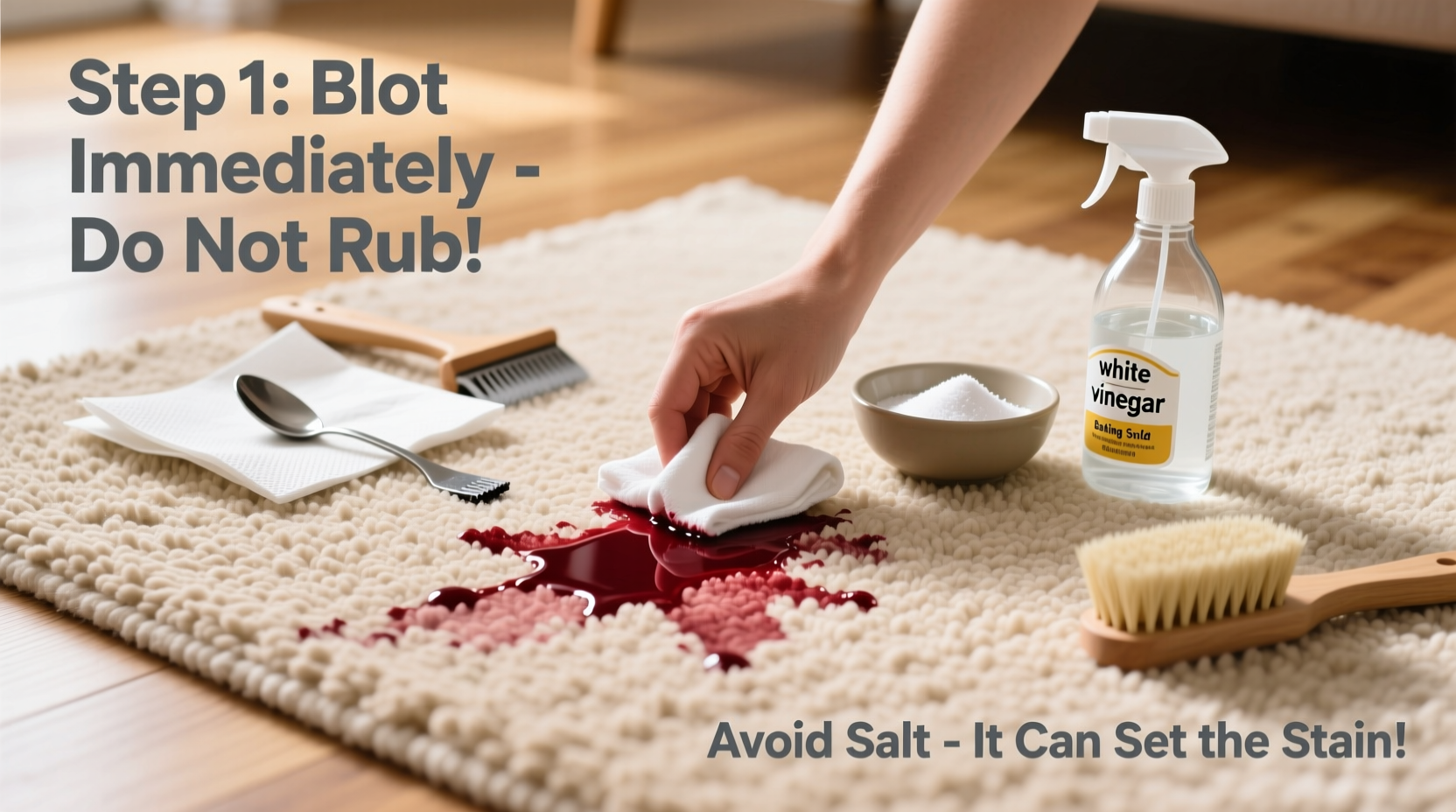
Salt has long been touted as a miracle solution for absorbing red wine spills. It works by drawing moisture out of the liquid before it sets into the fibers. However, there are several reasons why skipping salt might be preferable:
- Residue buildup: Fine salt particles can embed deeply into rug fibers and backing, leading to grittiness underfoot or even attracting more dirt over time.
- Fiber sensitivity: Some natural fibers like wool may react poorly to salt, especially if left too long, potentially weakening the material.
- Slip hazard: Loose salt creates a slippery surface, posing a risk in high-traffic areas.
- Incomplete removal: If not fully vacuumed afterward, salt remains invisible but damaging.
“While salt can help absorb moisture initially, it's not a cleaning agent. Overreliance on salt without proper follow-up cleaning often leads to residual discoloration.” — Dr. Lena Patel, Textile Restoration Specialist
Relying solely on salt gives a false sense of security. True stain removal requires breaking down tannins and pigments in red wine—not just soaking up liquid. That’s where alternative methods come in.
Immediate Response: What to Do in the First 60 Seconds
The first minute after a spill is critical. Red wine contains tannins, acids, and coloring agents that begin bonding with fibers almost instantly. Acting fast prevents deep penetration and significantly improves cleanup success.
Step-by-Step Initial Cleanup (No Salt Needed)
- Blot, don’t rub: Use a clean, dry microfiber cloth or paper towel to gently press down on the spill. Apply steady pressure to absorb as much liquid as possible. Rubbing spreads the stain and pushes wine deeper.
- Work from the outside in: Start at the edge of the stain and move inward to prevent expansion.
- Layer towels: Place multiple layers beneath the affected area if the rug is thin or the spill has soaked through, helping wick moisture from below.
- Stop when no more transfer occurs: Replace cloths frequently until pressing yields no visible wine.
After initial blotting, proceed immediately to a cleaning solution. Delay increases the chance of permanent staining.
Effective Cleaning Methods Without Salt
Below are four proven, salt-free techniques for removing red wine from beige rugs. Each uses accessible ingredients and targets different aspects of the stain—pigment, acidity, and organic matter.
Method 1: Dish Soap and Hydrogen Peroxide Solution
This combination breaks down both the color and organic components of red wine. Ideal for synthetic and colorfast rugs.
Materials Needed:
- Liquid dish soap (clear, fragrance-free preferred)
- Hydrogen peroxide (3%, standard drugstore strength)
- Cool water
- Spray bottle
- Clean cloth or sponge
Instructions:
- Mix 1 tablespoon dish soap, 1/2 cup hydrogen peroxide, and 1 cup cool water in a spray bottle.
- Mist the solution directly onto the stained area.
- Let sit for 5–7 minutes—do not exceed 10 minutes to avoid fiber bleaching.
- Gently agitate with a soft-bristled brush or sponge.
- Blot thoroughly with a dry cloth until moisture is removed.
- Rinse with a damp cloth using plain water to remove residue.
- Air dry completely, avoiding direct sunlight.
Method 2: White Vinegar and Baking Soda (Non-Salt Absorption)
Vinegar neutralizes wine’s acidity, while baking soda lifts odor and provides mild abrasion without scratching fibers.
Steps:
- Blot the spill thoroughly.
- Pour white vinegar directly onto the stain—enough to saturate the area.
- Wait 5 minutes; fizzing indicates acid-base reaction helping break down stain molecules.
- Sprinkle a thin layer of baking soda over the wet area (not salt).
- Allow to sit for 15–20 minutes.
- Scrub gently with a soft brush.
- Blot with a damp cloth, then dry completely.
This method is particularly effective for older or set-in stains where odor lingers.
Method 3: Enzyme-Based Cleaner for Organic Stains
Enzymatic cleaners—commonly used for pet stains—contain proteins that digest organic matter, including wine residues.
- Apply according to label instructions, usually involving saturation and a 10–30 minute dwell time.
- Best for natural fiber rugs like cotton or jute.
- Safe for homes with children and pets when used properly.
These cleaners target the biological components of wine, making them ideal for complete molecular breakdown rather than surface masking.
Method 4: Commercial Carpet Spot Remover (Eco-Friendly Options)
If DIY solutions aren’t feasible, choose a plant-based spot remover labeled safe for colorfast fabrics. Look for ingredients like citric acid, enzymes, or oxygen-based bleaches (not chlorine).
| Product Type | Best For | Caution |
|---|---|---|
| Dish soap + peroxide mix | Synthetic, durable rugs | Avoid on wool/silk; may lighten |
| Vinegar + baking soda | Set-in stains, odor removal | Strong smell during reaction |
| Enzyme cleaner | Natural fibers, deep cleaning | May require longer dwell time |
| Eco spot removers | All rug types (if pH-balanced) | Check labels for dye safety |
Mini Case Study: Recovering a Vintage Beige Wool Rug
Sarah, a homeowner in Portland, accidentally spilled Cabernet Sauvignon on her vintage Turkish wool rug during dinner. She didn’t have salt, and feared damaging the delicate fibers. Instead, she followed the vinegar-and-baking-soda method after blotting the excess.
She applied white vinegar liberally, waited five minutes, then added baking soda. After gentle brushing and blotting, the stain lifted significantly. A second round reduced the remaining trace to a faint shadow. Within 24 hours, the rug was dry and nearly indistinguishable from its original state. No residue, no fiber damage.
“I was amazed,” Sarah said. “I thought I’d ruined a family heirloom. But avoiding salt actually helped—I didn’t have to worry about scrubbing out leftover grains or causing abrasion.”
This real-world example shows that alternative methods can be just as effective—if not safer—than traditional salt-based remedies.
Do’s and Don’ts When Removing Wine Stains
To maximize your chances of success and minimize damage, follow this checklist:
| Do’s | Don’ts |
|---|---|
| Blot immediately with a clean cloth | Rub or scrub the stain aggressively |
| Use cool water—never hot (heat sets stains) | Apply heat via hairdryer or steam too soon |
| Test any solution on a hidden area first | Assume all rugs react the same way |
| Work from the outer edge inward | Over-saturate the backing (risk mold) |
| Air dry naturally away from sunlight | Walk on the rug while wet |
Frequently Asked Questions
Can I use club soda instead of salt?
Yes. Club soda contains carbonation and minerals that help lift stains. Pour it over the spill immediately after blotting, then dab with a cloth. Its alkalinity counteracts wine’s acidity, though it’s most effective as an initial step, not a standalone fix.
What if the stain has already dried?
Dried stains require rehydration. Dampen the area with cool water, then apply a vinegar solution or enzyme cleaner. Let it penetrate for 15–20 minutes before blotting. Multiple applications may be needed, but most set-in wine stains can still be removed with patience.
Is hydrogen peroxide safe for all beige rugs?
No. While generally safe for synthetics and cotton, hydrogen peroxide can bleach or weaken natural protein fibers like wool and silk. Always perform a spot test in an inconspicuous area before full application.
Final Checklist: Your Salt-Free Stain Removal Plan
- Blot the spill immediately with a dry, absorbent cloth.
- Choose a cleaning method based on rug type and stain age.
- Pre-test any solution on a hidden section.
- Apply treatment gently—avoid aggressive scrubbing.
- Rinse with clean water to remove cleaning residue.
- Dry thoroughly using fans or open air—no direct heat.
- Vacuum once fully dry to restore texture.
Conclusion
Removing red wine from a beige rug without salt is not only possible—it can be more effective and safer for your flooring. By understanding the chemistry of wine stains and using targeted, gentle methods, you protect both the integrity and beauty of your rug. Immediate action, the right cleaning agents, and careful technique make all the difference.
Whether you choose a vinegar-baking soda reaction, an enzymatic cleaner, or a hydrogen peroxide blend, the key is consistency and caution. Avoid common pitfalls like heat, rubbing, or skipping tests. With these strategies, even the most alarming spills can end well.




 浙公网安备
33010002000092号
浙公网安备
33010002000092号 浙B2-20120091-4
Comments
No comments yet. Why don't you start the discussion?