
Hanging holiday ornaments is a tradition that brings color, warmth, and personal meaning to seasonal decor. Yet, many people face a recurring challenge: how to display heavier, more ornate decorations on trees with slender or fragile branches. Whether you're working with a real fir, spruce, or an artificial tree with flexible tips, placing a heavy ornament incorrectly can lead to snapped limbs, lopsided arrangements, or even toppling the entire tree. The solution lies not in avoiding bold pieces but in understanding balance, weight distribution, and smart hanging techniques.
The key isn’t brute force—it’s finesse. With thoughtful planning and the right tools, even the most delicate-looking branch can support a striking centerpiece ornament. This guide dives into practical strategies, tested methods, and insider tips used by professional decorators to preserve tree integrity while maximizing visual impact.
Understanding Branch Strength and Weight Limits
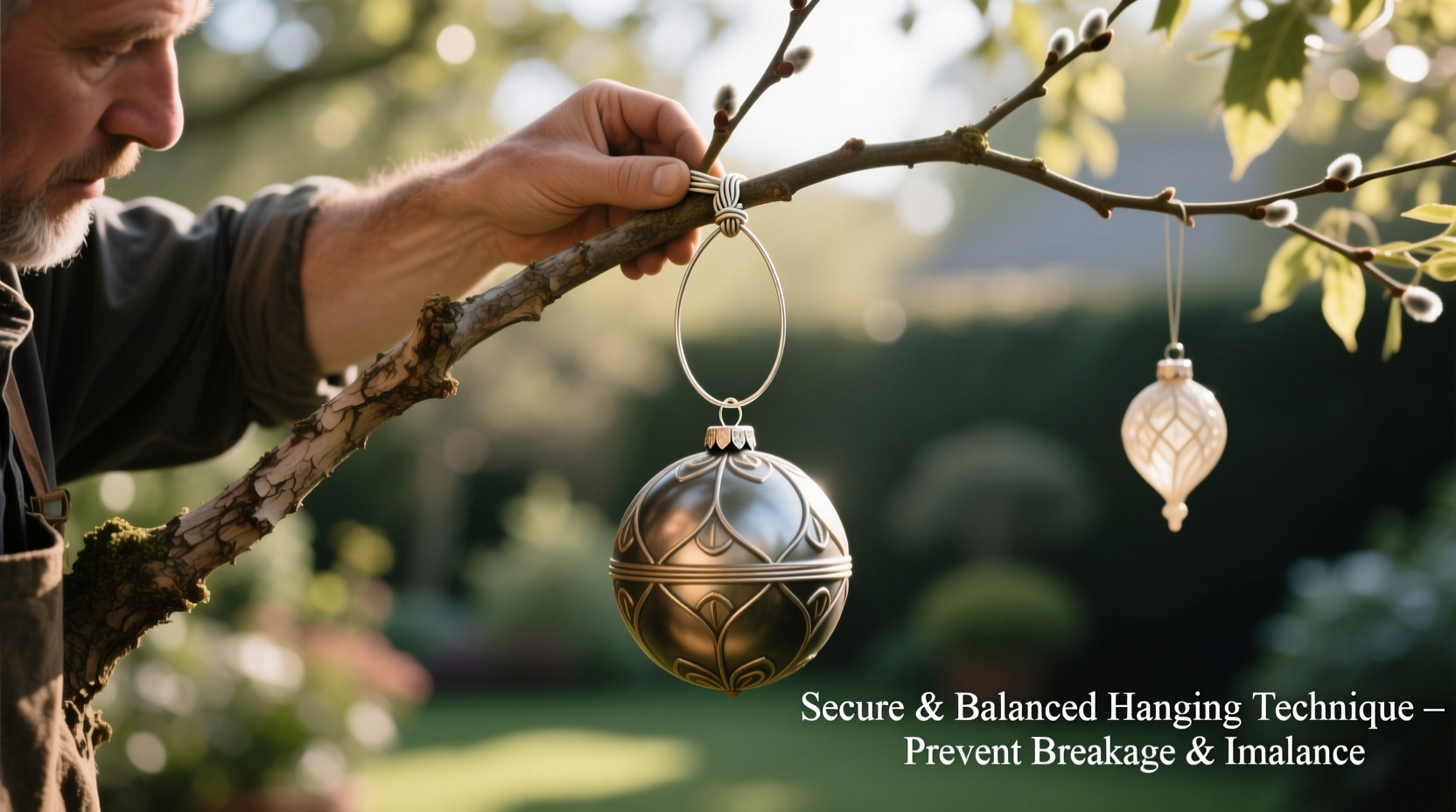
Not all branches are created equal. Natural evergreens vary in flexibility and load-bearing capacity based on species, age, moisture level, and needle density. Artificial trees differ by material—PVC tips tend to be stiffer but more brittle, while PE (polyethylene) foliage mimics real texture but may bend under concentrated weight.
On average, a single healthy natural branch tip can support 3–5 ounces (85–140 grams) before showing signs of stress. Beyond that threshold, the risk of snapping increases significantly—especially if the ornament's weight is unevenly distributed or hung at the very end of the limb.
Artificial branches often have lower tolerance. Many PVC limbs begin to sag under just 2–3 ounces when loaded at the extremity. However, their strength improves dramatically when weight is placed closer to the central stem, where support wires provide structural reinforcement.
“Overloading branch tips is the number one cause of damage during holiday decorating. It’s not about skipping large ornaments—it’s about redistributing the load.” — Marcus Lin, Professional Holiday Decorator & Lighting Designer
Strategic Placement: Where to Hang Heavy Ornaments Safely
The location of an ornament on a branch determines its mechanical leverage. Think of each limb as a cantilever beam: the farther from the trunk, the greater the bending moment. To minimize strain:
- Avoid the outer third of any branch for heavy items.
- Anchor near the trunk or main stem, where multiple branches converge and offer mutual support.
- Distribute weight across different levels rather than clustering heavy pieces on one side.
For trees with sparse branching, consider using secondary supports such as internal armatures or discreet wire frames that extend from the trunk. These allow you to suspend ornaments mid-air near thin branches without direct contact.
Step-by-Step Guide: Hanging Heavy Ornaments Without Damage
Follow this sequence to secure heavier decorations safely and maintain aesthetic balance:
- Assess the ornament’s weight and shape. Use a kitchen scale if needed. Note whether the center of gravity is centered or offset (e.g., teardrop shapes).
- Select a structurally sound zone. Look for areas where several branches meet or cross—these junctions naturally reinforce each other.
- Reinforce the hook or hanger. Replace flimsy string or thin ribbon with braided nylon thread, fishing line, or thin floral wire for better load transfer.
- Attach the ornament closer to the base of the branch. Slide the hook inward along the limb until it rests within the inner half, ideally near supporting wires or thicker stems.
- Use supplemental support if necessary. For ornaments over 5 oz, add a nearly invisible support line anchored to the tree trunk or an adjacent sturdy branch.
- Check balance after placement. Step back and view the tree from multiple angles. Adjust neighboring ornaments to prevent leaning or visual heaviness on one side.
This method allows you to enjoy statement pieces—like glass globes, ceramic figures, or vintage tinsel-covered spheres—without compromising tree stability.
Tools and Materials That Make a Difference
Using the right accessories reduces stress on branches and enhances overall presentation. Below is a comparison of common hanging solutions:
| Material | Max Load Capacity | Visibility | Best For | Caution |
|---|---|---|---|---|
| Fishing Line (Clear Monofilament) | Up to 10 lbs (with proper knotting) | Nearly invisible | Heavy ornaments, floating effects | Can cut soft bark; use knots to prevent slippage |
| Braided Nylon Thread | 3–5 oz per strand | Low visibility | Moderate-weight glass or wood | Avoid tangling; keep dry |
| Floral Wire (22-gauge) | 4–6 oz | Visible unless painted | Shaping custom hangers, anchoring | May scratch finishes; wrap ends |
| Satin Ribbon | 1–2 oz | High visibility (decorative) | Lightweight, festive look | Poor weight distribution; avoid heavy loads |
| Twist Ties (Coated Wire) | 2–3 oz | Medium visibility | Temporary fixes, adjustable holds | Can weaken with movement |
Professionals often combine materials—using fishing line for primary suspension and floral wire to fine-tune positioning. This hybrid approach maximizes both strength and discretion.
Do’s and Don’ts When Decorating Delicate Branches
To prevent accidents and ensure longevity of your tree display, follow these guidelines:
| Do’s | Don’ts |
|---|---|
| Hang heavier ornaments lower on the tree, where branches are sturdier | Place heavy items at eye level on thin outer tips |
| Use counterweights on opposite sides to balance visual mass | Cluster multiple heavy ornaments on one quadrant |
| Inspect hooks and loops for sharp edges before hanging | Force a bent hook onto a fragile branch |
| Rotate large ornaments quarterly to check for shifting | Ignore early signs of drooping or stress |
| Store heavy ornaments in padded containers to protect hangers | Leave metal hooks exposed where they can corrode or deform |
Real Example: Restoring Balance in a Client’s Living Room Display
A designer in Portland was hired to decorate a tall Fraser fir for a family known for collecting hand-blown German ornaments—some weighing up to 8 ounces. The tree, though full, had long, supple branches prone to drooping. Early attempts to hang larger pieces caused noticeable sagging on the south-facing side.
The decorator reassessed the layout using a grid system: dividing the tree into vertical thirds and horizontal zones. Heavy ornaments were reserved for the lower two-thirds and inner branches. For three particularly dense pieces, clear fishing lines were run from ceiling hooks through the crown of the tree, suspending the ornaments just above the canopy to create a “floating” effect.
Additionally, lightweight replicas were substituted for two originals at the periphery. The result? A balanced, visually rich display with no structural compromise. The family reported zero breakage over a six-week display period.
Expert Checklist: Safe Heavy Ornament Hanging
Before finalizing your tree setup, go through this checklist:
- ✅ Weigh each ornament over 3 oz using a small scale
- ✅ Identify at least three strong anchor points near the trunk
- ✅ Replace weak strings or ribbons with reinforced hangers
- ✅ Distribute total ornament weight evenly across quadrants
- ✅ Test stability by gently shaking the tree base (simulate foot traffic)
- ✅ Mark problematic areas with removable tape for future reference
- ✅ Keep emergency repair supplies nearby (extra line, clips, gloves)
Frequently Asked Questions
Can I use Command Hooks inside the tree?
Yes—but only on artificial trees with solid trunks or backing panels. Standard adhesive strips aren’t designed for variable temperatures or outdoor humidity. Use indoor-rated, high-strength versions and apply to clean, dry surfaces. Avoid placing them on flexible PVC limbs.
What if my ornament doesn’t have a hook?
Create a custom hanger using 22-gauge floral wire. Wrap it securely around the ornament’s sturdiest point (like a neck or rim), twist tightly, and form a loop. For delicate glass, pad the wire with felt tape to prevent scratching.
Is it safe to hang ornaments from the ceiling instead?
Absolutely. Suspended displays are increasingly popular for protecting trees while showcasing prized pieces. Use monofilament line anchored to ceiling joists or tension rods. Ensure lines are taut and out of walkways to prevent tripping.
Final Thoughts: Beauty Meets Stability
The joy of holiday decorating comes from expressing creativity within the limits of your space and materials. Thin branches don’t mean sacrificing elegance or impact—they simply require smarter engineering. By respecting weight thresholds, leveraging structural zones, and using the right tools, you can showcase even the heaviest heirloom ornaments with confidence.
Remember: a well-balanced tree isn’t just safer—it’s more beautiful. Symmetry draws the eye, prevents fatigue in viewing, and ensures every guest experiences your display as intended. Take time to plan placements, test supports, and adjust as needed. Your efforts will pay off in durability, safety, and lasting impression.




 浙公网安备
33010002000092号
浙公网安备
33010002000092号 浙B2-20120091-4
Comments
No comments yet. Why don't you start the discussion?