
December arrives with a familiar tension: the thrill of thoughtful gifting versus the dread of discovery. Children (and sometimes spouses) develop radar for wrapped boxes—peeking under beds, rattling closet doors, scanning bookshelves for suspiciously uniform bulges. Traditional hiding spots—under the bed, inside suitcases, or stacked behind holiday decor—fail under scrutiny. What works isn’t concealment through obscurity, but integration: making gifts functionally invisible by embedding them into daily life. This approach draws on behavioral psychology, spatial awareness, and domestic pragmatism—not magic, but method.
Professional organizers and family therapists consistently observe that successful gift secrecy hinges less on physical distance and more on cognitive invisibility. When an object serves a clear, ongoing purpose in its location—and aligns with environmental expectations—it disappears from conscious attention. A box of Lego bricks tucked inside a toy chest doesn’t register as “suspicious” because it belongs. A set of gourmet mugs displayed on open kitchen shelves? Expected. A wrapped gift box placed beside them? Not expected—and therefore conspicuous. The goal is not to outsmart curiosity, but to remove the cue that triggers it.
1. Repurpose Functional Furniture & Built-Ins
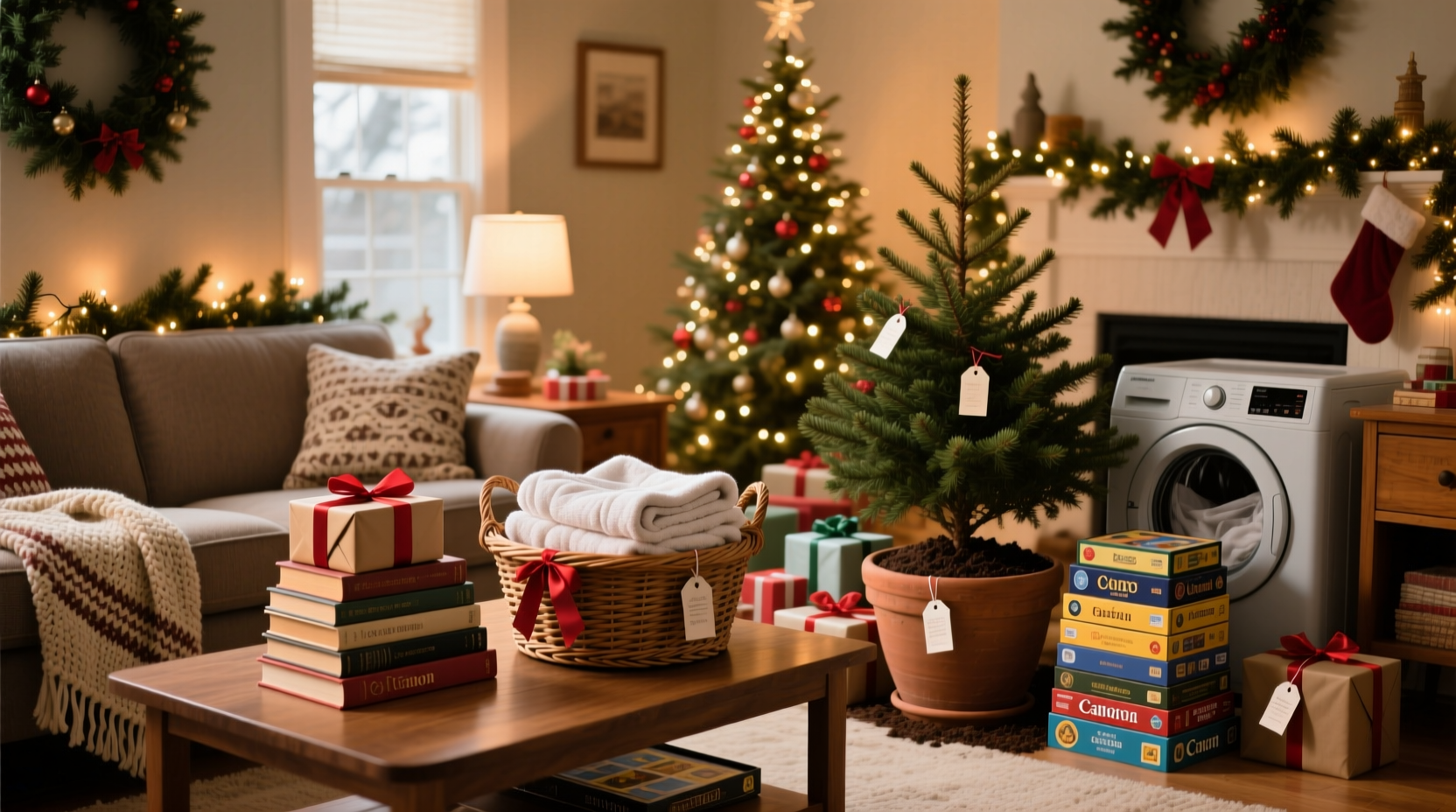
Modern homes contain dozens of functional voids—spaces designed for utility, not decoration. These are ideal for integrating gifts without raising suspicion. The key is selecting locations where access feels routine, not secretive.
- Behind cabinet toe-kicks: Most base cabinets have a 3–4 inch gap between the floor and the bottom panel. Slide flat, rigid-wrapped items (board games, art supplies, or slim electronics boxes) into this space using a thin cardboard tray or rigid foam board as a slider. Access requires kneeling—not crawling—so it feels like routine maintenance, not covert retrieval.
- Inside hollow-core interior doors: Many bedroom and closet doors are hollow-core. With a small, removable panel (often hidden behind the hinge plate), you can create a shallow cavity. Wrap gifts in neutral-toned fabric (e.g., charcoal linen) and insert them vertically. Reattach the panel. The door functions normally—and no one inspects its interior unless repairing hardware.
- Under stair treads (non-load-bearing side): In homes with open-riser or partially enclosed stairs, the underside of treads often conceals framing. A custom-fit plywood shelf—mounted flush against the stringer—holds medium-sized boxes. Cover with matching wood veneer or paint. From below, it’s indistinguishable from structural framing; from above, it’s just stairs.
2. Camouflage Through Everyday Objects
The most effective camouflage mimics objects already present in your environment. Gifts shouldn’t look *like* something else—they should *be* something else, functionally and visually.
- Book-safe integration: Hollow out hardcover books (especially large, unopened reference volumes or textbooks). Use a craft knife and ruler to carve a precise cavity, then line with acid-free tissue. Place gifts inside and reseal the spine with archival glue. Stack the “book” on a shelf among real titles. Bonus: choose titles that subtly hint at the gift’s theme (e.g., The Art of Electronics for a soldering kit).
- Appliance disguise: Refrigerators, microwaves, and dishwashers all have service panels or vent covers that open for maintenance. Remove the panel (typically secured with screws), place a flat-wrapped gift behind it, and replace the cover. Ensure the gift doesn’t obstruct airflow or touch internal components. This works best for flat items: gift cards, vouchers, or folded clothing.
- Laundry basket decoys: Use a sturdy, deep wicker or canvas laundry basket. Line the bottom with rolled towels or folded blankets, then nestle medium-sized gifts upright inside. Top with a single layer of clean clothes—just enough to obscure shape but not so much that the basket looks overloaded. Keep it in the laundry room or bathroom, where it belongs.
3. Leverage Seasonal Decor & Holiday Infrastructure
Christmas decor provides built-in visual noise—strategic placement turns clutter into cover. The trick is ensuring gifts occupy spaces where temporary density feels intentional.
| Decor Element | How to Integrate Gifts | Risk Mitigation |
|---|---|---|
| Wreaths (indoor, wall-mounted) | Mount a lightweight, rigid gift box (e.g., a 12\"x12\"x4\" box) directly behind the wreath using heavy-duty adhesive hooks. Wrap the box in matching ribbon or burlap before mounting. | Ensure box weight stays under hook rating (max 5 lbs); avoid placing near light switches or outlets. |
| Tree skirt | Use a thick, layered skirt (felt + burlap + lace). Place flat gifts horizontally beneath the innermost layer, centered under the tree trunk. Weight corners with decorative pinecones to prevent shifting. | Only use non-fragile, flat items (e.g., puzzles, photo albums, gift cards). Never place electronics here—heat from lights poses risk. |
| Holiday throw pillows | Sew a discreet zipper into the seam of a pillow cover. Insert small, soft gifts (socks, scarves, plush toys) before stuffing with polyester fiberfill. Fluff and place on sofa or bed. | Avoid overstuffing—pillow should retain natural drape. Test zippers for smooth, silent operation. |
4. Real-World Integration: A Case Study from Portland, OR
When Maya R., a pediatric occupational therapist and mother of two (ages 7 and 10), faced her third consecutive year of pre-Christmas gift discoveries, she abandoned the attic and garage. Instead, she mapped her home’s “cognitive blind spots”—areas where family members interacted daily but never scrutinized. Her solution involved three layers of integration:
“We turned our mudroom bench into a gift vault. It’s a solid oak piece with a hinged lid, but the original storage compartment was shallow and rarely used. I installed a false bottom—1.5 inches high—lined with velvet. Inside, I placed wrapped gifts for both kids: a tablet stand, a set of watercolor brushes, and a LEGO architecture kit. To access them, I simply lifted the cushion (which sits atop the lid) and opened the compartment—same motion I use weekly to grab gloves or dog leashes. My son asked why the bench ‘felt heavier,’ and I said, ‘We added insulation for winter.’ He nodded and went back to his video game. No follow-up questions.”
Maya’s success wasn’t accidental. She timed her retrieval to coincide with habitual actions—glove-grabbing at 7:45 a.m., leash-fetching at 4:30 p.m.—making access feel automatic, not furtive. She also maintained consistency: the bench never looked different, never smelled different (she avoided scented wrapping paper), and never held anything unexpected besides seasonal gear.
5. Expert Insight: The Psychology of Visual Inattention
Dr. Lena Cho, cognitive psychologist and author of Everyday Attention: How We See Without Looking, explains why these methods succeed where traditional hiding fails:
“Human vision operates on predictive coding—we don’t process every pixel; we match incoming sensory data against mental models of what ‘should’ be there. A wrapped box in a closet violates that model. But a book-shaped object on a shelf? A laundry basket in the bathroom? A bench with a cushion? Those match expectations perfectly. The brain filters them out—not as secrets, but as irrelevant background. That’s not deception. It’s design alignment.”
This principle underscores why aesthetic cohesion matters more than physical seclusion. A gift wrapped in gold foil beside a stack of white towels breaks the visual model. Wrapped in unbleached cotton and tied with jute twine? It merges seamlessly.
6. Step-by-Step: Preparing Your Home for Stealth Gifting
Begin this process four weeks before December 25. Rushing invites errors and inconsistency.
- Week 1: Audit & Map
Walk through each room. Note functional voids (cabinet gaps, hollow doors, appliance panels) and recurring decor elements (pillows, baskets, wreaths). Photograph each candidate location. Eliminate any spot requiring tools, ladders, or unusual access. - Week 2: Select & Adapt
Prioritize gifts by size, fragility, and timing. Flat, non-fragile items go behind doors or in book safes. Soft, compressible items go in pillows or laundry baskets. Reserve high-traffic areas (mudroom, kitchen) for frequently accessed gifts. Purchase neutral wrapping materials (linen, kraft paper, undyed cotton) and simple ties (jute, hemp, matte ribbon). - Week 3: Install & Normalize
Place gifts in chosen locations. Then, perform the “habit test”: for three days, interact with each location as if retrieving or storing everyday items (e.g., lift the bench cushion daily to check for gloves; open the cabinet toe-kick to retrieve cleaning supplies). This trains your muscle memory—and reduces hesitation. - Week 4: Final Review & Reset
Inspect each location for visual consistency. Is the pillow still plump? Does the book sit naturally among others? Are decor elements undisturbed? Remove any item that draws even momentary attention. Replace it with a lower-profile alternative.
7. FAQ
What if my child is exceptionally observant—or has a knack for solving puzzles?
Lean into their strengths. Place a single, highly visible “decoy gift” in an obvious spot (e.g., under the tree with a note: “For the puzzle master—open first!”). Fill it with a fun, non-spoiling challenge: a riddle leading to a candy cane, or a mini escape-room kit. Their focus shifts to solving—not searching. Meanwhile, real gifts remain embedded in functional zones they’ve learned to ignore.
Can I hide gifts in the freezer or fridge?
Not recommended. Temperature fluctuations damage packaging adhesives, cause condensation that warps paper and ink, and risk food contamination if wrapping tears. More critically, refrigerators are high-attention zones—people check them multiple times daily. Cognitive invisibility fails here. If cold storage is essential (e.g., for perishable gift certificates), use a sealed, labeled freezer bag inside a container of frozen peas—then place the container in the freezer’s least-accessed corner.
How do I retrieve gifts without alerting others during the final week?
Time retrievals to coincide with predictable household rhythms: during morning showers, while dinner simmers, or during shared screen time (e.g., watching a holiday movie together). Use the same access motion you practiced during Week 3—no new gestures, no hesitation. Carry retrieved items in a reusable tote already used for groceries or library books. Consistency signals normalcy far more effectively than silence or speed.
Conclusion
Hiding Christmas presents isn’t about winning a game of cat-and-mouse. It’s about respecting the intelligence and routines of the people you live with—and designing your environment to support shared joy rather than suspenseful secrecy. The most elegant solutions don’t ask anyone to look away; they invite everyone to see the ordinary, beautifully, and completely. When a wrapped box becomes indistinguishable from a book, when a gift emerges from a bench cushion as naturally as a pair of mittens, you haven’t just concealed a surprise—you’ve woven intention into the fabric of daily life.
Start small this year. Choose one functional space—a drawer, a shelf, a piece of furniture—and integrate one gift using the principles outlined here. Observe how it feels to move through your home without guarded glances or whispered logistics. Notice the ease that comes when preparation replaces panic. That ease is the truest gift—not just for your recipients, but for you.




 浙公网安备
33010002000092号
浙公网安备
33010002000092号 浙B2-20120091-4
Comments
No comments yet. Why don't you start the discussion?