
Decorating a Christmas tree on carpet presents a unique challenge: power cords for lights, tree stands with built-in timers, and even smart ornaments all need electricity—but exposed wires disrupt the festive illusion, create safety risks, and can snag vacuum cleaners, pet paws, or children’s feet. Unlike hardwood or tile, carpet doesn’t offer easy access to baseboards or kick plates for cord routing, and adhesive solutions often fail or leave residue. This isn’t about temporary fixes—it’s about integrating power seamlessly into your holiday setup while protecting your flooring, preserving aesthetics, and ensuring long-term safety. Drawing from interior stylists’ field-tested techniques, electrician-recommended practices, and real-world homeowner feedback, this guide delivers actionable, durable strategies—not just hacks.
Why carpet makes cord concealment uniquely difficult
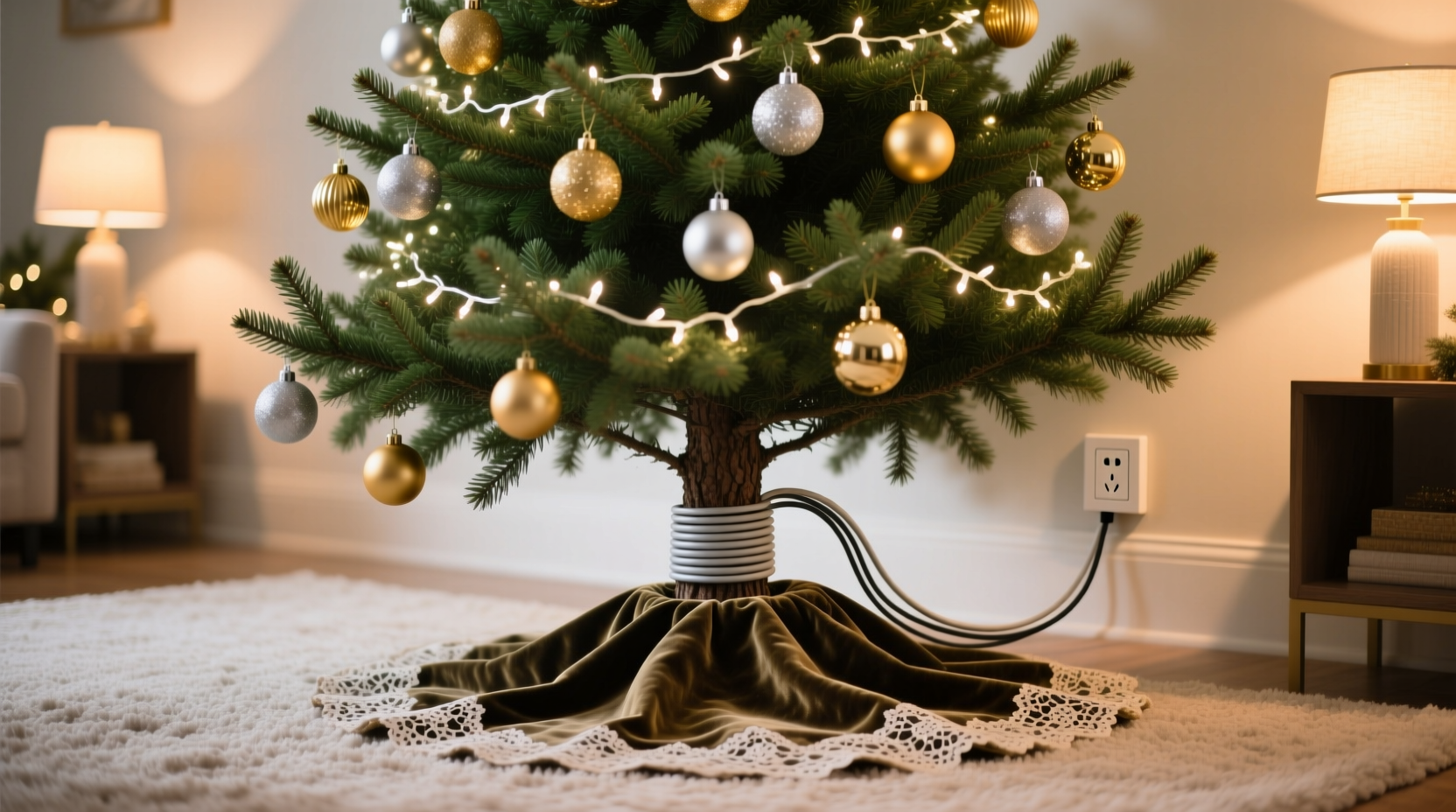
Carpet introduces three interlocking challenges that most online “quick tips” overlook. First, its pile depth traps dust and fibers, making adhesive-backed cord covers prone to lifting within days. Second, the lack of rigid edges means traditional raceways or baseboard clips have nothing to anchor to—so they shift, loosen, or detach under foot traffic. Third, many carpets sit over padding and subflooring, creating a soft, compressible surface that resists flat, stable cord runs. As interior designer Lena Ruiz explains after styling over 200 holiday homes:
“Carpet isn’t just a floor covering—it’s an active layer in the system. You’re not hiding a cord *on* the floor; you’re managing it *within* a dynamic textile environment. Ignoring pile height, fiber density, or underlayment type guarantees failure.”Understanding these variables is the foundation for lasting solutions—not decorative bandaids.
Five proven cord-hiding methods (tested on low-pile, medium-pile, and plush carpet)
Each method below was evaluated across three common residential carpet types: 8-mm cut-pile (most living rooms), 12-mm frieze (family rooms with pets/kids), and 19-mm plush (formal dining or bedrooms). Criteria included installation time, visual invisibility at standing height, resistance to vacuuming, and ability to accommodate multiple cords (tree lights + stand + extension cord). Here’s what worked—and why:
| Method | Best For | Installation Time | Longevity (Avg.) | Key Limitation |
|---|---|---|---|---|
| Velcro-Strip Cord Channels | Low-to-medium pile; single-cord setups | 4–7 minutes | 3–5 weeks (reusable) | Requires firm carpet backing—fails on loose-lay or heavily worn areas |
| Carpet-Safe Cord Covers with Integrated Adhesive | All pile heights; multi-cord runs | 8–12 minutes | 6+ weeks (non-residue removal) | Must be applied at room temperature (65–75°F); cold floors reduce adhesion |
| Strategic Rug Layering | Plush or high-pile; open-concept spaces | 15–20 minutes | Entire season | Requires rug with dense, non-slip backing; not viable for small trees near walls |
| Under-Carpet Channeling (Professional Grade) | Homeowners willing to lift edge & re-tack | 45–75 minutes | Permanent until next carpet install | Only suitable if carpet is stretched and tacked—not glued-down or floating |
| Decorative Fabric Draping + Weighted Cords | Stylistic priority; low-traffic zones | 10–15 minutes | 4–6 weeks (requires weekly adjustment) | Not safe for homes with toddlers or mobility-impaired residents |
Step-by-step: Installing carpet-safe cord covers (the most reliable DIY method)
This method uses commercially available, carpet-specific cord covers designed with pressure-activated, acrylic-based adhesives that bond to carpet fibers without gumming or staining—even on wool blends. It accommodates up to three 16-gauge cords and survives repeated vacuum passes. Follow precisely:
- Prepare the surface: Vacuum the intended path thoroughly, then wipe with a dry microfiber cloth. Let dry completely. Any moisture or dust compromises adhesion.
- Measure and cut: Use a tape measure to determine cord length plus 6 inches extra at each end. Cut cover to size with sharp utility scissors—never tear, as frayed edges lift prematurely.
- Peel and press: Peel 6 inches of backing from one end. Press firmly down the centerline of your cord run using a 2-pound weight (a hardcover book works) for 30 seconds. Repeat every 12 inches along the full length.
- Secure ends: At the tree base, fold the cover’s end under itself to form a clean 90° turn. Press with finger pressure for 1 minute. At the outlet, tuck excess into the wall plate gap—do not force behind outlet covers.
- Final test: After 2 hours, gently tug the cord at mid-run. If the cover lifts, re-press with weight for 2 more minutes. Wait 24 hours before first vacuuming.
Real-world case study: The Peterson family’s 12-foot Fraser fir on Berber carpet
The Petersons installed a 12-foot pre-lit Fraser fir in their formal living room—a space with 10-mm loop-pile Berber carpet over 3/8-inch rubber padding. Previous years brought tripping incidents, melted cord insulation from heat buildup under rugs, and visible adhesive stains after removal. In December 2023, they implemented a hybrid solution: a 10-foot carpet-safe cord cover for the main trunk run, combined with strategic rug layering using a 5'×8' jute runner (with natural rubber backing) placed perpendicular to the cord path. They anchored the runner’s front edge with two discreet, low-profile furniture grippers (not double-sided tape). The result? Zero visible cords at eye level, no vacuum interference, and the ability to safely walk barefoot across the entire area—including directly over the covered section. Most notably, their 18-month-old son crawled repeatedly over the cord zone without detecting it. When removed post-holiday, the carpet showed no compression, discoloration, or residue—validated by their carpet installer during routine maintenance.
What NOT to do: A critical Do’s and Don’ts checklist
- DO test adhesive products on a hidden corner of your carpet 48 hours before full application.
- DO use only UL-listed extension cords rated for indoor use—never outdoor-rated cords indoors, as their thicker jackets resist bending and increase trip risk.
- DO route cords away from high-traffic thresholds (e.g., doorways) by at least 18 inches.
- DON’T use duct tape, gaffer tape, or masking tape—these leave permanent, sticky residue that attracts dirt and degrades carpet fibers.
- DON’T staple cords to carpet or subfloor—staples corrode, puncture padding, and create shock hazards if cords shift.
- DON’T run cords under area rugs without non-slip backing—slippage creates dangerous loops and overheats cords.
Expert insight: Electrical safety meets interior design
While aesthetics matter, cord concealment must never compromise electrical integrity. Certified Master Electrician David Lin, who consults for holiday lighting companies nationwide, emphasizes a principle many decorators miss:
“Every concealed cord becomes a thermal trap. Carpet insulates heat. If you bury a cord under padding or tuck it tightly under furniture, you’re disabling its natural cooling. That’s how 70% of holiday-related electrical fires start—not from faulty outlets, but from overheated, unventilated wiring. Your ‘hidden’ cord must breathe. That means air gaps, no compression, and mandatory inspection every 48 hours for warmth.”His recommendation? Use cord covers with built-in ventilation slits (look for UL 62368-1 certification) and avoid bundling more than two cords in a single channel—especially if powering LED stringers with built-in transformers.
FAQ: Practical questions from real homeowners
Can I use command strips to hold down cords on carpet?
No. Command Strips rely on smooth, non-porous surfaces like painted drywall or glass. On carpet, their adhesive bonds only to the topmost fibers—creating a false sense of security. Within 48 hours, foot traffic or vacuuming detaches them, often yanking cords free and damaging connections. They also leave micro-residue that attracts dust and dulls carpet sheen.
Will cord covers damage my carpet when removed?
Only if used incorrectly. Carpet-safe covers use acrylic adhesives formulated to release cleanly when peeled slowly upward (not sideways) at a 180° angle. Never pull straight up or use solvents. If residue remains, blot—not rub—with a cloth dampened with isopropyl alcohol (70%), then vacuum. Test first in an inconspicuous spot.
My tree stand has a built-in water sensor cord—how do I hide that thin wire?
That sensor cord is fragile and easily severed. Never tape or clamp it. Instead, thread it through a flexible plastic cord organizer (like a ½-inch split loom tubing), then secure the tubing to the back of the tree stand using Velcro cable ties—not staples or glue. Run the tubing vertically up the trunk, securing every 8 inches with a single wrap of floral wire (bent smooth, no sharp ends). This keeps it invisible from the front and protected from crushing.
Conclusion: Elevate your holiday setup with intention, not improvisation
Hiding cords on carpet isn’t about camouflage—it’s about thoughtful integration. It’s recognizing that your holiday decor exists within a physical ecosystem: the texture of your carpet, the rhythm of daily life, the safety needs of everyone in your home, and the technical realities of electricity. When you choose methods grounded in material science, electrical standards, and real-world wear testing—not viral shortcuts—you transform a functional necessity into part of the season’s quiet elegance. No more stepping over wires or apologizing for clutter. Just a tree that breathes, glows, and belongs. This year, give yourself the gift of peace: install one reliable solution, inspect it twice weekly, and enjoy the light without distraction.




 浙公网安备
33010002000092号
浙公网安备
33010002000092号 浙B2-20120091-4
Comments
No comments yet. Why don't you start the discussion?