
Extension cords are a practical solution for powering devices in rooms where outlets are scarce. But exposed cords create tripping hazards, disrupt interior design flow, and pose safety concerns—especially in high-traffic areas. Many people instinctively slide cords beneath area rugs to conceal them. While this may look neat, it can lead to serious overheating risks if not done correctly. A hidden cord trapped under fabric with no airflow becomes a potential fire hazard, particularly when overloaded or used with high-wattage appliances.
The good news is that with the right approach, materials, and precautions, you can safely manage extension cords under rugs—without compromising safety or violating electrical codes. This guide provides a comprehensive breakdown of safe practices, expert insights, and actionable steps to help you maintain both aesthetics and safety in your home or office.
Why hiding extension cords under rugs is risky
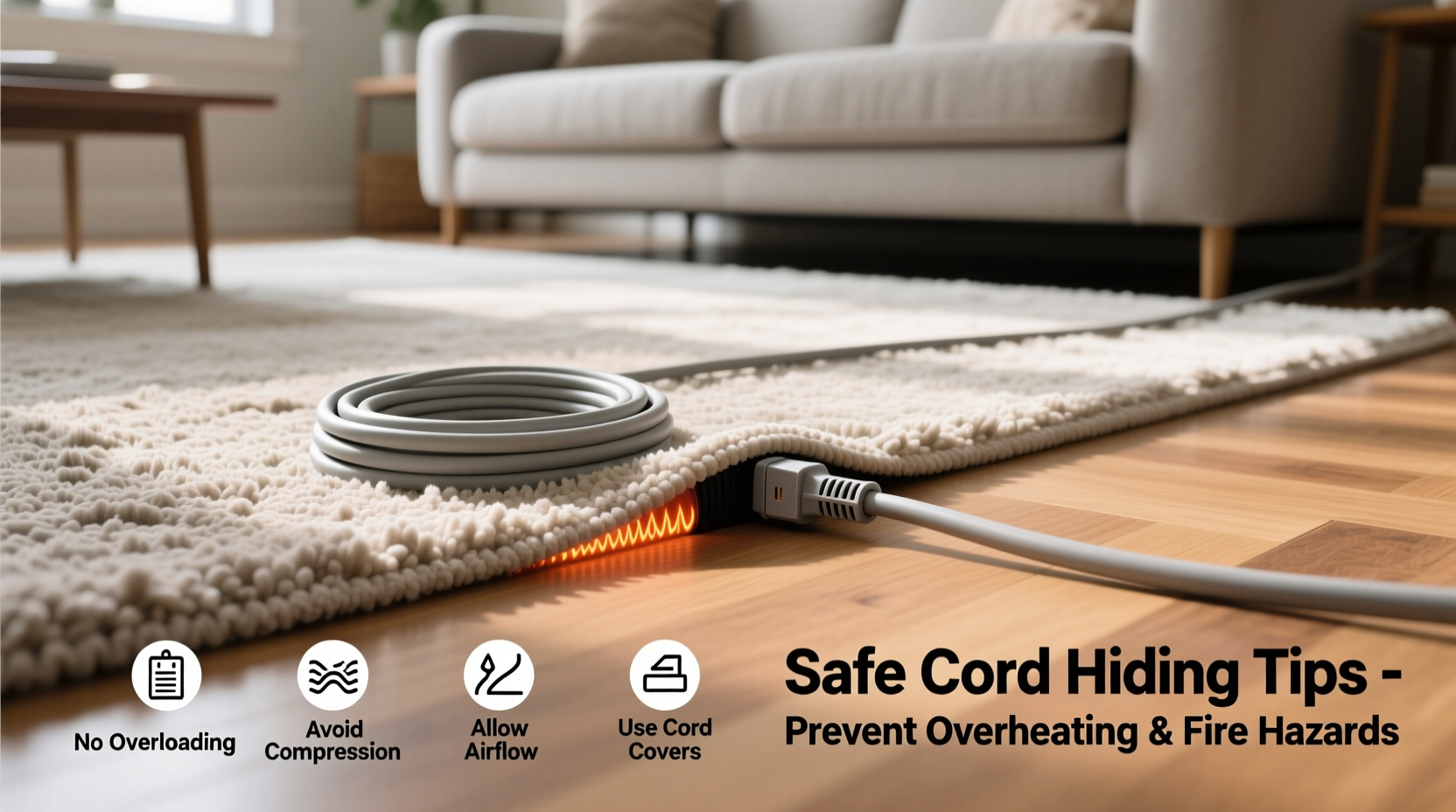
At first glance, tucking an extension cord under a rug seems like a simple fix. However, the U.S. Consumer Product Safety Commission (CPSC) warns against covering electrical cords with rugs, carpets, or any insulating material. The core issue lies in heat dissipation. When an extension cord carries electricity, it generates heat. Under normal conditions, this heat dissipates into the surrounding air. But when the cord is buried under thick fabric or padding, heat builds up faster than it can escape.
This trapped heat increases resistance in the wire, which in turn produces even more heat—a dangerous feedback loop. Over time, this can degrade insulation, melt plastic components, and potentially ignite nearby flammable materials like carpet fibers or wooden flooring.
Another overlooked risk is physical damage. Foot traffic over a rug-covered cord causes repeated compression and bending. This wears down the outer jacket and internal wires, increasing the likelihood of short circuits or exposed conductors.
“Never run extension cords under rugs or floor coverings. The lack of ventilation can cause overheating, which is one of the leading causes of electrical fires in homes.” — National Fire Protection Association (NFPA)
Safe alternatives to hiding cords under rugs
The safest approach is to avoid placing extension cords under rugs altogether. Instead, use purpose-built solutions designed to manage cords while maintaining visibility and airflow. These alternatives are not only safer but often more durable and aesthetically pleasing.
Cord covers and raceways
Rigid or flexible cord covers—also known as cable raceways—are plastic channels that mount to the floor or baseboard and enclose cords completely. They come in various colors and finishes to blend with your décor. Unlike rugs, they allow for easy inspection and prevent physical damage from foot traffic.
- Surface-mounted raceways attach with adhesive or screws
- Low-profile designs stay flush with the floor
- Available with hinged lids for quick access
Floor cord protectors
These rubber or polyurethane strips lay flat on the floor and snap over cords, creating a smooth walking surface. Commonly used in offices and event spaces, they’re ideal for temporary setups. Most are translucent or neutral-colored to remain discreet.
Route cords along walls or baseboards
Repositioning cords to travel vertically along baseboards eliminates the need to cross walkways. Use cord clips or adhesive ties every 12–18 inches to keep them secure and out of sight. Paint the clips to match the wall for a seamless look.
Step-by-step guide to managing cords near rugs safely
If you absolutely must route a cord across a space covered by an area rug, follow this procedure to minimize risks while maintaining functionality.
- Assess the load requirement: Determine the total wattage of all devices connected to the extension cord. High-draw appliances like space heaters, refrigerators, or microwaves should never be powered through cords under rugs—even temporarily.
- Select the right cord: Use a heavy-duty, grounded (three-prong) extension cord rated for the intended load. Look for labels like “12 AWG” or “14 AWG” and ensure it has a UL certification mark.
- Plan the shortest possible path: Minimize cord length to reduce resistance and heat buildup. Avoid coiling excess cord, as this traps heat.
- Lift the rug edge slightly: Instead of sliding the cord fully underneath, place it just beneath the fringe or edge so part remains exposed. This allows some airflow and makes the cord visible for inspection.
- Use a flat, low-profile cord: Flat cords generate less heat and compress more evenly than round ones. They also lie flatter under thin rugs.
- Limit usage duration: Treat this as a temporary setup. Never leave a cord under a rug permanently. Unplug and remove it after daily use.
- Inspect regularly: Check the cord daily for warmth, discoloration, or fraying. If the cord feels hot to the touch, disconnect immediately.
This method reduces—but does not eliminate—risk. It should only be used for low-power devices such as lamps, phone chargers, or small electronics, and never in homes with children or pets who might disturb the setup.
Do’s and Don’ts of extension cord use under rugs
| Do’s | Don’ts |
|---|---|
| Use UL-listed, heavy-gauge cords | Use lightweight, indoor-only cords |
| Keep cords uncovered or partially exposed | Bury cords completely under thick rugs |
| Check temperature before and after use | Leave cords unattended for hours |
| Use for temporary, low-wattage needs only | Power heating or cooling appliances |
| Secure cords with non-damaging clips | Staple, nail, or tape cords to floors |
Real-world example: A close call in a home office
Sarah, a freelance graphic designer in Portland, needed to power her desktop computer, monitor, and lamp in a corner of her living room far from outlets. With no desire to trip over cords, she placed a 15-foot extension cord under a plush 5x7 wool area rug. For weeks, everything seemed fine—until she noticed a faint burning smell one evening.
Upon lifting the rug, she found the cord’s insulation had softened and discolored near the midpoint. The section under the rug was significantly warmer than the rest. She unplugged everything immediately and replaced the cord. After consulting an electrician, she learned that her space heater—occasionally used nearby—had been plugged into the same circuit, pushing the cord beyond its capacity.
Sarah switched to a surface-mounted raceway painted to match her baseboard. Though less invisible than the rug method, it eliminated the hazard and gave her peace of mind. Her experience underscores how easily a minor convenience can escalate into danger without awareness.
Expert-recommended checklist for safe cord management
Before using any extension cord near flooring or rugs, go through this checklist to ensure safety and compliance.
- ✅ Confirm the cord is rated for the device’s wattage (check labels)
- ✅ Use only grounded, three-prong cords for appliances
- ✅ Avoid daisy-chaining multiple extension cords
- ✅ Keep cords away from moisture, heat sources, and sharp objects
- ✅ Ensure at least 6 inches of clearance around plug connections
- ✅ Never cover cords with rugs, furniture, or bedding
- ✅ Test GFCI outlets monthly if used in kitchens or bathrooms
- ✅ Replace frayed, cracked, or warm-to-the-touch cords immediately
When to consider permanent solutions
Reliance on extension cords often signals a deeper issue: insufficient electrical outlets. If you find yourself repeatedly routing cords across rooms, it may be time to invest in long-term upgrades.
Installing additional outlets is a job for a licensed electrician, but the benefits are significant. Not only does it eliminate cord clutter, but it also improves home safety and resale value. Options include:
- Adding recessed floor outlets in living rooms or home offices
- Installing outlet extenders or pop-up power hubs in islands or desks
- Using smart power strips with surge protection and auto-shutoff
In rental properties, talk to your landlord about adding outlets. Many are willing to make improvements that enhance safety and tenant satisfaction.
“The best extension cord is the one you don’t need. Plan your electrical layout ahead of time to reduce dependency on temporary fixes.” — Mark Reynolds, Master Electrician & NFPA Contributor
Frequently asked questions
Can I use a power strip under a rug if it’s only for charging phones?
No. Even low-power devices generate heat, and power strips concentrate multiple cords in one spot. This increases the risk of overheating and makes inspection difficult. Always keep power strips visible and well-ventilated.
Are there any rugs designed to accommodate cords safely?
Some modern area rugs feature built-in cord channels or slits for cable management. These are typically made with breathable materials and designed to keep cords partially exposed. However, they still require caution—never overload the cord, and avoid using them with high-wattage devices.
What should I do if my extension cord feels warm?
A warm cord is a warning sign. Immediately unplug all devices and inspect the cord for damage. If the warmth persists with minimal load, the cord is likely undersized or degraded. Replace it with a higher-gauge model. Also, check whether the outlet is loose or damaged, as poor connections can cause excessive heat.
Final thoughts: Prioritize safety over convenience
Hiding extension cords under area rugs may offer a quick visual fix, but the risks far outweigh the benefits. Electrical fires caused by overheated cords are preventable—and often stem from seemingly harmless habits. By choosing safer alternatives like cord covers, strategic routing, or permanent electrical upgrades, you protect your home, your family, and your peace of mind.
Take action today: inspect your current cord setups, replace outdated or damaged cables, and plan a safer layout. Small changes now can prevent emergencies later. Whether you're renting or owning, investing in proper cord management is an investment in long-term safety and functionality.




 浙公网安备
33010002000092号
浙公网安备
33010002000092号 浙B2-20120091-4
Comments
No comments yet. Why don't you start the discussion?