
During the holiday season, many pet owners enjoy incorporating their furry companions into festive traditions. One popular idea is hiding pet toys beneath the tree skirt as part of a pet-friendly gift surprise. However, this seemingly harmless gesture can backfire when dogs or cats respond with obsessive digging, leading to shredded fabric, scattered debris, and even anxiety around the tree. The challenge isn’t just about concealment—it’s about managing instinctual behaviors while preserving peace in the household.
Digging is deeply rooted in animal psychology. For dogs, it may stem from ancestral hunting or caching behaviors; for cats, it often relates to territory marking or prey simulation. When a toy is hidden under a tree skirt, the subtle crinkle of wrapping, scent trails, or movement cues can trigger an intense search response. Left unchecked, this can evolve into a compulsive habit that persists long after the holidays.
The solution lies not in suppression, but in strategic redirection. With thoughtful placement, environmental enrichment, and behavioral conditioning, you can safely hide toys under the tree skirt without setting off your pet’s instincts. This guide offers actionable strategies grounded in animal behavior science, real-world testing, and expert insights.
Understanding Why Pets Dig at Tree Skirts
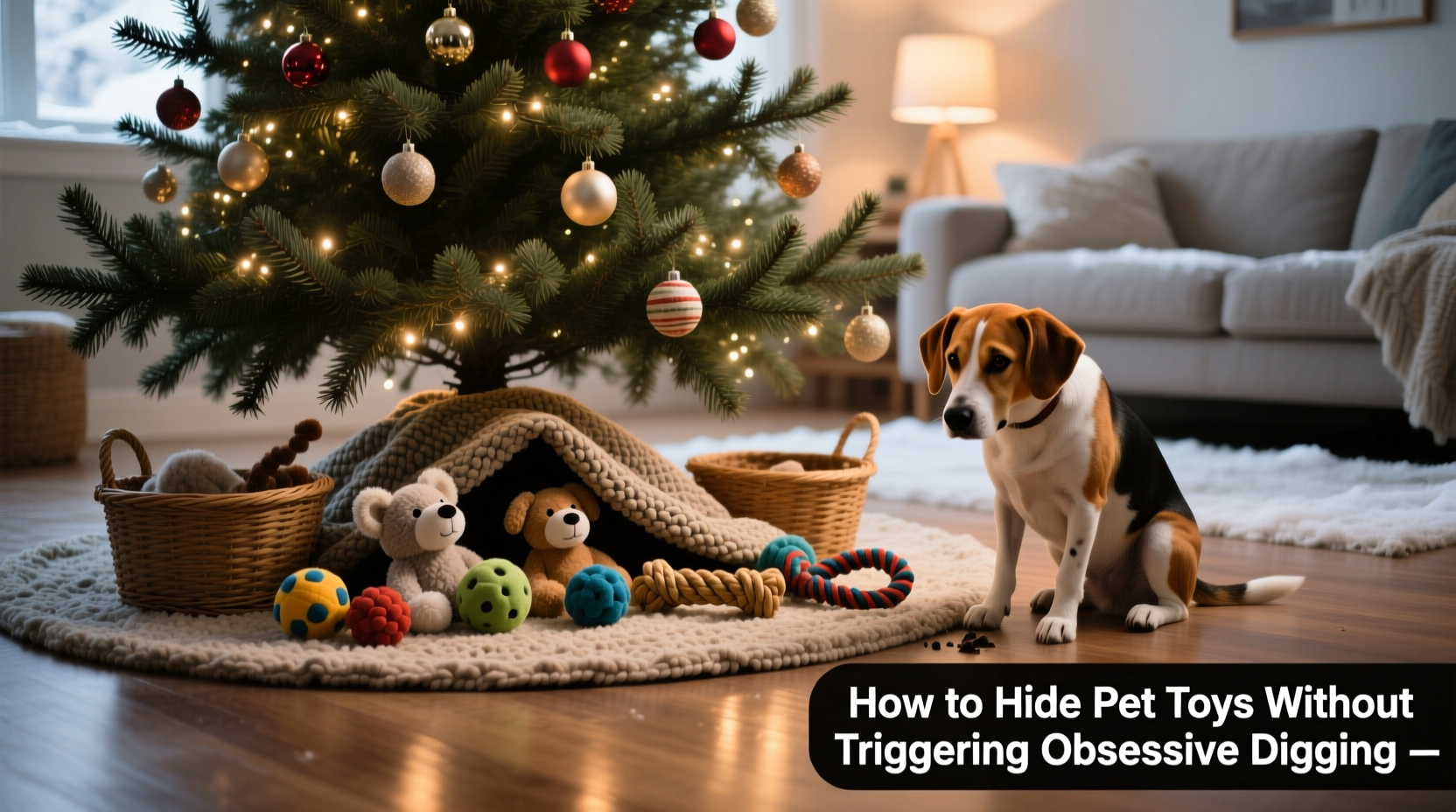
Pets don’t dig out of mischief—they respond to stimuli. When a toy is placed beneath a tree skirt, several factors can activate the digging impulse:
- Scent cues: Even sealed toys emit odors detectable to animals with superior olfactory systems.
- Auditory triggers: Rustling fabric or jingling tags create sound patterns associated with prey or novelty.
- Visual motion: Shifting shadows or slight movements under the skirt mimic hidden creatures.
- Past reinforcement: If digging once revealed a reward, the behavior becomes self-reinforcing.
Dr. Lena Torres, a certified veterinary behaviorist, explains:
“Animals learn through consequence. If a dog uncovers a toy by pawing at the tree skirt, that action is rewarded—and more likely to repeat. Prevention requires altering both access and expectation.” — Dr. Lena Torres, DVM, Behavioral Science Specialist
This means success depends less on physical barriers and more on shaping your pet’s perception of the tree area. The goal isn’t to outsmart your pet, but to design an environment where digging feels unnecessary—or unrewarding.
Step-by-Step Guide: Hiding Toys Safely Under the Tree Skirt
Follow this five-phase process to introduce hidden toys without encouraging destructive digging.
- Pre-condition the tree zone (Days 1–3): Allow your pet to explore the bare tree area freely. Use treats to create positive associations. Toss kibble or small rewards *near* the base—not under the skirt—to build comfort without reinforcing excavation.
- Introduce neutral objects (Days 4–6): Place non-toy items like fabric rolls or empty boxes under the skirt. Let your pet investigate. Reward calm behavior. This desensitizes them to “something being there” without linking it to play.
- Add scent-masking layers (Day 7): Layer clean towels or cotton batting over any hidden items. These absorb scent and reduce noise. Avoid plastic, which crinkles and attracts attention.
- Hide the toy strategically (Day 8): Choose one low-value toy—one your pet enjoys but won’t obsess over. Wrap it in soft cloth and place it near the outer edge of the skirt, not directly under the tree trunk. Offset placement reduces focus on high-traffic zones.
- Monitor and redirect (Ongoing): Observe your pet’s first interactions. If they begin to dig, calmly interrupt with a command like “leave it,” then redirect to a designated digging zone (e.g., a sandbox with buried treats).
Consistency in redirection strengthens alternative behaviors. Over time, the tree skirt becomes a neutral space rather than a treasure map.
Smart Placement and Containment Tactics
Physical setup plays a crucial role. Consider these structural adjustments to minimize temptation:
- Use weighted skirts: Opt for heavy-duty felt or quilted tree skirts with sewn-in weights or a hemmed pocket for sandbags. This stabilizes the fabric and makes lifting difficult.
- Create false compartments: Sew small internal pockets into the skirt lining and place non-toy items inside. This satisfies investigative urges without exposing real prizes.
- Elevate the tree stand: Place the tree on a low platform (2–3 inches high). This creates a visual gap that discourages pawing, as animals are less likely to dig beneath visible spaces.
- Double-layer the base: Position a second decorative runner or rug underneath the skirt. This adds thickness and muffles sound from hidden objects.
For multi-pet households, spatial distribution matters. If one pet is prone to digging, position the toy opposite their usual lounging spot. Leverage natural traffic patterns to reduce exposure.
Do’s and Don’ts: Toy Hiding Best Practices
| Do | Don’t |
|---|---|
| Use low-scent toys or wash new ones before hiding | Hide strongly scented plush toys or treat-dispensers |
| Pair hidden toys with scheduled “discovery times” | Leave toys hidden indefinitely |
| Choose quiet materials (cotton, fleece) over crinkly wraps | Use cellophane, tinsel, or noisy ribbons near hidden items |
| Supervise initial interactions closely | Allow unsupervised access during early stages |
| Reinforce alternative play zones with daily use | Rely solely on punishment to stop digging |
Adhering to these guidelines helps maintain balance between celebration and behavioral stability. Remember: the objective isn’t to deceive your pet, but to coexist harmoniously during a stimulating season.
Mini Case Study: Managing Max the Border Collie
Max, a 3-year-old Border Collie in Portland, OR, developed an intense digging habit after discovering a squeaky toy under the Christmas tree in 2022. His owner, Sarah, reported that he would spend hours scraping at the skirt, even when no toys were present. By January, the behavior had generalized to other rugs and furniture edges.
Working with a local trainer, Sarah implemented a structured reconditioning plan:
- She replaced the lightweight polyester skirt with a 12-pound weighted felt version.
- Introduced a “dig box” in the living room filled with sand and rotating toys.
- Used the step-by-step hiding method over two weeks, starting with empty concealments.
- In 2023, she successfully hid three toys under the skirt—Max showed interest but redirected to his dig box when prompted.
“The key was giving him a better option,” Sarah said. “Once he realized the digging box had consistent rewards and the tree didn’t, he lost interest.”
By December 2024, Max only glanced at the tree base and settled nearby without pawing. The intervention prevented a compulsive habit from taking root.
Checklist: Holiday Toy Hiding Preparation
Use this checklist in the week before introducing hidden toys:
- □ Assess your pet’s history with digging or resource guarding
- □ Select a heavy, non-crinkly tree skirt with secure edges
- □ Prepare a distraction zone (dig box, puzzle feeder, or chew station)
- □ Choose one low-value toy for initial hiding attempts
- □ Wash and de-scent the toy to reduce odor appeal
- □ Practice “leave it” and “go to mat” commands daily
- □ Schedule supervised introduction windows (15–20 mins, 2x/day)
- □ Plan rotation: swap hidden items every two days
Completing this checklist ensures you’re addressing both environmental and behavioral components. Prevention is far more effective than correction once habits form.
Frequently Asked Questions
Can I use deterrent sprays around the tree skirt?
While bitter sprays may discourage some pets, they’re inconsistent and can stress animals with sensitive noses. Instead, focus on positive redirection. A well-trained alternative behavior is more reliable and humane than aversion.
What if my cat starts scratching at the skirt?
Cats often target tree skirts due to texture or movement. Trim excess fabric to eliminate loose edges that invite clawing. Provide a nearby scratching post and use catnip or silver vine to draw attention away. Vertical space (like a cat tree) near the holiday tree can also reduce floor-level curiosity.
How long should I keep toys hidden under the skirt?
Limited duration is key. Hide toys for no more than 48 hours at a time. Prolonged exposure increases fixation risk. Treat it like a scheduled event—“Toy Reveal Time”—rather than a constant feature.
Expert Insight: Redirecting Natural Instincts
Dr. Alan Prescott, an animal cognition researcher at the Midwest Companion Animal Institute, emphasizes proactive engagement:
“The problem isn’t the digging—it’s the lack of appropriate outlets. When we suppress natural behaviors without replacement, we see displacement activities like over-grooming or pacing. The healthiest homes provide structure *for* instincts, not against them.” — Dr. Alan Prescott, PhD, Animal Behavior Researcher
This philosophy supports creating designated zones where digging, foraging, and searching are not only allowed but encouraged. When pets have clear boundaries and satisfying alternatives, they’re less likely to test limits elsewhere.
Conclusion: Celebrate Thoughtfully, Not Just Festively
Hiding pet toys under a tree skirt can be a joyful tradition—if approached with behavioral awareness. Success doesn’t come from perfect concealment, but from thoughtful integration of your pet’s needs into holiday planning. By using scent control, strategic placement, and consistent training, you can create moments of surprise without sacrificing peace.
Remember, the holidays are temporary, but habits formed during them can last much longer. A few weeks of mindful preparation today can prevent months of unwanted behavior tomorrow. Your pet doesn’t need to understand the concept of Christmas to benefit from your patience and planning.




 浙公网安备
33010002000092号
浙公网安备
33010002000092号 浙B2-20120091-4
Comments
No comments yet. Why don't you start the discussion?