
Service dogs play a vital role in the lives of individuals with disabilities, providing independence, safety, and emotional support. However, as public access rights for service animals have expanded under laws like the Americans with Disabilities Act (ADA), so too has the misuse of these privileges. A growing number of people are misrepresenting pets as service dogs—often using fake IDs, vests, or online certifications—to gain entry into restaurants, hotels, and airplanes. This not only undermines the integrity of legitimate service dog teams but also puts public health and safety at risk.
Understanding how to spot a fake service dog ID and knowing what legal rights businesses and individuals have is essential for maintaining fairness, accessibility, and accountability. This guide breaks down the red flags, verification methods, and best practices for identifying fraudulent claims while respecting the rights of those who genuinely rely on service animals.
Understanding Service Dogs vs. Emotional Support Animals
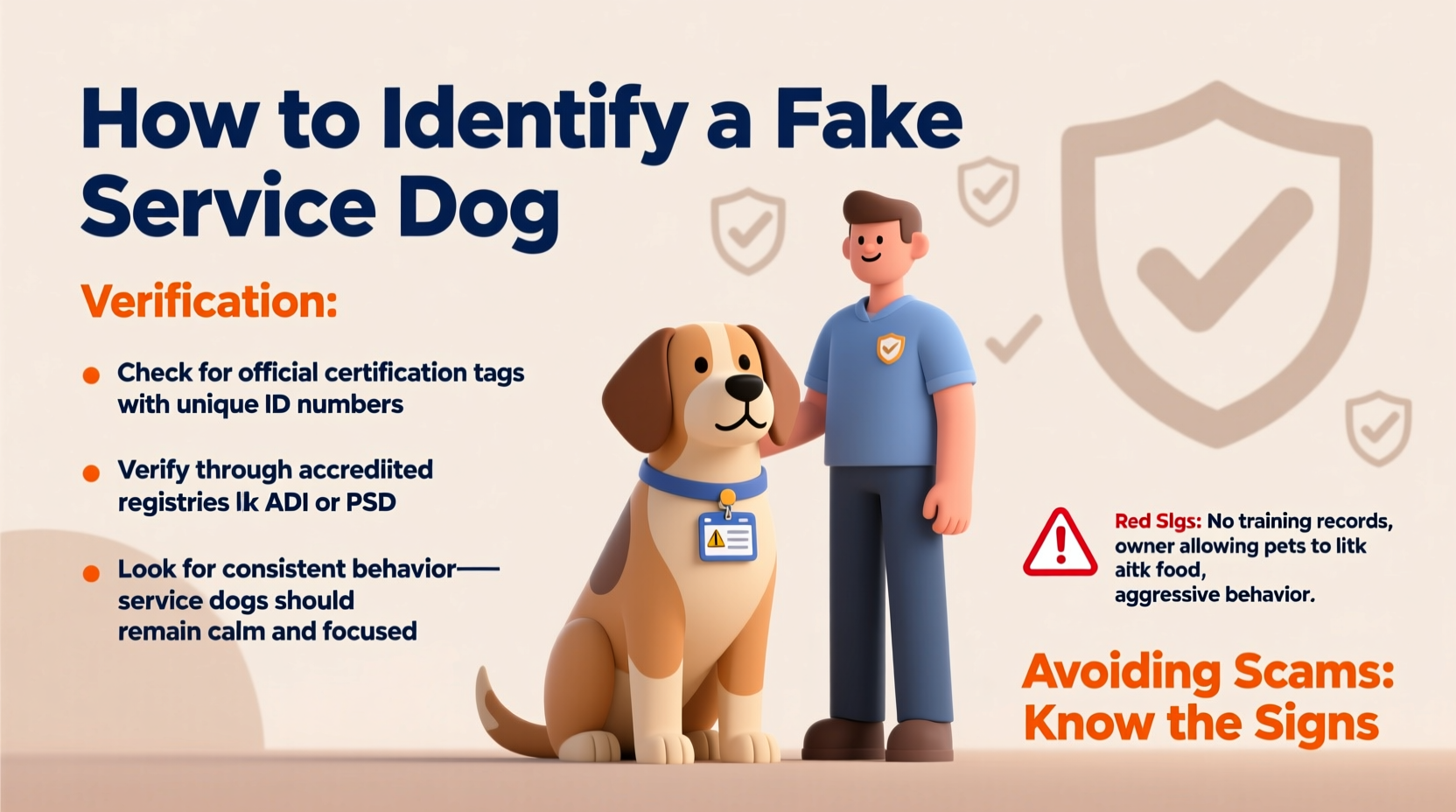
A critical first step in identifying a fake service dog is understanding the difference between a true service animal and other types of assistance animals. Under the ADA, a service dog is individually trained to perform specific tasks for a person with a disability. These tasks can include guiding someone who is blind, alerting a person with diabetes to blood sugar changes, or interrupting harmful behaviors in someone with PTSD.
In contrast, emotional support animals (ESAs) provide comfort simply by being present but are not trained to perform tasks. While ESAs may be protected under housing laws like the Fair Housing Act, they do **not** have the same public access rights as service dogs. Despite this, many scam artists falsely claim their pet is a service dog when it’s actually an ESA—or just a regular pet.
Common Scams and How They Work
Fraudulent service dog claims often involve purchasing counterfeit IDs, vests, or \"certification\" kits from online retailers. Websites sell laminated cards, badges, and even doctor letters claiming the pet qualifies as a service animal—none of which hold legal weight under the ADA.
These scams thrive because many business owners and employees are unaware of their rights. Fearful of violating discrimination laws, some allow any dog inside, even if it’s barking, untrained, or off-leash. Scammers exploit this uncertainty.
“Fake service dog schemes are not victimless. They erode trust in real handlers and make it harder for disabled individuals to access spaces they’re legally entitled to.” — Dr. Rebecca Green, Canine Behavior Researcher and ADA Consultant
Red Flags of a Fake Service Dog
- Lack of focus: The dog is distracted, sniffing tables, jumping on people, or pulling its handler.
- No task performance: The dog doesn’t appear to be assisting with a disability-related need.
- Poor behavior: Barking, whining, growling, or relieving itself indoors.
- Sale of “certifications”: The handler mentions buying an ID or registration online.
- Vague answers: When asked about the dog’s training, the handler gives evasive or inconsistent responses.
What Businesses Can Legally Ask
Under the ADA, staff at businesses such as restaurants, stores, and hotels are allowed to ask **only two questions** when a service dog’s legitimacy is in doubt:
- “Is the dog a service animal required because of a disability?”
- “What work or task has the dog been trained to perform?”
They cannot request documentation, demand a demonstration, or inquire about the nature of the person’s disability. Importantly, they also cannot deny access based solely on suspicion—unless the dog is out of control or poses a direct threat.
| Permitted Questions | Prohibited Actions |
|---|---|
| Ask if the dog is a service animal | Require proof of certification |
| Ask what task the dog performs | Request medical documentation |
| Observe the dog’s behavior | Charge a pet fee |
| Exclude a disruptive dog | Deny access without cause |
Step-by-Step Guide to Verifying a Service Dog
If you're a business owner, property manager, or concerned citizen trying to assess whether a service dog is legitimate, follow this process:
- Observe the dog’s behavior. Is it calm, focused on its handler, and well-groomed? Untrained dogs often appear anxious or overly excited.
- Note the environment. Does the dog remain quiet and under control? Frequent barking or sniffing food counters suggests lack of training.
- Listen to the handler’s explanation. Are they able to clearly describe a specific task the dog performs? Vague answers like “it helps with anxiety” without a concrete task (e.g., deep pressure therapy, panic attack interruption) may indicate a pet.
- Ask one of the two permitted questions if necessary. Focus on the task, not the paperwork.
- Make a judgment based on behavior, not appearance. A dog without a vest can still be a real service animal. Conversely, a dog in full gear may be a fraud.
Mini Case Study: The Airline Incident
In 2022, a major U.S. airline denied boarding to a passenger traveling with a large pit bull-style dog labeled as a psychiatric service animal. The dog had all the accessories—a vest, ID tag, and a printed letter—but began growling at nearby passengers during pre-flight screening. When asked what task the dog performed, the handler said, “It makes me feel safe,” but couldn't describe any trained behavior.
The airline crew followed protocol: they did not demand documents but noted the dog’s aggressive behavior and lack of task-specific training. After consultation with their accessibility team, they denied transport—not because the dog was a pit bull, but because it posed a direct threat and failed to meet service animal criteria under Department of Transportation rules.
This case highlights how proper observation and adherence to legal guidelines prevent abuse while protecting genuine service teams.
Checklist: How to Respond to a Suspicious Service Dog
- ✅ Stay calm and professional
- ✅ Observe the dog’s behavior and control
- ✅ Ask only the two permitted ADA questions
- ✅ Do not request ID, certification, or medical records
- ✅ Allow access unless the dog is disruptive or dangerous
- ✅ Document incidents involving uncontrolled animals for liability purposes
- ✅ Train staff on ADA service animal policies annually
Frequently Asked Questions
Can a landlord require a service dog ID?
No. Landlords cannot require certification or identification for a service dog. However, they may request a reasonable accommodation letter from a healthcare provider if the disability and need for the animal are not obvious.
Are service dog registries legitimate?
No official registry exists under U.S. federal law. Any website offering “registration” or “certification” for service dogs is selling a novelty item with no legal standing. Real service dogs don’t need to be registered to be protected under the ADA.
What should I do if I suspect a fake service dog in a public place?
If you’re a business owner, politely ask the two allowable questions. If the dog is misbehaving, you may exclude it for being out of control. If you’re a member of the public, you generally have no authority to challenge the person—but you can report repeated violations to management or local authorities if public safety is compromised.
Conclusion: Protecting Access and Integrity
The rise of fake service dog claims threatens both public trust and the rights of people with disabilities. By learning to recognize the signs of fraud, understanding legal boundaries, and responding appropriately, we can uphold fairness and inclusion. Real service dogs are highly trained professionals; they deserve respect, space, and unimpeded access. At the same time, institutions and individuals must feel empowered to enforce rules when those privileges are abused.




 浙公网安备
33010002000092号
浙公网安备
33010002000092号 浙B2-20120091-4
Comments
No comments yet. Why don't you start the discussion?