
Understanding your body isn’t just about aesthetics—it’s about working *with* your biology, not against it. The way your body stores fat, builds muscle, and responds to diet and exercise is deeply influenced by your natural build. This guide breaks down the three primary body types—ectomorph, mesomorph, and endomorph—and shows you how to identify yours, interpret your unique metabolic tendencies, and design a fitness and nutrition plan that delivers real, sustainable results.
The Science Behind Body Types: Somatotypes Explained
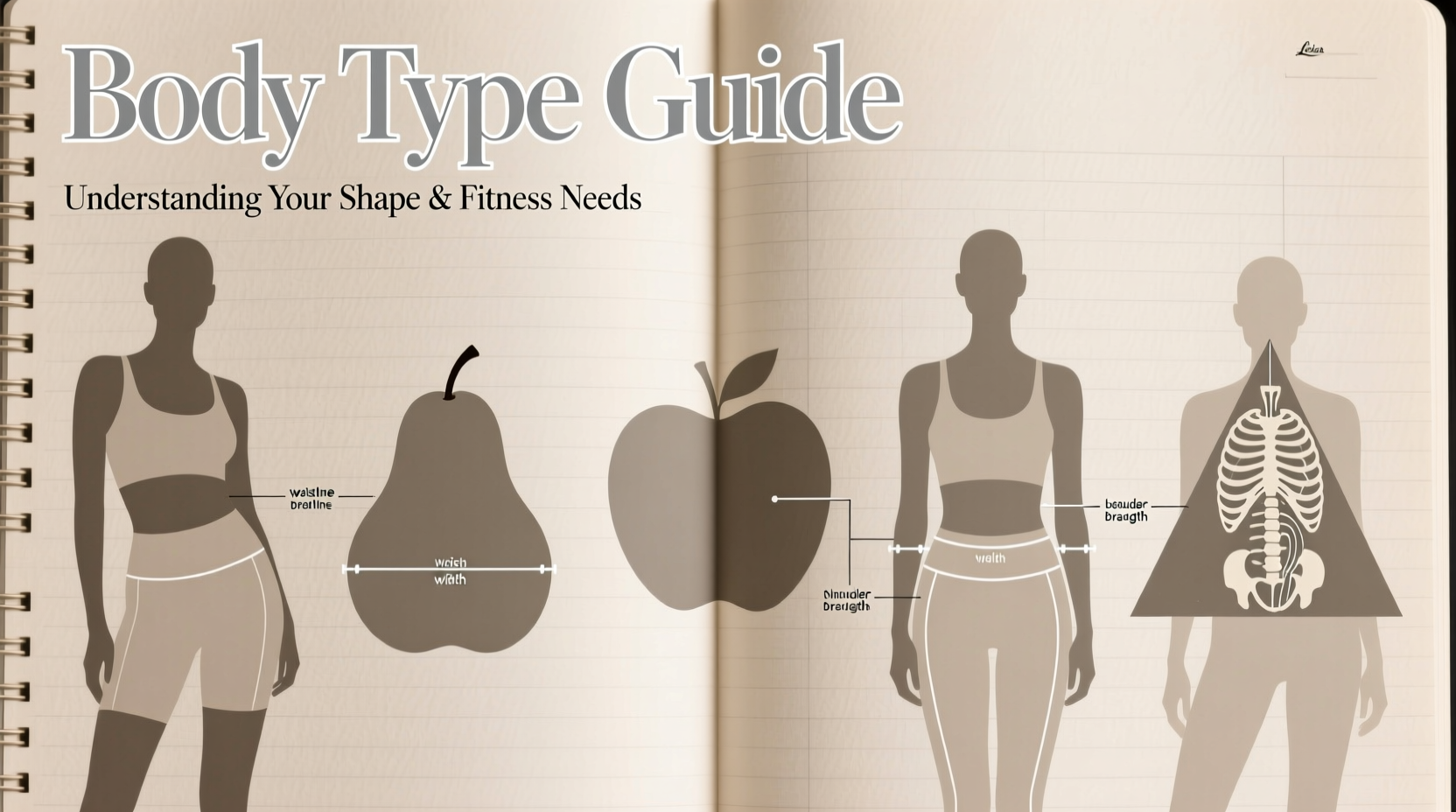
In the 1940s, psychologist William H. Sheldon introduced the concept of somatotypes—a classification system based on physical and physiological traits. While modern science acknowledges that genetics, lifestyle, and environment play complex roles, the somatotype model remains a useful starting point for personalizing fitness strategies.
The three main categories are:
- Ectomorph: Naturally lean, with a fast metabolism and difficulty gaining weight or muscle.
- Mesomorph: Naturally muscular, athletic build with balanced proportions and efficient muscle gain.
- Endomorph: Softer, rounder physique with a slower metabolism and tendency to store fat more easily.
Most people are a blend of two or even all three types, but one usually dominates. Identifying your dominant type helps clarify why certain diets or workout routines succeed—or fail—for you.
How to Identify Your Body Type: A Step-by-Step Guide
Follow these steps to assess your somatotype accurately. Use a mirror, take measurements if possible, and reflect honestly on your lifelong patterns—not just your current state.
- Assess Your Frame and Bone Structure
Look at your wrists, shoulders, and hips. Are your bones visibly prominent? Do clothes hang loosely even when you’re not underweight? If so, you may lean toward ectomorphic. - Observe Muscle Development
Do you build muscle easily with minimal effort? Are your shoulders broad and waist narrow without strict dieting? These are hallmarks of a mesomorphic tendency. - Track Fat Distribution Patterns
Where does your body store fat? Endomorphs often carry weight around the hips, thighs, and lower abdomen. Ectomorphs rarely gain fat, while mesomorphs tend to stay lean unless in a prolonged calorie surplus. - Reflect on Metabolic Response
Can you eat large amounts without gaining weight? Or do you gain fat quickly even on moderate calories? Fast metabolisms suggest ectomorphy; slower, more efficient energy use points to endomorphy. - Consider Training Adaptations
Do you respond well to strength training? Do you recover quickly? Mesomorphs thrive here. Ectomorphs may struggle to gain mass despite effort, while endomorphs see strength gains but need extra focus on fat loss.
Body Type Identification Checklist
- ✔️ I have a small joint structure and narrow shoulders — Ectomorph sign
- ✔️ I gain muscle easily with consistent training — Mesomorph sign
- ✔️ I tend to gain fat around my midsection and hips — Endomorph sign
- ✔️ I can eat a lot without gaining weight — Ectomorph trait
- ✔️ My recovery between workouts is fast — Mesomorph advantage
- ✔️ I need strict diet control to manage body fat — Endomorph reality
Fitness and Nutrition Strategies by Body Type
Once you’ve identified your dominant type, tailor your approach. Generic plans often fail because they ignore biological predispositions. Here’s how to align your routine with your physiology.
| Body Type | Fitness Approach | Nutrition Strategy | Common Pitfalls |
|---|---|---|---|
| Ectomorph | Focus on compound lifts (e.g., squats, deadlifts). Limit cardio. Prioritize recovery. | High-calorie, nutrient-dense meals. Emphasize protein and healthy fats. Eat frequently. | Overtraining, undereating, excessive cardio |
| Mesomorph | Versatile—responds well to strength, hypertrophy, and interval training. | Balanced macros. Moderate surplus for muscle gain; slight deficit for fat loss. | Complacency due to “easy” results; inconsistent long-term habits |
| Endomorph | Strength training + regular cardio (HIIT and steady-state). Focus on consistency. | Controlled calorie intake. Higher protein, moderate carbs, lower simple sugars. | Over-restriction leading to burnout; neglecting resistance training |
“Knowing your body type doesn’t limit you—it liberates you. It allows you to train smarter, eat better, and avoid wasting months on methods mismatched to your biology.” — Dr. Lena Torres, Exercise Physiologist & Human Performance Researcher
Real Example: From Frustration to Progress
James, 29, had been lifting weights for over a year but saw no muscle growth. He followed popular fitness influencers who promoted high-volume training and low-carb diets. Despite eating clean and training six days a week, he remained lean to the point of looking underdeveloped.
After assessing his frame—narrow shoulders, thin wrists, fast metabolism—he realized he was a classic ectomorph. He adjusted his routine: reduced training frequency to four days, eliminated long cardio sessions, and increased daily calories by 800, focusing on oats, nuts, chicken, and whole milk.
Within 12 weeks, he gained 5 pounds of lean mass. His transformation wasn’t due to a new supplement or secret workout—it was alignment with his body type.
Common Misconceptions About Body Types
Some dismiss somatotypes as outdated or overly simplistic. While no system captures every genetic nuance, dismissing body types entirely leads people to blame themselves for lack of progress when the real issue is misalignment.
One common myth is that body types are fixed. In reality, while your baseline structure doesn’t change, lifestyle can shift your expression significantly. An endomorph can achieve a lean, strong physique—but likely needs stricter consistency than a mesomorph to maintain it.
Another fallacy: “Everyone can look like a fitness model.” Not true. Genetics determine your muscle insertion points, limb length, fat distribution, and metabolic efficiency. Goals should be personalized, not copied from someone with a different frame.
Frequently Asked Questions
Can you be more than one body type?
Yes. Most people are hybrids. For example, an “ecto-endomorph” might have a light frame but slow metabolism and fat storage tendencies. In such cases, prioritize the most limiting factor—usually metabolism and fat response—when designing your plan.
Does age change your body type?
Your fundamental structure stays the same, but hormonal shifts with age—especially declining testosterone and growth hormone—can make mesomorphs more endomorphic over time. Adjust training intensity and nutrition accordingly, with greater emphasis on protein and resistance work to preserve muscle.
Can body type affect injury risk?
Indirectly, yes. Ectomorphs with longer limbs may experience different biomechanical stresses during lifts. Endomorphs may face higher joint load. Understanding your build helps you modify exercises—like using a wider stance in squats or adjusting grip width—to improve safety and effectiveness.
Take Action: Build Your Personalized Plan
Now that you understand your body type, it’s time to act. Start by writing down your key traits: frame size, fat storage areas, metabolic rate, and training response. Then, match them to the appropriate strategy.
If you're an ectomorph, commit to eating more and training less frequently but with higher intensity. Mesomorphs should leverage their adaptability but avoid coasting—consistency still matters. Endomorphs must prioritize discipline in both diet and training, especially incorporating strength work to boost metabolism.
Remember, this isn’t about labeling yourself—it’s about empowering yourself. The goal isn’t to change your body type, but to work with it. When your plan respects your biology, progress becomes not just possible, but sustainable.




 浙公网安备
33010002000092号
浙公网安备
33010002000092号 浙B2-20120091-4
Comments
No comments yet. Why don't you start the discussion?