
Bringing a new kitten into a home with a senior cat can be both exciting and nerve-wracking. While kittens are often playful and energetic, older cats may be set in their routines, less tolerant of disruption, and more sensitive to environmental changes. A poorly managed introduction can lead to fear, territorial aggression, or long-term hostility between pets. However, with patience, structure, and an understanding of feline behavior, it’s entirely possible to foster a peaceful coexistence—sometimes even companionship—between your aging feline and the newcomer.
Cats are territorial animals by nature. Unlike dogs, they don’t automatically accept new members into their social circle. Sudden introductions can trigger defensive behaviors such as hissing, swatting, or even full-blown fights. The key is to mimic natural feline socialization processes: slow, scent-based, and controlled exposure. This approach respects the senior cat’s emotional needs while giving the kitten space to adapt without overwhelming the household hierarchy.
Understanding Feline Territorial Behavior
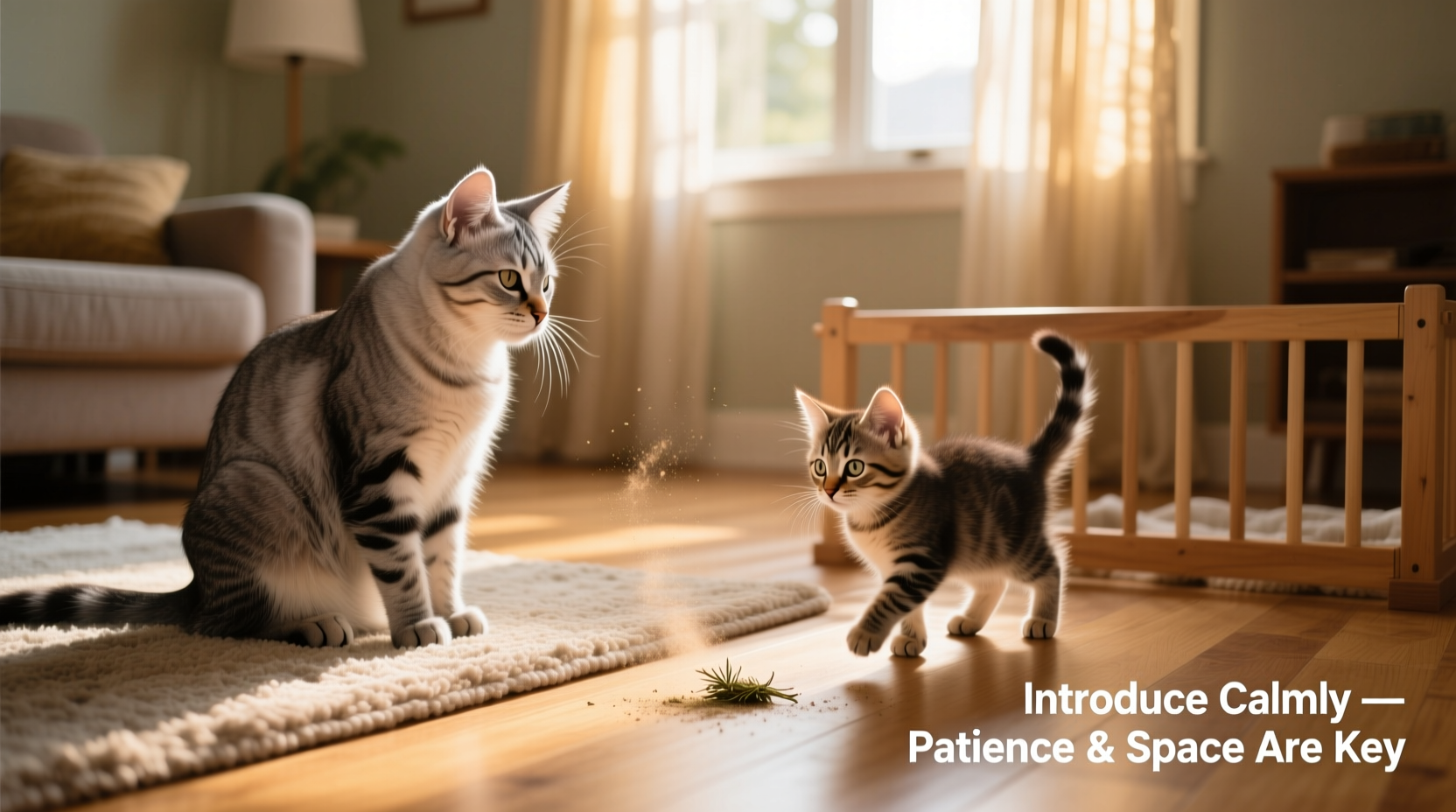
Cats mark their environment through scent glands located on their cheeks, paws, and flanks. These subtle chemical signals help them feel secure. When a new animal enters the space, especially one with unfamiliar scents and energy, it disrupts this established order. Senior cats, who may already experience reduced mobility or sensory decline, are particularly vulnerable to stress during such transitions.
Stress in cats manifests in various ways: hiding, over-grooming, inappropriate elimination, loss of appetite, or vocalization. Aggression toward a new kitten is often not about hatred but self-preservation—an attempt to reassert control over territory. Recognizing these signs early allows for timely intervention before conflicts escalate.
Dr. Sarah Ellis, a feline behavior expert at the University of Lincoln, emphasizes that “Cats do not generalize well across social experiences. Just because a cat has lived peacefully with another cat before doesn’t mean they’ll automatically accept a new one.” This underscores the importance of treating each introduction as a unique process requiring individualized attention.
“Cats need time and predictability. Rushing introductions is the most common mistake owners make when integrating new pets.” — Dr. Karen Overall, Veterinary Behavioral Medicine Specialist
Step-by-Step Introduction Timeline
A successful integration typically takes **two to four weeks**, though some cases may require longer depending on the cats’ temperaments. Follow this phased timeline to minimize tension:
- Preparation Phase (Days 1–3): Set up a separate room for the kitten with food, water, litter box, toys, and bedding. This becomes their safe zone. Do not allow direct contact yet.
- Scent Exchange (Days 4–7): Swap bedding or use a soft cloth to gently wipe each cat’s cheek area, then place the cloth near the other’s resting spot. This transfers familiar scents gradually.
- Controlled Visual Exposure (Days 8–10): Use a baby gate or cracked door so cats can see each other without physical contact. Monitor body language closely—look for relaxed postures versus flattened ears or tail flicking.
- Supervised Interactions (Days 11–18): Allow short, leashed or confined meetings under close supervision. End sessions before any signs of tension arise.
- Gradual Freedom (Days 19+): If interactions remain calm, allow brief unsupervised access while keeping resources abundant and escape routes available.
Essential Preparation Checklist
Before the kitten arrives, ensure your home is ready to support a smooth transition. Use this checklist to prepare:
- Designate a quiet, isolated room for the kitten’s initial stay
- Provide separate litter boxes (one per cat plus an extra)
- Stock multiple feeding stations in different areas
- Install vertical spaces like cat trees or shelves for retreat options
- Acquire pheromone diffusers (e.g., Feliway) to reduce ambient stress
- Collect items with the senior cat’s scent (blankets, toys) for exchange
- Schedule a veterinary check for the kitten prior to introduction
- Plan for continued one-on-one attention with the senior cat
Do’s and Don’ts During Introduction
| Do’s | Don’ts |
|---|---|
| Maintain consistent routines for feeding, play, and sleep | Force interaction or hold cats together |
| Use treats and praise to reward calm behavior | Punish growling or hissing—it suppresses communication |
| Allow the senior cat to observe from elevated vantage points | Let the kitten chase or pounce on the older cat |
| Monitor all interactions closely for early warning signs | Leave them alone together until fully acclimated |
| Continue bonding activities with the senior cat daily | Neglect the senior cat’s emotional needs for the kitten’s sake |
Real-Life Example: Bella and Milo’s Integration
When 14-year-old Bella met 10-week-old Milo, her owner, Lisa, followed a structured plan. For the first week, Milo stayed in a spare bedroom. Lisa swapped blankets daily and played calming music near Bella’s usual napping area. By day six, Bella began sniffing the blanket curiously instead of batting it away.
On day nine, Lisa used a baby gate between the hallway and living room. Bella watched Milo from the couch while receiving tuna treats. Over the next ten days, supervised floor time increased from five to twenty minutes. Lisa noticed Bella would groom herself after encounters—a sign of displacement behavior indicating mild stress—but never showed aggression.
After three weeks, Milo learned not to chase Bella, and she started tolerating his proximity during meals. Within two months, they were sharing sunlit spots on the carpet, though never touching. Lisa credits success to patience and refusing to rush milestones. “I thought it might take a week,” she said. “It took six. But now our house feels whole again.”
Recognizing and Responding to Warning Signs
Even with careful planning, minor conflicts may occur. It’s crucial to distinguish between normal defensive posturing and escalating aggression. Common warning signs include:
- Prolonged hissing or growling beyond initial meetings
- Swatting that draws blood or causes injury
- Avoidance lasting more than 48 hours after exposure
- Urinating outside the litter box, especially near shared spaces
- Dilated pupils, piloerection (fur standing up), or crouched posture
If severe aggression occurs, revert to earlier stages. Separate the cats completely for a few days, restart scent exchanges, and proceed more slowly. In persistent cases, consult a certified cat behaviorist or veterinarian. Underlying medical issues—such as arthritis in senior cats—can heighten irritability and must be ruled out.
Frequently Asked Questions
How long does it usually take for a senior cat to accept a kitten?
Acceptance varies widely. Some cats adjust within two weeks; others take several months. The critical factor isn’t speed but consistency in following gradual steps. Full friendship isn’t guaranteed, but peaceful cohabitation is achievable in most households.
Should I adopt a kitten if my senior cat lives alone?
Only if you’re prepared for a slow integration and committed to meeting both cats’ needs. Never assume companionship will solve loneliness—some senior cats prefer solitude. Consider adopting another adult cat instead, as their energy levels may align better.
What if my senior cat hisses every time they meet?
Hissing during early phases is normal and part of communication. However, if it continues past the second week of visual exposure or escalates to attacks, pause direct contact and reinforce scent-swapping and positive reinforcement techniques. Consult a professional if progress stalls.
Final Thoughts and Call to Action
Introducing a new kitten to a senior cat is less about forcing friendship and more about managing change with empathy. Success lies not in immediate affection but in sustained peace. By honoring your senior cat’s boundaries, providing environmental enrichment, and moving at a pace dictated by the cats—not your expectations—you create the conditions for harmony.
Every cat deserves to feel safe in their home. With thoughtful preparation and unwavering patience, you can welcome a new life into your family without compromising the comfort of the one who’s been there longest.




 浙公网安备
33010002000092号
浙公网安备
33010002000092号 浙B2-20120091-4
Comments
No comments yet. Why don't you start the discussion?