
Bringing a second cat into your home can enrich your household with companionship, play, and warmth. But without careful planning, the introduction can quickly spiral into tension, territorial disputes, or even ongoing aggression. Cats are creatures of habit, deeply attuned to their environment and social hierarchy. A sudden change—especially the arrival of another feline—can trigger fear, anxiety, and defensive behaviors.
The key to a peaceful coexistence isn’t luck; it’s strategy. With patience, observation, and a step-by-step approach rooted in feline psychology, you can foster a harmonious relationship between your cats. This guide walks you through the science-backed process of introducing a second cat, minimizing conflict, and building trust—one sniff at a time.
Understanding Feline Social Dynamics
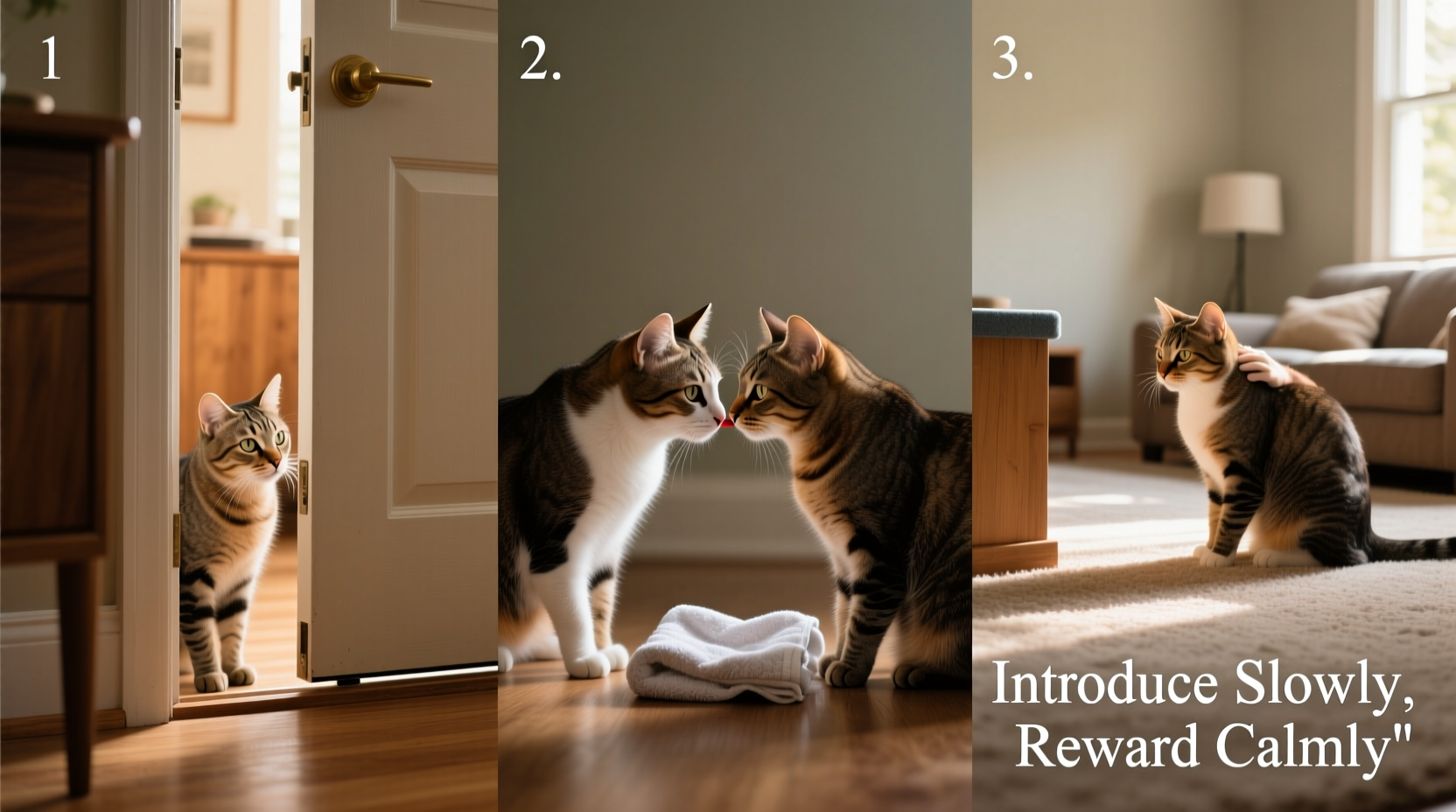
Cats are often misunderstood as solitary animals, but they are capable of forming complex social bonds. In the wild, related females may live in loose colonies, sharing territory and even raising kittens together. However, these relationships develop gradually and are based on familiarity, scent, and mutual tolerance.
When a new cat enters a resident cat’s space, it’s perceived not just as an intruder but as a potential threat to resources: food, litter boxes, sleeping spots, and human attention. Even if both cats are friendly by nature, the sudden disruption of routine can lead to stress-induced aggression.
Dr. Sarah Jameson, a certified feline behavior consultant, explains:
“Cats don’t communicate through words—they rely on scent, body language, and subtle cues. When we rush introductions, we bypass their natural communication system, which leads to confusion and conflict.” — Dr. Sarah Jameson, Feline Behavior Specialist
This is why successful integration isn’t about forcing interaction—it’s about creating safety, predictability, and positive associations over time.
A Step-by-Step Introduction Timeline
Rushing the process is the most common mistake. A proper introduction should take anywhere from two weeks to several months, depending on the cats’ temperaments. Follow this phased timeline to ensure gradual, low-stress exposure.
- Preparation (Days 1–3): Set up a separate room for the new cat with its own litter box, food, water, bed, toys, and scratching post. This becomes their safe zone.
- Scent Swapping (Days 4–7): Exchange bedding or towels between cats daily. Rub a soft cloth on one cat’s cheeks (where scent glands are) and place it near the other’s resting area.
- Controlled Visual Contact (Days 8–14): Use a baby gate or cracked door so cats can see each other without physical contact. Feed them on opposite sides to create positive mealtime associations.
- Supervised Interactions (Weeks 3–6): Allow short, monitored meetings in neutral territory. End sessions before tension arises—ideally while both cats are calm.
- Gradual Freedom (Week 7+): If interactions remain peaceful, allow longer periods together. Continue monitoring closely for signs of stress or aggression.
Each phase should only progress when both cats show relaxed body language—ears forward, slow blinking, normal eating habits, and absence of hissing or swatting.
Essential Do’s and Don’ts During Introduction
Mistakes in handling early interactions can set back progress significantly. The following table outlines critical actions to embrace or avoid.
| Do | Don't |
|---|---|
| Use pheromone diffusers (e.g., Feliway) to reduce anxiety | Force direct contact before cats are ready |
| Provide multiple litter boxes (one per cat + one extra) | Allow unsupervised interactions too soon |
| Play with each cat separately to maintain individual bonding | Punish growling or hissing—these are stress signals, not defiance |
| Offer high perches and hiding spots for escape routes | Let one cat monopolize resources like food or warm beds |
| Use treats and praise during calm interactions | Ignore signs of prolonged stress (over-grooming, hiding, urination) |
Remember: every cat has a unique personality. Some adapt quickly; others need months of gentle exposure. Pushing too fast risks long-term animosity that can be difficult to reverse.
Creating a Peaceful Multi-Cat Environment
Once initial introductions are complete, the focus shifts to maintaining harmony. Conflict often stems not from dislike, but from competition over limited resources. The “Rule of Threes” helps prevent tension:
- Three litter boxes: Place them in separate locations, away from food and high-traffic areas.
- Three feeding stations: Prevent guarding behavior by spacing food bowls apart.
- Three resting zones: Include elevated shelves, window perches, and quiet corners where cats can retreat.
Vertical space is especially important. Cats feel safer when they can observe their surroundings from above. Install wall-mounted shelves or cat trees to expand usable territory without increasing floor congestion.
Real-Life Example: Introducing Luna to Milo
Sophia adopted a shy three-year-old rescue cat named Luna, hoping her outgoing five-year-old tabby Milo would become a playmate. Within hours of bringing Luna home, Milo hissed, arched his back, and retreated under the bed. Luna stayed frozen in her carrier.
Instead of forcing interaction, Sophia followed a structured plan. She confined Luna to the guest bedroom, placed Milo’s blanket inside, and used a Feliway diffuser in both rooms. After a week of scent swapping, she began feeding them on either side of a cracked door. She noticed Milo eventually stopped growling and started sniffing the air curiously.
Two weeks in, she used a baby gate for visual access. Both cats ate calmly within sight of each other. Over the next month, supervised meetings increased from five minutes to an hour. By week ten, they were napping in the same room—Luna on the windowsill, Milo on the couch, occasionally exchanging slow blinks.
Today, they groom each other and chase toys together. “It took patience,” Sophia says, “but never once did I regret going slow.”
Checklist: Preparing for a Second Cat
Before bringing a new cat home, complete this checklist to set the stage for a smooth transition:
- ✅ Designate a separate room for the new cat with essentials (litter, food, water, bed)
- ✅ Purchase a pheromone diffuser (Feliway Classic or MultiCat)
- ✅ Buy duplicate resources: two litter boxes, two sets of food/water bowls, separate toys
- ✅ Schedule a veterinary check-up for the new cat before introduction
- ✅ Gather soft cloths for scent-swapping
- ✅ Plan a two- to four-week introduction timeline with no major disruptions (e.g., travel, guests)
- ✅ Observe resident cat’s behavior for signs of stress (hiding, reduced appetite)
Completing these steps ensures both cats start from a foundation of security, reducing the likelihood of defensive aggression.
Frequently Asked Questions
How long does it take for cats to stop fighting?
There’s no fixed timeline. Some cats tolerate each other within days; others take months to build trust. Persistent fighting beyond six weeks may require intervention from a feline behaviorist. Temporary hissing or posturing is normal—ongoing chasing, biting, or vocalizing indicates unresolved stress.
Should I adopt cats of the same sex or different sexes?
Personality matters more than gender. While some believe male-female pairs get along better, research shows compatibility depends on temperament, upbringing, and introduction method. A confident male may clash with another dominant male, just as two timid females might avoid each other entirely. Focus on behavioral assessments from shelters rather than sex.
What if my cats never become friends?
Not all cats become cuddle buddies—and that’s okay. The goal is peaceful coexistence, not forced friendship. Many cats learn to share space while maintaining independence. As long as they aren’t injuring each other and have access to resources, a neutral relationship is a success.
Final Thoughts: Patience Builds Peace
Introducing a second cat is less about managing cats and more about managing time, space, and emotions. Every hiss, tail flick, or avoidance is a message—one that says, “I need to feel safe first.” When you honor that need, you lay the groundwork for trust.
The most successful multi-cat homes aren’t those where cats sleep piled together, but where each animal feels secure, respected, and valued. By following a structured introduction, respecting boundaries, and providing environmental enrichment, you create a home where both cats thrive—not just survive.




 浙公网安备
33010002000092号
浙公网安备
33010002000092号 浙B2-20120091-4
Comments
No comments yet. Why don't you start the discussion?