
Guacamole is one of those beloved staples—creamy, rich, and packed with healthy fats and flavor. But its Achilles’ heel is oxidation: within hours of being made, the once-vibrant green turns an unappetizing brown. While many claim that pressing plastic wrap directly onto the surface or leaving the pit in the bowl will solve the problem, these methods often fall short beyond 24 hours. If you’ve ever tossed half a batch because it looked like swamp water by day two, you’re not alone. The good news? With the right techniques, you can realistically keep guacamole fresh and green in the fridge for up to three days. This guide breaks down what actually works, why common myths fail, and how to store your guac like a pro.
The Science Behind Guacamole Browning
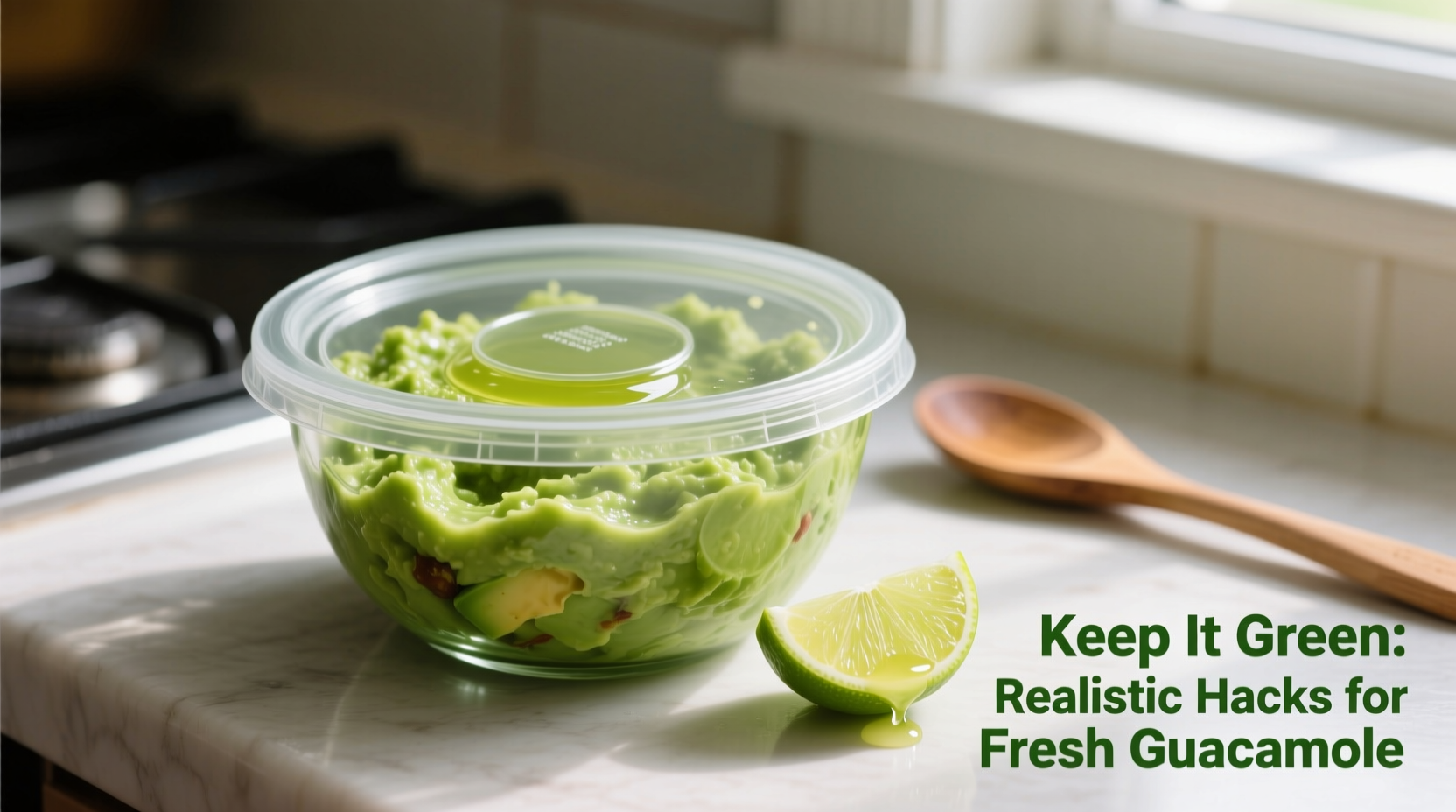
Avocados contain an enzyme called polyphenol oxidase (PPO). When the flesh is exposed to oxygen, this enzyme triggers a reaction that produces melanin—the same pigment responsible for human skin tanning. In avocados, it manifests as browning. This process accelerates when the fruit is mashed, cut, or bruised, which increases surface area and enzyme exposure.
Temperature, pH levels, and physical barriers all influence how fast oxidation occurs. Cold slows it down, acidity can inhibit the enzyme, and minimizing air contact limits oxygen access. Understanding this helps explain why some storage methods succeed while others are ineffective.
“Oxidation is inevitable, but manageable. The key is reducing oxygen exposure and stabilizing the avocado’s chemistry.” — Dr. Lena Torres, Food Scientist at UC Davis Postharvest Lab
Why Common Myths Don’t Work Long-Term
Before diving into what does work, it's important to debunk popular but flawed advice that may give temporary results but fail over extended storage.
- The Pit Trick: Leaving an avocado pit in the guacamole bowl only protects the tiny area directly beneath it. The rest of the surface remains fully exposed to air. It’s symbolic, not functional.
- Plastic Wrap Flush to Surface: While better than nothing, standard plastic wrap often traps micro-pockets of air and doesn’t adhere perfectly. Over time, oxygen still penetrates, especially if the wrap shifts during movement in the fridge.
- Water Layer Method: Pouring a thin layer of water over guacamole creates a barrier, but it risks diluting flavor and making the top layer soggy. Removing the water without disturbing the dip is tricky and messy.
These methods might preserve appearance for a day, but they’re unreliable beyond that. Realistic long-term freshness requires a layered approach.
Step-by-Step Guide: How to Keep Guacamole Green for 3+ Days
Follow this detailed process to maximize freshness and color retention using accessible tools and ingredients.
- Start with Fresh Ingredients: Use ripe but firm avocados, freshly squeezed lime juice (not bottled), and mix in finely minced red onion, cilantro, and salt immediately after mashing. Lime juice lowers pH, slowing enzymatic browning.
- Mash Thoroughly and Compact: Use a fork or potato masher to create a smooth, dense consistency. Air pockets between chunks accelerate oxidation. The smoother and tighter the blend, the less internal exposure to oxygen.
- Add Extra Acid (Strategically): For every two medium avocados, add an additional ½ tablespoon of lime or lemon juice. This won’t overpower the flavor but boosts preservation. Mix well to distribute evenly.
- Transfer to an Airtight Container: Choose a container just large enough to hold the guacamole with minimal headspace. Glass or BPA-free plastic with a locking lid works best. Avoid wide, shallow bowls.
- Create a Physical Oxygen Barrier: Press a piece of plastic wrap directly onto the surface of the guacamole, ensuring zero air gaps. Mold it tightly to the contours. Then, seal the container with its lid on top for double protection.
- Refrigerate Immediately: Place the container in the coldest part of the fridge (usually the back, away from the door). Temperature fluctuations near the front accelerate spoilage.
Proven Storage Methods Compared
| Method | Keeps Green For | Pros | Cons |
|---|---|---|---|
| Pit left in bowl + loose cover | 6–12 hours | Easy, no extra materials | Fails quickly; only protects small spot |
| Plastic wrap pressed on surface | 12–24 hours | Better than nothing; widely used | Air pockets form; wrap lifts easily |
| Water layer method | 24–36 hours | Creates full oxygen barrier | Dilutes flavor; messy removal |
| Double-wrap + airtight container | 48–72 hours | Most effective household method | Requires plastic wrap and proper container |
| Vacuum sealing | Up to 5 days | Superior oxygen exclusion | Requires special equipment |
The double-wrap method—plastic wrap flush to the surface plus a sealed container—is the most practical solution for home kitchens. Vacuum sealing offers the longest shelf life but isn't feasible for everyone.
Real-World Example: Meal Prep Success
Sophia, a working mom in Austin, prepares guacamole every Sunday for weekday lunches and snacks. She used to make it fresh each morning until she tested a side-by-side experiment. One batch was stored with just a lid, another with the pit, and a third using the double-wrap method described above.
By Tuesday, the first two batches were visibly brown on top and had developed a faint off-taste. The third remained bright green and tasted fresh. “I stirred it and couldn’t tell it was two days old,” she said. “Now I prep three servings at once and save 15 minutes every day.”
This real-life case shows that proper technique makes a tangible difference in both appearance and usability.
Checklist: How to Store Guacamole for Maximum Freshness
Use this checklist every time you make guacamole for future meals:
- ✓ Use ripe avocados and fresh lime juice
- ✓ Mash smoothly with no chunks or air pockets
- ✓ Add a slight extra squeeze of citrus (½ tsp per avocado)
- ✓ Transfer to a narrow, deep container to reduce surface area
- ✓ Press plastic wrap directly onto the surface, eliminating air gaps
- ✓ Seal with a lid on top of the wrapped container
- ✓ Label with date and refrigerate promptly
- ✓ Consume within 72 hours for best quality
Following this routine consistently delivers reliable results. Skipping even one step—like forgetting the plastic wrap—can cut shelf life in half.
When Is Brown Guacamole Still Safe?
It’s worth noting that browning doesn’t automatically mean spoilage. Oxidation affects appearance and slightly alters taste, but it’s not inherently dangerous. If the top layer has turned brown but the rest underneath remains green and smells fresh (no sour or fermented odor), it’s likely safe to eat.
To salvage oxidized guacamole:
- Discard the top ¼ inch of browned layer.
- Stir the remaining portion to redistribute flavors.
- Refresh with a splash of lime juice and a pinch of salt.
However, if the entire batch is brown, smells rancid, or has a slimy texture, it should be discarded. Trust your senses—they’re better indicators than color alone.
Frequently Asked Questions
Can I freeze guacamole to keep it longer?
Yes, freezing halts oxidation and bacterial growth. Portion guacamole into airtight containers or freezer bags, press out air, and freeze for up to 3 months. Thaw overnight in the fridge. Texture may become slightly grainier, but stirring vigorously and adding a touch of fresh lime juice restores much of the original consistency. Best for cooking or blending into sauces rather than dipping.
Does adding onion really help prevent browning?
Not directly. Onions don’t slow oxidation, but their acidity and sulfur compounds may slightly alter the chemical environment. More importantly, onions act as a physical buffer—when mixed in, they displace air pockets within the guacamole. However, do not rely on onions alone for preservation. Combine with proper storage for best results.
Is store-bought guacamole preserved differently?
Yes. Commercial brands often use preservatives like citric acid, ascorbic acid (vitamin C), and modified atmosphere packaging (MAP) to extend shelf life. Some also homogenize the mixture to eliminate air pockets. These methods are effective but not replicable at home without additives. That’s why homemade versions require more careful handling.
Expert Tips for Advanced Preservation
For those who meal prep frequently or run catering services, consider these advanced strategies:
- Ascorbic Acid Spritz: Dissolve a small amount of vitamin C powder in water (¼ tsp per 2 tbsp) and lightly mist the surface before sealing. This is used in professional kitchens and significantly delays browning.
- Gentle Stirring Before Serving: Even properly stored guacamole may develop a slight gradient. Stirring redistributes oils, acids, and any minor oxidation, restoring uniform color and flavor.
- Portion Control: Divide large batches into single-use containers. Repeated opening and closing introduces fresh oxygen, accelerating spoilage in the remainder.
“In high-volume kitchens, we treat guacamole like a perishable sauce—minimize air, maximize acidity, and chill fast. That’s the golden rule.” — Carlos Mendez, Executive Chef at Verde Taqueria
Conclusion: Fresh Guacamole Beyond Day One Is Possible
Keeping guacamole green in the fridge for more than a day isn’t magic—it’s method. By understanding the science of oxidation and applying practical, layered storage techniques, you can enjoy fresh-tasting guac for up to three days. Skip the outdated myths and focus on what truly matters: minimizing air exposure, leveraging acidity, and using the right containers.
Whether you're prepping for family dinners, packing school lunches, or hosting weekend guests, these realistic hacks save time, reduce waste, and keep your favorite dip looking as vibrant as it tastes.




 浙公网安备
33010002000092号
浙公网安备
33010002000092号 浙B2-20120091-4
Comments
No comments yet. Why don't you start the discussion?