
For many people, the dream of lush indoor greenery crashes into the reality of missed watering days, wilted leaves, and guilty glances at drooping foliage. If you love plants but struggle with consistency—whether due to a hectic schedule, travel, or simple forgetfulness—you’re not alone. The good news is that keeping houseplants alive doesn’t require perfect timing. With the right strategies, resilient species, and smart systems, you can maintain healthy plants even when weeks pass between waterings.
The key isn’t just choosing “hard-to-kill” plants—it’s understanding how moisture retention, soil composition, and environmental conditions affect your plants’ survival during dry spells. This guide walks through proven techniques to help your green companions thrive despite irregular care.
Choose Naturally Resilient Houseplants
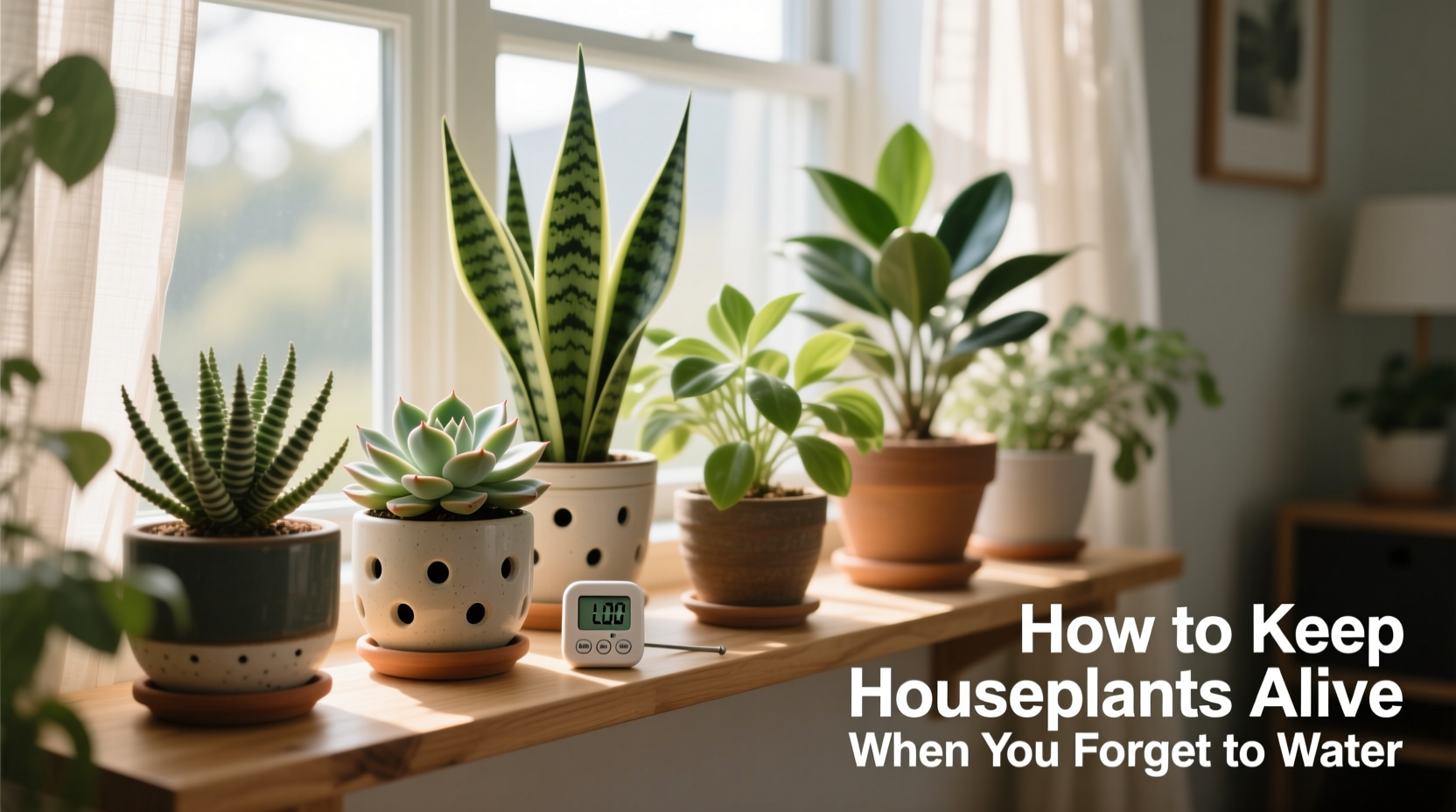
Not all houseplants are created equal when it comes to drought tolerance. Some have evolved to survive in arid environments, storing water in their leaves, stems, or roots. These species can go days—or even weeks—without water and still bounce back.
Plants like succulents, cacti, snake plants, and ZZ plants have adapted to store moisture efficiently. Their physiology allows them to endure extended dry periods without significant damage. For example, the snake plant (Sansevieria trifasciata) uses crassulacean acid metabolism (CAM) photosynthesis, which minimizes water loss by opening its stomata only at night.
Drought-Tolerant Houseplants Worth Growing
| Plant Name | Watering Frequency | Why It Works |
|---|---|---|
| ZZ Plant (Zamioculcas zamiifolia) | Every 2–3 weeks | Stores water in rhizomes; thrives on neglect |
| Snake Plant (Sansevieria) | Every 3–6 weeks | Thick leaves retain moisture; tolerates low light |
| Ponytail Palm (Beaucarnea recurvata) | Every 3–4 weeks | Bulbous trunk acts as a water reservoir |
| Succulents & Cacti | Every 2–4 weeks | Specialized tissues store water; minimal transpiration |
| Pothos (Epipremnum aureum) | Every 1–2 weeks | Tolerates drying out; recovers quickly after watering |
Selecting these types drastically reduces the pressure of maintaining a strict watering schedule. They forgive missed days and often signal distress slowly, giving you time to respond.
Optimize Soil and Potting Mix
The type of soil your plant grows in plays a critical role in moisture management. Standard potting soil may retain too much water or drain too quickly, neither of which helps when you're inconsistent with watering.
For drought-prone care routines, use a well-draining mix that still holds some moisture. A blend of peat moss, perlite, and orchid bark provides both aeration and moderate water retention. Avoid dense garden soils or mixes high in vermiculite if your pattern leans toward infrequent watering—they stay wet longer and increase root rot risk.
“Getting the soil right is half the battle. A porous mix prevents rot while allowing roots to access oxygen between waterings.” — Dr. Lena Patel, Urban Horticulturist
For succulents and cacti, consider using a specialized cactus mix with added sand or pumice. These amendments improve drainage and mimic natural desert conditions where plants are accustomed to infrequent but deep watering.
DIY Drought-Resistant Potting Mix Recipe
- Mix 2 parts standard potting soil
- Add 1 part perlite for aeration
- Incorporate 1 part coconut coir or peat moss for moisture retention
- Optional: Add ½ part orchid bark for larger pots or slow-growing plants
- Stir thoroughly and moisten slightly before repotting
This custom blend dries evenly and supports root health, reducing stress during dry stretches.
Use Self-Watering Systems and Moisture Retention Tools
If forgetfulness is the main obstacle, technology and clever gardening tools can bridge the gap. Self-watering pots, wicking systems, and humidity trays reduce dependency on daily attention.
Self-watering containers have a built-in reservoir that supplies water to the roots over time through capillary action. These are especially effective for plants like peace lilies or ferns that prefer consistent moisture but can be risky for succulents unless monitored.
DIY Wicking System for Long Absences
A simple wicking system can sustain a plant for up to two weeks. Here's how to set one up:
- Cut a piece of cotton rope or nylon cord about 12 inches long.
- Thread one end through the drainage hole of the pot and into the soil near the roots.
- Place the other end in a separate container filled with water.
- Ensure the reservoir is lower than the pot to prevent overflow.
- Test the setup for 24 hours to confirm steady water transfer.
This method works best with moderately thirsty plants like spider plants or pothos. Avoid using it with succulents or cacti, which may suffer from overwatering.
Create a Supportive Environment
Environmental factors such as light, temperature, and humidity influence how quickly soil dries out. By adjusting these conditions, you can extend the time your plants survive between waterings.
Bright, direct sunlight accelerates evaporation and increases transpiration rates. While some sun-loving plants need full exposure, placing less drought-tolerant varieties in indirect light slows moisture loss. Similarly, avoid positioning plants near heating vents, radiators, or drafty windows, where air movement dries soil faster.
Humidity also plays a role. In dry indoor climates—especially during winter—plants lose water more rapidly. Grouping plants together creates a microclimate that retains moisture. Alternatively, placing a small humidifier nearby or using pebble trays can help maintain ambient humidity.
Do’s and Don’ts for Extending Watering Intervals
| Do | Don’t |
|---|---|
| Group plants to boost humidity | Place plants near AC units or heaters |
| Use terracotta pots for better airflow | Over-pot into containers much larger than the root ball |
| Mulch soil surface with pebbles or bark | Leave plants in saucers full of standing water |
| Rotate plants seasonally based on light needs | Expose sensitive species to cold drafts |
Mulching the top of the soil with decorative stones or bark chips reduces surface evaporation and gives your plants a buffer against dry periods.
Establish a Simple Care Routine That Fits Your Lifestyle
Even the most resilient plants benefit from a basic routine. Instead of aiming for perfection, build a system that fits your rhythm. The goal isn’t daily attention but reliable, spaced-out check-ins.
One effective strategy is to tie plant care to an existing habit—like checking mail, brewing coffee, or charging your phone. Pairing plant checks with a daily ritual increases consistency without adding mental load.
“People fail with plants not because they don’t care, but because the system doesn’t match their life. Make it frictionless.” — Marcus Reed, Indoor Gardening Coach
Step-by-Step Weekly Check-In Routine
- Day 1 (e.g., Sunday evening): Walk through each room and assess plant condition.
- Check soil moisture by inserting your finger 1–2 inches deep. If dry, water thoroughly.
- Wipe dust off leaves with a damp cloth to support photosynthesis.
- Rotate pots 90 degrees to promote even growth.
- Note any issues—yellowing, pests, leaning—and address them promptly.
- Refill self-watering reservoirs or wicks as needed.
This five-minute weekly ritual prevents crises and keeps plants in good shape, even if you skip midweek checks.
Real-Life Example: Surviving a Two-Week Trip
Sarah, a graphic designer and frequent traveler, once returned from a two-week work trip to find her apartment dry and several plants struggling. Her fiddle-leaf fig had crispy edges, and her pothos was limp. After researching drought recovery, she revamped her approach.
She replaced moisture-sensitive plants with a ZZ plant and a ponytail palm, upgraded to self-watering pots, and installed a smart timer for grow lights. Before her next trip, she set up wicking systems for her remaining ferns and grouped plants in the bathroom, where humidity was higher.
When she returned three weeks later, all her plants were alive—with some even producing new growth. The change wasn’t in her schedule; it was in her system.
Frequently Asked Questions
Can a completely dried-out plant be saved?
Yes, many plants can recover even when the soil is fully dry and leaves are brown. Submerge the pot in a basin of water for 10–15 minutes to rehydrate the root ball. Trim damaged foliage and place the plant in indirect light. Recovery may take days to weeks, depending on species and severity.
How do I know when to water if I’m not sure?
Use the finger test: insert your index finger into the soil up to the second knuckle. If it feels dry, it’s time to water. For succulents, wait until the soil is completely dry. For tropical plants, water when the top inch is dry.
Are plastic or ceramic pots better for forgetful waterers?
Plastic pots retain moisture longer than porous materials like terracotta, making them better for those who water infrequently. However, they increase the risk of overwatering. If you tend to forget, plastic with drainage holes offers a forgiving balance.
Final Checklist: Keep Plants Alive Despite Irregular Watering
- ✅ Choose drought-tolerant species like ZZ plant, snake plant, or pothos
- ✅ Use well-draining soil with perlite and coir
- ✅ Switch to self-watering pots or DIY wicking systems
- ✅ Mulch soil surface with pebbles to reduce evaporation
- ✅ Group plants to create a humid microclimate
- ✅ Perform a 5-minute weekly check-in tied to a daily habit
- ✅ Avoid direct heat sources and excessive sunlight
Conclusion: Build Systems, Not Guilt
Keeping houseplants alive when you forget to water them isn’t about willpower—it’s about designing a setup that works with your real life. Forgetfulness doesn’t make you a bad plant parent; it makes you human. The solution lies in selecting resilient species, optimizing growing conditions, and implementing low-effort systems that bridge the gaps in your attention.
Start small. Pick one plant, improve its soil, and try a self-watering hack. Observe what works. Over time, you’ll build confidence and a greener home—not through perfection, but through practical, sustainable choices.




 浙公网安备
33010002000092号
浙公网安备
33010002000092号 浙B2-20120091-4
Comments
No comments yet. Why don't you start the discussion?