
White clothing brings timeless elegance and versatility to any wardrobe. But maintaining that crisp, bright appearance can be challenging—especially when traditional bleaching agents damage fabrics or irritate sensitive skin. The good news is that you don’t need harsh chemicals to preserve the brilliance of your whites. With thoughtful care and natural alternatives, you can keep your white garments looking fresh, clean, and radiant over time.
This guide explores proven, eco-conscious methods to prevent yellowing, dullness, and graying in white clothes. From laundry techniques to ingredient-based treatments, these strategies are gentle on fabric, safe for families, and effective for everyday use.
The Problem with Bleach and Why Natural Alternatives Matter
Bleach, particularly chlorine bleach, has long been a go-to solution for whitening clothes. While it can deliver quick results, its drawbacks are significant. Chlorine breaks down fabric fibers over time, leading to thinning, holes, and weakened seams. It also releases toxic fumes and contributes to environmental pollution when washed into water systems.
Additionally, many people experience skin irritation from residual bleach, especially those with conditions like eczema or chemical sensitivities. For these reasons, more consumers are turning to natural, non-toxic solutions that maintain cleanliness and brightness without compromising health or sustainability.
“Switching to natural whitening agents not only protects your clothes but also supports long-term textile durability and personal well-being.” — Dr. Lena Torres, Textile Scientist and Sustainable Fashion Researcher
Natural Ingredients That Brighten White Clothes
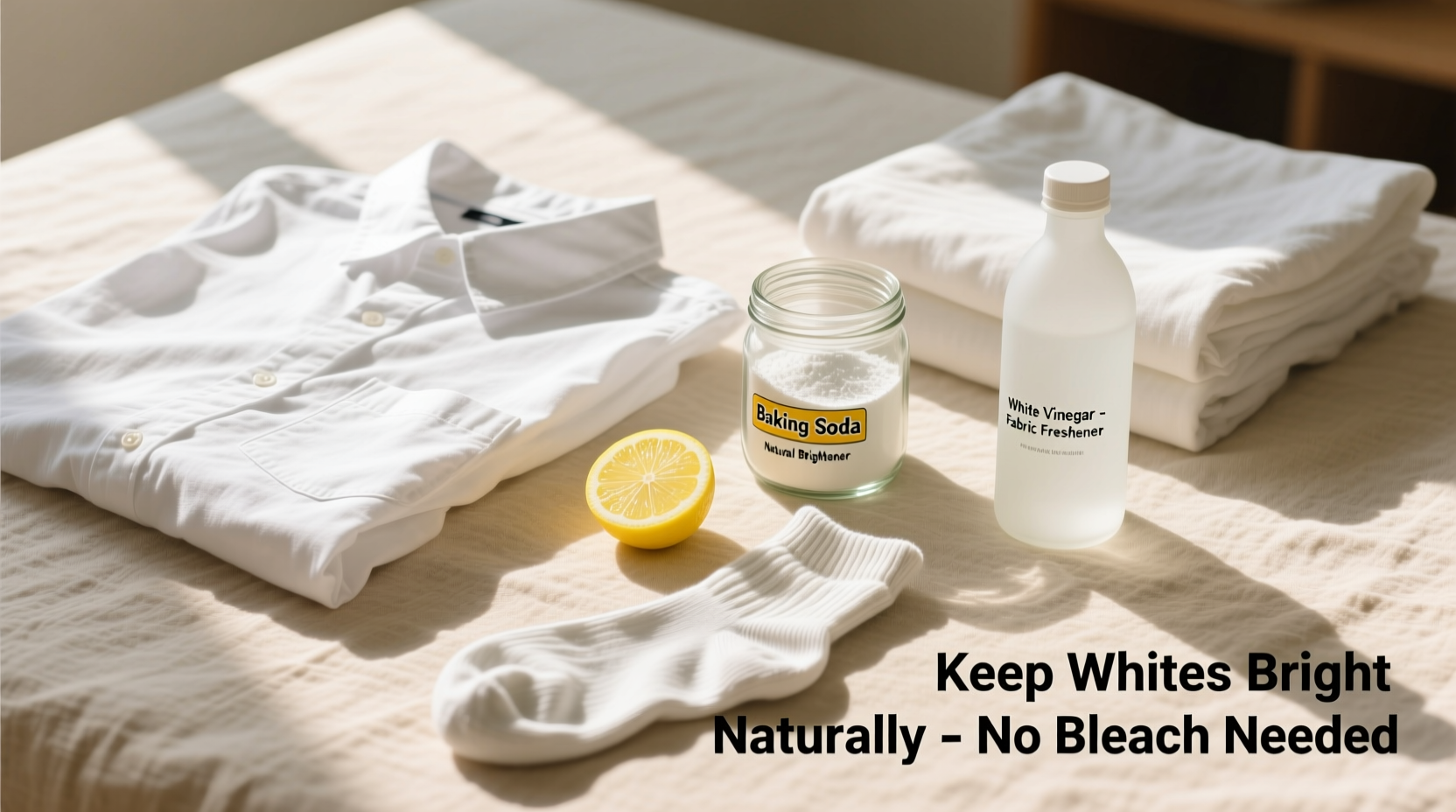
Several common household items possess natural whitening and deodorizing properties. When used correctly, they lift stains, neutralize odors, and restore luster without damaging fabrics.
1. Baking Soda: The Gentle Abrasive
Sodium bicarbonate (baking soda) is mildly abrasive and highly effective at breaking down organic residues like sweat, oils, and food stains. It also helps balance pH levels in the wash, enhancing detergent performance.
2. White Vinegar: Odor Neutralizer and Softener
Distilled white vinegar dissolves mineral deposits, removes soap scum, and eliminates musty smells. Its acidity helps break down stains while naturally softening fabrics—eliminating the need for synthetic fabric softeners.
3. Hydrogen Peroxide: Oxygen-Based Whitener
A safer alternative to chlorine bleach, hydrogen peroxide (3% solution) releases oxygen when activated by water, lifting stains and brightening fibers. It’s biodegradable and effective on cotton, linen, and polyester blends.
4. Sunlight: Nature’s Bleaching Agent
Ultraviolet (UV) rays have a natural photodegradation effect that breaks down organic matter on fabric surfaces. Drying white clothes in direct sunlight not only disinfects but also gradually whitens them over time.
5. Lemon Juice: Citric Powerhouse
Lemon juice contains citric acid, which acts as a natural stain lifter and brightener. Combined with sunlight, it enhances UV whitening effects, making it ideal for treating collars, cuffs, and underarms.
Step-by-Step Guide to Washing Whites Without Bleach
Consistency and technique are key to maintaining bright whites. Follow this routine for optimal results:
- Pre-Treat Stains Immediately: Apply a paste of baking soda and water or a few drops of hydrogen peroxide directly to stained areas. Let sit for 15–30 minutes before washing.
- Sort Carefully: Wash whites separately to avoid color transfer. Separate heavily soiled items (like workout gear) from lightly worn ones to prevent re-depositing dirt.
- Use Warm Water (When Safe): Warm water (around 40°C / 104°F) improves cleaning efficiency for cotton and durable synthetics. Check garment labels first—delicate fabrics may require cold water.
- Add Natural Boosters: Use ½ cup baking soda + ½ cup white vinegar in the rinse cycle (add vinegar via dispenser, not directly with baking soda). Alternatively, add 1 cup of hydrogen peroxide to the bleach dispenser or drum.
- Air-Dry in Sunlight: Hang clothes outside in direct sun whenever possible. Rotate garments halfway through drying to ensure even exposure.
- Store Properly: Keep whites in a cool, dry place away from humidity and direct light sources that could cause premature yellowing.
Do’s and Don’ts of Maintaining Bright Whites
| Do’s | Don’ts |
|---|---|
| Wash whites regularly to prevent buildup of body oils and sweat | Leave damp clothes sitting in the washer—this causes mildew and yellowing |
| Use high-quality, plant-based detergents free from dyes and optical brighteners | Overload the washing machine—clothes need space to agitate properly |
| Treat underarm and collar stains promptly with lemon juice or peroxide | Use chlorine bleach on spandex, silk, wool, or nylon—it weakens fibers rapidly |
| Dry whites in sunlight to enhance natural whitening | Iron dirty or incompletely dried clothes—they can set stains permanently |
| Turn clothes inside out to protect outer fabric during washing | Ignore care labels—heat and agitation settings vary by material |
Mini Case Study: Reviving a Yellowed Linen Shirt
Sarah, a yoga instructor from Portland, noticed her favorite white linen shirt had developed a dingy yellow tint around the collar after months of regular wear and sweat exposure. She avoided bleach due to sensitivity concerns but wanted to restore its brightness.
She soaked the shirt overnight in a solution of 4 liters of warm water, 1 cup of baking soda, and ½ cup of hydrogen peroxide. The next day, she rinsed it thoroughly and hung it to dry in full sunlight for six hours, flipping it midway. After one treatment, the collar was visibly lighter, and after a second soak a week later, the shirt looked nearly new.
By combining soaking, oxygenation, and UV exposure, Sarah achieved professional-level results at home—without a single synthetic chemical.
Effective Soak Treatments for Deep Cleaning
For whites that have already started to gray or yellow, periodic deep-soaking can reverse discoloration and refresh fibers.
- Baking Soda & Vinegar Soak: Mix 1 cup baking soda and 1 cup white vinegar in a basin of warm water. Submerge clothes for 1–2 hours before laundering normally.
- Lemon & Sun Soak: Squeeze two lemons into a bucket of hot water. Soak white garments for 2–4 hours, then wring and hang in direct sunlight until dry.
- Oxygen Bleach Soak: Use sodium percarbonate (a powdered oxygen bleach) according to package instructions. Dissolve in warm water and soak for 4–6 hours. Safe for most fabrics and colors.
Checklist: Weekly Routine for Bright Whites
Stay ahead of dullness with this simple weekly checklist:
- ✅ Inspect whites for stains and pre-treat immediately
- ✅ Sort whites by soil level and fabric type
- ✅ Add ½ cup baking soda to the wash cycle
- ✅ Add ½ cup white vinegar to the rinse cycle
- ✅ Hang clothes outside in direct sunlight when weather permits
- ✅ Store clean whites in breathable cotton bags or drawers
- ✅ Once a month, perform a deep soak using oxygen bleach or lemon solution
Frequently Asked Questions
Can I use apple cider vinegar instead of white vinegar?
While apple cider vinegar has similar acidic properties, its color and aroma may transfer to light fabrics. Stick with clear distilled white vinegar to avoid staining or lingering smells.
Is baking soda safe for high-efficiency (HE) washing machines?
Yes, baking soda is HE-compatible and does not produce excess suds. However, avoid overuse—stick to ½ cup per load to prevent residue buildup in the drum.
How often should I deep-clean my white clothes?
Once every four to six weeks is sufficient for most wardrobes. Heavily worn items like gym shirts or chef coats may benefit from monthly oxygen bleach soaks.
Expert Insight: The Long-Term Benefits of Chemical-Free Care
Maintaining white clothes without bleach isn’t just about immediate appearance—it’s an investment in fabric longevity. Repeated exposure to chlorine and synthetic brighteners degrades cellulose fibers in cotton and weakens elastic components in blended fabrics.
“Natural methods may take slightly longer than bleach, but they preserve the integrity of textiles. A well-cared-for cotton shirt can last 2–3 years longer with gentle washing.” — Marcus Reed, Sustainable Laundry Consultant
Over time, the cumulative effect of gentler cleaning translates into fewer replacements, reduced waste, and better value for money.
Conclusion
Keeping white clothes bright without bleach is not only possible—it’s preferable for both your wardrobe and your well-being. By embracing natural alternatives like baking soda, vinegar, sunlight, and hydrogen peroxide, you achieve clean, radiant results while protecting fabric quality and minimizing environmental impact.
The habits you build today—prompt stain treatment, mindful sorting, regular soaking, and sun-drying—will compound over time, preserving the crispness and purity of your whites for seasons to come. You don’t need harsh chemicals to get brilliant results; you just need consistency and the right approach.




 浙公网安备
33010002000092号
浙公网安备
33010002000092号 浙B2-20120091-4
Comments
No comments yet. Why don't you start the discussion?