
Cats are naturally curious, agile, and playful—but their antics can quickly become frustrating when your favorite mug ends up in pieces on the floor. One of the most common behaviors pet owners report is their cat deliberately swatting objects off tables, shelves, or counters. While it might seem like mischief, this behavior is rooted in instinct, not defiance. Yelling may stop the action momentarily, but it damages trust and does nothing to address the underlying cause. The good news is that with understanding, environmental adjustments, and consistent training, you can reduce—and often eliminate—this destructive habit humanely and effectively.
Understanding Why Cats Knock Things Over
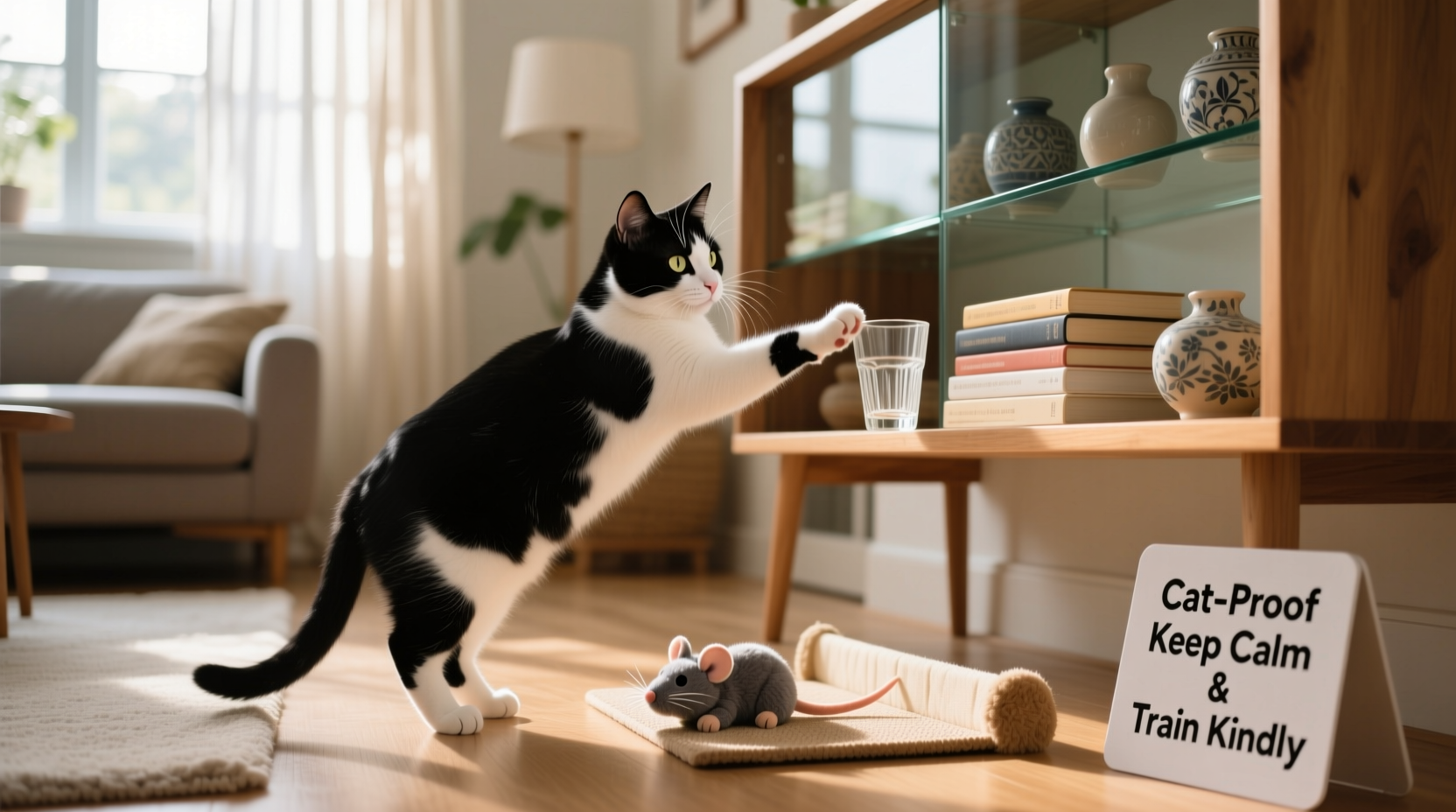
To solve the problem, you must first understand why cats do it. Contrary to popular belief, your cat isn’t trying to annoy you. Several natural instincts drive this behavior:
- Hunting simulation: Swatting at dangling or loosely placed items mimics pouncing on prey. Even stationary objects can trigger a predatory response if they’re within reach.
- Sensory exploration: Cats use their paws to investigate texture, weight, and movement. A wobbly object becomes irresistible.
- Attention-seeking: If knocking something down gets a reaction—even yelling—the cat learns it’s an effective way to engage you.
- Play stimulation: Indoor cats often lack sufficient mental and physical challenges, so they create their own entertainment.
- Curiosity about motion: Objects that fall or roll spark fascination. The sound, movement, and resulting chaos are inherently stimulating.
“Cats don’t misbehave out of malice—they respond to their environment based on instinct and reinforcement.” — Dr. Sarah Thompson, Feline Behavior Specialist
Recognizing these motivations shifts the approach from punishment to prevention. Instead of reacting after the fact, you can proactively shape a space where your cat feels fulfilled and less inclined to engage in destructive play.
Effective Environmental Modifications
The foundation of preventing shelf knockovers lies in modifying your cat’s environment. Rather than expecting your cat to ignore tempting objects, make those temptations inaccessible or uninteresting.
Secure or Remove Tempting Items
Start by auditing elevated surfaces. Ask yourself: Is this item necessary up here? Could it be stored elsewhere? Fragile decor, photo frames, and lightweight knickknacks should be moved to closed cabinets or secured behind glass doors.
If you want to keep decorative items visible, consider anchoring them:
- Use museum putty (like QuakeHold) to secure vases or figurines to shelves.
- Opt for heavier materials—stone, ceramic, or metal—that are harder to dislodge.
- Place items toward the back of shelves, out of easy paw range.
Designate Cat-Friendly Zones
Cats will climb regardless. Instead of fighting this instinct, redirect it. Install cat shelves, perches, or wall-mounted climbing systems in key areas. These give your cat approved high ground and reduce their interest in your bookshelves or entertainment units.
Position these zones near windows for bird-watching or in social areas so your cat still feels involved while staying off forbidden furniture.
Use Strategic Surface Treatments
Certain textures discourage cats from jumping or lingering on surfaces:
- Aluminum foil: Most cats dislike the sound and feel underfoot.
- Plastic carpet runners (nub-side up): Uncomfortable to walk on, yet safe and removable.
- Citrus-scented sprays: Natural deterrents (avoid essential oils, which can be toxic).
Apply these temporarily until your cat learns to avoid the area, then phase them out.
Enrichment: The Key to Long-Term Prevention
A bored cat is a destructive cat. Enrichment doesn’t just mean toys—it’s about creating a dynamic environment that satisfies your cat’s mental, physical, and emotional needs.
Interactive Play Sessions
Daily interactive play mimics the hunt-catch-kill-eat cycle. Use wand toys to encourage stalking, pouncing, and batting. Aim for two 10–15 minute sessions daily, ending with a treat or meal to simulate “eating” after the hunt.
This routine reduces excess energy and redirects predatory instincts away from household objects.
Mental Challenges
Puzzle feeders, treat-dispensing balls, and hidden food games keep your cat mentally engaged. Rotate toys weekly to maintain novelty and prevent habituation.
Sensory Stimulation
Add variety with:
- Window perches with bird feeders outside
- Cat-safe plants like catnip or wheatgrass
- Background nature videos or calming music designed for cats
A stimulated cat has less need to invent its own entertainment from your belongings.
Step-by-Step Guide to Reducing Shelf Knockovers
Follow this timeline to systematically reduce and eliminate unwanted knocking behavior:
- Week 1: Assess and Secure
Walk through each room and remove or secure loose items on shelves. Install deterrents on high-traffic zones. Begin setting up cat shelves or perches in alternative locations. - Week 2: Introduce Enrichment
Add two new enrichment activities: one physical (e.g., a new toy), one mental (e.g., a puzzle feeder). Start scheduled play sessions using a wand toy. - Week 3: Redirect and Reward
When you catch your cat approaching a shelf, gently redirect them to a cat tree or toy. Reward with praise or treats when they engage appropriately. - Week 4: Monitor and Adjust
Track incidents in a journal. Note time, location, and what was knocked over. Use this data to refine your strategy—perhaps more playtime is needed in the evening when activity spikes. - Ongoing: Maintain Consistency
Continue rotating toys, cleaning perches, and reinforcing good behavior. Avoid reintroducing fragile items until the behavior has ceased for at least 30 days.
Do’s and Don’ts: Quick Reference Table
| Do’s | Don’ts |
|---|---|
| Provide multiple climbing and resting spots at different heights | Leave fragile or noisy items within paw reach |
| Engage in daily interactive play with wand toys | Use physical punishment or yelling as correction |
| Rotate toys weekly to maintain interest | Ignore signs of boredom or excess energy |
| Use safe deterrents like double-sided tape temporarily | Rely solely on sprays or scents long-term |
| Reinforce desired behavior with treats or affection | Give attention (even negative) when your cat knocks something over |
Real Example: How the Rivera Family Reduced Shelf Chaos
The Riveras adopted a young rescue cat named Milo, who quickly developed a habit of knocking books and lamps off their living room shelves. At first, they tried yelling and spraying water, but the behavior worsened. After consulting a feline behaviorist, they implemented a multi-pronged approach:
- They installed floating cat shelves along one wall, placing Milo’s favorite blanket and toys on them.
- Fragile items were moved to glass-front cabinets.
- They began two daily play sessions with a feather wand, ending each with a small meal.
- They used plastic carpet runners (nub-side up) on the edge of the main shelf for two weeks, then removed them once Milo stopped jumping there.
Within three weeks, incidents dropped by 90%. By week six, Milo had fully transitioned to his designated climbing zones. The family reported not only fewer broken items but also a calmer, more confident cat.
FAQ: Common Questions About Cat Knockover Behavior
Why does my cat only knock things over when I’m not looking?
This is likely coincidental. Cats are most active during dawn and dusk, and they may be testing boundaries. If they’ve been rewarded (even unintentionally) by your reaction in the past, they may repeat the behavior when they anticipate interaction—even if it’s negative.
Is my cat doing this out of spite?
No. Cats don’t experience spite in the human sense. Their actions are driven by instinct, environment, and learned consequences. What looks like revenge is usually redirected hunting behavior or a cry for engagement.
Can I train my cat to stop completely?
Yes, but not through punishment. Training involves redirection, environmental management, and positive reinforcement. With consistency, most cats learn to leave off-limits items alone within a few weeks.
Final Thoughts and Call to Action
Keeping your cat from knocking things off shelves isn’t about control—it’s about coexistence. When you replace yelling with understanding, and punishment with prevention, you build a stronger, more trusting relationship. The goal isn’t a perfectly tidy home, but a harmonious one where both you and your cat thrive.
Start today: Walk through your space with your cat’s instincts in mind. Remove one risky item, add one new toy, or schedule a five-minute play session. Small changes compound into lasting results. Your cat isn’t being “bad”—they’re being a cat. And with the right guidance, their clever paws can stay out of trouble while still expressing their natural curiosity.




 浙公网安备
33010002000092号
浙公网安备
33010002000092号 浙B2-20120091-4
Comments
No comments yet. Why don't you start the discussion?