
Cats are naturally curious and agile creatures, drawn to high places where they can observe their surroundings. While this instinct served them well in the wild, it becomes a problem when your feline decides the kitchen counter is the perfect perch. Not only is it unsanitary—especially when preparing food—but it can also lead to knocked-over items and potential injuries. Traditional methods like yelling or spraying water may offer short-term results but often damage trust and fail over time.
Scent deterrents, however, provide a humane, non-invasive solution rooted in feline biology. Cats rely heavily on their sense of smell, which means certain odors can strongly influence their behavior. When used correctly, scent-based repellents discourage cats from jumping onto countertops without causing fear or stress. This guide explores the most effective scents, how to apply them properly, and how to combine them with environmental enrichment for lasting success.
Why Cats Are Drawn to Countertops
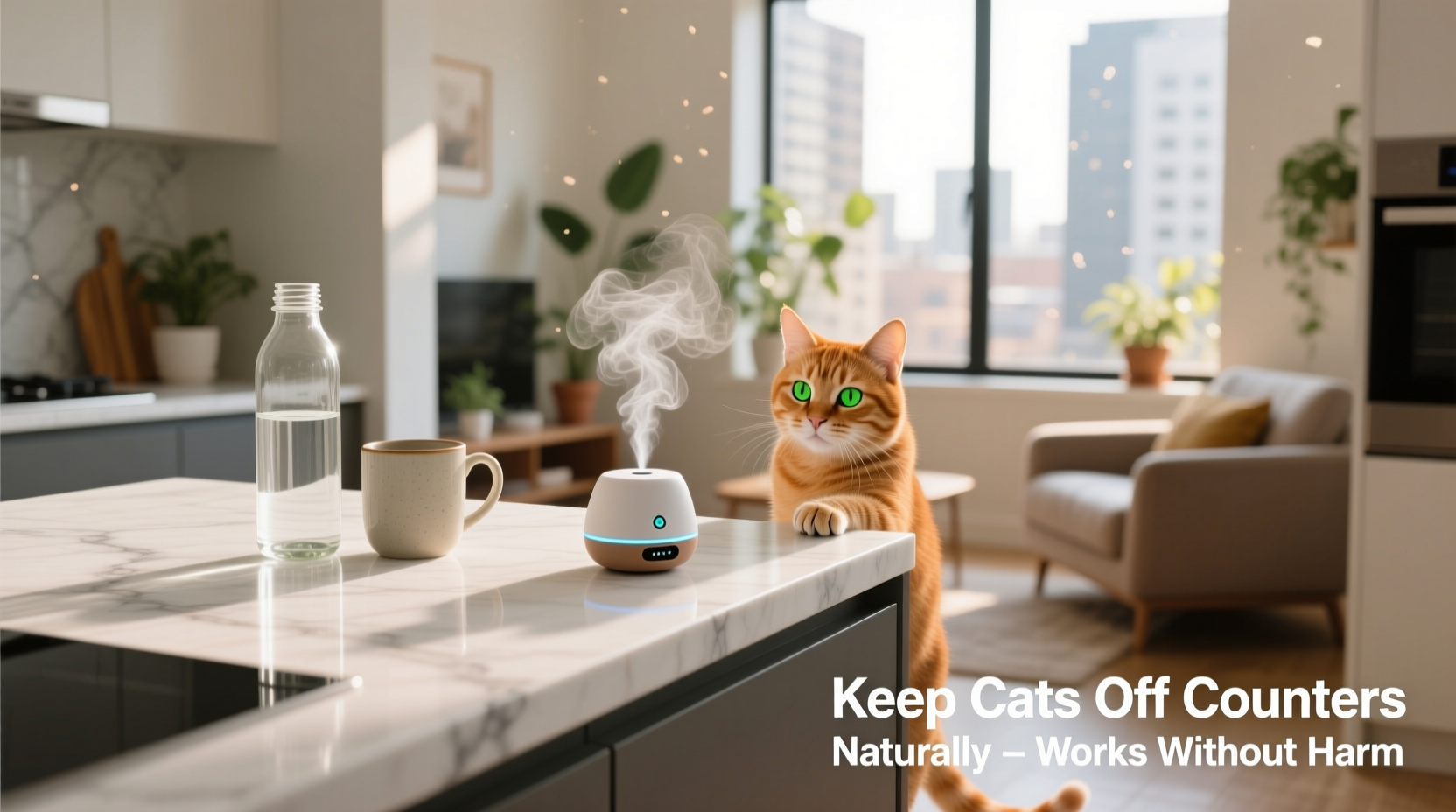
Understanding why your cat chooses the countertop is essential before implementing any deterrent. It’s not just about rebellion—it’s about instinct. Elevated surfaces give cats a strategic vantage point to monitor their territory, stay safe from perceived threats, and feel in control. In multi-pet households or busy homes, counters may be one of the few quiet zones available.
Additionally, kitchens often carry enticing smells—residual food aromas, open cabinets, or even the warmth of appliances. A cat may jump up simply because something smelled interesting the last time they were there. Without alternative high spaces, they’ll continue returning.
The Science Behind Scent Deterrents for Cats
Cats have approximately 200 million olfactory receptors—compared to humans’ mere 5 million. This makes their sense of smell incredibly powerful and directly linked to emotional and behavioral responses. Certain scents trigger avoidance because they signal danger, discomfort, or territorial boundaries.
Essential oils and strong citrus compounds, for example, overwhelm a cat’s sensitive nasal passages. While not harmful in diluted, properly applied forms, these odors are unpleasant enough to deter repeated visits. The key is consistency and placement: the scent must be present every time the cat considers jumping up, reinforcing the idea that the area is undesirable.
It's important to note that not all strong smells work equally. Some scents may initially repel a cat but lose effectiveness if overused (leading to habituation). Others may be unsafe if ingested or absorbed through the skin. Always prioritize cat-safe options and avoid concentrated essential oils near food preparation areas.
“Cats respond best to consistent environmental cues. A scent deterrent works not because it ‘shocks’ the cat, but because it reliably signals that a space isn’t worth occupying.” — Dr. Lena Patel, Feline Behavior Specialist
Top 5 Effective & Safe Scent Deterrents
Not all scents are created equal when it comes to repelling cats. Below are five of the most proven and safe options, backed by veterinary recommendations and owner success stories.
- Citrus Peels (Lemon, Orange, Grapefruit): The natural limonene in citrus rinds emits a sharp, bitter odor cats dislike. Place peels directly on the counter (out of reach of food) or use a citrus-scented spray made from boiled peels and water.
- Vinegar Solution (White or Apple Cider): Vinegar has a pungent smell that dissipates quickly to humans but lingers for cats. Mix one part vinegar with three parts water and wipe surfaces daily.
- Menthol-Based Products (Vicks VapoRub alternative): While Vicks itself is toxic to cats, pet-safe menthol sprays or diluted eucalyptus oil (highly diluted) can mimic the effect safely. Never apply directly to skin or near face.
- Lavender (in moderation): Though some cats tolerate lavender, its strong herbal scent often deters climbing. Use dried bundles or lightly scented sprays away from ingestion zones.
- Black Pepper or Ground Mustard: These spices release volatile compounds that irritate feline nostrils. Lightly sprinkle along counter edges (clean thoroughly afterward to avoid residue).
Step-by-Step Guide to Applying Scent Deterrents Effectively
Using scent deterrents isn't just about spraying something smelly—it's about creating a consistent, reliable boundary. Follow this timeline for best results:
- Day 1–3: Clean Thoroughly
Wipe down countertops with unscented cleaner to remove food residues and previous odors that attract your cat. Avoid lemon-scented cleaners if you plan to use citrus deterrents—they may confuse the message. - Day 4–7: Introduce the Deterrent
Choose one primary scent (e.g., citrus spray). Apply it each morning and evening to areas your cat frequents. Do not over-saturate—light misting is sufficient. Pair application with positive redirection (e.g., offering a treat on a cat tree). - Week 2: Monitor and Adjust
Observe whether your cat hesitates or avoids the counter. If no change occurs, switch to a different scent or add physical barriers (like double-sided tape). - Week 3–4: Reinforce and Fade
Once your cat stops jumping up, reduce frequency to every other day. Continue for two more weeks to solidify the habit. Gradually phase out the scent while maintaining alternative perches. - Ongoing: Rotate and Maintain
Reintroduce deterrents periodically, especially after cleaning or if the cat shows renewed interest. Combine with routine environmental enrichment.
Do’s and Don’ts of Using Scent Deterrents
| Do’s | Don’ts |
|---|---|
| Use diluted, pet-safe formulations | Apply undiluted essential oils directly |
| Test on a small area first to avoid surface damage | Use near food prep zones without rinsing |
| Pair scents with positive alternatives (cat trees, window perches) | Rely solely on scent without environmental changes |
| Rotate scents monthly to prevent adaptation | Use citrus sprays on marble or granite (can etch surfaces) |
| Combine with motion-activated air sprays for reinforcement | Punish or shout at your cat after they jump up |
Real-Life Example: How Sarah Reduced Counter-Jumping by 90%
Sarah, a working professional in Portland, struggled with her rescue cat, Luna, constantly leaping onto the kitchen counter—especially at night. Despite covering the area with aluminum foil and using a spray bottle, Luna returned within hours. Frustrated and worried about hygiene, Sarah consulted a certified feline behaviorist.
The expert recommended a dual approach: installing a tall cat tree beside the fridge (providing an elevated view) and using a citrus-vinegar spray on the counters each evening. Sarah also began feeding Luna her evening meal on the cat tree, reinforcing it as a positive space.
Within ten days, Luna stopped jumping up entirely. After two weeks, Sarah reduced spraying to twice a week. Six months later, Luna uses the counter only when explicitly invited—proof that scent deterrents work best when combined with environmental enrichment.
Complementary Strategies for Long-Term Success
Scent alone won’t solve the problem if your cat lacks better alternatives. Consider these supporting tactics:
- Provide Elevated Perches: Install cat shelves, window hammocks, or a multi-level cat tree near the kitchen. Height satisfies instinct without compromising hygiene.
- Use Textural Deterrents: Double-sided tape, plastic mats with nubs, or crinkled aluminum foil make surfaces uncomfortable to walk on—especially when paired with scent.
- Employ Motion-Activated Devices: Air-releasing deterrents (like Ssscat) hiss when movement is detected. They’re highly effective when used alongside scent cues.
- Feed and Reward Elsewhere: Never feed on the counter. Instead, reward your cat for using designated platforms with treats or affection.
- Keep Counters Clear: Remove items that attract cats—coffee mugs, fruit bowls, or unsealed food. An empty counter is less tempting.
Frequently Asked Questions
Are essential oils safe to use around cats?
Many essential oils—especially tea tree, peppermint, and citrus oils—are toxic to cats when ingested or absorbed through the skin. If used at all, they must be highly diluted, diffused in well-ventilated areas, and never applied directly. Safer alternatives include vinegar, citrus peels, or commercial pet-safe sprays labeled as non-toxic.
How long does it take for scent deterrents to work?
Most cats show reduced interest within 3–7 days of consistent application. Full habit change typically takes 2–4 weeks, especially when combined with environmental modifications. Patience and repetition are critical.
Can I use coffee grounds as a deterrent?
Coffee grounds have a strong smell that some cats dislike, but caffeine is toxic if ingested. Used grounds may also mold if left damp, posing additional health risks. It’s safer to avoid this method despite anecdotal popularity.
Checklist: How to Keep Your Cat Off Counters Using Scent
- ✅ Identify why your cat uses the counter (view, warmth, curiosity)
- ✅ Choose a safe, cat-approved scent deterrent (citrus, vinegar, etc.)
- ✅ Clean countertops thoroughly before starting
- ✅ Apply deterrent consistently for at least two weeks
- ✅ Provide appealing alternative perches at similar height
- ✅ Rotate scents monthly to prevent adaptation
- ✅ Avoid punishment; focus on redirection and prevention
- ✅ Monitor progress and adjust strategy as needed
Conclusion: Create a Cat-Friendly Home Without Sacrificing Hygiene
Keeping your cat off the countertops doesn’t require conflict or compromise. By leveraging their powerful sense of smell and understanding their natural instincts, you can create boundaries that are both effective and respectful. Scent deterrents—when used safely and consistently—offer a humane, long-term solution that preserves your relationship with your pet.
The key is not to eliminate your cat’s desire for height and observation, but to redirect it. Combine scent strategies with enriching alternatives, and you’ll find that your cat happily chooses their own space over yours. Start today: clean the counter, brew a citrus spray, and set up a cozy perch. Small steps lead to lasting change.




 浙公网安备
33010002000092号
浙公网安备
33010002000092号 浙B2-20120091-4
Comments
No comments yet. Why don't you start the discussion?