
Compatibility isn’t just about shared interests or physical attraction—it’s the invisible thread that holds a relationship together through challenges, growth, and change. Many people mistake chemistry for compatibility, but while chemistry creates sparks, compatibility sustains the flame. Understanding whether you’re truly compatible with someone requires honest self-reflection, observation, and time. It involves looking beyond surface-level connection to assess deeper alignment in values, communication styles, life goals, and emotional maturity.
Recognizing true compatibility early can save years of misalignment, frustration, and heartache. It doesn’t mean two people must agree on everything, but they should respect differences and share a foundation strong enough to support long-term partnership. Below are key signs to help you determine whether your connection has the depth to last.
Emotional Maturity and Mutual Respect
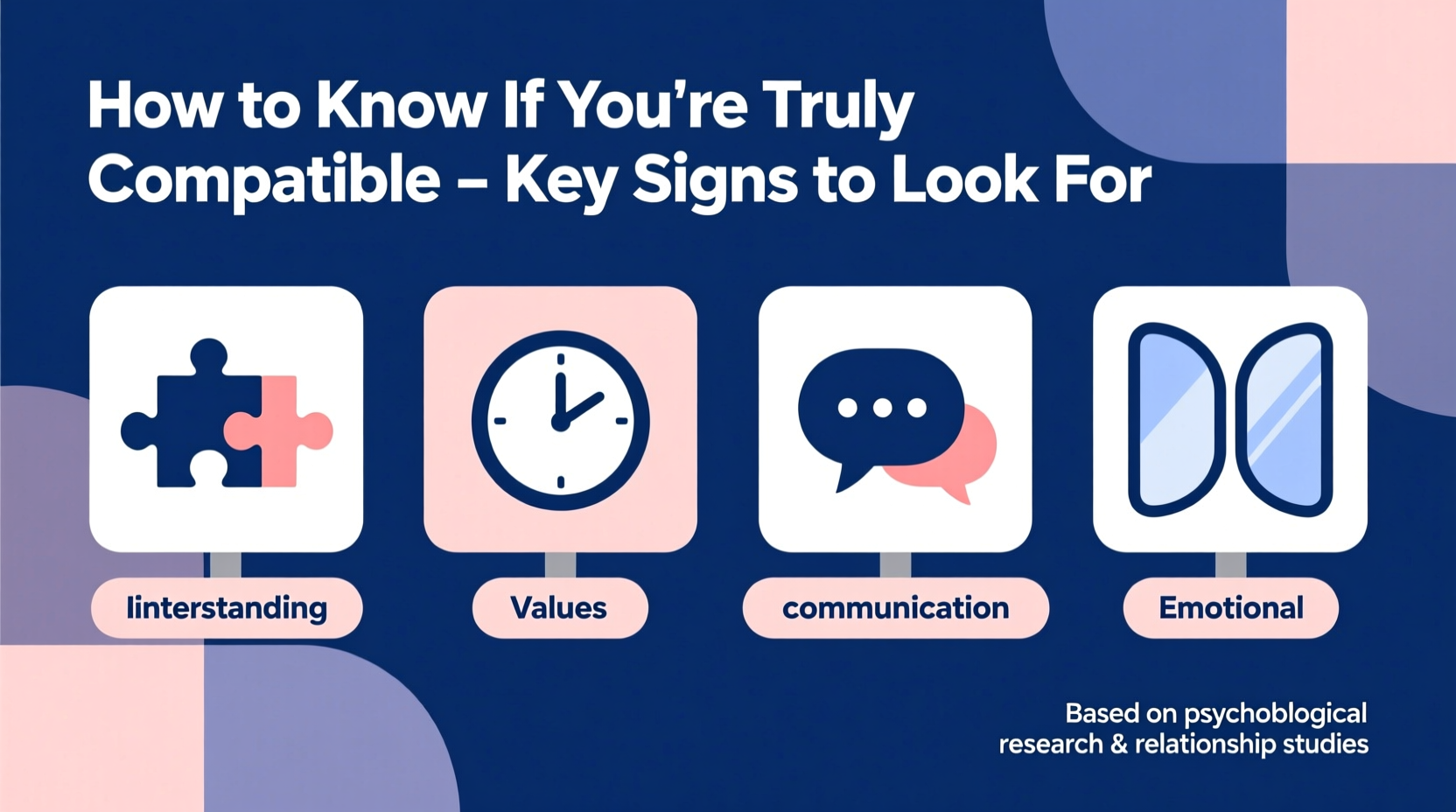
One of the most telling signs of compatibility is how both partners handle conflict, stress, and vulnerability. Emotional maturity means taking responsibility for your feelings without blaming others, listening with empathy, and staying calm during disagreements. When both individuals approach emotional conversations with respect rather than defensiveness, it signals a healthy dynamic.
Respect also shows up in small ways: honoring boundaries, supporting each other’s growth, and celebrating successes without envy. If one person consistently dismisses the other’s emotions or dominates decision-making, it points to imbalance—not compatibility.
Shared Core Values (Not Just Interests)
While enjoying similar hobbies is nice, shared core values are essential for long-term harmony. These include beliefs about family, finances, integrity, spirituality, and personal responsibility. Couples who align on these deeper principles tend to navigate life’s major decisions—like having children, managing money, or relocating—with greater ease.
For example, a couple may both love travel, but if one values financial security above all and the other prioritizes experiences over savings, tension will eventually arise. The difference between liking the same things and valuing the same things is profound.
“Values are the compass of a relationship. Without alignment there, even the strongest chemistry won’t keep people moving in the same direction.” — Dr. Lena Patel, Relationship Psychologist
Checklist: Assessing Value Alignment
- Do we have similar views on honesty and loyalty?
- Are our attitudes toward money and spending compatible?
- Do we envision the same kind of family life (or lack thereof)?
- How important is personal growth to each of us?
- Do we agree on what constitutes a meaningful life?
Communication That Feels Effortless
True compatibility includes a natural flow in conversation—not just talking, but understanding. You don’t need to talk constantly, but when you do, there’s clarity, curiosity, and care. Compatible partners can discuss difficult topics without fear of judgment or retaliation. They ask questions to understand, not to win.
Pay attention to how you communicate during disagreements. Are pauses allowed? Is sarcasm or stonewalling common? Does one person shut down while the other escalates? These patterns reveal more about compatibility than romantic gestures ever could.
| Healthy Communication Signs | Red Flags |
|---|---|
| Active listening without interruption | Frequent interruptions or eye-rolling |
| Willingness to apologize and repair | Refusal to acknowledge mistakes |
| Asking clarifying questions | Mind-reading or assuming intent |
| Calm tone during conflict | Yelling, silent treatment, or threats |
Lifestyle and Long-Term Goals Are Aligned
Differences in daily routines or weekend preferences can be managed, but mismatched life trajectories often lead to resentment. For instance, one partner wanting to live abroad while the other refuses to leave their hometown may seem manageable at first—but over time, unmet aspirations breed frustration.
Consider not just where you are now, but where you want to be in ten years. Do your visions overlap in meaningful ways? Compatibility includes being able to say, “I see myself building a life with this person,” not just “I enjoy being with them right now.”
Mini Case Study: Sarah and Mark
Sarah and Mark dated for two years. They had great chemistry, loved the same movies, and enjoyed traveling together. But when Sarah was offered a job in another country, Mark refused to consider relocating. He valued stability and proximity to family above career advancement. Sarah felt trapped. Though they cared deeply for each other, their life priorities were fundamentally misaligned. After months of tension, they amicably parted ways, realizing that shared interests weren’t enough to override divergent life paths. Their story highlights how crucial long-term vision alignment is—even when everything else seems perfect.
Intellectual Stimulation and Curiosity About Each Other
Compatibility isn’t only emotional or practical—it’s also intellectual. Do you find your partner’s mind engaging? Can you talk for hours without running out of things to say? A compatible partner sparks curiosity. You’re not just attracted to their looks or status, but to how they think, solve problems, and view the world.
This doesn’t require identical education levels or political views, but it does require mutual respect for each other’s intelligence and perspectives. When one person consistently talks down to the other or shows disinterest in their thoughts, it erodes connection.
“The best relationships aren’t just emotionally safe—they’re intellectually exciting. You grow because of each other, not despite each other.” — Dr. Alan Torres, Couples Therapist
Step-by-Step Guide: Evaluating Compatibility Over Time
- Observe reactions under stress: How does your partner behave during crises or pressure?
- Discuss non-negotiables: Talk openly about dealbreakers like children, religion, or finances.
- Test daily habits: Spend extended time together to see if routines clash (e.g., sleep schedules, cleanliness).
- Introduce to close friends or family: Outside perspectives often reveal blind spots.
- Revisit after 3–6 months: Initial infatuation fades; real compatibility becomes clearer with time.
FAQ
Can compatibility grow over time, or is it either there or not?
Some aspects of compatibility can deepen with intention and effort—especially communication skills and emotional awareness. However, core values and life goals rarely shift dramatically. While couples can learn to compromise, fundamental mismatches in areas like desire for children or financial philosophy are unlikely to resolve completely.
Is it possible to be compatible but still not happy in a relationship?
Yes. Compatibility provides a strong foundation, but happiness also depends on effort, timing, individual mental health, and external circumstances. Two compatible people might still struggle due to poor conflict resolution or unmet emotional needs. Compatibility increases the odds of success, but it doesn’t guarantee fulfillment.
What if we’re compatible in some areas but not others?
All relationships involve trade-offs. The key is identifying which areas are non-negotiable for you. Minor lifestyle differences (like one person preferring quiet nights in) can be negotiated. But misalignment in ethics, ambition, or emotional availability is harder to overcome. Prioritize depth over convenience.
Conclusion
Knowing whether you’re truly compatible with someone goes far beyond butterflies and shared playlists. It’s found in the quiet moments: how you handle silence, disagree respectfully, support dreams, and show up during hardship. True compatibility feels like coming home—a sense of ease, safety, and mutual growth.
If you recognize the signs outlined here—emotional maturity, aligned values, effortless communication, shared vision, and intellectual connection—you may have found something rare and worth nurturing. But if doubts persist, don’t ignore them. Use this insight not to judge your relationship harshly, but to understand it honestly.




 浙公网安备
33010002000092号
浙公网安备
33010002000092号 浙B2-20120091-4
Comments
No comments yet. Why don't you start the discussion?