
Walking into a professionally decorated space during the holidays often feels like stepping into a dream. One of the most striking elements isn’t the ornaments or ribbons—it’s the way the tree glows. Unlike basic stringing, designer-level Christmas lighting uses strategic layering to create depth, warmth, and visual interest that transforms a tree from flat to three-dimensional. This effect doesn’t come from more lights; it comes from smarter placement, varied textures, and intentional design. With the right approach, anyone can achieve this elevated look at home.
Understanding Depth in Tree Lighting
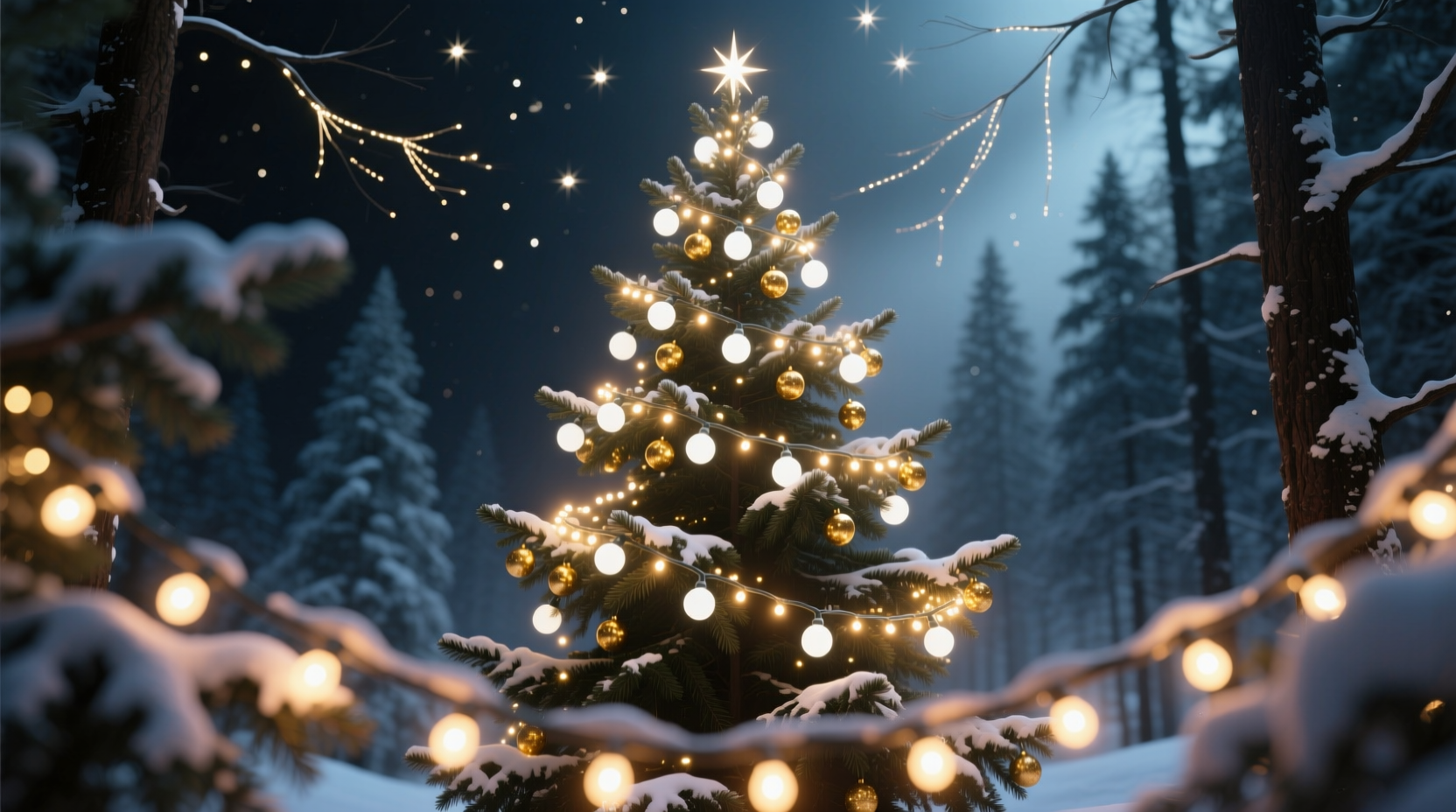
Most people treat tree lighting as a single task: wrap the lights evenly and plug them in. But professional decorators see lighting as a foundational layer—like paint on a canvas—that builds dimension. The illusion of depth is created by manipulating light intensity, direction, and density across different planes of the tree.
A flatly lit tree appears two-dimensional because light hits only the outer surface. In contrast, a layered approach places lights within the interior, mid-layer, and outer canopy, creating shadows, highlights, and gradients. This mimics natural light filtering through foliage and gives the tree volume, making it appear fuller and more dynamic—even in low-light rooms.
“Lighting isn’t just decoration—it’s architecture. You’re building form with illumination.” — Daniel Reyes, Lead Holiday Designer at Rockefeller Center
The key is to think in zones: back-to-front, inside-to-outside, and dark-to-bright. Each zone plays a role in shaping how the eye travels across the tree. When done well, the result is a tree that seems to glow from within, not just shine from the surface.
Step-by-Step: How to Layer Lights Like a Pro
Layering isn’t complicated, but it does require planning and patience. Follow this sequence to build true dimension:
- Start with the base layer (interior illumination)
Begin by placing warm white mini lights deep inside the tree, near the trunk and along central branches. These are your “shadow lights”—they won’t be highly visible when off, but when illuminated, they lift the inner structure and eliminate dark voids. Use wire-core lights for easier shaping and secure positioning. - Add the mid-layer (body definition)
Next, weave a second set of lights through the middle tier of branches. These should follow a spiral path from bottom to top, slightly overlapping but not duplicating the first layer. Choose the same color temperature (warm white) but consider varying bulb size or spacing for texture—clustered bulbs create pockets of brightness, while even spacing offers consistency. - Apply the outer layer (surface sparkle)
Now add a third strand—or reuse one type with enhanced features—on the outermost tips of branches. Opt for lights with faceted bulbs, glitter coatings, or slight flicker effects. These catch ambient light and draw attention, acting as visual anchors. Avoid overloading; use about half the density of the mid-layer to maintain balance. - Incorporate specialty lighting (accent layers)
For extra drama, integrate accent lights such as fairy lights (battery-powered micro LEDs), twinkle wires, or color-tinted strands in limited areas. Place these selectively—near the top third of the tree or around focal ornaments—to highlight specific zones without overwhelming the design. - Test and adjust
Turn off the room lights and view your tree from multiple angles. Look for dark patches, overly bright spots, or areas where layers compete. Gently reposition strands to smooth transitions. Remember: the goal is harmony, not uniformity.
Choosing the Right Lights for Each Layer
Not all lights serve the same purpose. Designers mix types intentionally to exploit differences in brightness, diffusion, and texture. Here’s how to match lights to layers:
| Layer | Light Type | Bulb Style | Color Temp | Notes |
|---|---|---|---|---|
| Interior | Mini incandescent or LED | Clear, frosted | Warm white (2700K) | Soft glow, minimal glare |
| Mid-body | LED string with steady output | Faceted or smooth | Warm white | Denser coverage, consistent spread |
| Outer surface | Multifaceted or glitter-tip | Prismatic, mirrored base | Warm or soft cool | High reflectivity, sparkles |
| Accents | Fairy lights, rope lights | Micro dots or starburst | Warm white or subtle color | Low-density, battery-powered |
Stick to one dominant color temperature—usually warm white—for cohesion. If using colored lights, limit them to no more than 10–15% of total lighting and place them deep within the tree so they tint surrounding foliage rather than dominate the view.
Tips for Maximum Dimension and Realistic Glow
Depth isn’t just about how many layers you use—it’s about how they interact. These techniques refine the effect:
- Spiral vertically, not horizontally: Wrap lights in a continuous upward spiral from base to tip. Horizontal wrapping creates bands of light that flatten the tree’s form.
- Vary spacing per layer: Interior lights can be spaced 4–6 inches apart; mid-layer at 3–4 inches; outer layer at 6–8 inches with intentional clustering at branch ends.
- Use warm white exclusively for realism: Cool white mimics office lighting and feels artificial. Warm white resembles candlelight and enhances wood tones, ornaments, and traditional decor.
- Don’t skimp on quantity—but distribute wisely: A common rule is 100 lights per foot of tree height. For a 7-foot tree, that’s 700 bulbs. But instead of one 700-light strand, use three 250-light strands across layers for better control.
- Hide cords and plugs inside the tree: Route power cords down the center pole or trunk and exit discreetly at the base. Never let cords dangle visibly down outer branches.
Real Example: Transforming a Flat 8-Foot Tree
Consider Sarah, a homeowner in Portland, who had always struggled with her Fraser fir looking sparse and lifeless after decorating. She used a single 600-light string wrapped haphazardly and topped it with a large star. Last year, she applied professional layering techniques:
She began by installing 200 warm white mini lights deep in the trunk and lower core. Then, she added 300 medium-density LEDs in a tight spiral up the mid-branches. Finally, she placed 100 prismatic-tipped lights on outer tips, focusing on the upper two-thirds where light would be most visible from her living room sofa. She also tucked in a 20-inch battery-powered fairy light garland near the top, weaving it around a cluster of vintage glass balls.
The result? Her tree appeared significantly fuller, with a gentle gradient from soft inner glow to bright outer sparkle. Neighbors commented that it looked “expensive” and “magical.” Sarah used the same number of lights as before—but distributed them with intention.
Common Mistakes That Flatten Your Tree
Even experienced decorators fall into traps that sabotage depth. Avoid these pitfalls:
- Using only one type of light: Uniform strings create monotony. Without variation in texture or placement, the eye doesn’t detect layers.
- Overloading the exterior: Too many lights on the outside drown out inner layers and make the tree look like a neon sign.
- Ignoring the backside: Trees against walls still need rear lighting. Darkness in the back collapses perceived depth.
- Skipping the base layer: No interior lights mean a hollow center, especially noticeable in sheer or sparse trees.
- Mixing color temperatures: Combining warm and cool whites creates visual conflict and reduces cohesiveness.
“The difference between amateur and pro lighting? Pros light the space, not just the surface.” — Lena Choi, Residential Lighting Consultant
Checklist: Professional-Layered Tree Lighting
Follow this checklist to ensure every layer is accounted for:
- ☐ Measure tree height and calculate total light needs (100 lights per foot)
- ☐ Purchase at least two, preferably three, sets of warm white lights (vary styles)
- ☐ Install interior layer first—deep within trunk and central branches
- ☐ Apply mid-layer in upward spiral, overlapping previous layer slightly
- ☐ Add outer-layer lights to branch tips, focusing on front and sides
- ☐ Insert accent lights (optional) near focal points or top third
- ☐ Conceal all cords and power sources inside the tree
- ☐ Test all strands in a darkened room from multiple viewing angles
- ☐ Adjust spacing or reposition bulbs to eliminate dark zones
- ☐ Step back and evaluate overall balance—no single area should dominate
FAQ: Lighting Layering Questions Answered
Can I achieve this look with a pre-lit tree?
Prelit trees make layering difficult but not impossible. Most have only one layer—on the exterior. To add depth, weave additional strands through the interior and mid-branches. Choose unlit sections carefully, and avoid covering existing bulbs. The added layers will compensate for the lack of internal illumination.
Should I use LED or incandescent lights?
Both work, but LEDs are preferred for layering. They run cooler (safer for deep placement), use less energy, last longer, and offer more design flexibility. Modern warm-white LEDs closely mimic the soft glow of incandescents without the heat or fragility.
How do I prevent tangled lights when layering?
Prevent tangles by spooling each strand individually after use and storing them on cardboard reels or in segmented bins. Before installation, lay each strand out straight and test it fully. Work with one layer at a time, securing each as you go, to avoid cross-threading.
Final Thoughts: Light with Intention
Layering Christmas lights isn’t about adding more—it’s about placing with purpose. Designers don’t rely on excess; they rely on strategy. By treating lighting as a structural element, not just decoration, you give your tree presence, warmth, and realism that elevates your entire holiday aesthetic.
This season, resist the urge to simply wrap and plug. Instead, build your tree’s glow from the inside out. Let the first lights rise from the darkness within, the next define its body, and the final touches bring it to life. When done right, your tree won’t just be lit—it will feel alive.




 浙公网安备
33010002000092号
浙公网安备
33010002000092号 浙B2-20120091-4
Comments
No comments yet. Why don't you start the discussion?