
Stair railings offer one of the most visible and dramatic spaces in a home to showcase holiday decor. When done well, layered garlands create a lush, inviting cascade that draws the eye and sets the tone for seasonal celebrations. But achieving elegance—rather than clutter—requires thoughtful planning, especially when combining multiple lengths and textures. The key lies not just in draping greenery, but in curating depth, rhythm, and balance.
Layering garlands of varying lengths transforms a simple railing into a dynamic focal point. Whether you're using fresh evergreen, faux pine, eucalyptus, or a mix of materials, the technique can elevate your entire entryway or hallway. This guide walks through the principles, tools, and methods to ensure your layered garland installation is cohesive, balanced, and visually striking.
Selecting Your Garland Types and Lengths
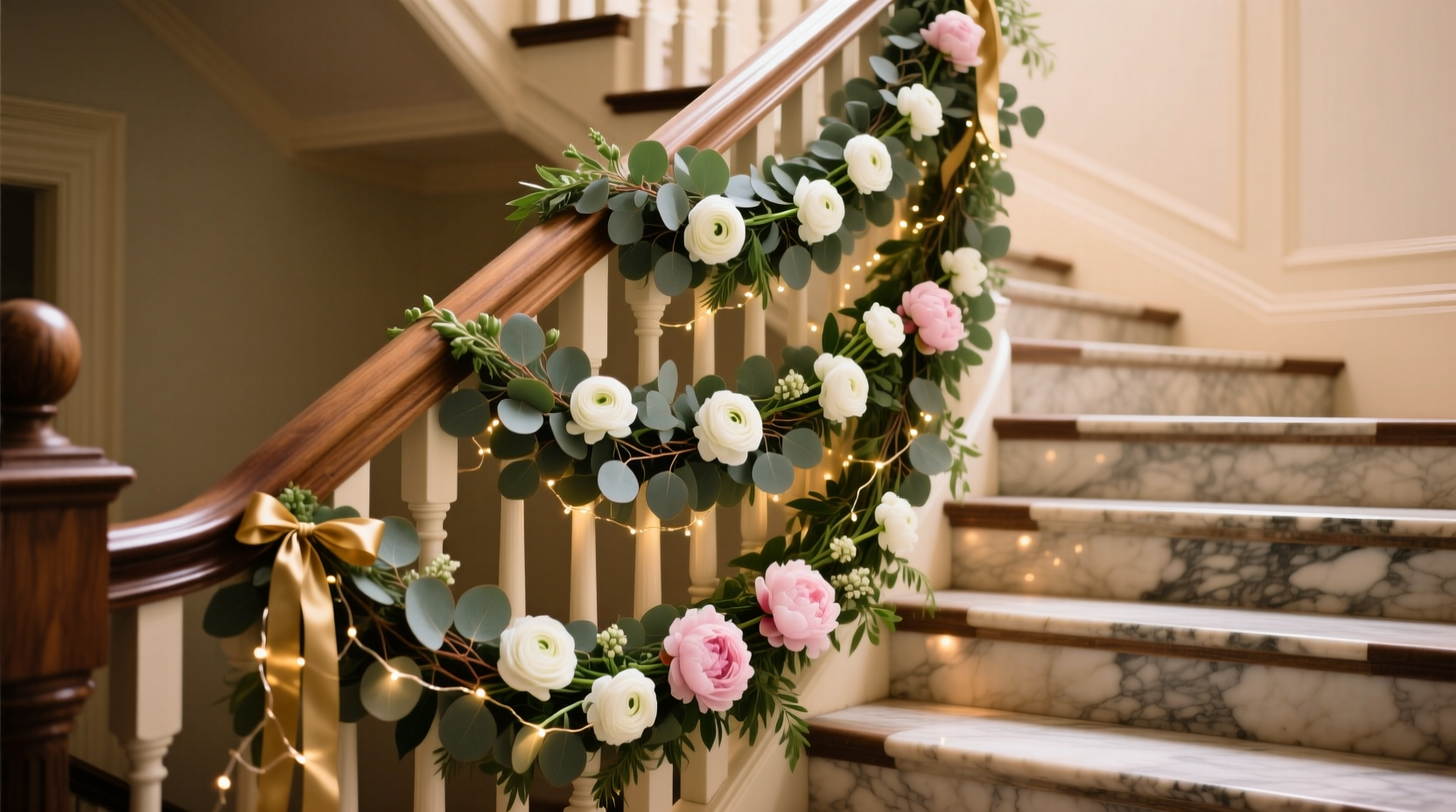
The foundation of elegant layering begins with selection. Not all garlands are meant to play the same role. Think of them as instruments in an ensemble—each contributes a different tone and texture to the overall composition.
Start by choosing at least two, preferably three, types of garland. A typical combination includes:
- Main garland: Thick, full-bodied, and often longer—this forms the base layer along the railing.
- Accent garland: Lighter in volume, possibly with berries, pinecones, or metallic sprays—used to add contrast and detail.
- Trailing garland: Longer and looser, designed to drape down the sides of the stairs for softness and movement.
Lengths should vary strategically. For a standard 10-step staircase with a continuous railing, consider:
| Garland Type | Recommended Length | Placement |
|---|---|---|
| Main (Base) | Equal to railing length + 1–2 ft extra | Along the top edge of the railing |
| Accent (Middle) | Same or slightly shorter than base | Offset or interwoven with base layer |
| Trailing (Draped) | 1.5x the height from railing to floor per side | Hanging from newel posts or每隔3–4 steps |
For example, if your railing runs 14 feet, use a 16-foot main garland to allow gentle pooling at the newel posts. The trailing pieces might be 6 to 8 feet long each, depending on stair height, to graze the edges of landings without touching the floor.
Step-by-Step Installation Process
Installing layered garlands isn’t about speed—it’s about precision and proportion. Follow this sequence to build dimension without overcrowding.
- Measure and prep the space. Use a tape measure to determine railing length and vertical drop. Clean the railing surface to ensure secure fastening.
- Install the base garland. Begin at the top newel post. Drape the longest, fullest garland along the railing cap, securing every 12–18 inches with clear zip ties or floral wire. Allow a 6–12 inch tail to cascade naturally at both ends.
- Add the accent layer. Take a second garland, ideally lighter or more decorative, and lay it slightly offset—either below or above the base. Weave it loosely over and under the first layer at intervals to create depth. Secure only where necessary to avoid rigidity.
- Incorporate trailing elements. Attach longer garlands to the top and bottom newel posts, letting them fall diagonally across the open side of the staircase. For multi-story landings, repeat on intermediate posts.
- Adjust for flow. Step back and view from multiple angles. Adjust loops, tighten loose ties, and fluff sections that appear thin. Rotate fuller segments toward high-visibility areas like turns or landings.
- Final embellishment. Add bows, ornaments, or battery-operated lights at staggered intervals—never symmetrically. Less is more; clusters of three work better than evenly spaced singles.
The goal is asymmetry within order—a sense of abundance that feels intentional, not accidental.
Design Principles for Visual Elegance
Elegance in garland layering comes from adherence to timeless design principles: balance, rhythm, and contrast.
Balance does not mean symmetry. Instead, distribute visual weight evenly. If one side has a large bow, counter it on the opposite end with a cluster of pinecones or a thicker knot of greenery. Avoid concentrating all decorations on one segment of the staircase.
Rhythm is created through repetition with variation. Repeat a motif—such as a red berry sprig or gold ribbon—but change its orientation or pairing. One berry cluster might face forward, the next might tuck beneath a loop. This keeps the eye moving without monotony.
Contrast elevates interest. Pair matte foliage with glossy ivy, or dark cedar with frosted eucalyptus. A velvet ribbon against feathery fir adds tactile contrast. Even scent can play a role—fresh pine layered with aromatic rosemary offers a sensory layer beyond sight.
“Holiday decor should feel abundant but never chaotic. Layering is about building atmosphere, not coverage.” — Clara Bennett, Interior Stylist & Seasonal Design Consultant
Avoid the temptation to cover every inch. Negative space—the bare railing between swags—allows the eye to rest and enhances the perception of fullness.
Common Mistakes and How to Avoid Them
Even experienced decorators fall into traps that undermine elegance. Awareness is the first step to avoiding these pitfalls.
- Overloading the railing: Too many garlands compress the space, making it look heavy and congested. Stick to no more than three layers unless the railing is exceptionally wide.
- Ignoring scale: A narrow bannister can’t support thick garlands without appearing swallowed. Match garland diameter to railing width—ideally no more than 1.5 times the rail’s thickness.
- Uniform spacing: Placing bows or ornaments at exact intervals creates a robotic look. Instead, cluster some elements closely and leave gaps elsewhere for organic flow.
- Using mismatched styles: Combining rustic burlap bows with sleek metallic garlands can clash. Define a theme—rustic farmhouse, modern minimalist, traditional luxe—and stick to it.
- Forgetting safety: Ensure garlands don’t obstruct handholds. Keep the lower third of the railing accessible, especially in homes with children or elderly visitors.
One often-overlooked issue is lighting integration. Tucking string lights underneath the top layer allows them to glow through the foliage, creating a soft backlight effect. Avoid wrapping lights around garlands before installation—they’re harder to adjust and can weigh down delicate stems.
Mini Case Study: A Historic Home’s Grand Staircase Transformation
The Whitmore Residence, a 19th-century brownstone in Boston, features a sweeping double staircase with ornate iron railings. Each holiday season, the homeowners struggled with garlands that looked sparse on the upper half and clumped awkwardly at turns.
Working with a local designer, they adopted a layered approach:
- A 20-foot Douglas fir garland formed the base, secured with discreet wire anchors.
- A secondary 18-foot garland of seeded eucalyptus was woven through at diagonal intervals, adding silver-green contrast.
- Three 7-foot magnolia vine garlands were suspended from newel posts, cascading down toward the first-floor landing.
- Amber fairy lights were threaded beneath the top layer, glowing softly at night.
The result was a staircase that felt rich without being overwhelming. From the foyer below, the layered greens created a sense of depth and warmth. The trailing vines softened the hard lines of the ironwork, while the lighting enhanced the natural shadows. Neighbors commented that it looked “effortlessly festive”—the highest compliment in seasonal decor.
Checklist: Preparing for Elegant Garland Layering
Before you begin, ensure you have everything needed for a smooth, professional-looking install:
- ✓ Measured railing length and vertical drop
- ✓ At least two garlands of differing textures and lengths
- ✓ Trailing greenery for side drops (optional but recommended)
- ✓ Zip ties, floral wire, or S-hooks for securing
- ✓ Scissors or wire cutters
- ✓ Step ladder (if needed)
- ✓ Decorative accents: bows, picks, ornaments
- ✓ String lights (if desired)
- ✓ A second pair of hands for adjusting and fluffing
Complete this checklist a day in advance. Store garlands flat or loosely coiled to prevent kinks, especially if using preserved or faux greenery.
Frequently Asked Questions
Can I mix real and faux garlands?
Yes, and it’s often recommended. Use fresh garlands as the base for scent and authenticity, then layer with high-quality faux pieces for durability and added embellishments. Just ensure textures complement each other—avoid pairing ultra-realistic pine with obviously plastic elements.
How do I keep garlands from drying out or shedding?
For fresh garlands, lightly mist with water every few days and apply an anti-desiccant spray before installation. Keep away from heating vents. Faux garlands should be dusted with a microfiber cloth or hairdryer on cool setting to prevent buildup.
Is it safe to use hot glue or nails on my railing?
Avoid permanent alterations. Hot glue can damage wood finishes, and nails leave holes. Opt for removable solutions like adhesive-backed hooks rated for outdoor use, or zip ties painted to match the railing. Always test adhesives on a small, hidden area first.
Conclusion: Create a Staircase That Invites Wonder
A beautifully layered garland transforms more than just a staircase—it transforms the experience of entering a home. When different lengths intertwine with purpose, when texture and light play together, the result is not decoration, but storytelling. Each loop and drape whispers of tradition, care, and celebration.
Don’t aim for perfection. Aim for presence. Let the garlands breathe, shift, and settle naturally. Revisit them mid-season to re-fluff, rotate, or swap in fresh elements. The most elegant displays aren’t static—they evolve, much like the holidays themselves.




 浙公网安备
33010002000092号
浙公网安备
33010002000092号 浙B2-20120091-4
Comments
No comments yet. Why don't you start the discussion?