
Layering Christmas garlands can transform your home into a richly textured winter wonderland. But the fine line between festive and overwhelming is thinner than tinsel on a pine branch. When done thoughtfully, combining different garlands adds depth, warmth, and visual interest. Done poorly, it results in cluttered chaos that distracts more than delights. The key lies not in restraint alone, but in intentionality—choosing complementary styles, varying textures, and strategic placement to create harmony rather than noise.
This guide walks through the principles, techniques, and real-world applications of layering multiple garlands across mantels, staircases, banisters, and entryways. Whether you're working with lush greenery, beaded strands, or vintage ribbon, you’ll learn how to blend them cohesively while preserving elegance and seasonal charm.
Understand the Role of Each Garland Type
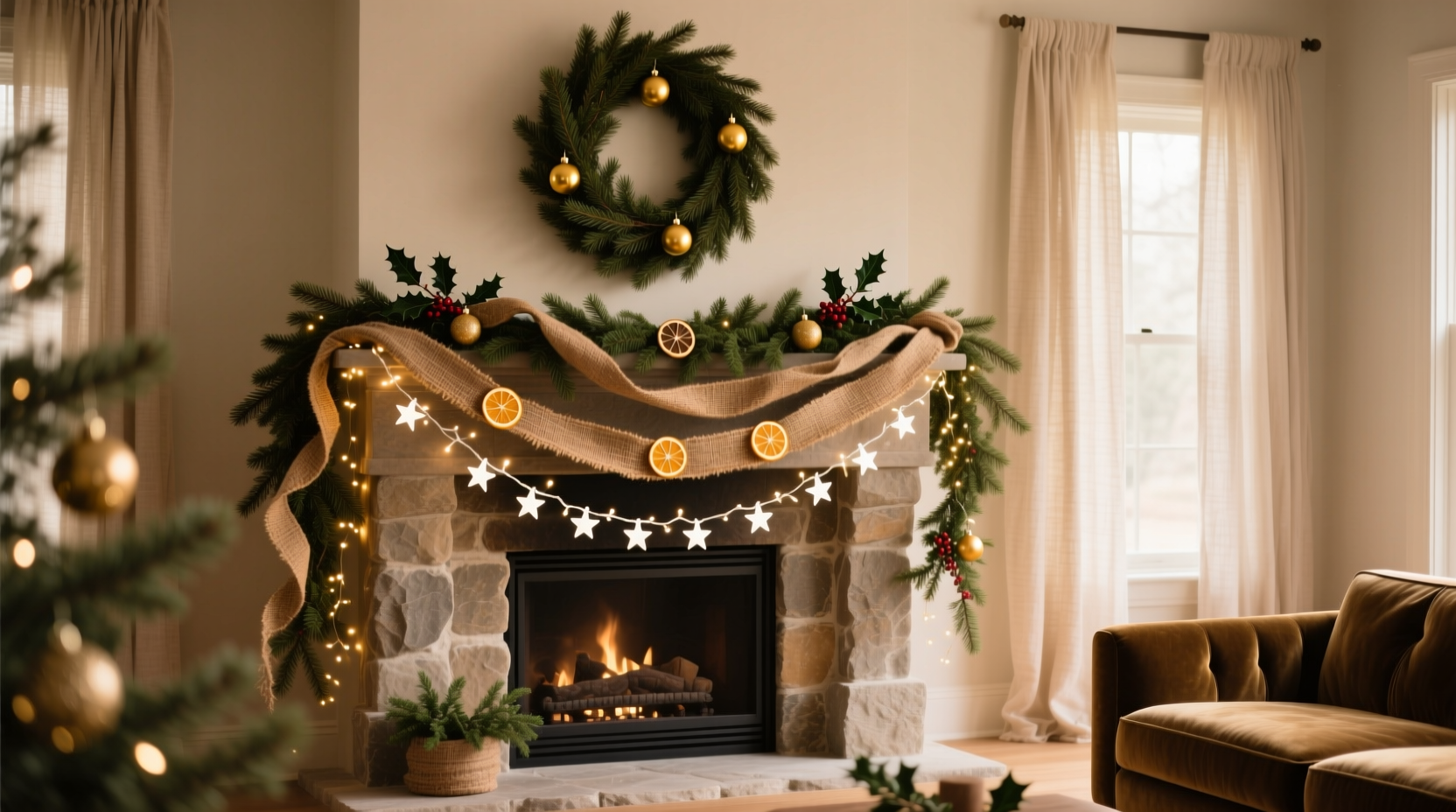
Before hanging anything, recognize that not all garlands serve the same purpose. Some are structural anchors, others add sparkle, and a few provide nostalgic detail. Treating each type as a design element—not just decoration—helps prevent overcrowding.
- Natural greenery garlands (pine, eucalyptus, cedar) act as foundational layers. They offer volume and organic texture, forming the base for other additions.
- Beaded or popcorn garlands bring rhythm and tradition. These are best used sparingly, often draped diagonally or in loose loops over heavier bases.
- Ribbon or fabric garlands introduce color and softness. Wide velvet ribbons work well on mantels; sheer organza suits delicate spaces like chandeliers.
- Lighted garlands function as both illumination and ornament. Use these to highlight focal points, not blanket entire surfaces.
- Vintage or handmade garlands (paper chains, crocheted snowflakes) add personality. Reserve them for secondary zones where they can shine without competing.
Create Visual Hierarchy with Placement and Scale
Overloading occurs when every garland fights for attention. To avoid this, establish a clear visual hierarchy by varying scale, position, and prominence.
On a mantel, for example, drape a thick evergreen garland along the back edge. This becomes your anchor. Then, weave a narrower strand of cranberry-and-cinnamon beads down the center, letting it dip slightly for movement. Finally, tie in a deep red velvet ribbon at intervals, allowing tails to fall naturally. The eye moves from background to foreground, noticing details without confusion.
For stair railings, consider staggering lengths. Run a continuous pine garland along the handrail, then layer a shorter string of fairy lights only on the lower third near the living area. A paper chain might hang from newel posts at child-height level—adding whimsy without interfering with adult sightlines.
“Balance in holiday decor isn’t about symmetry—it’s about rhythm. Let some areas breathe so others can sing.” — Clara Mendez, Interior Stylist & Seasonal Design Consultant
Follow the Layering Timeline: A Step-by-Step Guide
Successful layering unfolds in stages, not all at once. Rushing leads to haphazard results. Follow this sequence to ensure cohesion:
- Assess the space: Measure length and height. Note architectural features—cornices, shelves, hooks—that can support weight or break up long stretches.
- Choose a primary garland: Pick the most substantial piece based on material and color. This should reflect your overall theme (rustic, modern, traditional).
- Install the base layer: Secure it evenly using floral wire, zip ties, or adhesive hooks. Avoid over-attaching; slight looseness adds naturalism.
- Select two accent garlands maximum: One should contrast in texture (e.g., smooth ribbon vs. rough burlap), the other in function (e.g., lights vs. non-lit).
- Drape second layer loosely: Intertwine it partially with the base, leaving gaps to see through. Never fully cover the first layer.
- Add final touches last: Ornaments, pinecones, or small wreaths should punctuate, not populate. Place every 12–18 inches.
- Step back and evaluate: View from multiple angles and lighting conditions. Remove any element that feels redundant or distracting.
Do’s and Don’ts: Balancing Variety Without Clutter
Mixing garland types invites creativity, but certain combinations inherently clash. Refer to this table to make informed choices.
| Scenario | Do | Don't |
|---|---|---|
| Mantel with artwork above | Keep garlands narrow and low-profile to preserve sightlines | Stack tall garlands that obscure frames or mirrors |
| Combining lights and greenery | Weave LED string lights into pine for subtle glow | Use blinking multicolored lights over dense foliage—creates visual noise |
| Using vintage elements | Pair old-fashioned popcorn strands with neutral-toned greenery | Layer with glittery ribbon—competes for attention |
| High-traffic areas (entryway, staircase) | Opt for durable materials like wired eucalyptus or silk | Hang fragile paper chains prone to tearing |
| Modern minimalist interiors | Use monochromatic garlands (white birch, silver vines) | Add five different types including bells, tinsel, and beads |
A Real Example: The Balanced Entryway Makeover
The Thompson family wanted their front hall to feel festive but kept ending up with a tangled mess every December. Their narrow staircase had hosted three overlapping garlands: a thick cedar strand, a blinking light rope, and a wide plaid ribbon—all installed at once with no planning.
This year, they restructured the approach. First, they removed everything and measured the railing length (18 feet). They chose a medium-density fir garland as the base, secured with hidden clips every 16 inches. Next, they wove a warm-white micro-LED garland only along the bottom half, creating a “landing zone” glow visible from the street. Finally, they tied navy-and-gold striped ribbon at each post, cutting tails to 10 inches for polish.
The result? Depth without density. Guests noticed the craftsmanship, not the clutter. Most importantly, the staircase remained safe and unobstructed—a critical win for a home with young children and frequent visitors.
Essential Checklist for Layering Success
Use this checklist before and during installation to stay on track:
- ☐ Selected one dominant garland type (e.g., greenery)
- ☐ Limited accent garlands to two or fewer
- ☐ Verified compatibility in color palette and texture
- ☐ Measured installation area to avoid excess trimming
- ☐ Chosen secure but removable fasteners (no nails or tape residue)
- ☐ Tested lighted garlands for functionality and heat output
- ☐ Left negative space between layers for visual breathing room
- ☐ Stepped back to review balance from multiple vantage points
- ☐ Removed any single element that feels redundant
- ☐ Scheduled a mid-season check-in to refresh wilted sections
Frequently Asked Questions
Can I mix artificial and real garlands?
Yes, but do so intentionally. Pair realistic faux greenery with fresh-cut pine for extended longevity. Avoid placing obviously plastic-looking strands next to organic ones—they highlight each other’s flaws. Matte-finish artificial garlands blend better than glossy versions.
How many garlands is too many?
More than three layered in the same plane usually overwhelms. If you’re using four or more, stagger their locations instead of stacking them. For example: greenery on the railing, lights overhead, ribbon on the door, and a paper chain on the wall. Spatial separation prevents competition.
What if my space is small? Can I still layer?
Absolutely—but scale down. In compact areas like apartment balconies or studio apartments, use mini garlands. Try a thin ivy vine wrapped with copper wire lights, accented by a single loop of lace ribbon. Less volume, more detail, keeps intimacy intact.
Final Thoughts: Celebrate Restraint as Style
Mastering the art of layered garlands isn’t about adding more—it’s about curating better. The most memorable holiday displays aren’t those packed with every ornament available, but the ones where every choice feels deliberate. Texture plays against texture, light complements shadow, and tradition dances with modernity—all without shouting.
When you step back and feel calm instead of chaos, you’ve succeeded. That quiet joy—the sense that the season has settled in comfortably—is what truly defines festive elegance.




 浙公网安备
33010002000092号
浙公网安备
33010002000092号 浙B2-20120091-4
Comments
No comments yet. Why don't you start the discussion?