
Layering necklaces is one of the most expressive ways to elevate an outfit, but it’s easy to cross the line from curated to cluttered. Done well, layered necklaces add depth, personality, and sophistication. Done poorly, they compete for attention and overwhelm the eye. The key isn’t just throwing on multiple chains—it’s about intentionality, proportion, and harmony. Stylists don’t rely on luck; they use deliberate principles to create balanced, fashion-forward combinations that look effortless but are carefully constructed.
This guide breaks down the professional techniques behind seamless necklace layering. From understanding chain lengths to mixing metals and managing negative space, you’ll learn how to build cohesive stacks that enhance your look rather than distract from it.
Understand the Foundation: Chain Lengths & Proportions
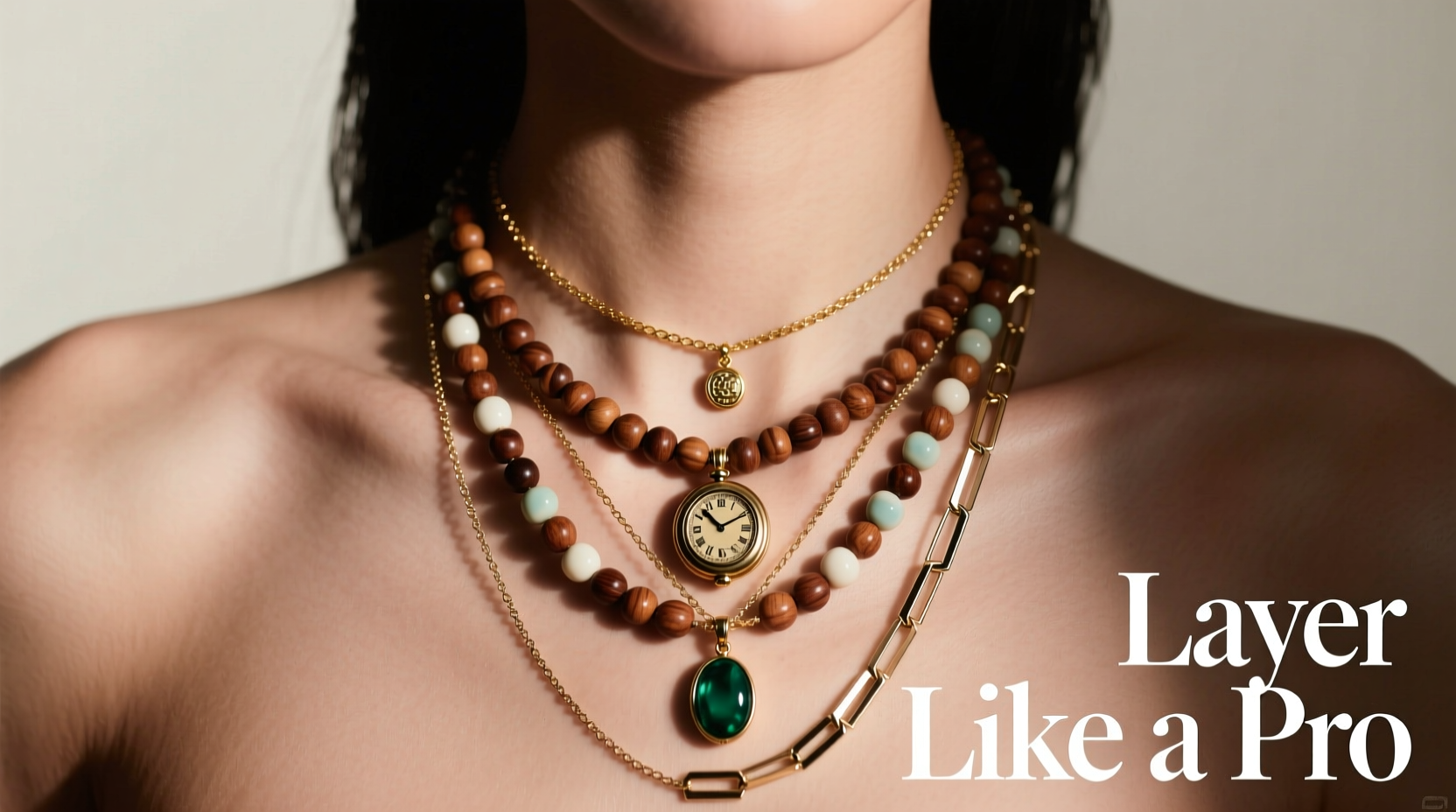
The backbone of any successful necklace stack is length variation. Wearing three 16-inch pendants at the same level creates tangles and visual congestion. Instead, stagger your pieces so each sits at a different point on the collarbone or chest. This creates vertical rhythm and allows each piece to be seen.
Common necklace lengths and their positioning:
| Length (inches) | Name | Where It Sits | Best For Layering |
|---|---|---|---|
| 14–16 | Choker / Collar | Tight around base of neck | Top layer with delicate chains |
| 17–18 | Princess | Just below collarbone | Middle anchor in a trio |
| 20–22 | Matinee | Rests on upper chest | Adds depth without overwhelming |
| 24–30+ | Opera / Rope | Falls mid-chest or lower | Dramatic base layer or solo drape |
A classic three-layer stack often follows a 16-18-22 inch progression. This spacing ensures clear separation while maintaining cohesion. When selecting lengths, consider your neckline—higher necklines benefit from longer layers to elongate the torso, while V-necks pair beautifully with pendants aligned along the angle of the cut.
Build With Intention: The Stylist’s Layering Formula
Professional stylists treat necklace layering like composing a sentence—each piece has a role. There’s a subject (statement piece), modifiers (supporting chains), and punctuation (negative space). Without structure, the message gets lost.
Follow this four-step formula to build a polished stack:
- Choose a focal point. Decide which necklace will be the hero—this could be a bold pendant, a textured chain, or a personalized charm. Place it in the middle or longest layer.
- Select complementary anchors. Add one or two simpler chains to frame the focal piece. These should differ in thickness or texture but not compete visually.
- Vary chain styles. Combine different links—like a cable, a box chain, and a delicate rope—to add dimension without clashing.
- Leave breathing room. Avoid overcrowding. Two to four pieces are usually enough. More than five often feels excessive unless intentionally styled for editorial effect.
Balance is critical. If you’re wearing a thick Cuban link at 20 inches, don’t pair it with another heavy chain at 18 inches. Instead, contrast it with a fine trace chain above and a simple pendant below. This creates lightness and prevents the neck from appearing weighed down.
“Less is more until more is needed. I always start with two pieces and add only if the outfit demands it.” — Lena Torres, Celebrity Stylist
Mix Metals & Textures Like a Pro
Gone are the days when matching metals was mandatory. Today’s styling rule: you can wear gold, silver, and rose gold together—as long as it’s intentional. The trick is to establish dominance. Choose one metal as primary (e.g., 70% gold) and use others as accents (30% silver or mixed).
To blend metals seamlessly:
- Stick to similar finishes—mix matte with matte, polished with polished.
- Use transitional pieces, like a double-strand chain with both metals, to bridge the gap.
- Avoid equal splits (50/50 gold/silver), which can look indecisive.
Texture plays an equally important role. A smooth, shiny chain next to a hammered or twisted design adds tactile interest. But avoid combining too many high-texture elements—three chunky, patterned chains will fight for attention.
Consider this effective combination:
- Top: 16” delicate gold vermeil cable chain with small initial charm
- Middle: 18” medium silver box chain, no pendant
- Bottom: 22” gold-filled figaro chain with a single geometric pendant
This mix uses two metals with gold dominant, varied textures, and increasing weight downward—creating movement and focus.
Avoid Common Pitfalls: Do’s and Don’ts
Even experienced jewelry wearers fall into traps that disrupt harmony. Recognizing these mistakes is half the battle.
| Do’s | Don’ts |
|---|---|
| Start with your outfit—let the neckline and formality guide your choices | Layer heavily over busy prints or ruffled collars |
| Use a necklace spacer or ring to keep chains from tangling | Wear all pendants facing forward—rotate some sideways for organic flow |
| Adjust layer order based on top vs. open-back clothing | Forget skin tone—cool tones suit silver/white gold; warm tones favor yellow/rose gold |
| Test your stack in natural light to check visibility and balance | Ignore comfort—long layers shouldn’t constantly flip or catch on fabric |
Real-Life Example: From Day to Night Layering
Sophia, a marketing executive, wanted to transition her look from office meetings to dinner events without changing jewelry. Her solution? A modular layering system.
During the day, she wore a single 18-inch rose gold bar necklace over a crisp white blouse—minimal and professional. For after-work drinks, she added two pieces: a 16-inch delicate chain with a tiny zodiac charm and a 24-inch paperclip chain with a subtle moon pendant. The result was elevated but not flashy, personal but not distracting.
The transformation worked because:
- All pieces were in the same metal family (rose gold dominant).
- Lengths were spaced to avoid crowding.
- She kept the original bar necklace as the consistent anchor, making the added layers feel like extensions, not replacements.
This approach reflects a core stylist principle: build around a signature piece. It becomes your jewelry “uniform,” with flexibility for context-driven adjustments.
Step-by-Step Guide: Creating Your First Balanced Stack
If you're new to layering, follow this sequence to develop confidence and consistency:
- Assess your jewelry collection. Pull out all necklaces and lay them flat. Group by metal, length, and style.
- Pick a base piece. Choose a versatile chain you already love and wear often—this will be your constant.
- Add a contrasting layer. Select a second chain that differs in length (at least 2 inches apart) and either thickness or texture.
- Introduce a third for depth (optional). Go longer or shorter than your first two, ideally with a small pendant to draw the eye.
- Try them on over a simple top. Check for tangling, visibility, and balance. Turn side-to-side to see how they move.
- Edit ruthlessly. Remove any piece that distracts or bunches. Simplicity often wins.
- Secure and test. Use clasps or adjustable sliders to lock lengths. Wear for an hour to ensure comfort and stability.
Repeat this process with different combinations to discover what flatters your body shape and suits your wardrobe. Over time, you’ll develop go-to stacks for different occasions.
FAQ: Common Layering Questions Answered
Can I layer necklaces with different pendant sizes?
Yes, but size should correspond with placement. Larger pendants work best on longer chains where they have room to shine. Smaller charms belong on shorter or thinner chains near the collarbone. Avoid stacking multiple large pendants—they’ll collide and obscure each other.
How do I keep my layered necklaces from tangling?
Use anti-tangle solutions like silicone necklace spacers or small jump rings between chains. Store layered sets pre-connected on a soft roll or padded hanger. Also, opt for sturdier chains like box or Figaro links, which resist twisting better than delicate ropes or wheat chains.
Is it okay to layer necklaces with casual outfits?
Absolutely. In fact, layering can elevate basics like tees and tanks. Stick to lighter materials and fewer layers (two to three max) for daytime. Think a short pendant over a crewneck tee paired with a slightly longer minimalist chain. Keep metals consistent and avoid anything overly formal like pearls or chandeliers.
Final Thoughts: Confidence Is the Best Accessory
Mastering necklace layering isn’t about following rigid rules—it’s about developing an eye for balance and expressing your individuality. The most stylish people aren’t those with the most expensive jewelry, but those who wear it with intention and ease. By understanding length, contrast, and composition, you can create stacks that feel personal, polished, and perfectly you.
Start small. Experiment fearlessly. Edit with honesty. And remember: every great style journey begins with a single chain.




 浙公网安备
33010002000092号
浙公网安备
33010002000092号 浙B2-20120091-4
Comments
No comments yet. Why don't you start the discussion?