
Layering necklaces is one of the most expressive ways to elevate an outfit. When done well, it adds depth, personality, and a curated sense of style. But when executed poorly, it can result in a tangled mess or visual chaos that distracts rather than enhances. The secret lies not in stacking every chain you own, but in intentional pairing—balancing length, texture, proportion, and personal taste. With the right approach, anyone can master this art, turning simple jewelry into a statement.
Understand the Basics of Necklace Lengths
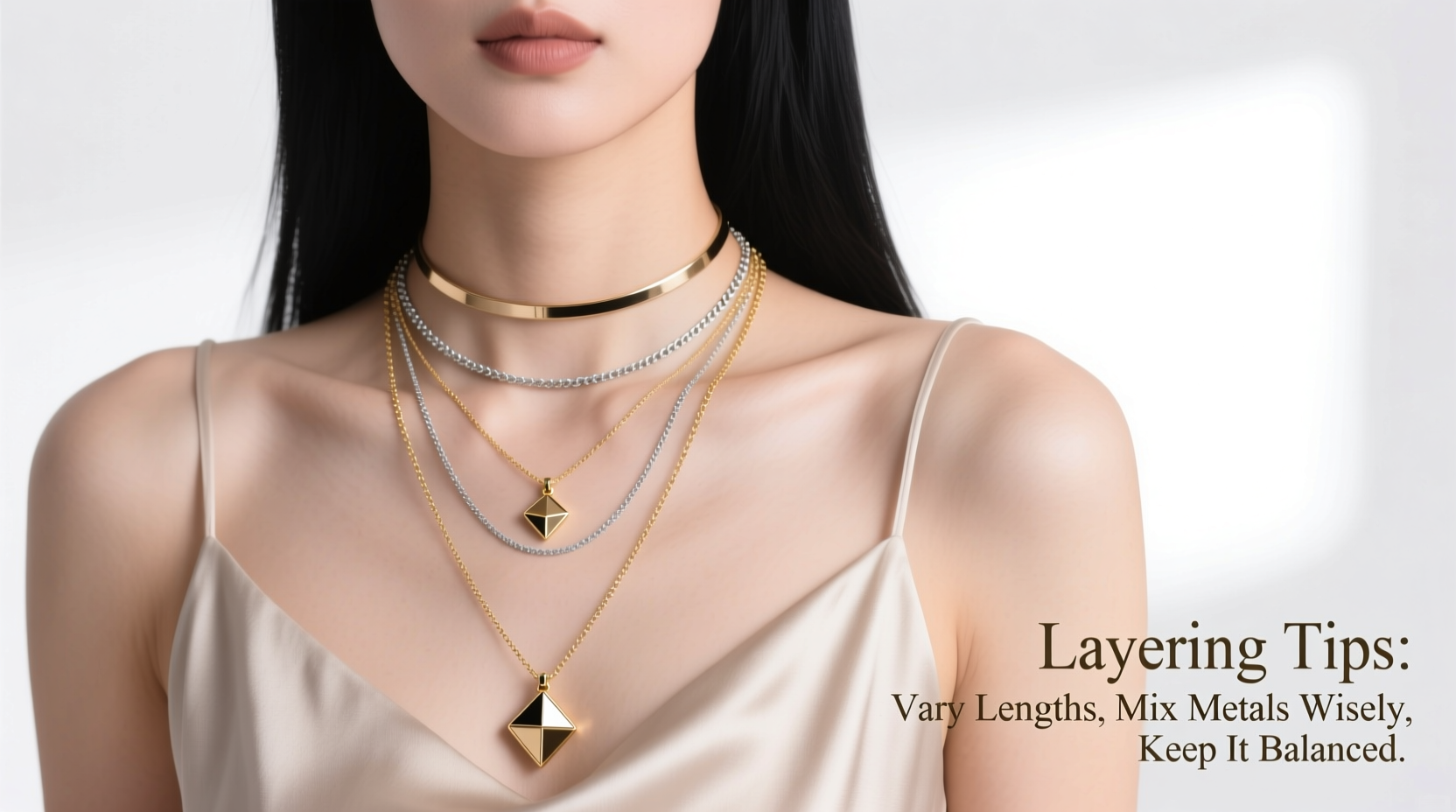
Before combining multiple chains, it’s essential to understand standard necklace lengths and how they interact on the body. Each length serves a different purpose and sits at a distinct point on the neck or chest, influencing both aesthetics and function.
| Length (inches) | Name | Sits At | Best For Layering? |
|---|---|---|---|
| 14–16 | Choker | Base of the neck | Top layer—adds definition |
| 18 | Princess | Top of the collarbone | Mid-layer—versatile anchor |
| 20–22 | Matinee | Middle of the sternum | Foundation layer—ideal for pendants |
| 24–30 | Opera / Rope | Breastbone to below bust | Bottom layer—creates drama |
The key to avoiding clutter is spacing. Choose lengths that are at least two inches apart so each piece remains visible and doesn’t overlap excessively. A classic trio might include a 16-inch choker, an 18-inch pendant, and a 24-inch chain with a larger charm—each occupying its own visual zone.
Choose Complementary Styles and Textures
Clashing occurs when too many competing elements fight for attention. This includes mismatched metals, overly busy designs, or inconsistent themes. To maintain harmony, start by selecting a unifying theme or material.
- Stick to one metal tone—whether gold, silver, rose gold, or platinum—to ensure cohesion. Mixing metals can work, but only if done deliberately and sparingly.
- Vary textures, not themes. Pair a delicate cable chain with a bold curb or rope chain, but avoid combining a vintage locket, a modern geometric pendant, and a beaded strand unless they share a color or motif.
- Limit pendants to one or two focal points. If more than half your layers have prominent charms, the look becomes noisy. Let one or two pieces carry the story; the others should frame them.
Think of layering like composing music: some notes are lead melodies, others provide rhythm or harmony. A dainty chain with no pendant supports a bolder piece—it doesn’t compete with it.
“Balance is everything. One strong piece can anchor three subtle ones. Too many solos, and you lose the song.” — Lila Torres, Jewelry Designer & Stylist
Step-by-Step Guide to Building a Layered Look
Creating a balanced layered necklace set isn't guesswork. Follow this sequence to build a polished combination every time.
- Start with your base outfit. Consider the neckline—high collars suit longer layers, while plunging necklines allow for intricate short-and-long combinations. A crewneck sweater, for example, works best with 18-inch and longer chains.
- Pick your hero piece. This is usually the necklace with a meaningful pendant, unique design, or standout texture. Place it at mid-chest (around 20–22 inches) so it’s visible but not overwhelming.
- Add a short accent above. Choose a simpler chain between 14 and 16 inches. It could be a plain delicate link or a minimalist initial charm. This draws the eye upward and frames the face.
- Extend downward with a longer chain. Select a third piece between 24 and 30 inches. This adds dimension and elongates the torso. Avoid adding a pendant if your hero piece already has one, unless they’re intentionally coordinated.
- Adjust spacing and symmetry. Put all pieces on and observe in a mirror. Are they overlapping awkwardly? Can you see each chain clearly? Adjust order or remove one if needed.
- Secure and test movement. Move your head, shoulders, and arms. Do the chains tangle immediately? If yes, reconsider weight distribution or use anti-tangle clips (discussed later).
Prevent Tangling with Smart Storage and Wear Techniques
Tangling is the biggest frustration in necklace layering. Fine chains knot easily, especially when stored together or worn without structure. The solution involves both daily habits and strategic accessories.
Wear Tips to Minimize Tangles
- Put necklaces on in order—from longest to shortest. This reduces friction as you fasten each clasp.
- Avoid wearing ultra-fine chains with thick, heavy ones unless separated by at least 4 inches in length.
- Use magnetic or lobster clasps consistently—spring rings are more likely to catch on other chains.
Storage Solutions That Work
- Store each necklace individually in soft pouches or fabric-lined boxes.
- Hang them on a jewelry stand with multiple arms to keep lengths separated.
- Lay flat in a drawer organizer with compartments—never toss them into a pile.
For frequent layerers, consider investing in **anti-tangle silicone clips**. These small devices attach between chains, keeping them spaced and preventing loops from forming.
“Most tangles happen during storage or removal. Take 30 seconds to lay them out properly, and you’ll save ten minutes untangling later.” — Marcus Reed, Luxury Jewelry Concierge
Checklist: Build Your Perfect Layered Stack
Use this checklist before styling or purchasing new pieces to ensure a harmonious, tangle-free result.
- ✅ Chosen 2–4 necklaces with varying lengths (minimum 2 inches apart)
- ✅ Selected one dominant focal point (pendant or textured chain)
- ✅ Confirmed metal tones match or are intentionally mixed
- ✅ Tested the combination in natural light and motion
- ✅ Verified no excessive overlapping or visual crowding
- ✅ Stored remaining necklaces separately to prevent damage
- ✅ Cleaned each chain recently to maintain shine and smooth movement
Real Example: From Cluttered to Curated
Sophia, a marketing executive in Chicago, loved jewelry but often received comments that her neck looked “busy” or “messy.” She owned over a dozen chains—delicate gold links, a silver nameplate, a beaded bohemian strand, and a chunky Cuban link she inherited. Every morning, she’d throw on three or four at random, usually ending up frustrated.
After consulting a personal stylist, she applied a structured approach: she kept only gold-toned pieces, selected a single 18-inch locket as her centerpiece, added a 16-inch paperclip chain for subtle texture, and finished with a 28-inch figaro chain worn long and sans pendant. The transformation was immediate—her colleagues noticed she looked “put-together,” and she reported feeling more confident.
The real win? She stopped tangling her favorite pieces because she stored them on a wall-mounted rack, grouped by length. What once took five minutes of untangling now takes seconds to wear.
Common Mistakes to Avoid
Even experienced fashion lovers make missteps when layering. Recognizing these pitfalls helps refine your technique.
- Overloading the collarbone area. Wearing three 16–18 inch necklaces creates a clustered effect that visually shortens the neck.
- Mixing too many pendant styles. A cross, a moon charm, and a monogram on separate chains compete for meaning and space.
- Ignoring chain weight. Heavy chains will pull lighter ones out of alignment, increasing tangle risk and discomfort.
- Neglecting skin tone and outfit contrast. Delicate gold chains may disappear against a patterned top or bronzed skin—adjust thickness accordingly.
Frequently Asked Questions
Can I mix gold and silver necklaces?
Yes, but do so intentionally. Modern “mixed metal” styling works when the combination feels deliberate—not accidental. Limit mixed metals to two pieces max, and ensure the rest of your accessories (watches, rings, bracelets) support the duality. Alternatively, choose pieces with dual-tone finishes for a seamless blend.
How many necklaces is too many?
Generally, three to four is the sweet spot for everyday wear. More than that risks visual overload and mechanical tangling. For special occasions, you can go up to five if lengths are widely spaced (e.g., 14\", 18\", 24\", 30\", 36\") and only one or two include pendants.
How do I clean tangled necklaces without damaging them?
First, don’t pull. Lay the chains flat on a clean surface. Apply a drop of baby oil or olive oil to the knot to reduce friction. Use a straight pin or fine crochet hook to gently loosen the loop from the inside. Once untangled, wash with mild soap and water, then dry thoroughly. For valuable pieces, consult a jeweler.
Final Thoughts: Style Is Intentional, Not Accidental
Perfect necklace layering isn’t about having the most expensive collection or following trends. It’s about curation—choosing pieces that reflect who you are and arranging them with care. The most admired looks aren’t the busiest; they’re the ones where every element has a reason to be there.
Start small. Master a two-chain combo. Learn how different lengths move with your body. Pay attention to what feels comfortable and what draws compliments. Over time, you’ll develop a signature style that’s uniquely yours—one that doesn’t tangle, clash, or confuse, but quietly commands attention.




 浙公网安备
33010002000092号
浙公网安备
33010002000092号 浙B2-20120091-4
Comments
No comments yet. Why don't you start the discussion?