
Layering necklaces is one of the most expressive ways to elevate an outfit. Whether you're dressing up for an evening event or adding dimension to a casual look, multiple chains can create depth, balance, and personality. But there's a common frustration that comes with this trend: tangled jewelry. Knots not only waste time but can damage delicate chains and diminish the elegance of your ensemble.
The good news is that with the right approach, you can layer necklaces confidently—without a single knot in sight. This guide reveals a proven system that combines thoughtful selection, strategic wearing order, smart storage, and maintenance habits used by stylists and jewelers alike.
Understanding Why Necklaces Tangle
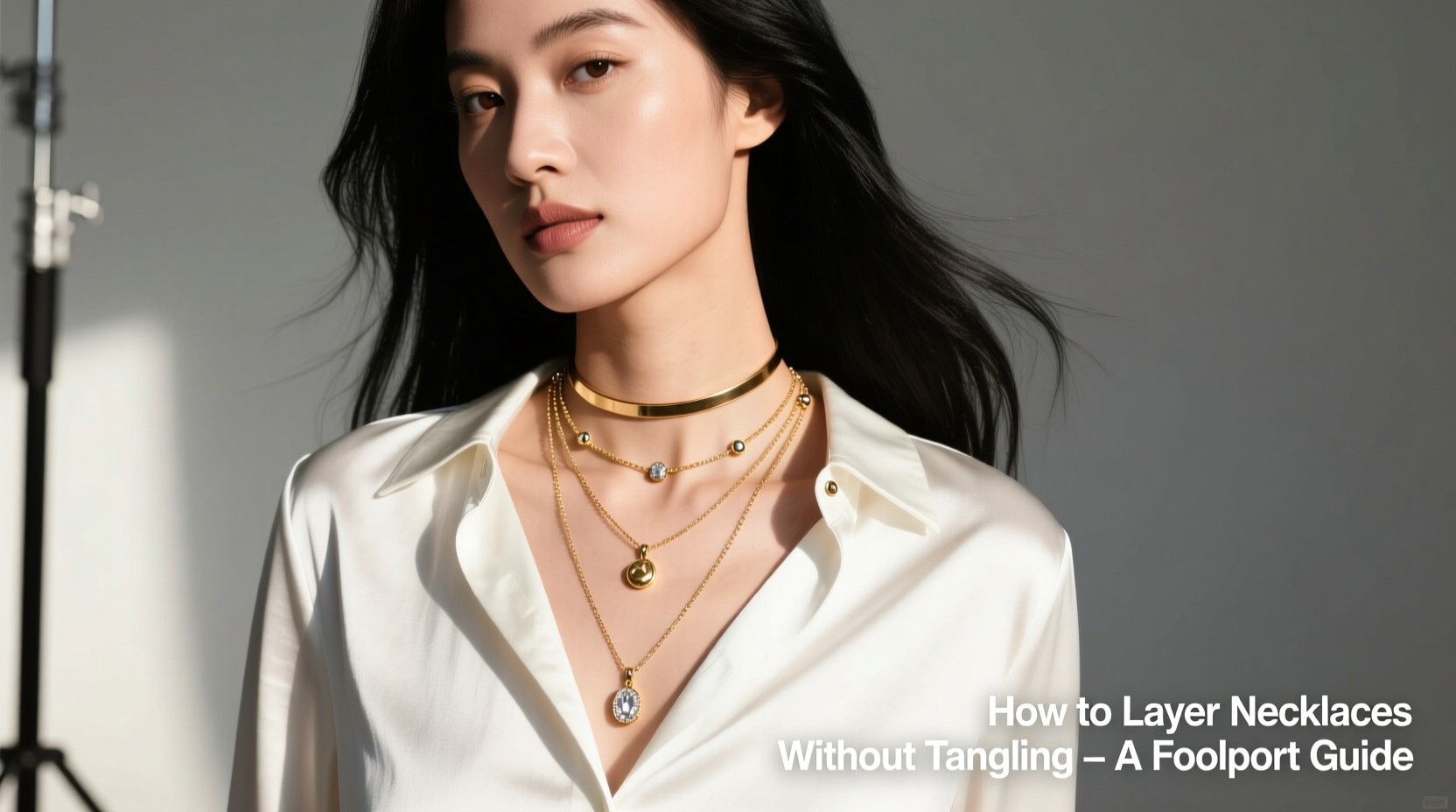
Tangling occurs when chains rub against each other during movement, especially if they’re lightweight, fine, or have similar lengths. The more layers involved, the higher the chance of friction. Certain metals like gold-filled or sterling silver are more prone to kinking due to their malleability. Additionally, improper storage—such as tossing necklaces into a drawer—invites knots before you even wear them.
It’s not just about convenience; repeated untangling weakens solder points and clasps over time, shortening the lifespan of your favorite pieces. Preventing tangles isn’t merely aesthetic—it’s essential jewelry preservation.
A Step-by-Step Method to Layer Without Tangles
Follow this five-step process every time you layer necklaces. It takes less than two minutes and virtually eliminates tangles—even with three or more chains.
- Select necklaces with distinct lengths. Choose pieces that differ by at least 1–2 inches (e.g., 16\", 18\", 20\"). This prevents overlap and reduces chain-to-chain contact.
- Start with the longest chain. Put it on first and let it rest naturally. Longer chains sit lower on the chest and form the base layer.
- Add shorter pieces progressively. Slide on the next shortest, then the next. Each new chain will naturally fall above the previous one, minimizing friction.
- Adjust spacing gently after all are on. Use your fingers to nudge any chain that feels too close to another. Avoid pulling or twisting while adjusting.
- Secure all clasps behind the neck. Ensure each closure is fully latched. A loose clasp can snag on fabric or other chains.
This reverse-layering technique—longest to shortest—is counterintuitive for many, but it’s the secret professionals use. By establishing the foundation first, subsequent layers glide into place without interference.
Real Example: Morning Rush, No Tangles
Sophie, a marketing executive in Chicago, used to avoid layered necklaces because she’d spend ten minutes every morning picking apart knots. After switching to the longest-first method and investing in a few adjustable chains, she now layers three necklaces in under 90 seconds. “I keep my 20-inch rope chain on all week,” she says. “Then I clip on an 18-inch pendant and a 16-inch choker depending on the top I’m wearing. They never touch.” Her trick? She added silicone stoppers (available online) to prevent sliding, keeping each chain precisely where it should be.
Choosing the Right Necklace Types for Layering
Not all necklaces are created equal when it comes to layering. Some styles resist tangling better due to structure and weight. Consider these factors when building a tangle-resistant stack:
- Chain thickness: Mix delicate chains with slightly heavier ones. Thicker chains act as anchors and reduce movement.
- Link style: Rolo, cable, and box chains tend to lie flat and resist twisting. Avoid overly flexible styles like Figaro or snake chains unless used as standalone pieces.
- Weight distribution: Pendants add downward pull, helping chains stay separated. Try placing pendants on alternating layers to break up visual and physical continuity.
- Metal type: While personal preference rules here, consider that stainless steel and titanium resist kinking better than softer metals like fine gold.
“Balance is everything. A well-layered set isn’t just about length—it’s about texture, weight, and intention. Think of it like music: each chain plays a different note.” — Lena Torres, Jewelry Stylist & Founder of ChainTheory Studio
Do’s and Don’ts of Necklace Layering
| Do’s | Don’ts |
|---|---|
| Use necklaces differing by at least 2 inches in length | Wear three 18-inch chains together |
| Fasten each clasp before dressing | Leave clasps unsecured while putting on clothes |
| Store layered sets together on a soft hanger or stand | Toss mixed chains into a cluttered jewelry box |
| Incorporate one statement piece per layer stack | Combine multiple dangling pendants that can catch |
| Clean and inspect chains monthly for weak links | Wait until a chain breaks to check its condition |
Smart Storage Solutions That Prevent Tangles
Prevention starts when the necklaces come off. How you store them determines how smoothly they’ll go back on.
Lay flat on a fabric-lined tray or hang individually on a wall-mounted rack. For those who love specific combinations, dedicated necklace trees with horizontal bars allow you to drape each chain at its correct length, preserving alignment.
If space is limited, try a roll-up travel case with individual slots. These keep chains separated and protected from pressure. Another pro tip: use drinking straws. Thread each chain through a plastic or reusable straw before closing the clasp. The rigid tube prevents loops from forming and protects against abrasion.
For drawers, invest in a compartmentalized organizer with padded dividers. Avoid stacking chains on top of each other—even briefly. Over time, this causes micro-abrasions and increases tangle risk.
Jewelry Care Checklist
- ✅ Fasten all clasps before storing
- ✅ Wipe down chains with a polishing cloth after wear
- ✅ Inspect for loose links or damaged springs monthly
- ✅ Store each necklace separately or in designated slots
- ✅ Remove necklaces before showering, sleeping, or exercising
- ✅ Keep away from perfumes, lotions, and chlorine
Advanced Tips for Frequent Layerers
If you change your layered look daily—or multiple times a day—consider creating \"signature stacks.\" These are curated groupings of 2–4 necklaces designed to work together seamlessly. Assign names like “Office Elegance” or “Evening Glow” and store each set as a unit.
You can also use adjustable extender chains. Attach a 2-inch extension to shorter pieces so you can fine-tune their drop and avoid crowding. Some modern necklaces come with dual clasps at 16\" and 18\", offering instant versatility.
Another insider trick: apply a tiny drop of clear nail polish to solder joints on delicate chains. This reinforces weak points and reduces breakage during detangling attempts. Let it dry completely before wearing.
“The average woman spends 17 hours a year untangling jewelry. Most of that is preventable with smarter systems.” — Dr. Miriam Chen, Product Design Researcher at the Institute of Wearable Goods
Frequently Asked Questions
Can I layer necklaces of the same length?
Yes, but only if they’re dramatically different in thickness or design. For example, pair a chunky curb chain with a thin bar necklace. To reduce tangling, attach a small jump ring spacer between them or wear them on separate days. Alternatively, use a multi-strand fixed pendant that mimics layering without the risk.
How do I untangle a knotted necklace safely?
First, lay the chain flat on a well-lit surface. Use a pin or needle to gently loosen the outer loops of the knot. Work slowly—never pull. Apply a drop of olive oil or specialized jewelry lubricant to help the metal slide. If the knot is tight or near a clasp, take it to a professional. Forced untangling can snap the chain.
Is it okay to sleep in layered necklaces?
No. Even if the chains seem secure, overnight movement causes constant friction and stress on links. Sweat and skin oils accelerate tarnishing. Always remove necklaces before bed to maintain their appearance and structural integrity.
Final Thoughts: Style With Confidence, Not Chaos
Layering necklaces shouldn’t come with the anxiety of inevitable tangles. With intentional selection, a consistent wearing routine, and proper care, you can enjoy intricate, eye-catching combinations that reflect your personal style—without sacrificing time or damaging your pieces.
The method outlined here—starting with the longest chain, maintaining length variation, securing clasps, and storing wisely—is trusted by stylists and jewelers because it works. It transforms a frustrating habit into a seamless part of your daily ritual.




 浙公网安备
33010002000092号
浙公网安备
33010002000092号 浙B2-20120091-4
Comments
No comments yet. Why don't you start the discussion?