
Layering necklaces has become a signature move in modern personal style—adding depth, dimension, and personality to any outfit. But the elegance can quickly unravel when chains tangle into an unmanageable knot. More than just a frustration, tangled jewelry risks damage, wastes time, and undermines the very purpose of accessorizing: ease and beauty. The good news is that with thoughtful selection, intentional arrangement, and smart maintenance, you can layer necklaces seamlessly while preserving their longevity and visual harmony.
The key lies not just in how you wear them, but in how you choose, organize, and care for each piece. From understanding chain lengths to adopting anti-tangle habits, this guide delivers actionable insights for creating effortlessly styled stacks that stay smooth, elegant, and tangle-free.
Selecting the Right Chains for Layering
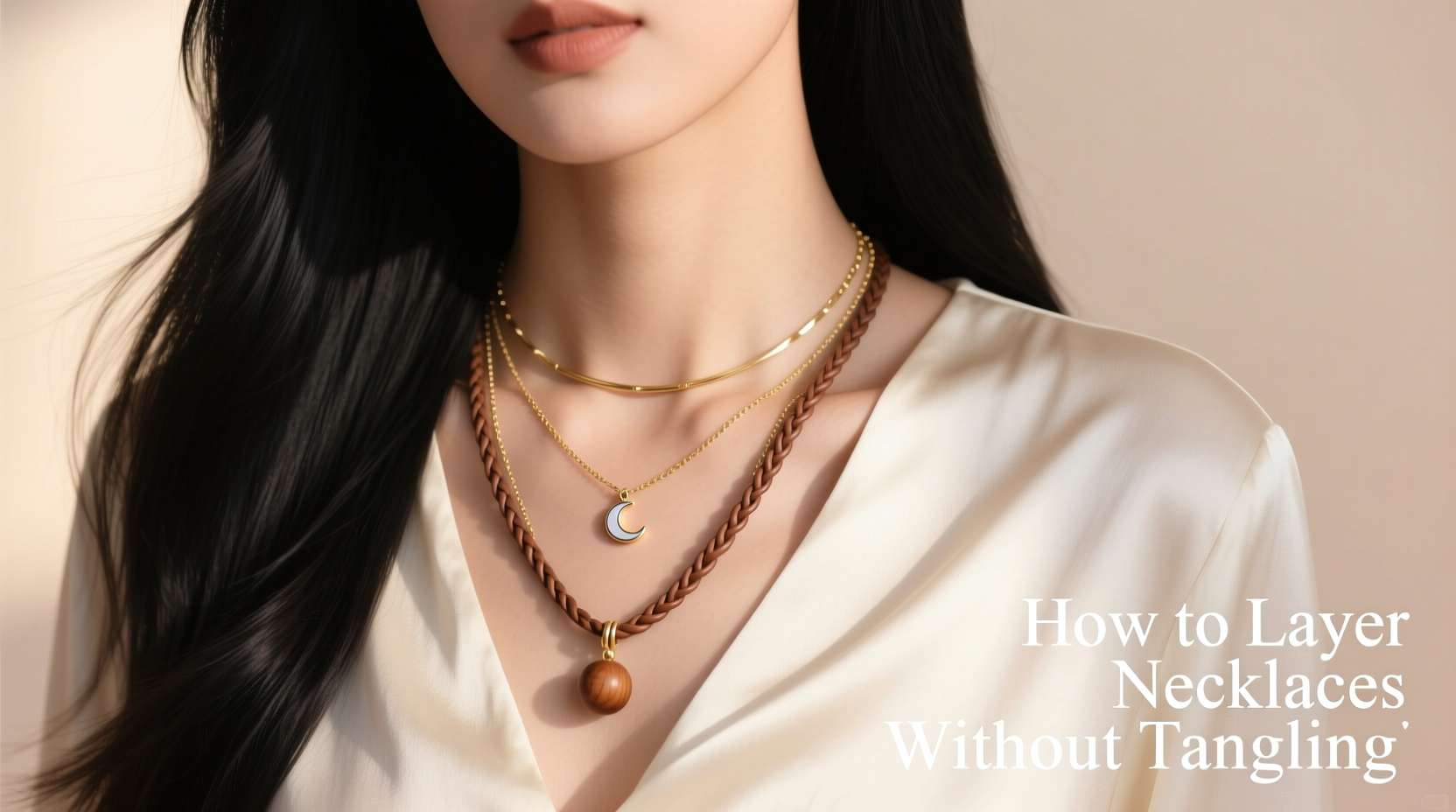
Not all necklaces are created equal when it comes to layering. Some chain styles naturally resist tangling due to their weight, structure, or movement. Choosing wisely from the start reduces friction and snags between pieces.
Thicker, more rigid chains like curb, rope, or Figaro styles tend to sit predictably on the collarbone and are less likely to twist around finer chains. These work well as anchor layers—your longest or most prominent necklace in a stack. In contrast, delicate chains such as cable, box, or snake links offer fluidity and lightness, ideal for shorter layers that rest higher on the neck.
Avoid pairing two ultra-fine chains (especially below 1mm thickness) unless they’re secured with a clasp guard or worn infrequently. Their flexibility makes them prone to wrapping around one another during movement. Instead, mix textures and weights strategically. For example, pair a bold pendant on a medium-width curb chain with a dainty choker in a contrasting metal tone. This creates visual separation and minimizes contact points where tangling occurs.
Understanding Lengths and Proportions
Proper spacing between necklace lengths is essential for both aesthetics and function. When chains are too close in length—say, 16 inches and 17 inches—they overlap frequently, increasing the chance of entanglement. A general rule is to maintain a minimum 2-inch difference between each layer.
A classic three-layer combination might include:
- Choker: 14–16 inches (sits snugly at the base of the neck)
- Princess: 18 inches (falls just below the collarbone)
- Matinee: 20–22 inches (drapes mid-chest)
This progression ensures each necklace occupies its own visual space. For bolder statements, extend to a 24-inch opera-length chain, which adds drama without interfering with upper layers if proportionally balanced.
Your body type and neckline also influence optimal lengths. Petite frames often shine with shorter combinations (14”, 18”, 20”), while taller individuals can carry longer drops (up to 28”) without overwhelming their silhouette. Always try combinations over actual clothing—not just on a dresser—to see how they interact with movement and fabric.
“Spacing isn’t just about avoiding tangles—it’s about giving each piece room to breathe and be seen.” — Lila Nguyen, Jewelry Stylist & Editorial Contributor, *Vogue Accessory*
Step-by-Step Guide to Layering Without Tangles
Creating a tangle-resistant stack is a process, not a guesswork game. Follow this sequence to build a layered look that stays intact throughout the day.
- Start with your longest chain. Drape it around your neck first so it settles closest to your chest. This avoids having to thread shorter chains under a longer one later, which increases snag risk.
- Add middle lengths next. Fasten the 18” or 20” piece, ensuring it rests cleanly above the first. Adjust gently by sliding the chain through the clasp until positioning feels natural.
- Finish with the shortest. Clip the choker or 16” chain last. Because it sits highest, it’s least likely to interfere with others once placed.
- Check spacing in a mirror. Lean forward slightly and turn side-to-side. Observe whether chains cross or pull unevenly. Minor adjustments at this stage prevent issues later.
- Secure pendants or charms. If any necklace has a dangling element, ensure it faces outward and isn’t caught beneath another chain. Use a tiny clear silicone charm stopper behind the pendant to limit swing.
- Test mobility. Shake your shoulders gently or simulate bending down. Watch how the chains react. If they twist immediately, reconsider the combination or add a spacer bead.
This methodical approach minimizes handling and reduces stress on clasps and links. Over time, you’ll develop intuition for which combinations flow smoothly together.
Do’s and Don’ts of Necklace Layering
Even experienced stylists make small mistakes that lead to tangles. Refer to this table to refine your routine and avoid common pitfalls.
| Do | Don’t |
|---|---|
| Choose chains with varying thicknesses (e.g., 1.5mm + 3mm) | Wear three or more fine chains of similar gauge |
| Maintain at least 2 inches between lengths | Stack necklaces only 1 inch apart in length |
| Use anti-tangle solutions like clip-in extenders or silicone guards | Leave clasps loose or damaged; replace worn closures promptly |
| Store layered sets together on a stand or in a partitioned box | Toss multiple chains loosely into a drawer or pouch |
| Remove necklaces before sleeping, exercising, or swimming | Sleep in layered chains—even ‘just for comfort’ |
Adhering to these guidelines protects your investment and keeps your daily routine streamlined. Remember: prevention is far easier than untangling a knotted mess with tweezers and patience.
Real-Life Example: Morning Commute Gone Wrong
Sophie, a graphic designer in Portland, loved wearing her three gold necklaces—a personalized initial pendant on a 16” chain, a geometric medallion at 18”, and a textured rope chain at 22”. She’d put them on every morning, proud of the curated look. But by mid-morning, she noticed the shorter chains had migrated downward, crossing over the longest one. By lunch, the 16” and 18” were tightly twisted near the clasp.
After weeks of frustration, she consulted a local jeweler who pointed out two issues: the chains were all within 1.5mm thickness, making them too similar in flexibility, and she was putting them on in reverse order—shortest first. He suggested switching the order and replacing the 18” chain with a slightly wider box link for distinction.
The change was immediate. With the new system, the layers stayed aligned throughout her commute, even during bike rides. Sophie now applies the same principle to other stacks and reports spending zero time detangling jewelry—an hour saved per month.
Storage Solutions That Prevent Tangles
How you store your necklaces matters as much as how you wear them. Tossing multiple chains into a single compartment invites friction and knots. Instead, adopt storage methods that isolate or stabilize each piece.
Hanging displays—such as wall-mounted racks, velvet-covered stands, or tiered boxes with individual hooks—allow chains to drape freely without touching. If space is limited, use compartmentalized trays with padded slots. Wrap each necklace in a soft cloth or place it in a mini pouch before storing to reduce surface abrasion.
For those who travel frequently, consider magnetic closure rolls or zippered jewelry rolls with fixed loops. These keep chains separated and secure during transit. Never coil a chain tightly or wrap it around your hand—that introduces twists that persist when worn again.
Essential Checklist for Tangle-Free Layering
Before building or wearing a layered look, run through this checklist to ensure smooth results:
- ✅ Are the chain lengths spaced at least 2 inches apart?
- ✅ Is there variation in chain thickness or texture?
- ✅ Are all clasps secure and functioning properly?
- ✅ Have I put on the longest necklace first?
- ✅ Are pendants positioned to face forward and not snag?
- ✅ Am I removing the set before sleeping or physical activity?
- ✅ Are my necklaces stored separately or in an organized display?
Using this list consistently turns best practices into habit. Over time, tangle-free layering becomes second nature.
Frequently Asked Questions
Can I layer necklaces made of different metals?
Absolutely. Mixing metals—such as rose gold, yellow gold, and silver—is not only acceptable but fashionable. Just ensure the overall look feels intentional. Stick to two or three metal tones max, and balance them across your accessories (e.g., earrings, rings) for cohesion.
What should I do if my necklaces are already tangled?
Stay calm and work slowly. Lay the chains flat on a well-lit surface. Use a pin or fine needle to gently loosen knots, starting from the outer edge. Apply a drop of baby oil or specialized jewelry lubricant to reduce friction. Never pull hard—this can break solder joints or stretch links. For severe tangles, consult a professional jeweler.
Are there products designed to prevent necklace tangling?
Yes. Silicone clasp guards slip over the hook and prevent chains from slipping through and intertwining. Magnetic necklace holders keep multiple pieces aligned on a stand. Some brands also sell interlocking necklace spacers—tiny beads that slide onto chains to maintain distance between layers.
Maintaining Your Collection for Long-Term Wear
Regular maintenance extends the life of your necklaces and preserves their ability to layer smoothly. Clean chains monthly with a soft cloth and mild soapy water, especially after exposure to sweat, perfume, or lotions. Rinse thoroughly and dry completely before storing.
Inspect each piece quarterly for weak links, worn springs in lobster clasps, or stretched jump rings. Repair minor issues early—waiting until a chain breaks mid-wear increases the risk of losing a cherished pendant or compounding tangles.
Consider rotating your stacks seasonally. Not only does this refresh your wardrobe, but it gives each necklace time to rest, reducing cumulative stress from daily wear.
Conclusion: Style Shouldn’t Come at the Cost of Struggle
Layering necklaces is meant to elevate your presence, not create daily battles with knots and kinks. With deliberate choices in length, texture, and order—and consistent care in storage and maintenance—you can enjoy a polished, effortless aesthetic that lasts all day. The most stylish looks aren’t the most complicated; they’re the ones that feel natural, intentional, and easy.




 浙公网安备
33010002000092号
浙公网安备
33010002000092号 浙B2-20120091-4
Comments
No comments yet. Why don't you start the discussion?