
Layering necklaces has become a signature move in modern jewelry styling—adding depth, personality, and visual interest to any outfit. But when multiple chains are involved, especially in different metals, the risk of tangling, clashing styles, or an unbalanced look increases. The key to mastering this trend lies not just in choosing the right pieces but in understanding how to combine lengths, textures, and materials thoughtfully while keeping your collection tangle-free.
Mixed metals—gold, silver, rose gold, gunmetal—are no longer fashion taboos. In fact, they offer a dynamic way to personalize your look. With the right approach, you can create effortlessly chic stacks that enhance your neckline without constant untangling or mismatched aesthetics.
Selecting the Right Necklace Lengths
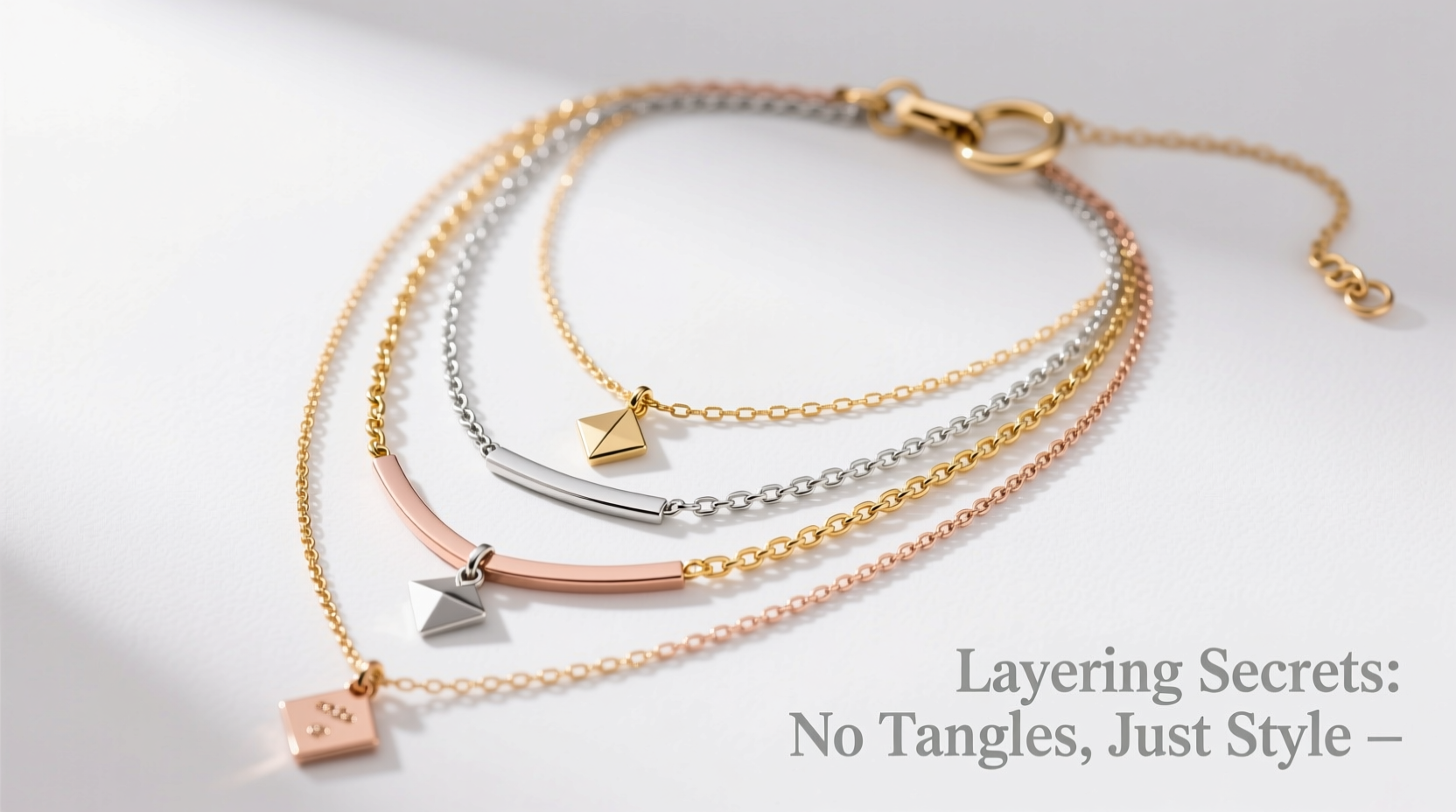
The foundation of successful necklace layering is varying chain lengths. When all chains are too close in length, they overlap and tangle easily, creating a messy cluster instead of a curated cascade. A well-layered stack typically spans at least three distinct levels to allow each piece room to breathe.
Standard necklace lengths range from 14 inches (choker) to 30 inches (matinee or opera length). For effective layering, aim for at least 2–3 inches of difference between each chain. Here’s a recommended breakdown:
| Length (inches) | Name | Best For |
|---|---|---|
| 14–16 | Choker / Princess | Close to the collarbone; ideal as top layer |
| 18–20 | Matinee | Rests just below the collarbone; middle anchor |
| 24+ | Opera / Rope | Drifts toward the sternum or beyond; base layer |
Start with a shorter choker-style chain as your top layer, add a mid-length pendant or simple link chain in the center, and finish with a longer, perhaps more delicate or statement piece at the bottom. This staggered effect prevents tangling by minimizing contact points and creates a balanced, intentional look.
Styling Mixed Metals with Confidence
Gone are the days when matching all jewelry metals was mandatory. Today’s fashion embraces the contrast of gold, silver, and rose gold as a form of self-expression. However, mixing metals successfully requires intention—not randomness.
The trick is to establish dominance. Choose one metal as your primary tone (e.g., warm gold), then use secondary metals (silver, rose gold) as accents. This creates cohesion rather than chaos. For example, wear two gold-toned chains and one silver pendant for subtle contrast.
Texture also plays a role. Pair a sleek box chain in silver with a chunky gold curb link and a delicate rose gold initial pendant. The variation in shine and structure helps differentiate the layers visually, reducing the chance of them appearing cluttered.
“Modern jewelry styling isn’t about perfection—it’s about personality. Mixing metals allows wearers to tell a story through their accessories.” — Lila Chen, Jewelry Stylist & Creative Director at Aura Collective
When combining metals, consider skin undertones. Warm undertones often harmonize better with yellow and rose gold, while cool tones pair elegantly with silver and platinum. However, if you're layering multiple metals, focus on overall balance rather than strict color theory.
Step-by-Step Guide to Tangle-Free Layering
Tangles don’t just ruin the wearing experience—they can damage delicate chains over time. Follow this practical timeline to build and maintain layered necklaces safely:
- Start with the longest chain. Put it on first so it rests deepest. This reduces friction during layering.
- Add mid-length next. Slide it over your head carefully, ensuring it doesn’t catch on the first chain.
- Finish with the shortest. This one sits highest and is most visible, so position it precisely.
- Adjust gently. Once all are on, lift each chain slightly to settle into place. Avoid pulling or twisting.
- Secure clasps properly. Make sure lobster claws or spring rings are fully closed to prevent snagging on clothing or hair.
- Remove in reverse order. Take off the shortest first to avoid catching longer chains on zippers or buttons.
For daily wearers, consider investing in magnetic or toggle clasps, which are easier to manage and reduce strain on thin chains during repeated use.
Storage Solutions to Prevent Tangling
How you store your necklaces is just as important as how you wear them. Tossed-together chains in a drawer will inevitably knot, weaken, or break. Implement these storage strategies to preserve both integrity and ease of use:
- Hanging organizers: Use a jewelry stand or wall-mounted rack with individual hooks. Each necklace hangs separately, preventing contact.
- Roll-up pouches: Fabric rolls with compartments keep chains isolated and portable—ideal for travel.
- Ziplock bags with straw method: Thread the chain through a drinking straw and seal it in a small bag. The straw acts as a rigid spine, keeping the chain straight and tangle-resistant.
- Button card trick: For short-term storage, thread the chain through a button card (like those used in retail) and fasten the clasp. This keeps loops open and separated.
Checklist: Build Your First Mixed-Metal Stack
Use this actionable checklist the next time you plan a layered look:
- ☐ Choose one dominant metal (e.g., gold) and one accent (e.g., silver)
- ☐ Select three chains with at least 2-inch differences in length
- ☐ Vary textures—try a cable chain, a pendant, and a rope chain
- ☐ Ensure clasps are secure and easy to fasten
- ☐ Test the stack with a crew-neck top to check visibility and spacing
- ☐ Store each chain separately after wear
- ☐ Clean each piece monthly with a soft cloth to maintain shine
Avoid These Common Layering Mistakes
Even experienced stylists sometimes fall into pitfalls. Watch out for these frequent errors:
| Don’t | Do Instead |
|---|---|
| Wear three identical thin silver chains | Mix metals or add a pendant for visual hierarchy |
| Layer only short chokers | Include a longer chain to create depth |
| Store necklaces loose in a box | Use individual pouches or hanging storage |
| Force apart tangled chains | Use a pin or earring back to gently loosen knots |
One common misconception is that longer layers should always be heavier. In reality, lightweight chains work best for the base layer—they drape smoothly without pulling shorter chains down. Reserve bolder, thicker designs for mid or upper layers where they’re more visible.
Real Example: From Cluttered to Cohesive
Sophia, a graphic designer in Portland, loved jewelry but struggled with her necklace collection. She owned six delicate chains in various metals but avoided wearing them together because they constantly tangled and looked disorganized.
After consulting a stylist, she restructured her approach. She selected three pieces: a 16-inch gold nameplate, an 18-inch silver bar pendant, and a 22-inch rose gold figaro chain. She began storing them in labeled fabric pockets and adopted the “longest first” rule when dressing.
Within a week, she received compliments at work. Her layered look appeared intentional, not accidental. More importantly, she stopped losing time untangling knots every morning. By applying simple spacing rules and mindful storage, Sophia transformed her routine into a seamless part of her personal style.
Frequently Asked Questions
Can I mix gold, silver, and rose gold in one stack?
Yes, absolutely. The key is balance. Use one metal as the base (e.g., two gold chains), and introduce silver and rose gold as accents. Avoid equal distribution unless you’re aiming for bold eclecticism. Also, consider using a unifying element like similar pendants or consistent chain thickness to tie the look together.
How do I untangle a knotted necklace without damaging it?
First, lay the chain flat on a clean surface under good lighting. Use a fine needle, pin, or earring back to gently probe the knot. Work from the outside inward, loosening loops slowly. Never pull hard—this can stretch or snap thin chains. For persistent tangles, apply a drop of baby oil or lotion to reduce friction, then wipe clean afterward.
Is it okay to sleep or shower with layered necklaces?
No. Water, soap, and sweat accelerate tarnishing, especially in mixed metals. Chlorine and saltwater can corrode metals and weaken solder joints. Additionally, tossing and turning can cause severe tangling or breakage. Always remove necklaces before sleeping, swimming, or bathing.
Final Thoughts: Style Smart, Wear Confidently
Layering necklaces in mixed metals isn’t just a trend—it’s a form of wearable art. With thoughtful selection, strategic layering, and smart maintenance, you can craft combinations that reflect your taste while staying tangle-free and durable. The goal isn’t uniformity, but harmony: letting each piece shine without competing for attention.
Start small. Experiment with two chains before building a three- or four-tier stack. Pay attention to how different lengths interact with your neckline and outfits. Most importantly, treat your jewelry with care—from the way you put it on to how you store it at night.




 浙公网安备
33010002000092号
浙公网安备
33010002000092号 浙B2-20120091-4
Comments
No comments yet. Why don't you start the discussion?