
Layering necklaces is one of the most expressive and elegant ways to elevate an outfit. Whether you're dressing up for a night out or adding subtle charm to your everyday look, a well-curated stack of chains can transform your style instantly. But there’s a catch: tangled jewelry isn’t just frustrating—it can damage delicate pieces and ruin the experience. The secret lies not just in choosing the right lengths and styles, but in mastering the techniques that keep your necklaces tangle-free while maximizing visual impact.
This guide breaks down the essentials of necklace layering with precision, offering actionable advice on how to combine different chains, pendants, and metals seamlessly—without knots, snags, or mismatched proportions. From storage solutions to styling formulas, you’ll learn how to build a versatile, wearable collection that reflects your personal aesthetic and stays effortlessly polished.
The Art of Proportion: Choosing the Right Necklace Lengths
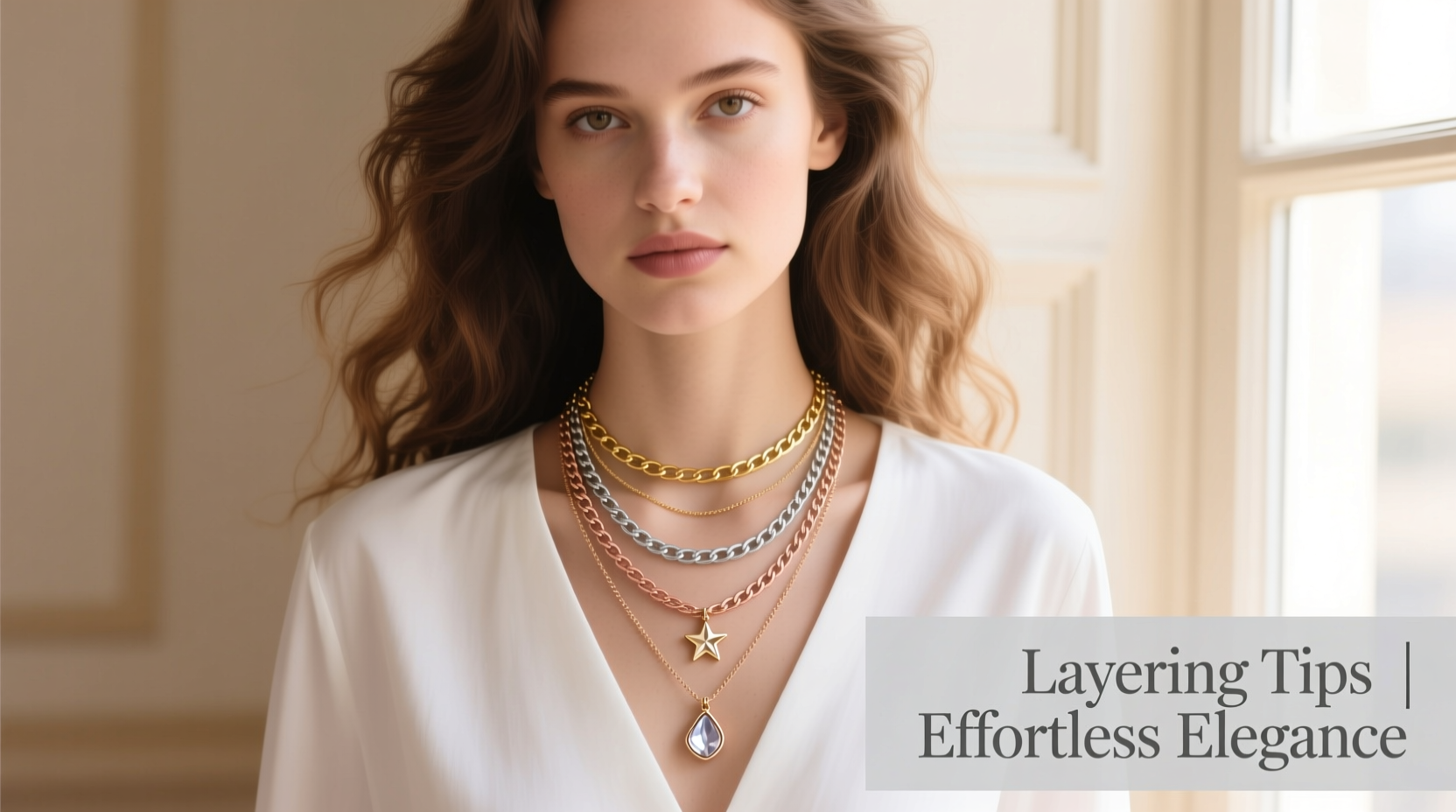
One of the foundational principles of successful necklace layering is understanding proportion. When multiple chains hang at similar lengths, they tend to twist around each other, increasing friction and tangling risk. The solution? Strategic length variation.
Aim to space each necklace at least 2–3 inches apart in length. This creates natural separation and allows each piece to drape independently. A common mistake is stacking three 16-inch chains—they may look balanced individually, but together they form a knotted cluster by midday.
Here’s a classic layering formula based on standard lengths:
- Choker (14–16 inches): Sits snugly at the base of the neck. Ideal for minimalist designs or bold pendants.
- Princess (17–19 inches): Falls just below the collarbone. Perfect for solitaire pendants or medium-weight chains.
- Matinee (20–24 inches): Drapes elegantly over the neckline. Works well with statement charms or layered over collars.
- Opera (28–34 inches): Long enough to double as a wrap or anchor piece. Best used as the outermost layer.
For most outfits, combining three lengths—say, 16\", 18\", and 22\"—creates depth without clutter. If you’re wearing a V-neck top, let the longest chain follow the neckline’s angle; this guides the eye and prevents visual congestion.
Material Matters: Mixing Metals and Textures Without Chaos
Gone are the days when matching metals were mandatory. Today’s fashion embraces mixed gold, silver, rose gold, and gunmetal tones—but blending them successfully requires intentionality. Random combinations can look haphazard, and dissimilar textures increase tangling due to uneven weight distribution.
Start by selecting a dominant metal—say, warm yellow gold—as your base. Then introduce one accent metal, such as white gold or silver, in no more than two supporting pieces. This creates contrast while maintaining cohesion.
Texture plays an equally important role. Delicate cable chains should be paired with slightly bolder elements like a box chain or rope link, but avoid combining two ultra-fine strands—they’ll inevitably twist. Instead, create a rhythm: fine, medium, chunky. This variation helps prevent contact points where tangles begin.
“Balance is everything. I always recommend clients choose one ‘hero’ piece—like a pendant—and build layers around it with simpler chains. That way, the design has focus, not chaos.” — Lila Monroe, Jewelry Stylist & Creative Director at Aura Collective
When incorporating pendants, stagger their positions. Avoid hanging multiple pendants at the same height—they’ll knock against each other and knot. Instead, place the focal pendant on the shortest chain and smaller accents on longer ones, letting them rest at different levels on the chest.
Step-by-Step Guide: How to Put On Layered Necklaces Without Tangling
Even perfectly chosen necklaces can become a mess if applied incorrectly. Follow this five-step routine to ensure smooth, snag-free wear every time:
- Prepare your workspace. Lay all selected necklaces flat on a clean surface—preferably a velvet-lined tray or soft cloth. Open each clasp and straighten the chain completely.
- Start with the longest chain. Put it on first and fasten the clasp. Longer chains are harder to adjust once shorter ones are in place.
- Add mid-length next. Drape it over your head, ensuring it sits above the first chain. Adjust so it rests naturally without overlapping excessively.
- Finish with the shortest. This is usually the choker or collar. Fasten carefully, making sure it doesn’t pull or twist adjacent layers.
- Final check. Gently shake your shoulders and tilt your head side to side. Observe how the chains settle. If any cross or twist, reposition by lifting and smoothing each strand individually.
Never try to put on multiple necklaces while they’re still linked or coiled. This dramatically increases the chance of knotting. Always separate and handle one at a time.
Smart Storage: Preventing Tangles Before They Start
How you store your necklaces is just as important as how you wear them. Tossed-together chains in a drawer are a tangle disaster waiting to happen. Over time, constant friction weakens solder joints and damages delicate links.
Invest in organized storage that keeps each piece isolated. Options include:
- Jewelry stands with individual hooks
- Hanging organizers with mesh pockets
- Compartmentalized boxes with padded slots
- Roll-up travel cases with secure loops
If space is limited, use drinking straws as DIY protectors. Thread each necklace through a plastic or reusable straw, then close the clasp. The straw acts as a rigid spine, preventing loops from catching on one another.
| Storage Method | Best For | Tangle Risk | Durability Benefit |
|---|---|---|---|
| Hanging jewelry tree | Frequent wearers with 5+ chains | Low | High – reduces kinking |
| Compartment box | Small collections, travel | Very Low | Medium – protects finishes |
| Pouch in drawer | Occasional wear | High | Low – prone to abrasion |
| Straw method | Thin or delicate chains | Very Low | High – prevents micro-tangles |
For travel, never pack loose necklaces in luggage. Use a hard-sided jewelry case or wrap each chain in tissue paper before placing in a zippered pouch. Even minor movement in a suitcase can cause irreversible knots.
Real Example: Emma’s Everyday Elegance Routine
Emma, a 34-year-old graphic designer from Portland, wanted to incorporate more personality into her workwear without looking overdressed. She owned six delicate gold chains but avoided wearing them because they always ended up tangled in her bag by noon.
After consulting a stylist, she simplified her approach. She selected three pieces: a 16-inch geometric choker, an 18-inch chain with a small moon pendant, and a 22-inch delicate rope chain. Each was stored on a rotating display stand at home and kept in a zippered clutch during commutes.
She now follows a morning ritual: putting on the 22-inch first, then the 18-inch, and finally the choker. At night, she removes them in reverse order and hangs them immediately. Within weeks, she noticed fewer snags, less clasp damage, and compliments on her “effortless” style.
“I used to think layering was too high-maintenance,” she says. “But once I set up a system, it took less than two minutes and made me feel put together all day.”
Checklist: Your Anti-Tangle Necklace Layering Routine
Follow this daily and weekly checklist to maintain tangle-free elegance:
- ✅ Choose necklaces spaced at least 2 inches apart in length
- ✅ Limit layering to 2–4 pieces for balance
- ✅ Mix textures intentionally—avoid pairing two ultra-thin chains
- ✅ Put on longest chain first, shortest last
- ✅ Store each necklace separately using hooks, compartments, or straws
- ✅ Inspect clasps weekly for wear or looseness
- ✅ Clean chains monthly with a soft cloth to prevent grime buildup that increases friction
- ✅ Rotate pieces regularly to reduce strain on specific links
Frequently Asked Questions
Can I layer different types of chains, like a cable and a snake chain?
Yes, but with caution. Cable and snake chains have different flex points and weights. Pair them only if there’s a noticeable length difference (at least 3 inches) and avoid wearing them during high-movement activities like workouts or cycling.
What should I do if my necklaces are already tangled?
Stay calm and work slowly. Lay the chains flat on a well-lit surface. Use a pin or needle to gently tease apart knots, starting from the outer loops. Apply a drop of olive oil or specialized jewelry lubricant only if necessary—wipe clean afterward. Never pull or cut unless absolutely required.
Is it okay to sleep or shower with layered necklaces?
No. Water, sweat, and friction from bedding accelerate tarnishing and increase tangling. Remove necklaces before sleeping, swimming, or showering. Even hypoallergenic metals benefit from dry, gentle care.
Conclusion: Effortless Elegance Is Within Reach
Layering necklaces doesn’t have to mean sacrificing convenience for beauty. With thoughtful selection, intelligent layering techniques, and consistent care, you can enjoy intricate, eye-catching combinations that remain smooth, functional, and durable. The key is structure: vary lengths, separate textures, and prioritize organization both in wear and storage.
Effortless elegance isn’t about doing more—it’s about doing smarter. Start small. Build a capsule of three complementary chains. Master the routine. Protect your investment. In time, your layered look will become second nature, turning heads without twisting your nerves.




 浙公网安备
33010002000092号
浙公网安备
33010002000092号 浙B2-20120091-4
Comments
No comments yet. Why don't you start the discussion?