
Layering necklaces is one of the most effective ways to elevate an outfit—adding depth, personality, and dimension with just a few carefully chosen pieces. But there’s a universal frustration: by midday, what started as a thoughtfully styled stack has devolved into a knotted mess. Tangled chains not only ruin the look but can damage delicate metalwork over time. The good news? With the right approach to selection, arrangement, and maintenance, you can wear multiple necklaces confidently from morning coffee to evening plans—without once needing to untangle.
Choose the Right Chain Styles and Lengths
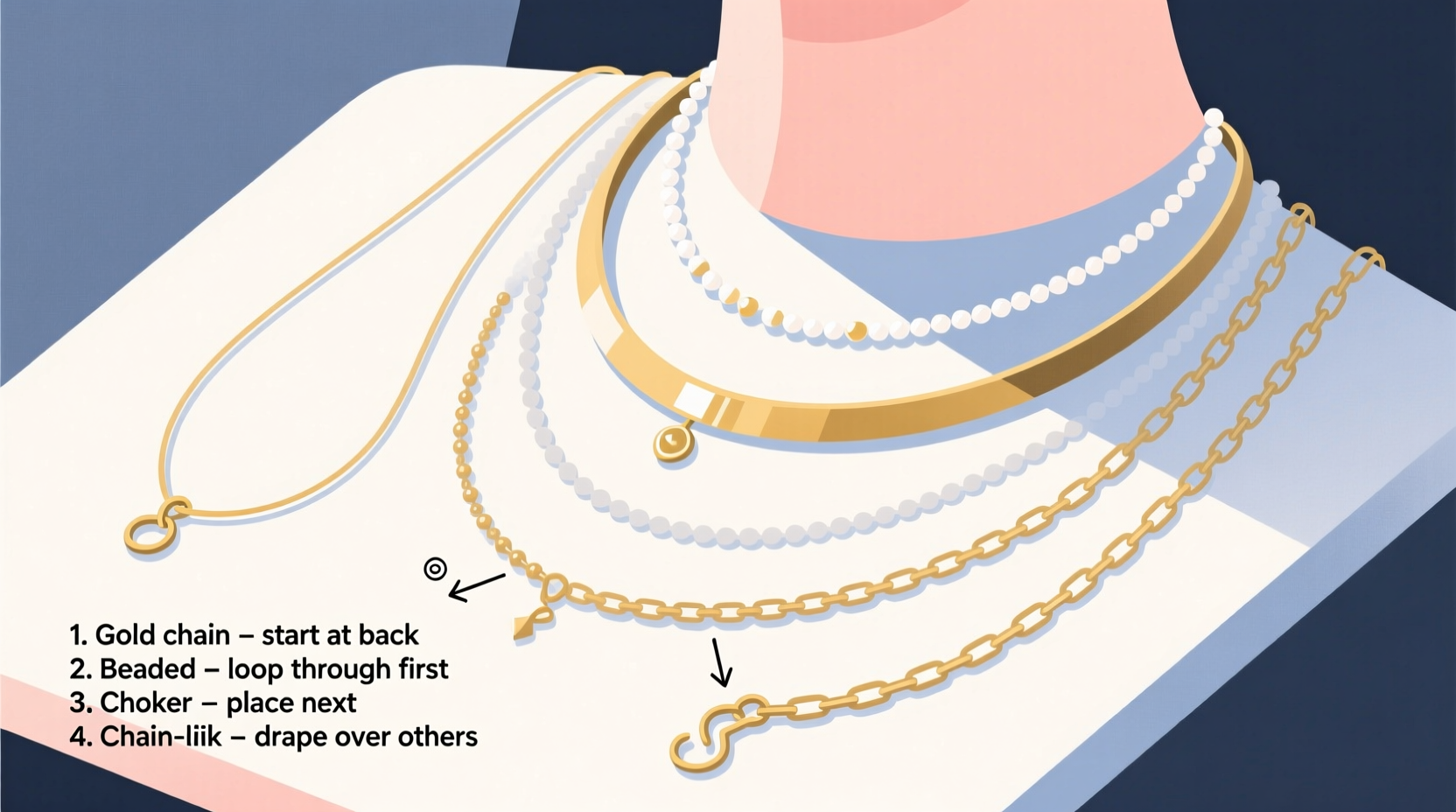
The foundation of tangle-free layering lies in thoughtful selection. Not all chains are created equal when it comes to staying separate. Certain designs naturally resist twisting and knotting due to their structure and weight distribution.
Chains like box, rope, or wheat links tend to hold their shape better than finer, more fluid styles such as cable or snake chains. Thicker, structured chains have less flexibility to twist around each other, making them ideal base layers. Meanwhile, delicate chains like thin chains or paperclip styles should be used sparingly and paired with sturdier companions to prevent them from slipping under and coiling.
Length variation is equally critical. A common mistake is stacking multiple necklaces at nearly identical lengths, which causes them to overlap constantly throughout the day. Instead, create deliberate spacing between layers. For example:
- Choker: 14–16 inches
- Princess: 18 inches
- Matinee: 20–22 inches
- Opera: 28–30 inches (used as a single long piece or doubled)
Spacing each necklace by at least two inches minimizes contact and reduces friction. Think of it like shelves—each piece occupies its own visual plane, reducing the chance of collision.
Master the Layering Sequence
How you put on your necklaces matters just as much as which ones you choose. The order affects how they settle and interact during movement.
Always start with the longest chain first. This ensures it rests closest to your body and forms the base layer. Then add progressively shorter pieces. If you reverse this—putting on the shortest first—it will shift upward and intertwine with longer ones as you move, increasing friction points.
- Begin with the longest necklace (e.g., 24-inch matinee).
- Add the middle-length piece (e.g., 18-inch princess).
- Finish with the shortest (e.g., 16-inch choker).
This sequence allows gravity to work in your favor. Each new layer drapes neatly over the previous one without catching underneath. It also prevents shorter chains from slipping behind longer ones—a frequent cause of early-morning tangles.
For asymmetrical looks, consider wearing one longer pendant necklace with a short choker on one side. This directional approach reduces frontal overlap and keeps chains separated by design rather than luck.
Use Strategic Pendants and Textures
Pendants aren’t just decorative—they’re functional tools in preventing tangles. A well-placed charm or focal point adds weight to a chain, helping it hang straighter and resist rotation.
Heavier pendants act as natural anchors, minimizing chain drift. For instance, a substantial geometric bar or initial pendant will keep its orientation stable, even during active movement. In contrast, lightweight or floating charms may spin freely, increasing the risk of wrapping around adjacent chains.
Texture also plays a role. Mixing smooth chains with textured ones—like twisted, braided, or hammered finishes—creates subtle grip differences that discourage sliding and interlocking. A flat curb chain next to a rounded rolo chain behaves differently under motion, reducing the likelihood of them winding together.
| Chain Type | Tangle Risk | Best Paired With |
|---|---|---|
| Cable | High | Avoid pairing with other fine chains; use alone or with thick anchor pieces |
| Box | Low | Ideal for base layers; pairs well with dainty chains above |
| Rope | Medium | Best with spaced lengths; avoid tight layering |
| Figaro | Low-Medium | Works well as a standout middle layer |
| Snake | High | Use solo or with non-slip clasps; prone to twisting |
Secure with Clasp Techniques and Accessories
The clasp might seem like a minor detail, but it significantly influences how necklaces behave throughout the day. Lobster clasps are generally more secure than spring rings, which can pop open or snag easily. Spring rings also tend to rotate, causing chains to twist within minutes of being worn.
To further stabilize your stack, consider using anti-tangle solutions:
- Necklace weights: Small silicone or metal clips that attach near the clasp to add downward pull and prevent flipping.
- Clasp guards: Silicone sleeves that fit over spring ring clasps to reduce movement and accidental opening.
- Chain separators: Tiny metal or plastic spacers that slide onto chains between layers to maintain distance.
Another clever trick: tie a tiny knot in extremely fine chains near the clasp. This slight imperfection increases surface tension and discourages slipping through loops or wrapping around other chains.
“Many clients come to me with damaged chains after months of daily tangling. The fix is rarely expensive jewelry—it’s smarter layering mechanics.” — Lena Torres, Jewelry Stylist & Conservator
Build a Daily Wear Checklist
Consistency beats complexity. To make tangle-free layering a habit, follow this simple routine every time you accessorize:
- ✔ Choose chains with varied lengths (minimum 2” apart)
- ✔ Prioritize structured chains (box, Figaro, rope) over fluid ones
- ✔ Start dressing with the longest necklace on
- ✔ Use one statement pendant as an anchor point
- ✔ Avoid overloading—3 is usually the sweet spot
- ✔ Check clasp security before leaving home
- ✔ Store properly at night (see below)
Real-Life Example: From Commute Chaos to Confidence
Sarah, a marketing executive in Chicago, loved layering her grandmother’s locket with a modern gold bar and a delicate heart chain. But by 10:30 a.m., she’d already visited the restroom mirror twice trying to undo knots formed during her train commute. After switching to a structured 18-inch box chain as her base, adding a 22-inch rope chain with a small disc pendant, and wearing only those two (instead of three), her mornings transformed. She now applies a silicone clasp guard and puts on the longer piece first. “It sounds minor,” she says, “but I haven’t had a tangle in six weeks. I actually enjoy putting on my necklaces now instead of dreading the mess.”
Nighttime Care That Prevents Morning Problems
How you store your necklaces overnight directly impacts their behavior the next day. Tossing them into a drawer or pile creates pre-twisted starting conditions—essentially guaranteeing tangles by noon.
Instead, adopt a dedicated storage system:
- Vertical display stand: Keeps chains separated and hanging naturally, preserving their shape.
- Individual fabric pouches: Ideal for travel; prevents metal-on-metal contact.
- Button-down organizer: Hang necklaces on buttons of an old shirt stored in a drawer—simple and effective.
If space is limited, wrap each necklace around a piece of cardboard cut into a figure-eight shape. The dual loops keep ends secured and prevent coils from forming.
Clean your chains weekly with a soft cloth to remove oils and residue that increase friction. Avoid storing wet or perfumed necklaces—moisture accelerates tarnishing and makes chains stickier, promoting entanglement.
Frequently Asked Questions
Can I layer different metals without causing more tangles?
Absolutely. Mixing metals doesn’t inherently increase tangling risk. However, differing densities (e.g., sterling silver vs. gold-filled) may affect how chains drape. Heavier metals sink faster, so place them as lower layers. Just ensure length spacing remains consistent regardless of material.
Is there a maximum number of necklaces I should wear?
While there’s no strict limit, three is typically the functional maximum for tangle-free wear. Beyond that, interaction between chains multiplies exponentially. If you want a bolder look, consider a multi-strand piece designed as a single unit—it eliminates independent movement.
What if I already have a bad tangle?
Don’t pull. Lay the necklace flat on a hard surface under good lighting. Use a fine needle or pin to gently tease apart knots, working from the outside in. Apply a drop of olive oil if needed to reduce friction. Patience prevents breakage.
Final Thoughts: Style Shouldn’t Require Sacrifice
Layered necklaces shouldn’t come at the cost of convenience or longevity. With intentional selection, mindful wearing order, and a few clever accessories, you can maintain a polished, intricate look from sunrise to sunset. The goal isn’t perfection—it’s sustainability. Jewelry that moves with you, not against you, becomes part of your rhythm, not a recurring chore.




 浙公网安备
33010002000092号
浙公网安备
33010002000092号 浙B2-20120091-4
Comments
No comments yet. Why don't you start the discussion?