
Layering necklaces is one of the most effective ways to elevate an outfit. Whether you're dressing up for a night out or adding subtle flair to a casual look, combining multiple chains creates depth, texture, and personality. But there's a universal frustration that comes with this stylish trend: tangled necklaces. Few things are more aggravating than reaching into your jewelry box only to pull out a knotted ball of metal links that take minutes—or even hours—to untangle.
The good news? With the right techniques, organization habits, and a bit of foresight, you can enjoy layered necklaces without the daily battle against knots. This guide breaks down practical solutions—from selection and wearing to storage and maintenance—so you can keep your jewelry looking pristine and ready to wear.
Select Necklaces That Layer Well
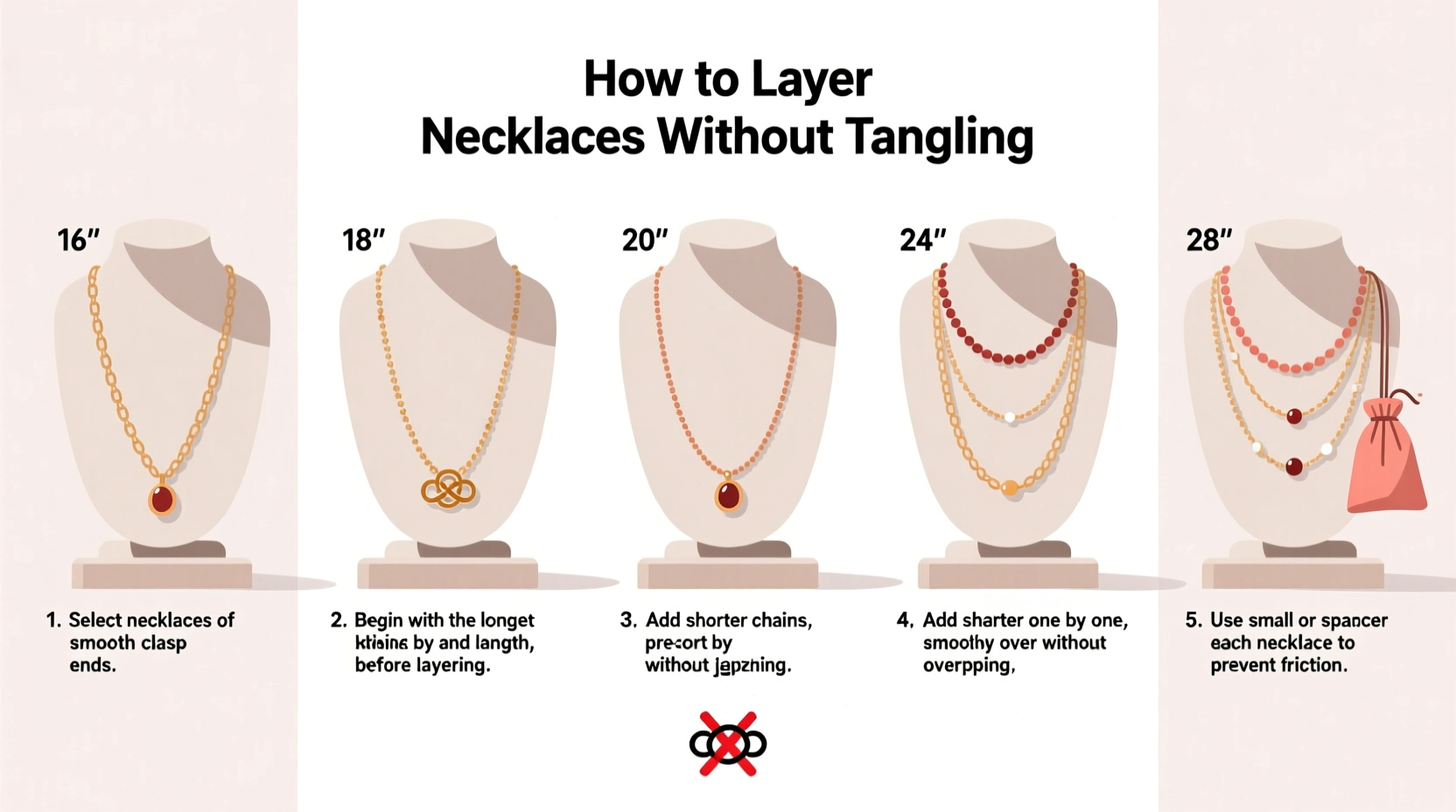
Not all necklaces are created equal when it comes to layering. The first step in preventing tangles is choosing pieces that complement each other in length, weight, and design. A mismatched combination may not only look awkward but also increase friction and twisting during wear.
Opt for chains with different thicknesses and lengths so they naturally fall at distinct levels. For example, pair a delicate 16-inch choker with a medium 18-inch pendant necklace and a longer 24-inch chain. This staggered approach reduces overlap and minimizes contact between pieces.
Avoid layering too many lightweight, fine chains together. These tend to slip over one another and twist easily. Instead, balance fragile chains with sturdier ones. A single bold piece—like a chunky curb or rope chain—can anchor the look while guiding thinner chains into place.
Master the Art of Wearing Order
How you put on your necklaces matters just as much as what you wear. Slipping multiple chains over your head at once dramatically increases the chance of tangling. Instead, adopt a strategic order of operations.
- Start with the longest necklace. Put it on first so it sits deepest around your neck.
- Add mid-length pieces next. Let each settle into its natural position before moving to the next.
- Finish with the shortest. This ensures it rests closest to your collarbone without getting pulled down.
If you're working with pendants, attach those last to avoid snagging. Also, consider fastening necklaces at the front and rotating them around rather than pulling them over your head. This method eliminates strain on the chains and keeps them aligned.
Real Example: Morning Routine Makeover
Sophia, a graphic designer from Portland, used to spend 10–15 minutes every morning untangling her favorite trio of gold necklaces. After switching to a back-to-front layering method and adjusting her chain lengths (from 16\", 20\", and 24\"), she noticed an immediate improvement. “Now I can get dressed in under five minutes, and my necklaces stay smooth all day,” she says. “It’s such a small change, but it makes a huge difference.”
Smart Storage Solutions
Most tangles happen not while wearing, but during storage. When necklaces are tossed loosely into drawers or pouches, they shift and wrap around each other overnight. Preventative storage is essential for long-term tangle-free success.
Invest in a dedicated jewelry organizer with individual hooks or slots. Wall-mounted racks, standing displays, or velvet-lined boxes with dividers allow each necklace to hang freely. If space is limited, repurpose everyday items—a small wine glass turned upside down lets chains drape over the base without touching.
| Storage Method | Pros | Cons |
|---|---|---|
| Jewelry Stand with Hooks | Keeps chains separated; easy access | Takes counter space |
| Travel Jewelry Roll | Portable; protects during trips | Limited capacity per slot |
| Zippered Pouch with Compartments | Compact; prevents scratches | Chains may still touch if overfilled |
| Hanging Organizer (Over-Door) | Maximizes vertical space | Less secure for heavy pieces |
“Proper storage isn’t just about aesthetics—it directly impacts the longevity of your jewelry. Chains that constantly tangle develop weak points and break faster.” — Lena Torres, Jewelry Designer & Conservator
Prevention Tactics During Wear
Even with careful layering and smart storage, movement throughout the day can cause shifting. Here’s how to minimize friction and keep your stack intact:
- Secure pendants with pin backs. Tiny silicone or metal stoppers can be clipped onto chains just above the pendant to prevent it from sliding and twisting.
- Use anti-tangle clips. These small, discreet devices link adjacent necklaces at a single point, keeping them aligned. They’re especially useful for formal events or windy days.
- Apply clear nail polish to clasp ends. A thin coat on the tip of each clasp adds grip and reduces slipping through loops.
- Avoid excessive motion. Rapid head turns, pulling clothing over your head, or leaning forward repeatedly can cause chains to wrap. Be mindful of movements that encourage tangling.
For active lifestyles, consider simplifying your layering strategy. Two well-chosen necklaces are easier to manage than four. You can always switch to a bolder single statement piece when mobility is key.
Step-by-Step: Weekly Jewelry Maintenance Routine
Maintaining your necklaces weekly reduces buildup of oils, dust, and stiffness—all of which contribute to tangling. Follow this simple routine:
- Remove all necklaces after wear. Don’t sleep or shower in them.
- Wipe gently with a microfiber cloth. Remove skin oils and residue.
- Inspect for kinks or weak links. Address minor twists before they become knots.
- Store properly using designated hooks or compartments.
- Once a month, clean with mild soap and water. Dry thoroughly before storing.
This routine takes less than ten minutes but significantly extends the life and usability of your jewelry.
What to Do When Tangles Happen
Despite best efforts, tangles occasionally occur. The key is addressing them calmly and correctly—rushing or pulling can turn a small knot into a permanent loop.
Begin by laying the necklace on a flat, well-lit surface. Use a magnifying glass if needed. Gently separate the loops with a fine tool like a sewing needle or toothpick. Work from the outside inward, loosening slack before tackling tight spots. Apply a drop of baby oil or specialized jewelry lubricant to reduce friction, but wipe it off afterward to avoid residue.
If the knot is near a clasp or pendant, remove the charm if possible. Many pendants unscrew or detach, giving you more flexibility to work the chain free. For persistent tangles, consult a professional jeweler. Most can untangle knots in minutes without damaging the metal.
Frequently Asked Questions
Can I layer necklaces of the same length?
You can, but it increases the risk of tangling because the chains rest in the same space. If you choose same-length necklaces, opt for varying thicknesses and textures—such as a cable chain with a box chain—and monitor them closely during wear.
Are certain metals less prone to tangling?
Not necessarily. Tangling is more about design and movement than material. However, stiffer chains like Figaro or Cuban styles resist twisting better than fluid ones like snake or mesh chains. Gold-filled and sterling silver offer durability, but proper care matters more than metal type.
How many necklaces can I safely layer?
Three is usually the sweet spot for both style and manageability. Beyond that, the risk of friction and tangles rises sharply. If you want a fuller look, consider a multi-strand necklace that mimics layering without the complexity.
Checklist: Tangle-Free Necklace Habits
- ✔️ Choose varied lengths (e.g., 16\", 18\", 22\")
- ✔️ Fasten necklaces in order from longest to shortest
- ✔️ Store each necklace separately on hooks or in compartments
- ✔️ Avoid tossing jewelry into drawers or bags
- ✔️ Clean and inspect chains weekly
- ✔️ Use anti-tangle clips for high-movement days
- ✔️ Untangle knots slowly with a fine tool
- ✔️ Visit a jeweler for stubborn knots
Final Thoughts
Layering necklaces shouldn’t come at the cost of constant frustration. With thoughtful selection, deliberate wearing techniques, and consistent storage habits, you can enjoy intricate, eye-catching stacks that remain smooth and functional. The elegance of layered jewelry lies not just in how it looks, but in how effortlessly it integrates into your daily life.
Remember, the goal isn’t perfection—it’s sustainability. A few small adjustments can save you time, protect your investment, and keep your favorite pieces ready to wear. Start tonight: take out your necklaces, lay them flat, and organize them with intention. Tomorrow, you’ll step out with confidence, knowing your style stays beautiful—not knotted.




 浙公网安备
33010002000092号
浙公网安备
33010002000092号 浙B2-20120091-4
Comments
No comments yet. Why don't you start the discussion?