
Skincare is only as effective as the way you use it. No matter how high-quality your serums, moisturizers, or treatments are, they can’t work if applied in the wrong order or if layers aren’t allowed to absorb properly. Many people unknowingly sabotage their routines by piling on products haphazardly—leading to pilling, irritation, breakouts, and wasted ingredients.
The key to unlocking real results lies in strategic layering: applying products from thinnest to thickest, allowing time between steps, and understanding how different formulations interact. When done correctly, each product penetrates where it’s needed most, enhancing performance and preventing barrier disruption.
The Science Behind Skincare Absorption
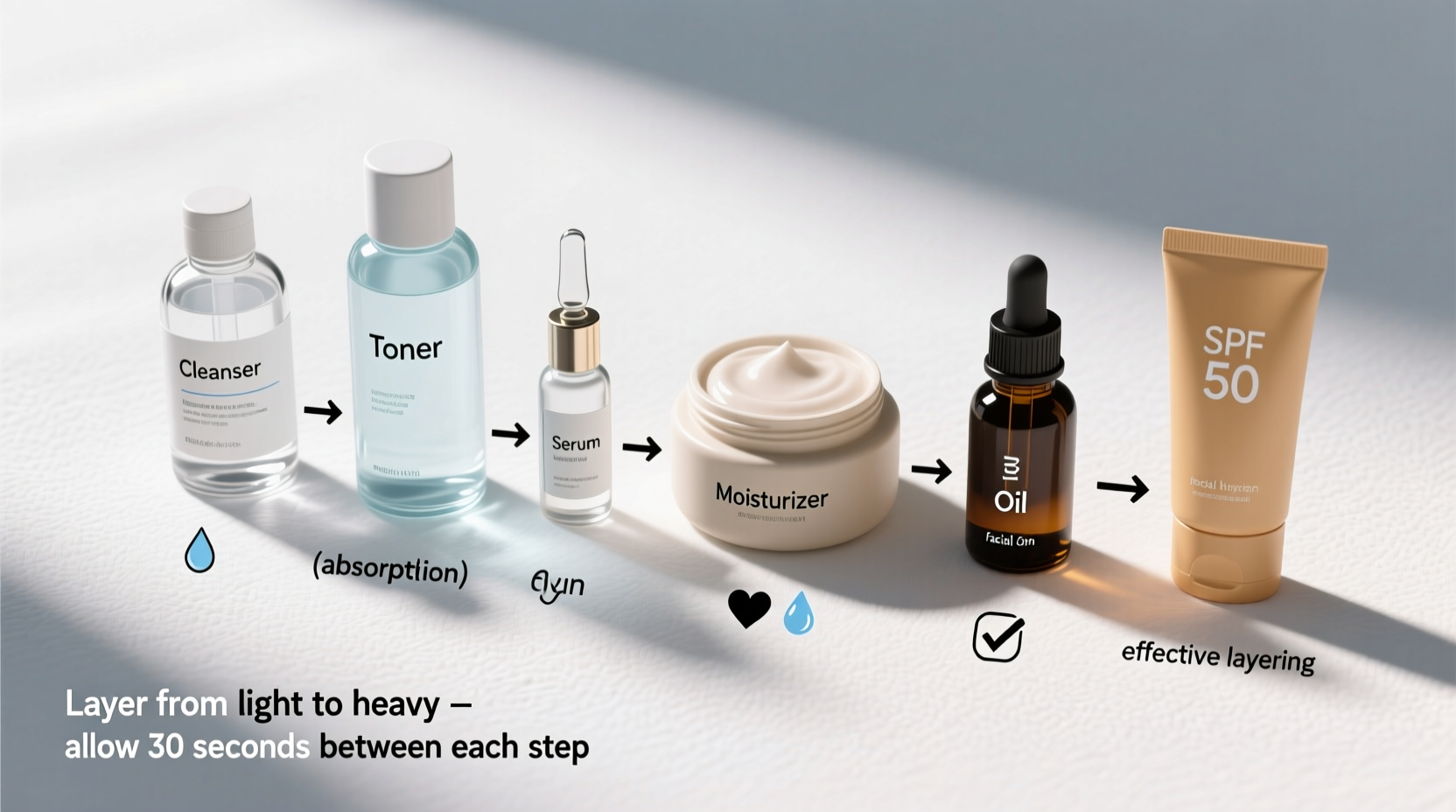
Skin isn't a sponge—it selectively absorbs substances based on molecular size, pH, formulation type (water-based vs. oil-based), and condition of the skin barrier. Applying multiple products without regard to these factors leads to poor penetration and surface buildup.
For example, occlusive ingredients like petrolatum or shea butter form a seal over the skin. If applied too early in a routine, they block subsequent lighter products from entering the epidermis. Conversely, water-soluble actives such as vitamin C, hyaluronic acid, and niacinamide need direct access to the skin’s surface to be effective—and must go on before heavier emollients.
“Layering skincare improperly is like building a house with wet cement—you’re setting instability into the foundation.” — Dr. Lena Park, Board-Certified Dermatologist
A well-layered routine supports ingredient delivery while maintaining hydration and barrier integrity. This precision ensures that potent ingredients reach their target layers instead of sitting idle on top of the skin.
The Correct Order of Skincare Application
The golden rule of layering: thin to thick, water-based to oil-based. Start with the lightest textures and progress toward richer consistencies. Here's the ideal sequence:
- Cleanser
- Toner or Essence
- Water-Based Serums (e.g., vitamin C, BHA/AHA, niacinamide)
- Ampoules or Boosters
- Exfoliating Treatments (chemical exfoliants only—never physical scrubs after actives)
- Hydrating Serums (e.g., hyaluronic acid)
- Facial Oils
- Moisturizer (cream or gel)
- Sunscreen (AM only)
This order maximizes compatibility and minimizes interference. For instance, applying a heavy cream before a lightweight serum creates a film that prevents active ingredients from penetrating. Likewise, using an oil-based cleanser after a hydrating toner defeats its purpose.
Key Layering Mistakes That Block Absorption
Even with the right products, common errors disrupt absorption and compromise results. These missteps are often overlooked but easy to fix:
- Mixing incompatible ingredients: Combining vitamin C (low pH) with retinol or benzoyl peroxide can destabilize both and cause irritation.
- Overlapping too many active treatments: Using AHA, BHA, and retinol all at once overwhelms the skin and damages the moisture barrier.
- Skipping wait times: Rushing into the next step traps air and causes pilling, especially with silicones or sticky polymers.
- Using cotton pads for actives: Wiping away essence or serum removes up to 70% of the formula before it has time to absorb.
- Applying sunscreen under moisturizer: Sunscreen should always be the final step in your morning routine to ensure even film formation.
| Mistake | Why It Blocks Absorption | Fix |
|---|---|---|
| Applying oils before water-based serums | Oils create a hydrophobic barrier that repels water-soluble ingredients | Use oils after hydrating serums |
| Layering two heavy creams together | Creates occlusion and suffocates the skin, leading to congestion | Choose one moisturizer; layer textures only when necessary |
| Using mist as a substitute for toner | Fine sprays don’t deliver concentrated actives like toners do | Use mists between layers for hydration boost, not replacement |
| Combining L-ascorbic acid with niacinamide incorrectly | Old myth said they react badly—but modern stabilized formulas coexist well | Apply them separately if sensitive, or test tolerance first |
Step-by-Step Routine for Optimal Absorption
Follow this timeline-based approach to build a functional, non-competing skincare regimen. Allow 30–60 seconds between steps unless otherwise noted.
Morning Routine (7 Steps)
- Cleanse: Use a gentle foaming or milky cleanser. Rinse thoroughly and pat dry.
- Toner: Apply with hands—press gently into skin to prep hydration levels.
- Vitamin C Serum: Apply to damp skin for better dispersion. Avoid mixing with niacinamide immediately unless formulated together.
- Hyaluronic Acid Serum: Press onto face while still damp. Mist lightly with thermal water if air is dry.
- Facial Oil (optional): 2–3 drops pressed onto cheeks and forehead. Ideal for dry climates.
- Moisturizer: Use a lightweight gel or lotion. Let set for one minute.
- Sunscreen: Apply generously (1/4 tsp for face). Wait 5 minutes before makeup.
Night Routine (8 Steps)
- Double Cleanse: First with oil-based cleanser, then water-based. Removes sunscreen and pollution.
- Toner/Essence: Rebalances pH and delivers first wave of hydration.
- Treatment Serum (e.g., niacinamide, peptides): Targets concerns like redness or aging.
- Chemical Exfoliant (2–3x/week): Apply after toner, avoid combining with retinoids.
- Retinoid (on alternate nights): Apply pea-sized amount to dry skin. Buffer with moisturizer if sensitive.
- Hydrating Serum: Reinforces moisture post-exfoliation or retinol use.
- Facial Oil or Sleeping Mask (as needed): Locks in moisture without clogging pores.
- Night Cream: Richer than daytime moisturizer—ideal for repair during sleep.
Real Example: Fixing a Frustrating Skincare Plateau
Maya, 32, had been using a brightening serum and retinol for months with no visible improvement. Her skin felt tight, looked dull, and occasionally flaked around the nose. She assumed her products weren’t strong enough and considered upgrading to prescription-grade treatments.
After reviewing her routine, a dermatology nurse noticed she was applying a thick facial oil before her vitamin C serum and using a physical scrub every other day alongside retinol. The oil blocked the serum entirely, and the scrubbing compounded irritation from the retinoid.
The fix? She adjusted her layering order, switched to chemical exfoliation twice weekly (and only on non-retinol nights), and moved facial oil to the very end. Within three weeks, her complexion appeared brighter, smoother, and more resilient. The same products finally worked—because they were used correctly.
Checklist: Are You Layering Skincare Right?
Use this checklist to audit your current routine:
- ✅ Do I start with the lightest texture (toner, essence)?
- ✅ Are water-based serums applied before oils and creams?
- ✅ Do I wait 30–60 seconds between layers?
- ✅ Am I avoiding incompatible combinations (e.g., vitamin C + retinol in same routine)?
- ✅ Is sunscreen the last step in my morning routine?
- ✅ Do I double cleanse at night if wearing sunscreen or makeup?
- ✅ Am I not overloading with too many actives at once?
- ✅ Do I apply products with clean hands or a soft press—not harsh rubbing?
If you answered “no” to any of these, small adjustments could dramatically improve absorption and results.
Frequently Asked Questions
Can I layer multiple serums together?
Yes, but follow the thin-to-thick rule. For example, apply a watery niacinamide serum before a thicker peptide formula. Avoid mixing more than three serums unless advised by a dermatologist—over-layering increases risk of pilling and irritation.
Should I let my skin dry after cleansing before applying products?
It depends on the ingredient. Hyaluronic acid works best on damp skin to draw in moisture. However, retinoids and some exfoliants should go on dry skin to reduce irritation. Wait 1–2 minutes after cleansing if using sensitive actives.
Why does my skincare pill when I layer?
Pilling occurs when products don’t absorb due to incorrect order, incompatible formulas (e.g., silicone-heavy over water-based), or over-application. Reduce the amount used, adjust layering sequence, and ensure each layer absorbs fully before adding the next.
Final Thoughts: Consistency Meets Strategy
Skincare success isn’t just about the products you buy—it’s about how you use them. Proper layering transforms good routines into great ones by ensuring every drop delivers value. Absorption isn’t automatic; it requires intention, timing, and knowledge of formulation science.
Start tonight: review your shelf, rearrange your steps, and give your skin the chance to truly benefit from what you’re applying. Small changes in order and patience between layers lead to visible improvements in clarity, texture, and resilience over time.




 浙公网安备
33010002000092号
浙公网安备
33010002000092号 浙B2-20120091-4
Comments
No comments yet. Why don't you start the discussion?