
Skincare layering is both an art and a science. When done correctly, it enhances product absorption, boosts efficacy, and delivers visible results. But when products don’t play well together, you’re left with pilling—those unattractive little balls that form on your skin—and a heavy, greasy finish that defeats the purpose of a refined routine. The good news: with the right knowledge and technique, you can layer multiple products seamlessly, achieving a lightweight, polished complexion every time.
Pilling occurs when ingredients fail to absorb properly, often due to incompatible formulations, incorrect application order, or overloading the skin. Greasiness, on the other hand, typically stems from occlusive ingredients being applied too early or in excess. By understanding your products, their textures, and how they interact, you can build a layered routine that feels as good as it performs.
The Science Behind Skincare Pilling
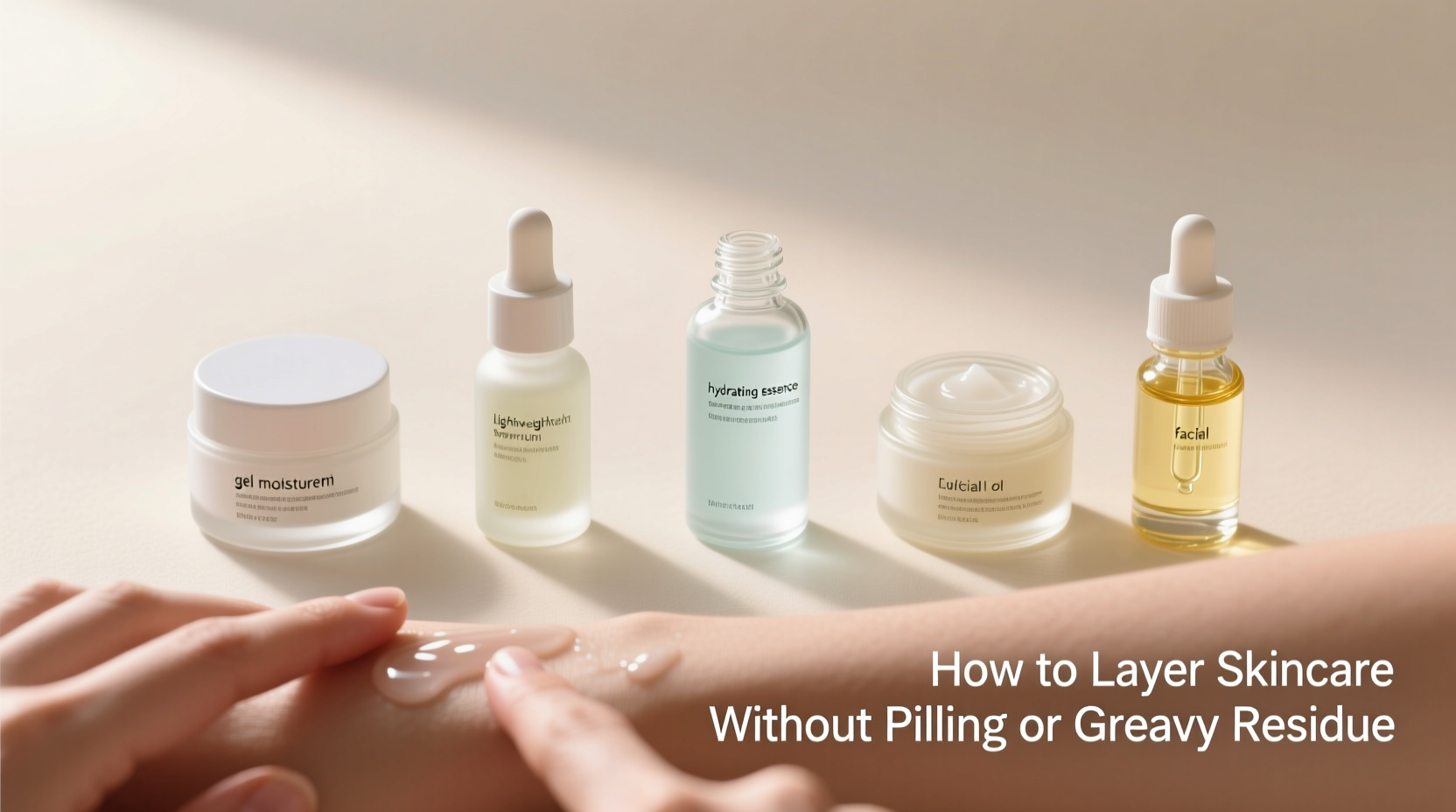
Pilling isn’t a flaw in your skin—it’s a reaction between products and application methods. It commonly happens when polymers, film-formers, or high concentrations of silicones (like dimethicone) are present in formulas. These ingredients create a barrier on the skin, which is great for locking in moisture but problematic when combined improperly.
When two such products are layered without sufficient drying time, they can lift off each other, forming tiny rolls. Humectants like glycerin or hyaluronic acid can also contribute if they sit on top of the skin and aren’t sealed properly. Environmental factors—such as low humidity or dry air—can worsen this effect by preventing proper ingredient penetration.
“Pilling is rarely about skin type. It’s almost always about formulation conflict and timing.” — Dr. Lena Park, Board-Certified Dermatologist
Understanding ingredient compatibility is key. For instance, water-based serums should always go before oil-based ones. Applying a silicone-heavy primer over a silicone-rich moisturizer increases the risk of pilling. Similarly, thick creams layered under lightweight sunscreens may cause friction during application.
Step-by-Step Guide to Flawless Layering
Follow this logical sequence to minimize resistance between products and maximize absorption:
- Cleanse gently: Start with a pH-balanced cleanser. Avoid stripping the skin, as compromised barriers increase friction and reduce absorption.
- Tone (if using): Apply hydrating or exfoliating toners with a cotton pad or hands. Wait 30 seconds for evaporation.
- Apply treatments in order of molecular weight: Thinnest to thickest. Water-based serums (like vitamin C or niacinamide) first, followed by thicker essences or ampoules.
- Hydrate with a lightweight moisturizer: Gel or lotion-based options work best for daytime routines.
- Seal with occlusives only when necessary: Heavy balms or oils are ideal for nighttime, not under makeup.
- Finish with sunscreen during the day: Allow at least 2 minutes between moisturizer and SPF to prevent slippage or pilling.
Between each step, allow 60–90 seconds for the previous product to absorb. This prevents mixing incompatible ingredients at the surface level and reduces mechanical friction during application.
Do’s and Don’ts of Product Compatibility
| Do | Don’t |
|---|---|
| Layer water-based before oil-based products | Mix multiple silicone-heavy primers and moisturizers |
| Use chemical exfoliants (AHAs/BHAs) before hydrating serums | Combine strong acids with physical scrubs daily |
| Wait 1–2 minutes between layers | Apply sunscreen immediately after a damp moisturizer |
| Use gel or emulsion textures in humid climates | Layer thick creams under liquid foundation |
| Blot excess oil with a tissue before SPF or makeup | Double up on occlusive lip balms and face oils simultaneously |
This table highlights common pitfalls and practical solutions. For example, while niacinamide and vitamin C can be used together, pairing L-ascorbic acid (a low-pH formula) with high-pH niacinamide serums may cause irritation or destabilization. In such cases, alternate them—vitamin C in the morning, niacinamide at night—or choose a stabilized C derivative compatible with higher pH levels.
Real Example: From Pilling to Perfection
Sophia, a 32-year-old marketing executive in Singapore, struggled with her morning routine. She loved her antioxidant serum, hyaluronic acid booster, rich moisturizer, and matte-finish sunscreen—but every day, small white flakes appeared around her nose and chin by mid-morning. Makeup would cling to the residue, creating an uneven look.
After consulting a dermatologist, she discovered the issue: her moisturizer contained high levels of dimethicone, and her sunscreen was also silicone-based. Applied too quickly one after the other, they never fully absorbed, leading to pilling. Additionally, she was using both a hydrating toner and a humectant serum in high humidity, causing excess moisture to sit on her skin.
Her revised routine:
- Used a lighter, water-based moisturizer instead of the rich cream
- Waited two full minutes after moisturizing before applying sunscreen
- Reduced serums to one active per routine (vitamin C in AM, retinol in PM)
- Switched to a hybrid sunscreen with lower silicone content
Within a week, the pilling disappeared. Her skin felt smooth, looked even, and her makeup applied flawlessly. The change wasn’t drastic—just strategic.
Choosing the Right Products to Prevent Greasiness
Greasiness doesn’t mean your skin is oily—it often means you’ve overloaded it with emollients and occlusives too early in the routine. To avoid a shiny, heavy feel:
- Opt for “gel-cream” or “water-cream” moisturizers during the day, especially in warm or humid environments.
- Avoid petrolatum, shea butter, or mineral oil in daytime routines unless you have extremely dry skin.
- Look for labels like “non-comedogenic,” “oil-free,” or “fast-absorbing.”
- Use facial mists to boost hydration without adding weight.
At night, heavier creams are acceptable, but apply them only after lighter layers have dried. If you use facial oils, apply 2–3 drops after moisturizer (“the sandwich method”) or mix directly into your cream to dilute richness.
Frequently Asked Questions
Why does my skincare pill only in certain areas, like around my nose?
This usually happens where dead skin cells accumulate or where facial movements (like smiling) create friction. Exfoliate gently 2–3 times a week and ensure those zones receive the same attention during application. Also, check if your sunscreen or moisturizer is too rich for your T-zone.
Can I fix pilling once it starts during my routine?
If pilling occurs, stop layering immediately. Gently press a warm, damp cloth over the area to dissolve buildup, then blot dry. Reapply only essential products—sunscreen and perhaps a light moisturizer—and skip the rest. Going lighter is better than compounding the issue.
Is pilling harmful to my skin?
No, pilling itself isn’t damaging. However, it indicates poor absorption, meaning your active ingredients aren’t working effectively. It can also lead to clogged pores if debris is rubbed back into the skin.
Expert Tips for Long-Term Success
Skincare layering isn’t about using more products—it’s about using them wisely. Dermatologists emphasize simplicity and consistency over complexity.
“Most people use 5–7 products thinking more is better. But a three-step routine with compatible, well-applied products outperforms a chaotic seven-layer stack any day.” — Dr. Rajiv Khanna, Cosmetic Dermatologist
Consider these additional strategies:
- Rethink double cleansing at night: Only necessary if wearing heavy makeup or sunscreen. Over-cleansing weakens the lipid barrier, increasing sensitivity and pilling risk.
- Adjust seasonally: Switch to richer creams in winter and lighter gels in summer. Your skin’s needs change with climate.
- Check expiration dates: Old products degrade and separate, increasing pilling likelihood.
- Use tools wisely: Jade rollers or gua sha can enhance absorption, but only if used gently and on sufficiently absorbed layers.
Final Checklist for a Smooth, Residue-Free Routine
- Start with a clean, dry face.
- Apply products from thinnest to thickest texture.
- Wait 60–90 seconds between layers.
- Pat, don’t rub, especially with actives.
- Avoid combining multiple silicone-heavy formulas.
- Use lightweight, fast-absorbing products during the day.
- Blot excess oil before applying sunscreen or makeup.
- Exfoliate 2–3 times weekly to prevent dead skin buildup.
- Test new products one at a time.
- Simplify if pilling persists—fewer steps often yield better results.
Conclusion
Layering skincare without pilling or greasy residue is entirely achievable with the right approach. It’s not about abandoning your favorite products, but about understanding how they interact and giving them the time and conditions to work. By following a structured order, choosing compatible formulas, and allowing proper absorption, you can enjoy a smooth, radiant complexion—free from flaking and shine.




 浙公网安备
33010002000092号
浙公网安备
33010002000092号 浙B2-20120091-4
Comments
No comments yet. Why don't you start the discussion?