
DNA is the blueprint of life. It holds the instructions that determine everything from your eye color to your susceptibility to certain diseases. For many, the world of genetics feels complex and intimidating—but it doesn’t have to be. With the right approach, anyone can grasp the fundamentals of DNA and build a working knowledge of genetics. This guide breaks down the journey into clear, manageable steps, designed specifically for beginners who want to understand how life encodes information at the molecular level.
Step 1: Understand the Basics of Cells and Molecules
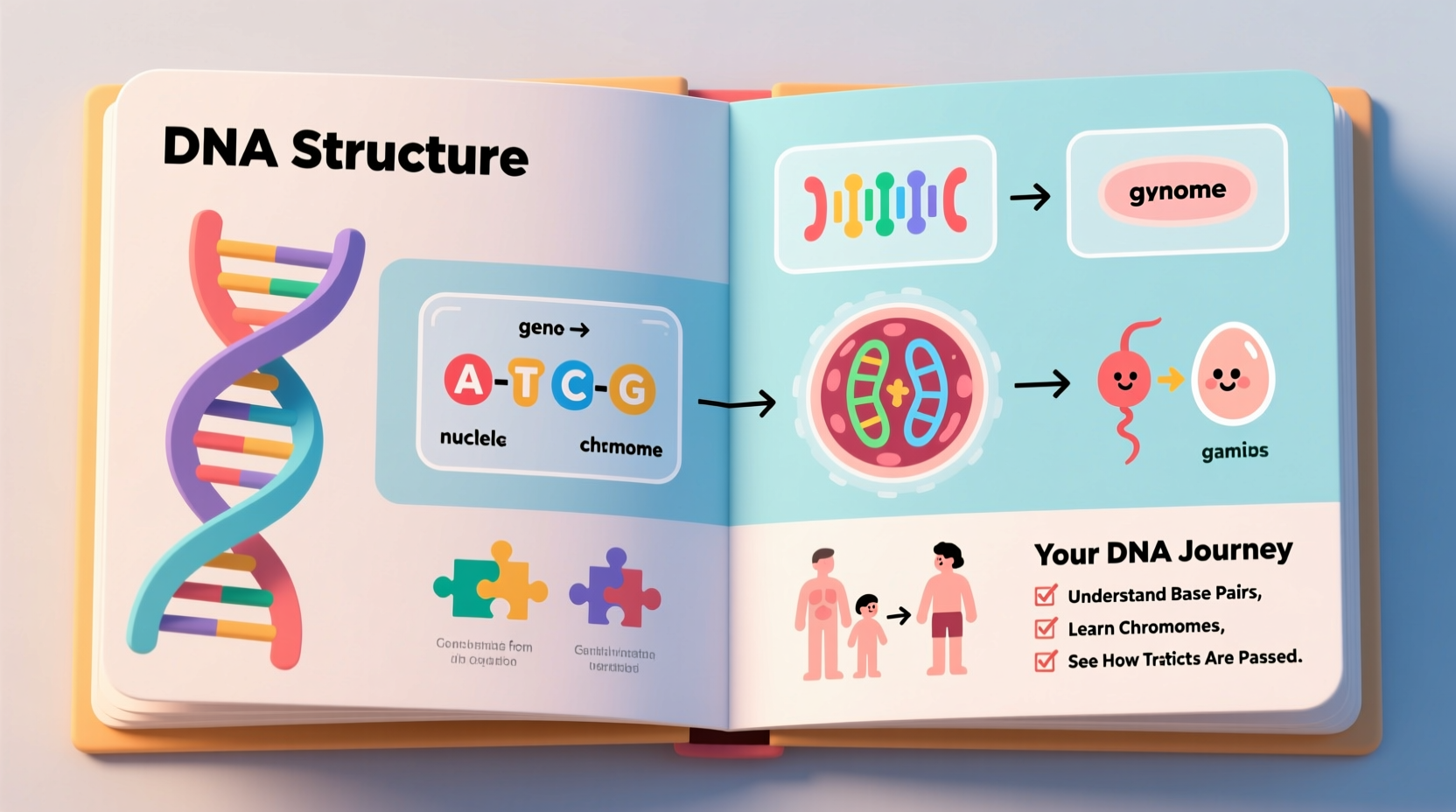
Before diving into DNA, it’s essential to understand where it lives and what it’s made of. All living organisms are composed of cells, and within most cells lies the nucleus—a control center that houses genetic material. DNA (deoxyribonucleic acid) is a long molecule located in the nucleus, shaped like a twisted ladder known as a double helix.
DNA is made up of smaller units called nucleotides. Each nucleotide consists of three parts:
- A sugar molecule (deoxyribose)
- A phosphate group
- One of four nitrogenous bases: Adenine (A), Thymine (T), Cytosine (C), and Guanine (G)
The sequence of these bases along the DNA strand forms the genetic code. The pairing rules—A with T, and C with G—are fundamental to how DNA replicates and functions.
Step 2: Learn How DNA Encodes Information
DNA doesn’t directly build proteins—it acts as a template. The process begins with transcription, where a segment of DNA is copied into messenger RNA (mRNA). This mRNA then travels out of the nucleus to ribosomes, where translation occurs: the mRNA sequence is read in groups of three bases (codons), each corresponding to a specific amino acid. These amino acids link together to form proteins, the workhorses of the cell.
For example, the DNA sequence \"ATG\" codes for the start of a protein. From there, sequences like \"GCT\" translate to alanine, and \"TTT\" to phenylalanine. The order of these amino acids determines the structure and function of the resulting protein.
“DNA is like a language written in a four-letter alphabet. The meaning emerges not from the letters themselves, but from their precise arrangement.” — Dr. James Watson, Co-discoverer of the DNA double helix
Step 3: Study Inheritance and Genetic Variation
Genetics isn’t just about molecules—it’s also about how traits are passed from parents to offspring. Humans inherit two copies of each gene, one from each parent. These variants are called alleles. Some alleles are dominant, meaning they mask the effect of recessive ones.
For instance, consider eye color. If a person inherits a dominant allele for brown eyes (B) and a recessive one for blue eyes (b), their eyes will be brown. Only individuals with two recessive alleles (bb) will have blue eyes.
Mendel’s laws of inheritance provide a framework for understanding these patterns:
- Law of Segregation: Each parent passes on only one of their two alleles for each gene.
- Law of Independent Assortment: Genes for different traits are inherited independently of one another (with some exceptions due to gene linkage).
| Genotype | Phenotype (Eye Color) |
|---|---|
| BB | Brown |
| Bb | Brown |
| bb | Blue |
Step 4: Explore Real-World Applications and Case Studies
Understanding DNA isn’t just academic—it has real-world impact. Consider the case of cystic fibrosis, a genetic disorder caused by mutations in the CFTR gene. This gene normally helps regulate salt and water movement in and out of cells. A mutation leads to thick mucus buildup, primarily affecting the lungs and digestive system.
In the 1980s, researchers identified the faulty gene through linkage analysis and positional cloning. Today, genetic testing can detect carriers, and therapies like Trikafta target the underlying protein defect—showcasing how deep genetic knowledge translates into life-saving treatments.
This example illustrates why learning DNA matters: it empowers individuals to understand health risks, make informed decisions, and appreciate advances in medicine.
Step 5: Build Knowledge Through Structured Learning
Learning genetics is a journey best taken in stages. Here’s a practical checklist to guide your progress over 8–12 weeks:
📋 Beginner Genetics Learning Checklist- Week 1–2: Review basic biology—cells, organelles, and biomolecules.
- Week 3–4: Study DNA structure, base pairing, and replication.
- Week 5–6: Learn transcription, translation, and the central dogma of molecular biology.
- Week 7–8: Explore Mendelian genetics, Punnett squares, and inheritance patterns.
- Week 9–10: Investigate mutations, genetic disorders, and DNA testing.
- Week 11–12: Dive into modern topics like CRISPR, epigenetics, and personalized medicine.
Supplement your study with reputable resources:
- Khan Academy – Biology: Free video lessons on DNA and genetics.
- Crash Course Biology (YouTube): Engaging, fast-paced overviews.
- “The Gene” by Siddhartha Mukherjee: A compelling narrative history of genetics.
- MIT OpenCourseWare: College-level lectures and materials.
Frequently Asked Questions
Can I learn genetics without a science background?
Absolutely. While some familiarity with biology helps, many beginners successfully learn genetics through self-study. Start with foundational concepts and gradually build complexity. Use visual aids and analogies to simplify abstract ideas.
What’s the difference between DNA, genes, and chromosomes?
DNA is the molecule that carries genetic information. A gene is a specific segment of DNA that codes for a particular protein or function. Chromosomes are tightly packed structures made of DNA and proteins; humans have 23 pairs of chromosomes in each cell.
Are all traits determined by single genes?
No. While some traits (like blood type) follow simple Mendelian patterns, most—such as height, intelligence, and disease risk—are polygenic, meaning they involve multiple genes and environmental factors. These are more complex and harder to predict.
Common Mistakes to Avoid
Many beginners fall into traps that slow their learning. Be mindful of these common pitfalls:
| Mistake | Do This Instead |
|---|---|
| Memorizing without understanding | Focus on mechanisms—why DNA replication works, not just the steps |
| Skipping foundational biology | Ensure you understand cells and molecules before advancing |
| Assuming genetics is purely deterministic | Recognize the role of environment and epigenetics in gene expression |
| Relying on outdated sources | Use current textbooks or peer-reviewed websites like Nature Scitable |
Conclusion: Start Small, Think Big
Learning about DNA opens a window into the very essence of life. What may begin as curiosity about heredity can grow into a deeper appreciation for biotechnology, medicine, and evolution. You don’t need a lab coat or a PhD to understand the basics—just patience, curiosity, and a willingness to learn step by step.
Every expert was once a beginner. By starting with the fundamentals, practicing regularly, and using reliable resources, you can develop a strong understanding of genetics that lasts a lifetime. Whether you're exploring for personal interest, health awareness, or future studies, the journey into DNA is one of the most rewarding paths in science.




 浙公网安备
33010002000092号
浙公网安备
33010002000092号 浙B2-20120091-4
Comments
No comments yet. Why don't you start the discussion?