
A floating illusion Christmas tree is more than a decoration—it’s an experience. By combining clever engineering with precise lighting techniques, you can create the mesmerizing effect of a tree that appears to hover in midair. This illusion captivates guests and transforms any space into a scene from a winter fantasy. While it may seem like stage magic, the technique relies on physics, optics, and thoughtful design rather than special effects. With the right materials and attention to detail, anyone can build this centerpiece for their holiday decor.
The secret lies not in defying gravity but in manipulating perception. The human eye is easily tricked when visual cues are removed or obscured. A floating tree isn’t truly unsupported; instead, its structure is concealed through darkness, reflection, or camouflage. Lighting plays the starring role—both in hiding what shouldn’t be seen and highlighting what should. Done well, the result is a tree that seems to glow from within, suspended by nothing but light and wonder.
The Science Behind the Floating Illusion
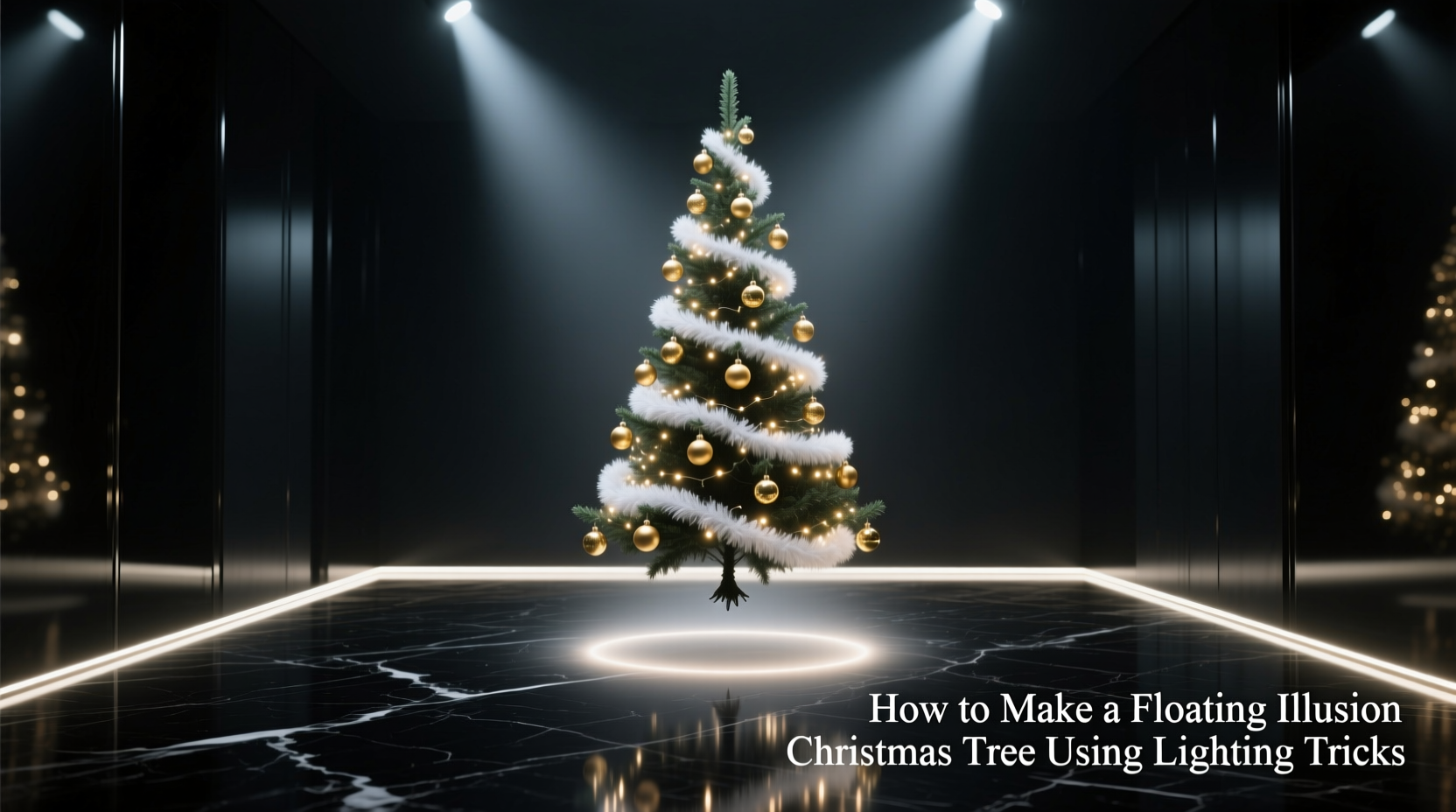
Visual illusions rely on how our brains interpret depth, contrast, and context. In a darkened environment, objects without clear reference points appear disconnected from physical support. This principle is used in theater, museum displays, and high-end retail installations. For a floating Christmas tree, the goal is to eliminate visual anchors—such as visible stands, poles, or wires—that signal grounding.
One key concept is figure-ground perception: the brain separates objects (figures) from their surroundings (ground). When the background is uniformly dark and the object is brightly lit, the figure appears isolated. If the support mechanism blends into the background—either by being painted black, placed in shadow, or made transparent—the mind assumes no support exists.
Another factor is luminance masking. Bright lights draw the eye, while dim or unlit areas recede visually. By illuminating only the tree and ornaments and keeping the base and support in near-total darkness, the brain ignores the structural elements. This is why these illusions work best in low-light rooms, where ambient brightness won’t reveal hidden components.
“Perception is not always reality—especially during the holidays. A well-lit tree in a controlled environment can defy expectations and create genuine awe.” — Dr. Lena Pruitt, Visual Perception Researcher, University of Michigan
Materials and Setup: Building the Foundation
Before focusing on lighting, you must construct a stable yet invisible support system. The tree itself should be lightweight—artificial trees made of PVC or aluminum are ideal. Avoid real trees, which are too heavy and pose fire risks near electrical components.
The core of the illusion is a central support rod, typically made of black-painted steel or acrylic rod. This rod runs vertically through the center of the tree, anchored at the base to a weighted platform hidden beneath flooring or carpeting. The rod attaches securely to the tree’s internal pole, ensuring stability without wobbling.
To hide the base, use one of two methods:
- Black Box Method: Place the weighted base inside a box painted matte black. Surround it with dark fabric or skirting to blend into shadows.
- Floor Integration: Embed the base flush into the floor or use a false floor panel that matches the room’s finish, making the support appear nonexistent.
Ensure the rod is thin—no more than 1 inch in diameter—and painted flat black to minimize reflectivity. Thicker rods catch light and break the illusion. For taller trees (over 6 feet), consider reinforcing the rod internally or adding tension wires attached to ceiling anchors, though these must also remain out of sight.
Lighting Strategy: Creating the Magic
Lighting is where the illusion comes alive. The goal is to illuminate the tree evenly while leaving the support structure in darkness. Use LED string lights with warm white or cool white tones—avoid multicolor strands, as they distract from the clean, ethereal look.
Begin by wrapping lights from the inside out. Start at the trunk and spiral outward toward the tips of the branches. This inward focus ensures light radiates from the center, minimizing shadows and reducing visibility of the central rod. Use dense spacing—about 100 bulbs per foot of height—for full coverage.
For maximum effect, incorporate multiple layers of lighting:
- Internal Core Lighting: Place a vertical strip of LEDs along the inner trunk, shielded from direct view by foliage. This creates a glowing spine effect.
- Branch Tip Accents: Add small spotlights or micro-LEDs at the ends of select outer branches to enhance depth.
- Under-Tree Uplighting: Position low-profile LED uplights beneath the lowest tier, aimed upward to cast soft illumination through the lower branches.
Use dimmable controllers to fine-tune brightness. Too much light reveals textures and edges that might expose the support. Aim for even diffusion—no hotspots or glaring bulbs. Consider frosted bulb covers or diffuser sleeves to soften the light output.
Color temperature matters. Stick to 2700K–3000K for a warm, inviting glow that mimics candlelight, or go slightly cooler (3500K) for a modern, crystalline effect. Avoid blue-heavy tones, which can make the scene feel sterile.
Step-by-Step Guide to Assembly
Follow this sequence to assemble your floating illusion tree with precision:
- Prepare the Space: Choose a room with controllable ambient light. Ideally, use blackout curtains or schedule display times for evening hours.
- Install the Base: Secure the weighted platform to the floor or embed it flush. Attach the black support rod vertically, ensuring it’s perfectly plumb using a level.
- Mount the Tree: Slide the artificial tree onto the support rod. Fasten it securely at the base collar. Adjust branch angles to conceal the rod as much as possible.
- Add Internal Lighting: Begin threading LED strings from the interior, working bottom to top. Route wires down the central rod and conceal them within the trunk.
- Power and Test: Connect all lights to a central power source routed discreetly along the floor or under a rug. Plug into a surge protector.
- Darken the Room: Turn off overhead lights. Activate the tree lights and observe from multiple angles. Adjust any visible wires or bright spots.
- Refine the Illusion: Use additional uplights or side backlighting to deepen shadows around the base. Hang dark drapes behind the tree to eliminate background distractions.
Do’s and Don’ts: Lighting and Design Table
| Do | Don’t |
|---|---|
| Use flat black materials for all supports | Use silver or reflective poles |
| Wrap lights from the inside outward | Only light the outer surface |
| Use dimmable, warm-white LEDs | Use flickering or multicolor lights |
| Test the setup in total darkness | Rely on ambient room light |
| Hide wires inside the trunk or base | Leave cords visible on the floor |
Real Example: A Gallery Installation in Portland
In December 2022, the Evergreen Art Collective in Portland unveiled a holiday exhibit titled *Levitation*. At its center was a 7-foot floating Christmas tree displayed in a pitch-black room. Visitors entered through a dark corridor, emerging into the space where the tree appeared to hover above a mirrored platform.
The team used a carbon fiber rod painted with non-reflective matte black coating, anchored to a 50-pound steel base hidden beneath a false floor. Over 1,200 warm-white micro-LEDs were hand-wired through the branches, with additional fiber-optic strands embedded in select tips to create star-like glimmers.
Uplights beneath the lowest tier projected soft gradients upward, eliminating any sense of contact with the ground. The mirrored base reflected the tree’s glow but not its base, enhancing the illusion of weightlessness. Feedback from visitors consistently mentioned feelings of calm and childlike wonder.
“We wanted people to forget engineering and just feel magic,” said lead designer Mara Lin. “The lights didn’t just decorate the tree—they became the reason it could float.”
Enhancing the Effect: Additional Tips
Once the basic illusion is functional, consider enhancements to deepen the impact:
- Mirror Floors: A black mirror or dark glass base reflects light without revealing supports, doubling the visual length of the tree.
- Fog or Haze Machines: A light mist diffuses light rays, blurring hard edges and increasing the dreamlike quality. Use sparingly and in ventilated areas.
- Sound Integration: Pair the display with soft instrumental carols or ambient chimes to engage multiple senses.
- Remote Control: Use smart lighting systems (e.g., Wi-Fi-enabled LEDs) to adjust brightness or patterns via app or voice command.
For outdoor versions, ensure all electrical components are weather-rated and grounded. Use GFCI outlets and avoid water exposure. Outdoor floating trees work best near patios or entryways with surrounding darkness.
Frequently Asked Questions
Can I make a floating tree without drilling or permanent modifications?
Yes. Use a freestanding weighted base inside a decorative black box. Skirt it with dark fabric or place it under a rug with a cutout. No drilling required—just ensure the base is heavy enough to prevent tipping.
Is it safe to leave the tree lit overnight?
If using UL-certified LED lights and proper wiring, it’s generally safe. However, for maximum safety, use a timer to turn lights off after 8–10 hours. Never leave high-heat incandescent bulbs unattended.
Can I use a real tree for this effect?
Not recommended. Real trees are heavier, drier, and more flammable. Their irregular shape makes consistent lighting difficult, and sap can damage wiring. Stick to artificial trees for safety and control.
Final Checklist Before Display
- Support rod is securely mounted and vertically aligned
- All connections are tight and wires are hidden
- Tree is balanced and does not sway
- Lights are evenly distributed with no dark zones
- Room can be fully darkened for optimal effect
- No part of the base or rod is visible from seated or standing viewpoints
- Power source is safely connected and protected from moisture
- Fire extinguisher or smoke detector is nearby (for safety)
Conclusion: Bring Wonder Into Your Home
A floating illusion Christmas tree isn’t just a decoration—it’s a statement of creativity and craftsmanship. By mastering the interplay of light, shadow, and structure, you can transform a simple holiday symbol into something transcendent. The effort pays off in the gasps of amazement, the quiet moments of awe, and the memories created around something that seems impossible, yet stands quietly glowing in your living room.
This holiday season, don’t just hang lights—orchestrate an experience. Whether for family, guests, or your own delight, the floating tree invites wonder back into everyday spaces. Start planning now, test early, and refine until the illusion feels seamless. When it works, you won’t just have a Christmas tree—you’ll have a moment of magic.




 浙公网安备
33010002000092号
浙公网安备
33010002000092号 浙B2-20120091-4
Comments
No comments yet. Why don't you start the discussion?