
In an era where sustainability meets creativity, handmade solutions are gaining popularity—especially during the holiday season. One of the most practical and charming additions to your gifting routine is a reusable fabric gift bag that also functions as a stocking stuffer holder. Unlike single-use wrapping paper or flimsy plastic bags, these fabric creations can be used year after year, reducing waste while adding a personal touch to every present.
Beyond their environmental benefits, these dual-purpose bags offer versatility. They’re ideal for holding small gifts like chocolates, jewelry, or gift cards—and when the holidays end, they can be folded neatly and stored for next time. With just a few basic sewing skills and some thoughtfully chosen materials, you can create elegant, functional pieces that double as keepsakes.
Why Combine a Gift Bag with a Stocking Stuffer Holder?
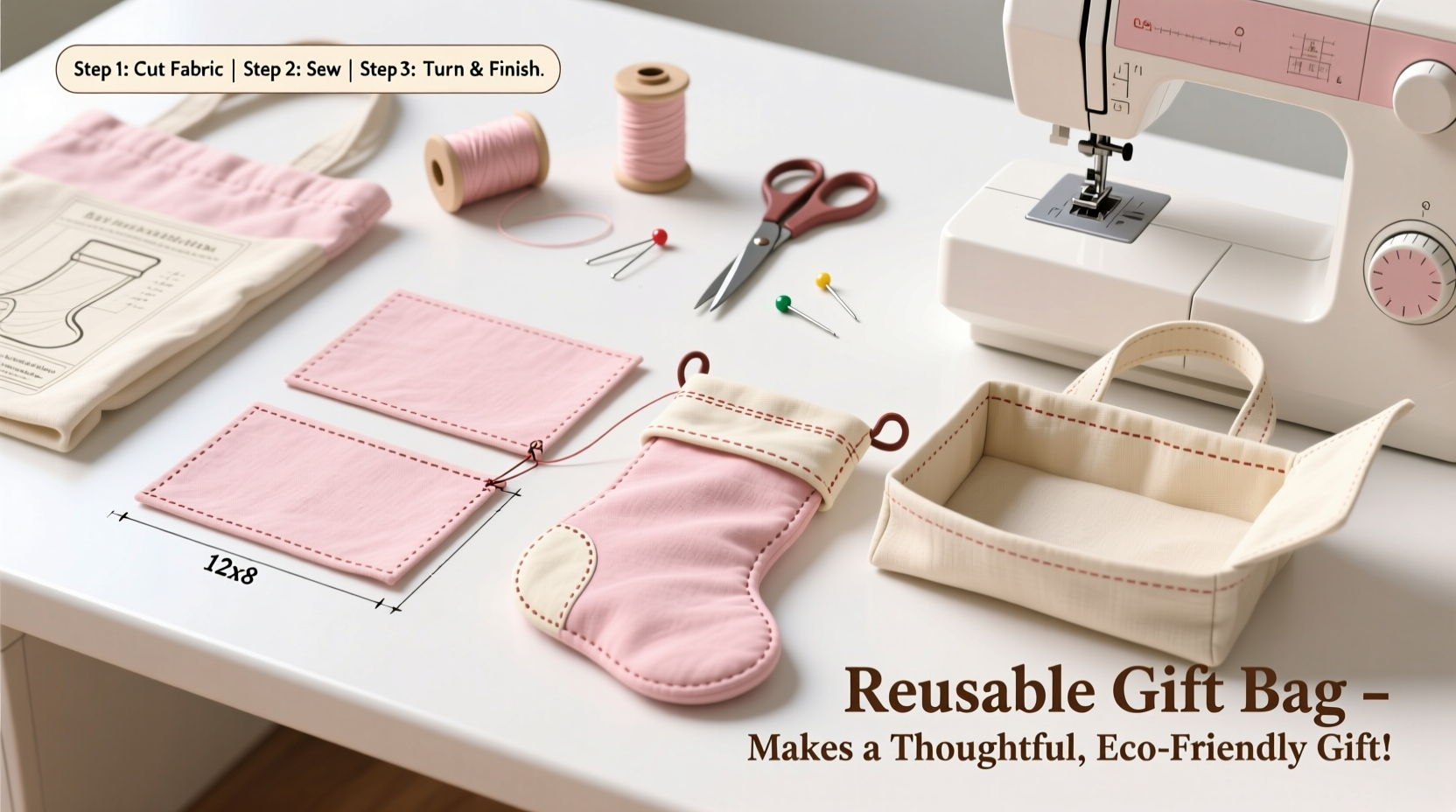
The concept stems from practical necessity. During the holidays, families often juggle multiple types of gifts: large presents under the tree and smaller items tucked into stockings. Traditionally, these categories are handled separately—one wrapped in paper, the other stuffed loosely into socks. But this approach leads to clutter, excess packaging, and forgotten items.
A hybrid fabric bag solves both problems. It’s sized appropriately for smaller gifts (typically 4x6 inches to 6x8 inches), yet structured enough to stand on its own as a mini gift container. When hung on a mantle or placed beside a larger present, it mimics the role of a stocking stuffer—but without requiring a physical stocking. This makes it especially useful for households without traditional fireplaces or those who prefer minimalist decor.
“Designing multifunctional items isn’t just about saving space—it’s about enhancing meaning. A bag that holds a gift today can become part of the memory tomorrow.” — Lila Monroe, Sustainable Textile Designer
Moreover, using reusable fabric supports eco-conscious values. According to the Environmental Protection Agency, Americans generate 25% more waste between Thanksgiving and New Year’s Day, much of it from wrapping materials. By switching to washable, durable fabric alternatives, individuals can significantly reduce their seasonal footprint.
Materials and Tools You’ll Need
Creating a high-quality fabric gift bag requires minimal supplies, most of which may already be in your craft cabinet. The key is selecting materials that balance durability, aesthetics, and ease of use.
| Material/Tool | Purpose | Recommended Type |
|---|---|---|
| Fabric (outer layer) | Main body of the bag | Cotton, linen, or quilting cotton with festive prints |
| Fabric (lining) | Interior finish | Contrasting solid color or coordinating print |
| Fusible interfacing | Adds structure and stiffness | Medium-weight woven type |
| Ribbon or cord | Closing mechanism | ¼” to ½” wide grosgrain or satin ribbon |
| Sewing machine | Stitching seams | Basic home model with straight stitch capability |
| Scissors, pins, thread | General assembly | Sharp fabric scissors; matching thread colors |
| Iron and ironing board | Pressing seams and fusing layers | Essential for professional results |
If you're making several bags at once—say, for family members or party favors—consider choosing a theme-based fabric (like snowflakes, reindeer, or winter florals) paired with neutral linings. Alternatively, personalize each by using monogrammed fabric or adding embroidered names.
Step-by-Step Construction Guide
Follow this detailed sequence to assemble a sturdy, attractive fabric gift bag that folds flat when not in use but stands proudly when filled.
- Cut the fabric pieces: Using sharp scissors or a rotary cutter, cut two rectangles measuring 7” x 9” from your outer fabric, lining fabric, and fusible interfacing. These dimensions allow for a finished size of approximately 6.5” x 8.5”, perfect for standard gift cards or small toys.
- Apply interfacing: Peel off the paper backing from the fusible interfacing and attach it to the wrong side of one outer fabric piece using a hot iron. Repeat for the second outer piece. This adds body and helps the bag hold its form.
- Sew outer bag: Place the two outer fabric pieces right sides together. Pin along three edges: both sides and the bottom. Sew with a ½” seam allowance. Leave the top edge open. Trim corners diagonally to reduce bulk, then turn the piece right side out. Use a blunt tool (like a chopstick) to push out the corners cleanly.
- Sew lining: Repeat the same process with the lining fabric, but leave a 3” gap along the bottom seam for turning later. Do not turn this piece right side out yet.
- Join outer and lining: Slide the outer bag (right side out) into the lining bag (still inside out). Align the top edges so all four layers are stacked with right sides facing each other. Pin thoroughly around the top opening.
- Create the casing: Before sewing the top seam, fold over ½” along the top edge of the outer fabric (the part closest to the sky when assembled) and press. Then fold again ¾” to create a clean channel for the drawstring. Re-pin everything in place.
- Sew the top seam: Sew all the way around the top edge with a ½” seam allowance, catching the folded casing. Backstitch at start and end for strength.
- Turn and close: Reach through the gap in the lining and pull the entire project right side out via the hole. Gently push out the corners. Press the top edge evenly, making sure the lining stays hidden inside the outer bag. Hand-stitch or machine-sew the gap in the lining closed.
- Add the drawstring: Cut a 24” length of ribbon or cord. Attach a safety pin to one end and thread it through the casing, going around the full perimeter. Tie the ends together securely once both emerge.
- Final press: Give the bag a final ironing, being careful not to melt synthetic ribbons. Your reusable gift bag is now complete and ready to fill.
Customization Ideas and Real-Life Application
One family in Portland, Oregon, adopted this design three years ago as part of their zero-waste holiday initiative. Instead of buying new stockings each year, they created eight personalized fabric gift bags for immediate family members. Each was made from upcycled quilt squares and lined with vintage Christmas dress fabric donated by a grandmother.
Each bag featured a unique charm tied to the recipient: a tiny wooden star for the eldest daughter, a miniature book pendant for the reader in the family, and a pinecone-shaped bead for the outdoors enthusiast. On Christmas morning, the bags were hung on a garland across the living room window, each containing a mix of candy canes, handwritten notes, and $10 gift cards.
By the third year, the children began requesting “their” bag specifically—not just for the contents, but because it had become a symbol of continuity and care. The parents reported spending less money on seasonal decor and disposables, estimating a savings of nearly $120 per year.
This real-world example illustrates how function and sentiment can coexist. Beyond utility, these bags foster tradition and emotional connection.
Ways to Personalize Your Bags
- Embroider initials or holiday symbols like holly, snowmen, or candles.
- Use fabric paint to stamp simple designs (great for kids to help).
- Attach tassels, pom-poms, or lace trim for extra flair.
- Choose fabrics that reflect cultural heritage—kente cloth, tartan, or batik prints.
- Incorporate reflective thread for visibility if used outdoors.
Care, Storage, and Long-Term Use
To ensure longevity, proper maintenance is essential. While fabric bags are inherently more sustainable than disposable options, their lifespan depends heavily on how they’re treated post-holiday.
“Textiles last longest when cleaned gently and stored unfolded. Even cotton can weaken under pressure if crushed for months.” — Dr. Helen Cho, Textile Preservation Specialist
After the season ends, empty each bag completely. Check for stray crumbs or sticky residues, particularly if food items were included. Most cotton-based bags can be hand-washed in cool water with mild detergent and air-dried flat. Avoid wringing or machine drying, as heat and agitation can cause shrinking or distortion.
Once dry, store the bags in a breathable cotton pillowcase or drawer liner. Avoid vacuum-sealed containers or plastic bins, which trap moisture and encourage mildew. If moths are a concern, add natural deterrents like cedar blocks or lavender sachets—but keep them separate from direct contact with fabric.
Checklist: End-of-Season Care Routine
- Empty all contents and inspect for stains or damage
- Spot-clean or fully wash as needed
- Ensure complete dryness before storing
- Fold neatly with acid-free tissue paper
- Store in a cool, dark, dry location away from pests
- Label clearly for easy retrieval next year
Frequently Asked Questions
Can I make these bags without a sewing machine?
Yes, though it will take longer. Use a needle and strong thread to hand-sew all seams with a backstitch for durability. Choose tightly woven fabrics that won’t fray easily, and consider using fabric glue to seal raw edges before stitching.
What size should I make the bag if I want to fit a standard mug?
For a typical 12-oz ceramic mug, increase the dimensions to 10” x 12” before seam allowances. You may also want to use a heavier fabric like denim or canvas and skip the drawstring in favor of a flap closure with a button or snap.
Are there non-holiday uses for these bags?
Absolutely. These bags work well for birthday party favors, teacher appreciation gifts, wedding guest welcome kits, or even as organizers in drawers. Swap festive prints for floral, nautical, or solid-color fabrics depending on the occasion.
Make It a Tradition Worth Repeating
Creating a reusable fabric gift bag that doubles as a stocking stuffer holder is more than a craft project—it’s an investment in mindful living. Each stitch represents intentionality: a choice to slow down, reduce consumption, and celebrate with authenticity. Whether you’re crafting alone on a quiet afternoon or involving children in a weekend activity, the process builds not only skill but connection.
Start small. Make one bag this season. See how it feels to give a gift that carries beauty beyond the moment. Then, next year, add another. Over time, you’ll build a collection that tells a story—one of care, consistency, and creativity. And when someone reaches for that familiar bag year after year, they won’t just remember what was inside. They’ll remember who made it.




 浙公网安备
33010002000092号
浙公网安备
33010002000092号 浙B2-20120091-4
Comments
No comments yet. Why don't you start the discussion?