
A small living room doesn’t have to feel cramped or confined. With thoughtful design choices—especially strategic mirror placement—you can dramatically alter the perception of space. Mirrors are among the most powerful tools in interior design for creating the illusion of openness, amplifying natural light, and adding architectural interest. When used correctly, they transform tight quarters into airy, inviting areas. The key isn’t just owning a mirror—it’s knowing where and how to place it for maximum visual impact.
Mirrors work by reflecting light and images, effectively doubling what’s in their line of sight. In a compact living room, this means mirrored surfaces can replicate windows, open up corners, and bounce daylight deep into the space. But poor placement can backfire, reflecting clutter or unflattering angles. This guide explores proven techniques, backed by design principles and real-world applications, to help you use mirrors like a professional decorator.
The Science Behind Mirror Illusions
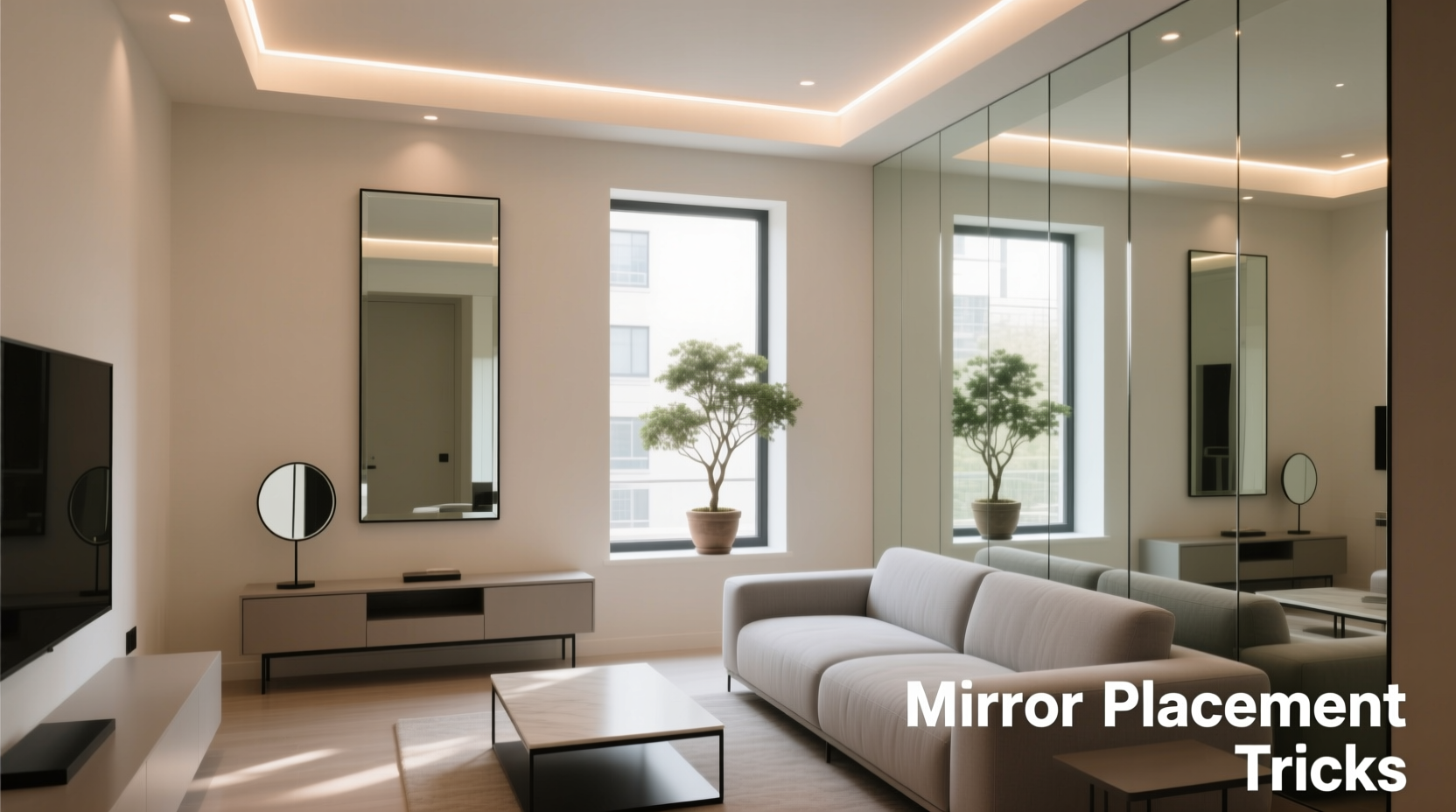
Mirrors manipulate perception through reflection and light diffusion. Unlike solid walls, which absorb or block light, mirrors return illumination, making a room feel brighter and more expansive. According to environmental psychologists, our brains interpret brightness and reflected depth as indicators of larger volume. A well-placed mirror tricks the eye into seeing “more” space, even when square footage remains unchanged.
Interior designer Laura Bennett explains:
“Mirrors don’t just reflect—they interact with your environment. Placed opposite a window, a mirror acts like a second source of light, reducing shadows and softening spatial boundaries.”
The effectiveness of a mirror depends on three factors: size, angle, and location. Large mirrors create stronger illusions but must be proportionate to the room. Angled or leaning mirrors introduce dynamic reflections, while wall-mounted ones offer stability and symmetry. Understanding these elements allows you to maximize impact without overwhelming the space.
Strategic Mirror Placement Techniques
Not all mirror positions yield equal results. To enhance spaciousness, focus on high-impact zones where reflection amplifies existing assets—like natural light, architectural features, or focal points.
1. Opposite Windows for Light Amplification
The most effective mirror placement is directly across from a window. Sunlight enters the room, hits the mirror, and bounces back, effectively doubling the illumination. This technique minimizes dark corners and creates an airy atmosphere.
Avoid placing mirrors too high or too low—center them at average eye level (about 57–60 inches from the floor) for optimal viewing and light capture.
2. Across from Focal Points
If your living room has a fireplace, artwork, or built-in shelving, position a mirror to reflect it. This doubles the visual weight of the feature and draws the eye deeper into the room. For example, a mirror facing a gallery wall creates the impression of a second art display, enhancing dimensionality.
3. In Narrow Hallways or Entryways
Even if the mirror isn’t inside the living room, one placed in an adjacent hallway or entry can influence the flow of space. A tall mirror near the entrance elongates the line of sight, making the transition into the living area feel more gradual and open.
4. On Interior Walls to Create Depth
Bare interior walls are missed opportunities. Mounting a mirror on a wall that faces seating areas gives the illusion that the room extends beyond its actual limits. Oval or round mirrors work particularly well here, as their soft edges reduce the harshness of flat surfaces.
5. Leaning Mirrors for Flexible Reflections
Floor-standing or leaning mirrors offer temporary solutions with high adaptability. Position them behind sofas or in corners to open up tight spaces. Their slight tilt captures both ceiling height and floor expanse, enhancing vertical and horizontal perception.
Choosing the Right Mirror Type and Size
Selecting the ideal mirror involves balancing aesthetics, function, and scale. A mirror too small will have minimal impact; one too large may dominate the room. Here’s how to choose wisely:
- Size: Aim for a mirror that covers at least two-thirds of the wall or furniture piece it accompanies (e.g., above a sofa).
- Shape: Rectangular mirrors emphasize length; round or oval ones soften angular rooms; arched mirrors add architectural flair.
- Frame: Thin or frameless mirrors maximize reflection; ornate frames add character but reduce reflective surface.
- Placement Height: Hang mirrors so the center is at eye level unless intentionally creating a dramatic overhead or floor-level effect.
| Mirror Type | Best For | Avoid If |
|---|---|---|
| Large Wall Mirror | Opposite windows, blank walls | Rooms with cluttered views |
| Pivot/Angled Mirror | Corners, tight spaces | High-traffic areas (safety risk) |
| Cluster of Small Mirrors | Accent walls, creative designs | Minimalist decor preferences |
| Floor-Leaning Mirror | Behind furniture, flexible layouts | Households with children or pets |
| Full-Length Mirror | Narrow walls, vertical expansion | Low ceilings (can exaggerate height issues) |
Consider the room’s overall style. A vintage gilt-framed mirror suits traditional spaces, while a sleek black-framed rectangle complements modern interiors. The goal is harmony between form and function.
Step-by-Step Guide to Installing Mirrors for Maximum Impact
Follow this sequence to ensure your mirror placement enhances space effectively:
- Assess Natural Light Sources: Identify where daylight enters the room. Mark the primary window(s) on a sketch of the floor plan.
- Determine Key Viewing Angles: Sit in common seating areas and note what you see from each vantage point. Avoid placing mirrors where they’ll reflect TVs (glare) or clutter.
- Select Mirror Location: Choose one of the high-impact zones: opposite a window, across from a focal point, or on a long interior wall.
- Test with Paper Mock-Up: Cut a piece of kraft paper to the mirror’s dimensions and tape it to the wall. Live with it for 24 hours to observe how it affects light and flow.
- Install Securely: Use appropriate anchors for your wall type (drywall, plaster, tile). For heavy mirrors, consider French cleats or professional installation.
- Evaluate and Adjust: After installation, assess during different times of day. Does it brighten the room? Does it create a sense of depth? Reposition if needed.
Real-World Example: Transforming a 12x14 Living Room
In a case study conducted in a downtown Chicago apartment, a 12x14-foot living room felt cramped due to limited natural light and bulky furniture. The tenant, Maria, wanted to open up the space without renovating.
Solution: A 36\"x48\" frameless rectangular mirror was mounted on the east wall, directly opposite a south-facing window. A second, smaller round mirror was leaned against a bookshelf to reflect greenery from a nearby potted plant.
Results: Daylight penetration increased visibly. The main mirror created the illusion of a second window, and the room felt at least 25% larger. Guests frequently commented on the “airy” feel, unaware the square footage remained unchanged.
“I didn’t expect such a simple change to make such a big difference,” Maria said. “Now I get compliments on the ‘bright, open layout’—all thanks to one well-placed mirror.”
Common Mistakes to Avoid
Even experienced decorators sometimes misplace mirrors. Steer clear of these pitfalls:
- Reflecting Clutter: A mirror that shows a messy corner or pile of shoes amplifies disorder. Keep the reflected view intentional and tidy.
- Over-Mirroring: Too many mirrors create visual chaos. Stick to one or two strategic placements.
- Ignoring Proportion: A tiny mirror on a large wall looks like an afterthought. Match mirror size to the wall and furniture.
- Blocking Light Paths: Don’t hang mirrors behind tall furniture where they can’t catch or reflect light.
- Using Distorted Glass: Old or low-quality mirrors can warp reflections, making the room feel off-balance.
“Mirror placement is like lighting design—it’s about directing attention. The best installations go unnoticed because they feel natural.” — David Tran, Interior Architect
Frequently Asked Questions
Can I use multiple mirrors in a small living room?
Yes, but with caution. Two mirrors can work if they reflect complementary scenes—such as one capturing light and another reflecting a focal point. Avoid placing mirrors directly facing each other, as this can create a disorienting tunnel effect.
What’s the best mirror shape for a small room?
Rectangular and oval mirrors are most effective. Rectangles extend linear space; ovals soften boxy layouts. Round mirrors are stylish but may not maximize wall coverage. Choose based on your wall dimensions and decor style.
Are mirrored walls outdated?
Full mirrored walls can feel dated or overly dramatic in residential spaces. However, large single mirrors or thoughtfully arranged mirror panels remain timeless. The key is subtlety—use mirrors as accents, not dominant features.
Final Checklist: Mirror Placement Success Plan
- ✅ Identify the main light source in the room
- ✅ Choose a mirror size proportional to the wall or furniture
- ✅ Position the mirror opposite a window or attractive focal point
- ✅ Test placement with a paper template before installing
- ✅ Ensure the reflected view is clean and visually pleasing
- ✅ Use secure mounting hardware appropriate for mirror weight
- ✅ Assess results at different times of day
- ✅ Limit to one or two mirrors unless design demands otherwise
Conclusion: Reflect Your Best Space
Transforming a small living room doesn’t require demolition or expensive renovations. With intelligent mirror placement, you harness the power of light and perception to create a space that feels open, bright, and effortlessly elegant. Whether you install a single statement mirror or experiment with layered reflections, the principle remains the same: reflect what you want to amplify—sunlight, views, or architectural charm.




 浙公网安备
33010002000092号
浙公网安备
33010002000092号 浙B2-20120091-4
Comments
No comments yet. Why don't you start the discussion?