
Drying celery is a time-tested method of preserving one of the most essential aromatic vegetables in global cuisine. While fresh celery wilts quickly and loses its crispness within days, properly dried celery retains its savory depth for months, offering concentrated flavor that enhances soups, stews, rubs, and spice blends. For home cooks seeking pantry efficiency, waste reduction, and deeper flavor control, mastering the art of drying celery unlocks new culinary possibilities. Whether you're working with surplus garden harvests or aiming to build a shelf-stable foundation for winter cooking, dried celery provides both practicality and taste enhancement.
Definition & Overview
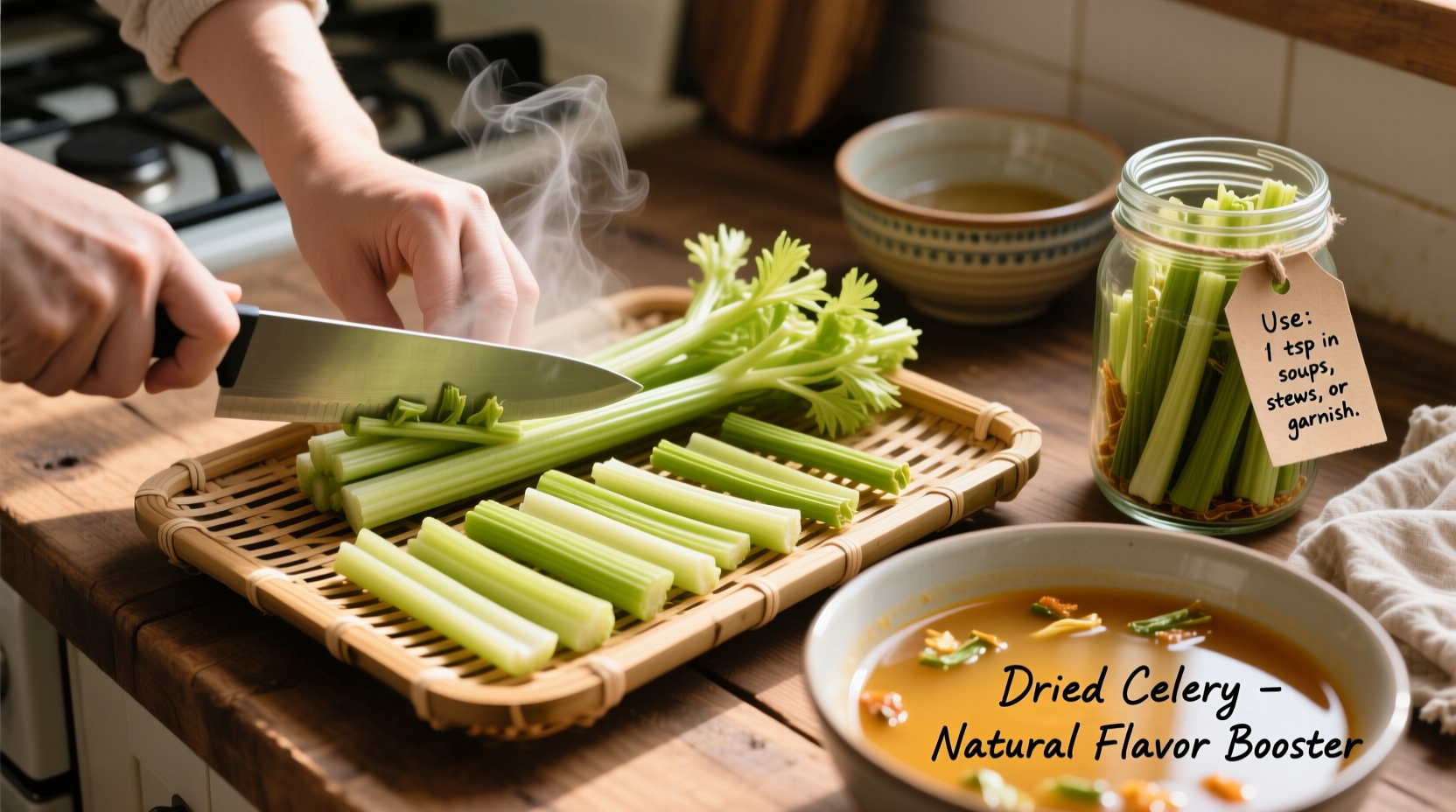
Celery (Apium graveolens) is a marshland plant cultivated for its edible stalks, leaves, and seeds. The stalk form—commonly known as Pascal celery—is most familiar in Western kitchens, prized for its high water content, crisp texture, and mild bitterness balanced by herbal sweetness. When dehydrated, celery undergoes physical and chemical transformation: moisture evaporates, cell walls break down, and volatile compounds concentrate, resulting in an intensified umami-rich profile.
Dried celery refers to any form of celery—stalks, leaves, or a combination—that has been dehydrated to extend shelf life and intensify flavor. It functions as a seasoning rather than a textural ingredient, dissolving into liquids or rehydrating during cooking. Unlike freeze-dried vegetables designed for instant meals, traditionally dried celery is typically ground into flakes or powder after dehydration, making it ideal for slow-cooked dishes where prolonged heat extracts maximum flavor.
The practice of drying celery dates back centuries, particularly among European and Middle Eastern cultures where root-to-leaf preservation was necessary before refrigeration. Today, dried celery remains a staple in commercial spice blends like bouquet garni, fines herbes, and poultry seasoning—but homemade versions offer superior freshness and purity, free from anti-caking agents or preservatives found in store-bought products.
Key Characteristics
| Characteristic | Description |
|---|---|
| Flavor Profile | Savory, earthy, slightly bitter with herbal brightness; more concentrated than fresh celery |
| Aroma | Grassy, green, with subtle anise-like notes when crushed |
| Color | Pale to medium green (leaves), beige to light tan (dried stalks) |
| Form | Whole dried pieces, flakes, granules, or fine powder |
| Culinary Function | Flavor base, seasoning agent, soup thickener (when rehydrated), component in spice rubs |
| Shelf Life | 6–12 months in airtight container away from light and heat |
| Rehydration Time | 5–15 minutes in warm liquid depending on cut size |
Practical Usage: How to Use Dried Celery in Cooking
Dried celery excels in recipes where long simmering allows full flavor extraction. Its low moisture content means it integrates seamlessly into dry rubs, doughs, and spice mixes without introducing unwanted sogginess. Because the natural glutamates in celery become more pronounced upon drying, it acts as a natural umami booster—comparable to dried mushrooms or tomato powder.
In traditional mirepoix—the French trinity of onion, carrot, and celery—dried celery can replace fresh when building flavor foundations for stocks, braises, or sauces. Simply add 1 teaspoon of dried celery flakes per cup of liquid-based dish to replicate the effect of one small stalk. For greater impact, toast the dried celery lightly in oil before adding liquids; this step volatilizes aromatic compounds and deepens overall complexity.
Beyond foundational use, dried celery shines in specific applications:
- Homemade Bouillon Cubes: Blend dried celery with powdered onion, garlic, salt, herbs, and a touch of nutritional yeast for a vegetarian umami bomb. Press into molds and store in the freezer.
- Spice Rubs: Combine equal parts dried celery, paprika, black pepper, and garlic powder for a versatile meat or poultry rub. Especially effective on roasted chicken or grilled pork chops.
- Bread and Biscuit Doughs: Add ½–1 teaspoon of finely ground dried celery to savory scones, cornbread, or cheese biscuits for herbal depth.
- Bean and Lentil Dishes: Stir into beans during cooking to reduce gassiness—celery contains phthalides that aid digestion while enhancing flavor synergy with legumes.
- Instant Seasoning Mixes: Create a “vegetable accent” blend using dried celery, carrot, onion, and parsley—ideal for boosting frozen or canned soups.
Pro Tip: For best results, crush dried celery between your palms or grind briefly in a spice mill just before use. This releases trapped essential oils and ensures even distribution in dishes.
Variants & Types of Dried Celery
Not all dried celery is created equal. The part of the plant used, drying method, and final form influence potency, color, and application. Understanding these variants helps match the right type to the right recipe.
1. Dried Celery Stalks
Made from sliced or julienned stalks, this version preserves fibrous structure but becomes tender when simmered. Best suited for soups, stews, and broths where gradual rehydration occurs. Retains a moderate level of crunch if added late in cooking. Flavor is clean and neutral compared to leaf forms.
2. Dried Celery Leaves
The leafy tops of celery are often discarded but contain the highest concentration of volatile oils and chlorophyll. When dried, they yield a vibrant green powder with intense herbal aroma. Ideal for finishing dishes, seasoning dips, or coloring compound butters. More potent than stalks—use at half the quantity.
3. Celery Flakes
A commercial term for coarsely ground dried celery (usually a mix of stalk and leaf). Widely available in supermarkets, though homemade versions lack fillers. Suitable for casseroles, stuffing, and sauce bases. Rehydrates faster than whole pieces due to increased surface area.
4. Celery Powder
Fine, flour-like consistency achieved by grinding fully dehydrated celery. Dissolves completely in liquids, making it perfect for dry brines, marinades, and spice blends. Often used in place of MSG in clean-label formulations due to its natural glutamate content.
5. Celery Salt
A prepared blend of celery seed or powder with sea salt (typically 3:1 ratio). Used primarily in cocktails (e.g., Bloody Mary), Chicago-style hot dogs, and potato salads. Can be made at home by combining coarse salt with freshly ground dried celery seeds or powder.
| Type | Best Uses | Substitution Ratio (vs Fresh) |
|---|---|---|
| Dried Stalks | Stews, soups, mirepoix | 1 tsp = 1 small stalk |
| Dried Leaves | Finishing, herb blends, spreads | 1 tsp = 1 tbsp chopped fresh leaves |
| Celery Flakes | Casseroles, gravies, stuffings | 1 tbsp = 1 medium stalk |
| Celery Powder | Rubs, dry brines, spice mixes | 1 tsp = 1 large stalk |
| Celery Salt | Seasoning blends, meats, drinks | Use to taste (contains salt) |
Comparison with Similar Ingredients
Celery is frequently confused with other aromatic or medicinal plants, especially in dried form where visual cues diminish. Clarifying distinctions ensures accurate usage and avoids flavor imbalances.
- Celery Seed vs. Dried Celery: Celery seed comes from mature Apium graveolens plants and has a pungent, almost mustard-like heat. It's far stronger than dried stalk or leaf—use only ¼ tsp seed in place of 1 tsp dried celery. Common in pickling spice and rye bread.
- Lovage vs. Dried Celery: Lovage (Levisticum officinale) resembles giant celery and shares a similar scent. Its dried leaves are more aggressive in flavor and should be used sparingly. A true substitute only when celery is unavailable.
- Chinese Celery vs. Western Celery: Chinese celery has thinner, hollow stems and a sharper, more peppery taste. When dried, it delivers a spicier note and is better suited to Asian stir-fries or medicinal broths.
- Fennel vs. Dried Celery: Fennel fronds may look like celery leaves but carry distinct licorice notes. Not interchangeable unless intentionally layering anise flavors.
\"Dried celery isn't just a backup—it’s a flavor accelerator. In my restaurant, we dry our own celery leaves every fall and use them to finish braised short ribs. The difference in depth is unmistakable.\" — Chef Elena Torres, Farm-to-Table Kitchen Director
How to Make Dried Celery at Home
Creating high-quality dried celery requires minimal equipment but benefits from attention to detail. Follow these steps for optimal results.
Step 1: Select and Prepare
Choose fresh, firm celery stalks with bright green leaves. Avoid limp or discolored specimens. Wash thoroughly under cold water to remove soil and grit. Pat dry with a clean towel.
- For stalks: Trim ends and slice crosswise into ¼-inch rounds or lengthwise into thin strips.
- For leaves: Strip from stems and leave whole or chop roughly.
Step 2: Choose Your Drying Method
Three primary methods exist, each with advantages based on climate, time, and tools available.
A. Dehydrator (Recommended)
- Arrange slices in a single layer on dehydrator trays, ensuring no overlap.
- Set temperature to 95°F (35°C) for herbs or 125°F (52°C) for thicker stalks.
- Dry for 6–12 hours (leaves) or 10–18 hours (stalks), until brittle and snapping easily.
- Check periodically for uniform dryness.
B. Oven Drying
- Preheat oven to its lowest setting (ideally below 170°F / 75°C).
- Place celery on parchment-lined baking sheets in a single layer.
- Prop oven door open slightly with a wooden spoon to allow moisture escape.
- Bake for 2–4 hours (leaves) or 4–6 hours (stalks), rotating trays halfway.
C. Air Drying (Traditional)
- Tie small bunches of celery stalks or leaves with twine.
- Hang upside down in a warm, dark, well-ventilated space (e.g., pantry or attic).
- Allow 7–14 days for complete drying, depending on humidity.
- Best for rustic applications; less consistent than mechanical methods.
Step 3: Cool and Store
After drying, let celery cool completely at room temperature (30–60 minutes). Any residual warmth can cause condensation in storage, leading to mold. Transfer to airtight glass jars or metal tins. Label with date and type (e.g., “Celery Leaves – Nov 2024”).
Storage Tip: Include a food-safe silica packet in the jar to absorb ambient moisture. Keep containers in a dark cupboard—light degrades chlorophyll and fades color over time.
Step 4: Grind (Optional)
For powder or flakes, pulse cooled dried celery in a spice grinder or blender. Sift through a fine mesh strainer to separate textures: fine powder for rubs, coarser bits for soups. Store separately for maximum versatility.
Practical Tips & FAQs
Can I dry celery with other aromatics?
Yes, but consider flavor blending. Drying onions or garlic alongside celery will create a built-in mirepoix mix, useful for quick seasoning. However, different moisture levels may affect drying times—monitor closely.
Is dried celery as nutritious as fresh?
Most vitamins (especially vitamin C) degrade during drying, but minerals like potassium and beneficial phytonutrients such as apigenin remain stable. Fiber content increases proportionally due to water loss. While not identical, dried celery still contributes meaningful nutrition to cooked dishes.
What’s the best way to rehydrate dried celery?
Soak in warm broth, stock, or water for 5–10 minutes before adding to dishes. Alternatively, add directly to simmering liquids—the heat and time will reconstitute it naturally. Rehydrated celery won’t regain full crispness but softens adequately for integration.
Can I use dried celery in raw applications?
Only if finely powdered. Whole or flaked dried celery will remain tough and unpleasant in uncooked dishes. Powdered form can be incorporated into dressings, dips, or spice blends where it hydrates via oil or acid components.
How do I know if dried celery has gone bad?
Signs include musty odor, visible mold, clumping due to moisture, or faded color. Properly stored, it should retain fragrance and hue for up to a year. If in doubt, perform a smell test—stale celery lacks its characteristic green aroma.
Can I dry store-bought pre-cut celery?
Yes, though it may have absorbed preservatives or chlorine rinse. Organic or farmer’s market celery yields cleaner-tasting results. Pre-cut pieces work well but ensure they’re unwashed prior to packaging to avoid excess moisture.
Summary & Key Takeaways
Drying celery at home transforms a perishable vegetable into a long-lasting, flavor-concentrated ingredient essential for serious home cooking. By removing water, you amplify its savory qualities and unlock new uses—from dry rubs to bouillon enhancers—that fresh celery cannot achieve.
Key points to remember:
- Dried celery is not a mere substitute but a distinct culinary ingredient with intensified umami and herbal character.
- Leaves offer stronger flavor than stalks; use accordingly to avoid overpowering dishes.
- Dehydrators provide the most consistent results, but ovens and air drying are viable alternatives.
- Store in airtight, dark containers to preserve color, aroma, and shelf life.
- Grinding just before use maximizes flavor release and prevents caking.
- Dried celery integrates best in cooked dishes, particularly those with extended simmer times.
Start small, experiment widely. Try adding homemade dried celery to your next pot of chili or homemade chicken noodle soup—you’ll notice a richer, more layered flavor profile. Once you master the process, consider expanding to other herbs and vegetables for a fully customized dried pantry.




 浙公网安备
33010002000092号
浙公网安备
33010002000092号 浙B2-20120091-4
Comments
No comments yet. Why don't you start the discussion?