
In the world of holiday decor, few displays captivate attention like the illusion of a floating Christmas tree. Suspended mid-air as if by magic, these luminous silhouettes create wonder in homes, storefronts, and event spaces. The secret? A clever combination of clear fishing wire or monofilament line and precisely arranged string lights. When executed well, the support wires vanish from view, leaving only the glowing outline of a tree that appears to defy gravity. This effect is not reserved for professional decorators—it’s achievable with basic materials and a bit of patience. Whether you're aiming for a minimalist centerpiece or an elaborate multi-tree installation, mastering this technique adds a touch of enchantment to your seasonal ambiance.
The Science Behind the Illusion
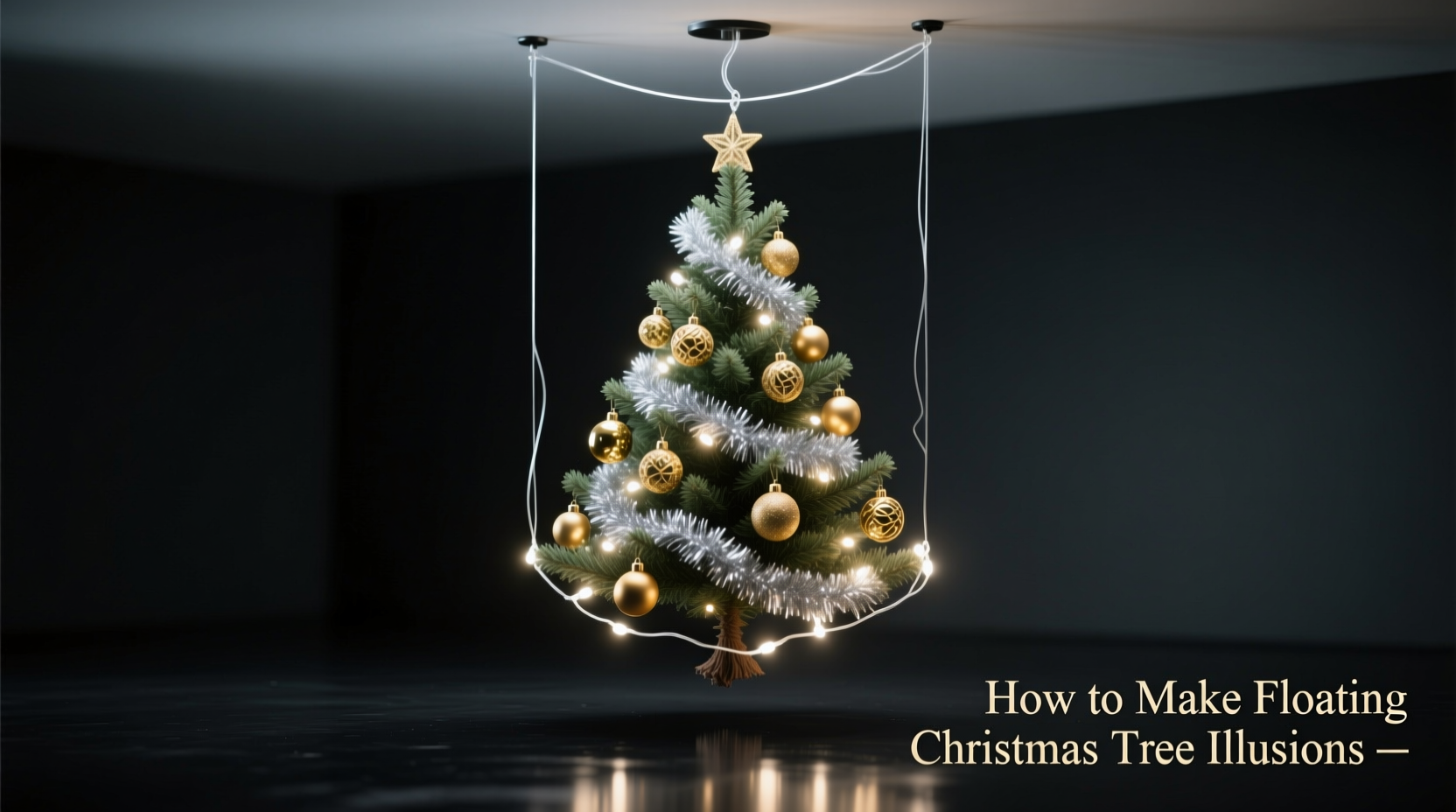
The floating tree illusion relies on visual perception. Clear nylon or monofilament wire—commonly used in fishing or plant support—is nearly invisible under most lighting conditions, especially when viewed from a distance. By attaching small, evenly spaced LED string lights to this transparent support structure and arranging them into a conical tree shape, the brain interprets the pattern of light as a solid object suspended in space. The absence of visible supports enhances the mystery, making it seem as though the tree levitates.
This principle is similar to techniques used in theater and museum displays, where objects are made to appear weightless. Lighting plays a crucial role: dim ambient light increases contrast, allowing the illuminated outline to stand out while further concealing the wires. Warm white or cool white micro LEDs work best due to their low heat output and high visibility without glare.
“The key to a convincing floating illusion is consistency in spacing and alignment. Even minor deviations break the spell.” — Lila Monroe, Lighting Designer & Holiday Installation Artist
Materials You’ll Need
Creating a floating Christmas tree requires minimal tools, most of which are readily available at hardware or craft stores. Below is a detailed list of essential components:
- Clear monofilament or fishing wire – For structural support and suspension.
- LED string lights – Preferably battery-operated mini or fairy lights with a tight bulb spacing (3–6 inches apart).
- A rigid frame base – Such as a metal coat hanger, bent wire, or plastic hoop to maintain tree shape.
- Wire cutters and pliers – For shaping and trimming support structures.
- Adhesive clips or clear tape – To secure lights to the frame without damaging bulbs.
- Anchoring points – Ceiling hooks, picture rails, or a sturdy overhead beam.
- A ladder or step stool – For safe installation at height.
- Measuring tape and level – To ensure symmetry and balance.
Battery-powered lights are ideal because they eliminate the need for trailing cords, preserving the clean, floating aesthetic. Opt for lights with a timer function to automate on/off cycles and reduce manual maintenance.
Step-by-Step Construction Guide
Follow this sequence to build a convincing floating Christmas tree illusion. Allow 1–2 hours for assembly, depending on size and complexity.
- Design the Tree Shape: Sketch a triangle or classic evergreen silhouette. Standard sizes range from 24” to 48” tall. Larger trees require thicker gauge wire for stability.
- Create the Frame: Bend a metal coat hanger or purchase a pre-formed wire hoop. Shape it into a cone or layered tiered structure resembling tree levels. Secure bends with pliers.
- Attach the Lights: Begin at the top (apex) and wrap string lights around the frame in a spiral or concentric pattern. Use small adhesive clips every 6 inches to prevent slippage. Avoid hot-glue, which can damage wiring.
- Test the Layout: Lay the frame flat and power on the lights. Check for dark spots or uneven spacing. Adjust bulb positions if necessary.
- Cut and Attach Suspension Wires: Cut three or four lengths of clear wire (each 2–3 feet long). Tie one end to upper points of the frame (e.g., top and outer corners). Keep knots tight and trim excess.
- Install Anchors: Mount small screw hooks into the ceiling or overhead structure at equal distances. Ensure they’re load-rated for at least 5 lbs, even for lightweight builds.
- Suspend the Tree: Lift the assembly and tie the free ends of the suspension wires to the anchors. Use a level to align the tree horizontally. Adjust wire lengths incrementally until the tree hangs straight.
- Final Illumination Test: Turn off room lights and activate the LEDs. View from multiple angles to confirm the wires are not visible and the tree appears to float.
Do’s and Don’ts: Common Pitfalls to Avoid
Even experienced decorators can fall into traps that compromise the illusion. Refer to the table below for quick guidance.
| Do | Don't |
|---|---|
| Use warm white or multicolor micro LEDs for better glow definition | Use large C7 or C9 bulbs—they’re too bulky and disrupt the delicate illusion |
| Mount in front of a dark wall or backdrop for maximum contrast | Place against bright or patterned walls that compete with the light outline |
| Secure all knots with a drop of clear nail polish to prevent slipping | Rely solely on friction—wires can loosen over time |
| Check wire tension weekly during display season | Forget about maintenance—vibrations or temperature shifts may alter alignment |
| Use a remote-controlled switch for easy operation | Run cords across walkways—use cord covers or wireless power options |
Real-World Example: A Boutique Window Display
A small gift shop in Portland, Oregon transformed its storefront each December with a trio of floating Christmas trees. Using 30”, 36”, and 42” wire frames wrapped with warm white fairy lights, the owner suspended them at varying depths from the ceiling using clear aircraft wire. Each tree was anchored to discreet hooks painted to match the ceiling. During the day, the wires were barely noticeable; at night, with interior lights dimmed, the trees appeared to hover in midair above a faux snow-covered base.
The display drew consistent foot traffic and social media attention. Customers often stopped to take photos, trying to figure out how the trees stayed aloft. The owner reported that the installation cost under $75 in materials and took less than three hours to assemble and hang. “People think it’s high-tech,” she said, “but it’s really just careful planning and the right kind of light.”
Advanced Variations and Creative Twists
Once you’ve mastered the basic floating tree, consider expanding the concept:
- Layered Trees: Hang multiple frames in sequence to create a 3D tunnel effect.
- Color-Changing LEDs: Use programmable RGB strings to shift colors slowly, adding dynamic movement.
- Musical Sync: Pair lights with a sound module so brightness pulses with holiday music.
- Outdoor Version: Use UV-resistant wire and weatherproof lights under a covered porch or gazebo.
- Mini Desktop Trees: Scale down to 6–12” versions using craft wire and USB-powered lights for desks or mantels.
For events, combine floating trees with fog machines or slow-moving fans to enhance the ethereal quality. The interplay of light and motion deepens the illusion of levitation.
“Simplicity sells the magic. The fewer elements you use, the more believable the illusion becomes.” — Rafael Jin, Immersive Experience Designer
Frequently Asked Questions
Can I make a floating tree without drilling into the ceiling?
Yes. Use removable adhesive ceiling hooks rated for lightweight loads (up to 3 lbs). These work well for small trees (under 24”) and leave no residue. Alternatively, suspend the tree from a curtain rod, bookshelf bracket, or tension pole placed across a doorway.
Are there fire risks with this setup?
Minimal, if proper materials are used. Always choose LED lights, which remain cool to the touch. Avoid incandescent bulbs, which generate heat and could pose a hazard near wires or fabrics. Never leave lights unattended for extended periods, and use timers to limit runtime.
How do I store the tree after the holidays?
Disassemble carefully. Remove lights from the frame and coil them separately to prevent tangling. Store the wire frame in a labeled container to avoid crushing. Keep all components together in a holiday decor bin. With proper storage, the same setup can last 5+ seasons.
Checklist: Building Your Floating Tree
Before starting, verify you have everything ready:
- ☐ Wire frame shaped into a tree silhouette
- ☐ String of LED fairy lights (battery-powered preferred)
- ☐ Clear monofilament wire (6–10 lb test)
- ☐ Adhesive clips or clear tape
- ☐ Ceiling anchors or alternative mounting solution
- ☐ Ladder and measuring tools
- ☐ Scissors or wire cutters
- ☐ Level for alignment
- ☐ Working batteries or charged power pack
- ☐ Final location cleared and prepared
Conclusion: Bring Magic Into Your Space
The floating Christmas tree illusion is more than a decoration—it’s an experience. With simple materials and thoughtful execution, you can transform any room into a space of wonder. The beauty lies not in complexity, but in precision: even spacing, clean lines, and strategic lighting. As guests admire your creation, they may not know how it works—but they’ll remember how it made them feel. That sense of quiet awe is what the holidays are about.




 浙公网安备
33010002000092号
浙公网安备
33010002000092号 浙B2-20120091-4
Comments
No comments yet. Why don't you start the discussion?