
Brisket is one of the most revered cuts in American barbecue—and for good reason. When executed well, it delivers a deeply savory, melt-in-the-mouth experience that few other meats can match. Yet, despite its popularity, many home cooks struggle to achieve consistent results, often ending up with dry, tough, or flavorless outcomes. The secret lies not just in slow cooking, but in understanding the interplay between muscle structure, connective tissue breakdown, heat transfer, and flavor layering. This guide reveals how to make perfect oven brisket using accessible equipment, precision seasoning, and food science principles—so you can produce restaurant-quality results without a smoker or pit.
Definition & Overview
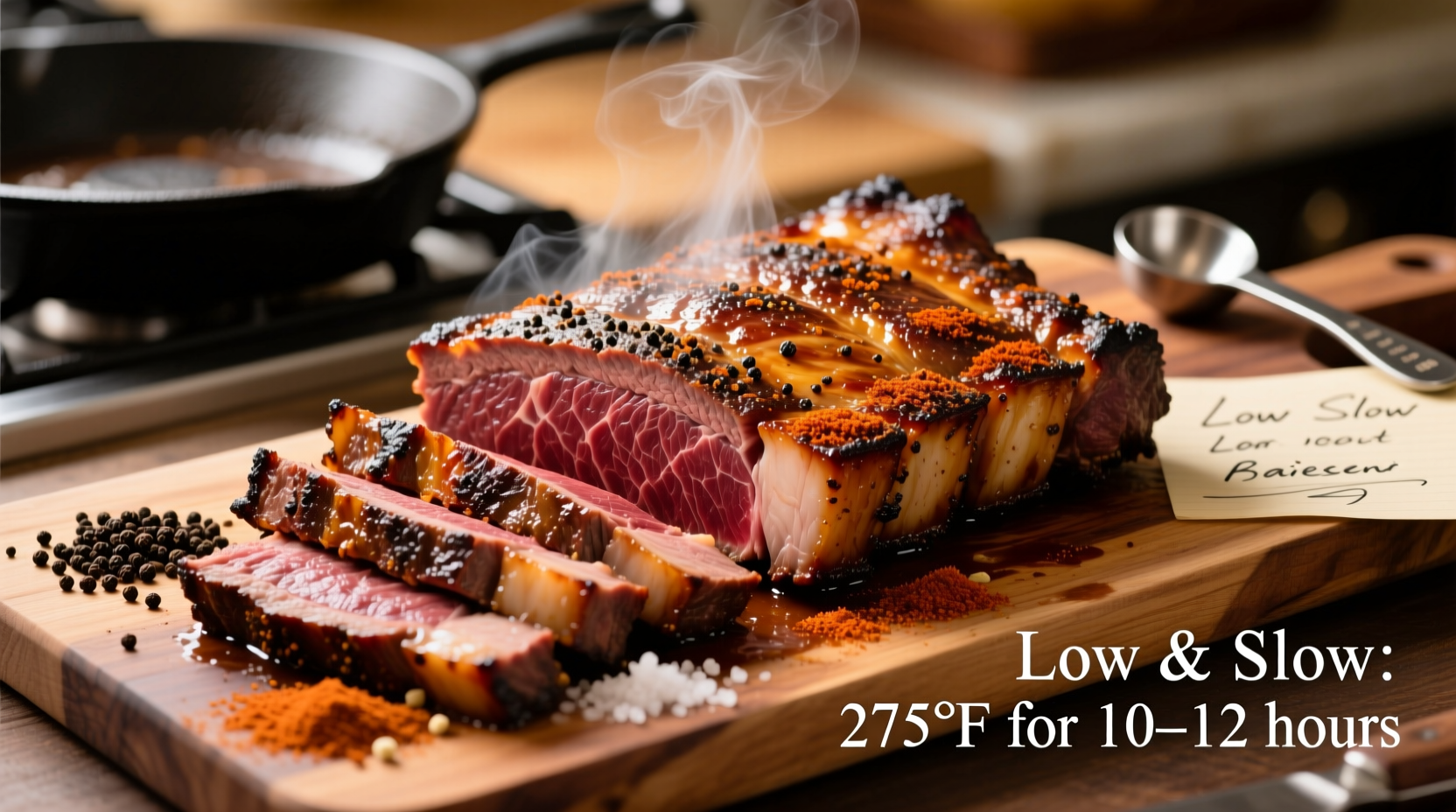
Brisket is a cut of beef taken from the lower chest or pectoral region of the cow. Because this area supports much of the animal’s weight, the muscle develops significant collagen and connective tissue, making it naturally tough if not cooked properly. However, when exposed to low, moist heat over an extended period, that collagen transforms into gelatin—a process known as hydrolysis—resulting in succulent, tender meat.
In culinary terms, brisket is typically divided into two sub-primal cuts: the flat cut (leaner, more uniform) and the point cut (fattier, more marbled). Most whole packer briskets include both sections. While traditionally associated with Texas-style smoking, brisket adapts exceptionally well to oven roasting—a method that offers superior temperature control, consistency, and accessibility for home kitchens.
The use of spices goes beyond surface-level flavoring; they interact chemically with proteins and fats during cooking, influencing browning (Maillard reaction), moisture retention, and even perceived tenderness. By combining proper spicing with thermal science, you can elevate oven brisket from acceptable to exceptional.
Key Characteristics of Brisket
- Texture (raw): Dense, fibrous, heavily grained with visible layers of fat and connective tissue.
- Flavor profile: Deeply beefy, rich, with umami intensity when properly rendered.
- Fat content: Varies by cut—point cut contains 30–40% intramuscular fat; flat cut is leaner (10–15%).
- Cooking requirement: Requires long-duration, low-temperature exposure (typically 225–275°F / 107–135°C) for 6–10 hours depending on size.
- Shelf life (raw): 3–5 days refrigerated; up to 12 months frozen.
- Culinary function: Ideal for slow-cooked dishes like pot roast, pastrami, corned beef, and smoked barbecue.
Tip: Always trim excess external fat to about ¼ inch thickness. Too much fat impedes spice adhesion and creates greasy steam; too little increases drying risk.
The Science Behind Tender Oven Brisket
Tenderness in brisket isn’t accidental—it’s the result of precise biochemical transformations driven by time and temperature.
Collagen Breakdown and Gelatin Formation
Collagen begins to denature at around 160°F (71°C), but full conversion into gelatin occurs optimally between 190°F and 205°F (88–96°C). At these temperatures, triple-helix collagen structures unwind and hydrolyze into soluble gelatin, which lubricates muscle fibers and gives the meat its signature unctuous mouthfeel.
This transformation requires sustained heat and moisture. In the oven, wrapping the brisket in foil or butcher paper after initial searing (the Texas crutch) traps steam, accelerates collagen breakdown, and prevents excessive evaporation.
Temperature Zones and Carryover Cooking
Oven environments provide more stable ambient temperatures than open pits, reducing hot spots and flare-ups. However, internal meat temperature lags behind oven settings due to thermal inertia. Use a leave-in probe thermometer to monitor core temperature accurately.
Note: Brisket undergoes a “stall” phase—usually between 150°F and 170°F—where evaporative cooling halts temperature rise temporarily. This can last 2–4 hours. Resist the urge to increase oven heat; instead, wrap the meat to push through the stall efficiently.
Maillard Reaction and Spice Interaction
The Maillard reaction—the browning of amino acids and reducing sugars—occurs above 285°F (140°C) and contributes complex roasted, nutty, and savory notes. A high-heat sear before slow roasting maximizes this effect.
Spices such as paprika, garlic powder, and black pepper participate indirectly in Maillard chemistry. For example, cysteine-rich garlic compounds react with sugars to form thiazoles and furans—aromatic volatiles that enhance overall depth. Pepper’s piperine also binds to fat molecules, slowly releasing heat and aroma during prolonged cooking.
Practical Usage: Step-by-Step Guide to Oven Brisket
Follow this method to produce consistently tender, flavorful brisket in your home oven using scientific best practices.
- Select the right cut: Choose a whole packer brisket (10–14 lbs) with even marbling and a thick flat section. Look for bright red color and firm texture. Avoid grayish or slimy surfaces.
- Trim strategically: Leave ¼ inch of fat cap on the top side. Remove hard fat deposits underneath and along edges that won’t render down.
- Dry-brine overnight (optional but recommended): Rub ½ tsp kosher salt per pound of meat evenly over all surfaces. Place uncovered on a rack in the refrigerator for 12–24 hours. This enhances moisture retention and surface drying for better bark formation.
- Prepare the spice rub: Combine:
- 2 tbsp coarse black pepper
- 2 tbsp smoked paprika (not sweet)
- 1 tbsp garlic powder
- 1 tbsp onion powder
- 1 tsp chili powder (mild ancho preferred)
- 1 tsp ground cumin
- 1½ tsp kosher salt (if not dry-brined)
- Season generously: Apply rub liberally to all sides of the brisket 1 hour before cooking. Let sit at room temperature to reduce thermal shock.
- Sear for flavor development: Preheat oven to 450°F (230°C). Sear brisket fat-side up in a heavy roasting pan or Dutch oven for 15 minutes to initiate Maillard browning. Do not flip.
- Reduce heat and slow roast: Lower oven temperature to 250°F (121°C). Add 2 cups beef broth or water to the pan to create steam and prevent scorching. Insert a probe thermometer into the thickest part of the flat.
- Monitor the stall: Once internal temperature reaches ~160°F, wrap tightly in heavy-duty aluminum foil or pink butcher paper. Return to oven.
- Cook to probe tenderness: Continue cooking until internal temperature reaches 200–205°F and a skewer inserts with butter-like ease (typically 6–8 hours total). Time varies based on thickness.
- Rest properly: Remove from oven and let rest, still wrapped, for 2–4 hours in a cooler or warm oven (thermal mass resting). This allows juices to redistribute and residual heat to complete fiber relaxation.
- Slice against the grain: Identify the direction of muscle fibers (they run lengthwise). Slice perpendicular to them, especially in the flat cut where fibers are tighter. Cut slices ¼ to ⅛ inch thick.
Pro Tip: Save the drippings! Strain and chill the cooking liquid to remove fat. Use the concentrated jus for au jus dipping sauce, gravy, or braising vegetables.
Variants & Types of Brisket Preparation
While the basic cut remains the same, preparation methods yield dramatically different end products. Understanding these variants helps tailor your approach to desired outcomes.
| Variant | Method | Flavor Profile | Best For |
|---|---|---|---|
| Texas Smoked Brisket | Low-and-slow smoke (18–20 hrs, wood-fired) | Savory, smoky, pronounced bark | Barbecue purists, competitions |
| Oven-Roasted Brisket | Controlled convection with wrap | Balanced beefiness, tender interior | Home cooks, weeknight meals |
| Pastrami-Style | Cured, spiced, steamed after smoking | Peppery, tangy, aromatic (coriander/clove) | Sandwiches, deli platters |
| Corned Beef | Brined in salt, sugar, nitrites, spices | Salty-sweet, pink-hued, soft texture | St. Patrick’s Day, hash |
| Jewish Pot Roast | Braised with onions, carrots, herbs | Comforting, sweet-onion base, fall-apart | Family dinners, holidays |
For oven brisket, the roasted variant offers the best balance of convenience and quality. It leverages modern kitchen tools to simulate traditional conditions while allowing greater control over doneness and seasoning.
Comparison with Similar Cuts
Brisket is often confused with other tough, slow-cook-friendly cuts. While interchangeable in some recipes, each has distinct properties.
| Cut | Origin on Animal | Fat Content | Texture After Cooking | Common Uses |
|---|---|---|---|---|
| Brisket | Chest (front) | Moderate-high (layered) | Fibrous yet tender when cooked correctly | Smoking, braising, curing |
| Pork Shoulder (Boston Butt) | Upper shoulder (pig) | High (marbled) | Shreddable, juicy | Pulled pork, carnitas |
| Beef Chuck Roast | Shoulder (cow) | High (intramuscular) | Rich, falls apart easily | Pot roast, stews, pho |
| Short Ribs | Rib section with bone | Very high (marrow-rich) | Buttery, decadent | Braising, Korean galbi |
Unlike chuck or pork shoulder, brisket has longer, straighter muscle fibers and a directional grain that demands careful slicing. Its unique fat cap also plays a critical role in insulation during cooking—something absent in boneless chucks or ribs.
Spice Science: Why Your Rub Matters
A well-formulated spice rub does more than add flavor—it influences texture, appearance, and even microbial safety during long cooks.
- Black pepper: Contains piperine, which enhances perception of warmth and amplifies other flavors via trigeminal stimulation.
- Smoked paprika: Provides color and subtle phenolic compounds from smoke, mimicking wood-smoked character without actual smoke.
- Garlic and onion powder: Dehydrated forms offer consistent distribution and participate in non-enzymatic browning reactions.
- Salt: Penetrates meat over time, improving water-holding capacity and seasoning deeper layers.
- Cumin: Releases terpenes when heated, contributing earthy, slightly bitter complexity that balances richness.
Do not use fresh garlic cloves in long oven roasts—they burn easily and turn acrid. Dry powders integrate better and withstand prolonged heat.
\"A great brisket isn't defined by smoke or time alone—it's the synergy of proper collagen management, precise spicing, and patience. The oven, ironically, often provides more reliable results than backyard smokers.\" — Chef Elena Ruiz, James Beard nominee and barbecue educator
Practical Tips & FAQs
Can I cook brisket at a higher temperature?
You can, but with trade-offs. Cooking at 300°F reduces total time (~4–5 hours), but risks uneven collagen breakdown and drier edges. Stick to 225–275°F for optimal texture.
Do I need to wrap the brisket?
Yes, once it hits the stall (150–170°F). Wrapping retains moisture, speeds cooking, and protects the developing bark. Butcher paper allows slight breathability; foil creates a steamier environment (better for very lean flats).
Why did my brisket turn out dry?
Common causes include: under-resting, slicing too soon, insufficient fat cover, or cooking past 210°F. Also, failing to maintain humidity in the oven leads to moisture loss.
Can I make this ahead of time?
Absolutely. Cook, rest, slice, and refrigerate for up to 4 days. Reheat gently in broth at 300°F until warmed through (30–45 mins). Flavor often improves on day two.
What wood flavors work best if I want to mimic smoke?
Add 1–2 tbsp liquid smoke (hickory or mesquite) to the braising liquid, or place soaked wood chips in a foil pouch on the oven rack below the brisket. Oak and pecan are milder alternatives.
Is there a vegetarian substitute that mimics brisket texture?
Seitan or king oyster mushrooms, when shredded and braised with tamari, liquid smoke, and onion, can replicate the fibrous chew and umami depth of brisket in plant-based dishes.
How do I know when it's done?
Temperature is a guide, but probe tenderness is the true indicator. If a thermometer or skewer slides in with no resistance—like warm butter—it’s ready, regardless of exact degrees.
Checklist for Success:
- ☑ Trim fat to ¼ inch
- ☑ Dry-brine overnight (optional)
- ☑ Use a reliable probe thermometer
- ☑ Sear before slow roasting
- ☑ Wrap during the stall
- ☑ Rest for minimum 2 hours
- ☑ Slice against the grain
Summary & Key Takeaways
Perfect oven brisket is achievable without specialized equipment—only a reliable oven, a meat thermometer, and an understanding of food science are required. The transformation of tough connective tissue into gelatin through controlled, moist heat is the cornerstone of success. Proper spicing enhances flavor development via Maillard reactions and aromatic release, while strategic wrapping and resting ensure juiciness and tenderness.
Key takeaways:
- Brisket requires low, slow cooking (225–275°F) for 6–10 hours to fully convert collagen.
- The “stall” is normal—wrap the meat to move through it efficiently.
- A balanced spice rub with pepper, paprika, garlic, and cumin builds layered flavor.
- Resting for 2+ hours post-cook is non-negotiable for juice retention.
- Slicing against the grain ensures tenderness, especially in the flat cut.
By applying these principles, home cooks can produce brisket that rivals professional barbecue—rich, aromatic, and texturally sublime. Whether serving it sliced with horseradish cream or repurposing leftovers into tacos or sandwiches, mastering oven brisket unlocks a world of culinary possibility grounded in science and seasoned with tradition.




 浙公网安备
33010002000092号
浙公网安备
33010002000092号 浙B2-20120091-4
Comments
No comments yet. Why don't you start the discussion?