
A sparse or lopsided Christmas tree doesn’t have to be a holiday disappointment. With thoughtful styling, clever placement, and resourceful use of what you already own, even the thinnest evergreen can appear lush and abundant. The secret isn’t in buying more—it’s in using what you have with intention. By strategically layering your existing ornaments and incorporating thrifted ribbons, you can create visual depth, balance gaps, and add movement that tricks the eye into seeing fullness where there is none.
This approach is not only cost-effective but also sustainable. Instead of contributing to seasonal waste or impulse decor buys, you’re reimagining pieces already in your possession. Whether your tree is a compact tabletop model or a towering floor-to-ceiling spruce, these techniques will elevate its presence without requiring a single new purchase.
Why Fullness Matters—and How to Fake It Naturally
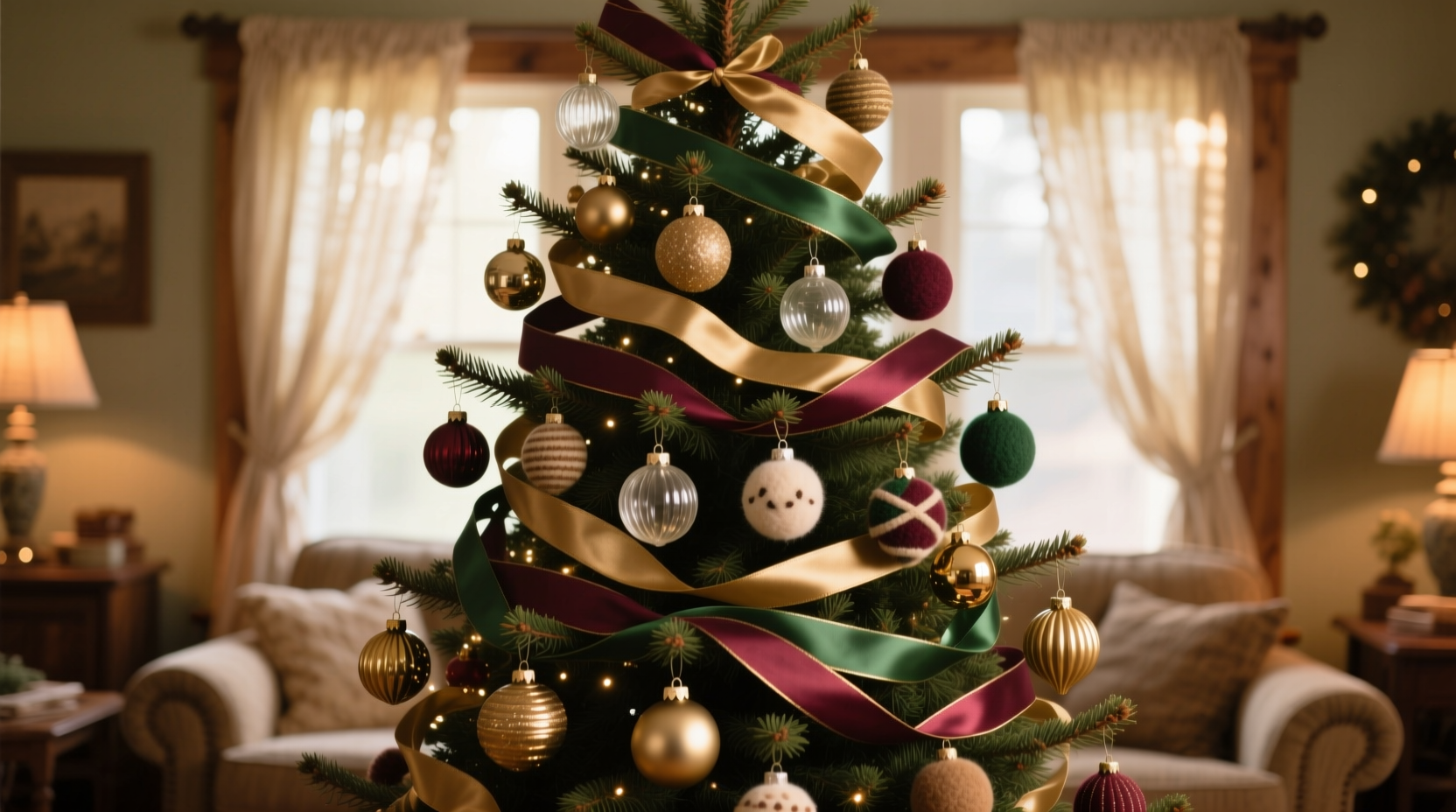
The perception of a \"full\" Christmas tree comes from balanced density, color variation, and layered textures—not necessarily from having hundreds of branches. A tree that appears rich and inviting draws the eye inward, creating a sense of warmth and festivity. But when limbs are widely spaced or one side dominates visually, the illusion breaks.
Fullness is less about volume and more about distribution. A well-styled tree uses contrast: large ornaments against small ones, shiny elements beside matte finishes, and flowing ribbons that bridge gaps between boughs. These layers work together to fill negative space and obscure bare spots.
Thrifted ribbons are especially powerful for this. Unlike mass-produced tinsel or pre-lit garlands, vintage or secondhand ribbons often feature unique textures—velvet, satin, grosgrain, or even metallic weaves—that catch light differently. Their irregular widths and faded hues add character, helping to blend imperfections into charm.
Step-by-Step: Building Visual Depth with What You Own
Creating fullness is a deliberate process. Follow this sequence to transform your tree using only existing decorations and thrifted materials.
- Assess the tree’s structure. Stand back and identify thin areas, especially at the front and sides. Note where limbs are missing or bent.
- Start with lights (if applicable). Even if not part of the final strategy, string lights help reveal gaps. Use them as a guide for ornament placement.
- Layer large ornaments first. Place bigger balls or statement pieces deep within the inner branches. These act as anchors and create shadow depth.
- Add mid-sized ornaments outward. Distribute medium-sized decor toward the ends of branches, varying colors and finishes to avoid clustering.
- Incorporate ribbons for flow. Cut thrifted ribbon into 18–24 inch lengths and weave them through multiple tiers of branches, letting ends drape naturally.
- Fill remaining gaps with small accents. Cluster tiny ornaments, pinecones, or folded ribbon scraps in sparse zones to break up emptiness.
- Step back and adjust. View the tree from different angles and heights. Move or add elements where needed to maintain balance.
The goal is not symmetry, but harmony. A tree that feels lived-in and thoughtfully styled often reads as fuller than a perfectly uniform one.
Creative Uses for Thrifted Ribbons
Thrift stores are goldmines for forgotten textiles. Look for old gift wrap remnants, damaged drapes, or costume scraps—especially in red, green, gold, silver, or plaid. Even faded or slightly frayed ribbons contribute texture and authenticity.
Here’s how to repurpose them effectively:
- Weave wide ribbons like garlands. Cut into long strips and twist around the tree vertically, moving from top to bottom. This draws the eye along the length of the tree, minimizing focus on weak spots.
- Create ribbon rosettes. Coil short pieces into tight spirals, secure with wire or thread, and pin them into gaps like floral blooms. They mimic fuller foliage.
- Make bow clusters. Tie three to five small bows together and attach them to central branches. The layered loops reflect light and occupy space without weight.
- Use ribbon tails as filler. After tying bows or attaching streamers, let the loose ends hang freely. Their movement adds dynamism and hides stem lines.
Ribbons also serve as color bridges. If your ornaments are mostly cool-toned, introduce warm-toned ribbons to unify the palette. This subtle blending prevents any area from feeling isolated or incomplete.
Strategic Ornament Placement for Maximum Impact
Your existing ornaments are more versatile than they appear. The key is strategic redistribution—not just hanging them evenly, but placing them to manipulate perception.
| Placement Zone | Purpose | Recommended Ornament Type |
|---|---|---|
| Inner Core (near trunk) | Create depth and shadow | Large, dark-colored, or reflective balls |
| Middle Tier (mid-branch) | Balanced visual weight | Medium-sized, mixed textures (matte, glitter, wood) |
| Outer Tips (end of branches) | Draw attention outward | Small, shiny, or lightweight pieces |
| Problem Areas (gaps, thin sides) | Camouflage and fill | Clusters of 3–5 small ornaments + ribbon accents |
| Top and Bottom | Frame the tree | Larger statement piece at top; heavier ribbon drape at base |
Instead of spacing ornaments uniformly, group them in odd numbers—three or five—to create focal points. The human eye perceives clusters as denser than scattered singles. Rotate some ornaments so their most reflective side faces forward, increasing luminosity in dim areas.
“Decorating a sparse tree is like staging a room—you’re not adding square footage, you’re enhancing perception. Strategic layering does more than fill space; it creates emotion.” — Clara Mendez, Interior Stylist & Holiday Design Consultant
Real Example: Transforming a Thin Fraser Fir
Sarah, a teacher in Vermont, inherited a narrow, 7-foot Fraser fir from her parents. Each year, she struggled with its open frame—especially on the south-facing side, where branches grew sparsely due to uneven sunlight.
Last season, she committed to using only her existing decor: about 40 assorted glass balls, a box of handmade paper stars from her students, and a collection of vintage ribbons gathered over years from thrift shops. She had no budget for new items.
Her process:
- She began by fluffing every branch, bending them outward gently to expose more surface area.
- She placed her largest gold ball deep in the trunk near eye level, using it as a “lure” to draw attention inward.
- She cut six yards of emerald velvet ribbon (found for $2 at a local thrift store) into 20-inch lengths and wove them vertically from top to bottom, focusing on the thin southern quadrant.
- She grouped her smallest ornaments—tiny silver cubes and student-made stars—into threes and tucked them into bare limb junctions.
- Finally, she tied three small bows from leftover satin ribbon and pinned them near the top, allowing tails to cascade down.
The result? Neighbors assumed she’d bought a new tree. The ribbon created continuous lines that masked gaps, while clustered ornaments gave the impression of density. No new purchases, no waste—just intentional design.
Checklist: Achieve a Fuller-Looking Tree Without New Decor
- ✅ Fluff and shape all branches before decorating
- ✅ Identify and mark thin or problematic areas
- ✅ Sort ornaments by size, color, and reflectivity
- ✅ Gather and cut thrifted ribbons into usable lengths (18–30 inches)
- ✅ Place large, dark ornaments deep in the tree for depth
- ✅ Use ribbon to weave through sparse zones and create vertical flow
- ✅ Cluster small ornaments in groups of three or five
- ✅ Step back frequently to assess balance from multiple angles
- ✅ Finish with a statement piece at the top and ribbon draping at the base
Frequently Asked Questions
Can I really make a tree look fuller without buying anything new?
Absolutely. Perception of fullness comes from arrangement, not quantity. By layering ornaments and using flowing ribbons to connect visual space, you create richness without additional decor. Many people overlook the power of existing resources when chasing “more.”
What kinds of thrifted ribbons work best?
Look for medium to wide ribbons (¾ inch or wider) with texture—velvet, satin, or grosgrain. Avoid overly stiff or brittle pieces. Faded colors often blend better than bright novelty prints. Even mismatched scraps can be cut and combined into cohesive streamers.
How do I keep ribbons from tangling or slipping off branches?
Secure each end with a twist tie, floral pin, or bent paperclip wrapped around a sturdy branch. For woven ribbons, anchor both ends before draping the middle. If using delicate fabric, knot it loosely around the stem rather than relying on friction alone.
Final Thoughts: Beauty in Resourcefulness
A truly beautiful Christmas tree isn’t defined by perfection or expense. It’s shaped by care, creativity, and the stories embedded in its decorations. The glass ball from your first apartment, the ribbon from a childhood gift, the handmade ornament from a loved one—these pieces carry meaning far beyond aesthetics.
By learning to work with what you have, you’re not just decorating a tree—you’re practicing mindful celebration. You reduce waste, honor your history, and cultivate a deeper connection to the season. And in doing so, you discover that abundance isn’t something you buy. It’s something you build, one thoughtful placement at a time.




 浙公网安备
33010002000092号
浙公网安备
33010002000092号 浙B2-20120091-4
Comments
No comments yet. Why don't you start the discussion?