
A small or cramped living room doesn’t have to feel confined. With thoughtful lighting design, you can dramatically alter the perception of space, making your living room appear more open, airy, and inviting. Lighting is one of the most underutilized tools in interior design when it comes to spatial illusion. Unlike paint color or furniture layout, light works on a psychological and visual level—shaping shadows, highlighting dimensions, and guiding the eye through a room. When used strategically, lighting can stretch walls, lift ceilings, and eliminate dark corners that make spaces feel smaller than they are.
The goal isn’t just brightness; it’s balance, layering, and direction. By combining ambient, task, and accent lighting in smart ways, you can manipulate depth, reflectivity, and flow. Whether your living room is narrow, low-ceilinged, or simply lacks natural light, the right lighting approach can transform its entire character—without moving a single wall.
Understand How Light Influences Spatial Perception
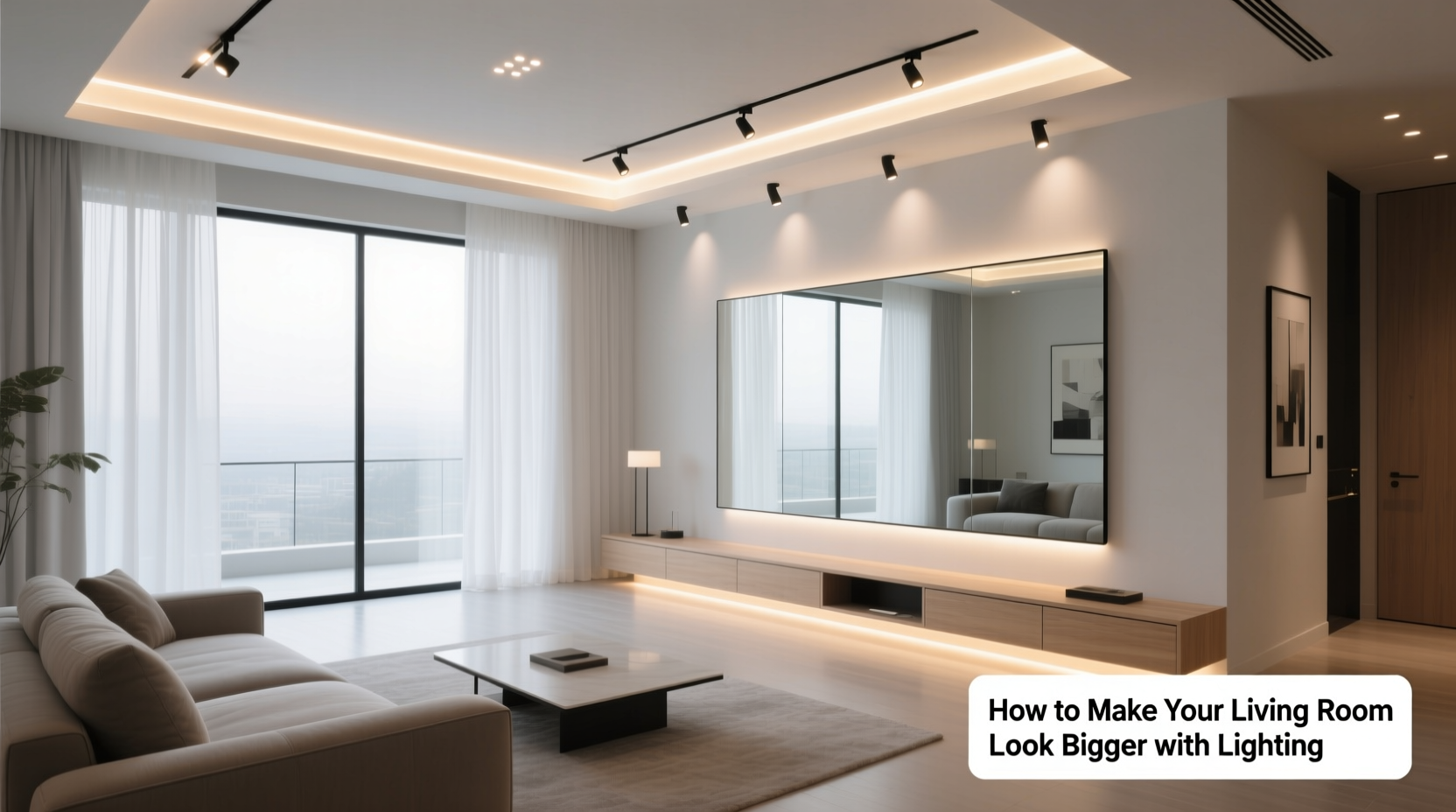
Light affects how we perceive size and proportion. Bright, evenly distributed light signals openness and safety, while shadows and dimness suggest enclosure or limitation. Our brains interpret well-lit areas as more expansive because visibility equals control and comfort. Conversely, dark corners recede visually, making rooms feel boxed in.
To make a room feel larger, lighting should minimize contrast between zones and avoid creating isolated pools of brightness surrounded by darkness. Instead, aim for continuity—light that flows from one area to another without abrupt shifts. This creates a sense of unbroken space, even in compact layouts.
Consider this: a single overhead fixture often casts harsh shadows and leaves perimeter areas underlit. This uneven distribution makes walls seem closer and ceilings lower. In contrast, layered lighting spreads illumination across vertical and horizontal planes, softening edges and enhancing depth.
Layer Your Lighting for Depth and Dimension
Professional interior designers rely on three primary layers of lighting: ambient, task, and accent. Each plays a role in expanding perceived space when used correctly.
- Ambient (General) Lighting: This is the baseline illumination—soft, diffuse light that fills the room. Recessed ceiling lights, track lighting, or indirect cove lighting work best. Avoid downlights that spotlight the floor; instead, use uplights or wall-mounted fixtures that bounce light upward.
- Task Lighting: Functional sources like table lamps or reading lights. Place these at seated eye level to prevent dark zones around furniture. Choose slim, minimalist designs that don’t clutter surfaces.
- Accent Lighting: Used to highlight architecture or artwork, but also effective for drawing attention away from tight corners. LED strips behind shelves or under media consoles create floating effects that reduce visual weight.
When layered properly, these elements prevent any single area from becoming a shadow trap. The key is to keep light moving—off walls, across ceilings, around furniture—so the eye never lands on a dead zone.
Step-by-Step Guide: Creating a Layered Lighting Plan
- Evaluate existing natural light: Note where sunlight enters and which areas stay dark during the day.
- Install ambient base lighting: Use recessed adjustable LEDs or wall sconces angled toward the ceiling.
- Add task lighting near seating: Floor or table lamps with upward-facing shades cast light on walls and ceilings.
- Incorporate accent lighting: Install LED tape behind TV units, bookshelves, or along baseboards.
- Integrate dimmers: Allow flexibility to adjust intensity based on time of day and activity.
- Test and refine: Walk through the room at night, observing shadow patterns and adjusting placements accordingly.
Use Vertical Lighting to Raise Perceived Ceiling Height
Low ceilings compress a room, making it feel cave-like. To counteract this, direct light upward. Uplighting tricks the eye into seeing greater vertical space because bright ceilings appear farther away.
Wall sconces placed at shoulder height and aimed toward the ceiling can double the apparent height of a room. Similarly, tall floor lamps with upward-facing heads emit light that washes over walls and reflects off the ceiling, dissolving the boundary between wall and sky.
Another technique is cove lighting—LED strips installed in a groove along the top edge of a wall or crown molding. The indirect glow eliminates the hard line where wall meets ceiling, blurring the transition and giving the illusion of volume.
“Vertical lighting is one of the most powerful illusions in residential design. A well-placed uplight can add two feet to a ceiling’s perceived height.” — Lena Torres, Interior Lighting Consultant
Maximize Reflective Surfaces with Strategic Fixture Placement
Reflection amplifies light and doubles the visual footprint of a room. Mirrors, glass tables, polished metals, and glossy finishes all benefit from targeted lighting that enhances their reflective properties.
Position lights so they bounce off mirrors rather than shine directly into them. A sconce beside a mirror will illuminate the wall behind it, sending light back into the room and deepening perspective. Similarly, placing a lamp near a glass-top coffee table creates secondary glows that break up solid masses.
Furniture with metallic legs or mirrored surfaces should be lit from multiple angles to prevent flat, dull appearances. Even a simple mirrored console table behind a sofa gains dimension when flanked by matching sconces.
Do’s and Don’ts of Lighting Reflective Surfaces
| Do | Don’t |
|---|---|
| Angle lights to reflect off mirrors into darker zones | Place lights directly in front of mirrors causing glare |
| Use warm-toned LEDs to soften metallic reflections | Use cool, blue-white light that makes reflections feel clinical |
| Highlight glossy furniture edges to define shape | Over-light shiny surfaces, creating hotspots |
| Pair mirrors with adjacent wall lighting | Rely solely on overhead light for reflection |
Eliminate Dark Corners with Peripheral Lighting
Dark corners pull walls inward, making rooms feel like tunnels. The solution is peripheral lighting—sources placed at the edges of the room to keep boundaries illuminated.
LED strip lights installed along baseboards or behind sofas provide subtle glow that defines the room’s footprint without overwhelming. Plug-in wall lamps or mini torchères in unused corners send light upward and outward, erasing depth-killing shadows.
If floor space is limited, consider plug-in sconces mounted near the top of walls. These require no hardwiring and can be positioned precisely where needed. Aim them toward the ceiling or adjacent wall to diffuse light effectively.
For long or narrow rooms, place lighting at both ends to create visual anchors. This draws the eye through the space, emphasizing length rather than constriction.
Mini Case Study: Transforming a Narrow Urban Living Room
Jamie lived in a 14-foot-wide apartment living room with one window and a low ceiling. Initially, the space felt like a corridor, especially at night when only a central pendant provided light. After consulting a lighting designer, Jamie implemented several changes:
- Added two wall-mounted uplights at opposite ends of the longest wall
- Installed LED tape behind the entertainment center and floating shelves
- Replaced the pendant with recessed adjustable LEDs aimed at walls
- Placed a tall arc floor lamp behind the sofa, directing light upward
- Mounted a large mirror opposite the window, flanked by slim sconces
Within a weekend, the room transformed. Friends commented that it “felt twice as big.” The combination of vertical emphasis, reflective bounce, and eliminated shadows created continuity and depth. Most importantly, no structural changes were made—only lighting.
Choose Fixtures That Enhance, Not Obstruct
Even the best lighting plan fails if fixtures are too bulky or poorly scaled. In small or modestly sized living rooms, oversized chandeliers or wide-shaded lamps absorb light and dominate space.
Select sleek, low-profile fixtures. Linear suspension lights, for example, can provide ambient illumination without hanging low. Wall-mounted swing-arm lamps save surface space while offering directional task light. Transparent or open-frame designs (like wire cages or glass globes) allow light to pass through freely, reducing visual mass.
Height matters too. Hang pendants high enough to clear sightlines—typically 7 feet above the floor. Floor lamps should rise above head level when seated to avoid cutting the room horizontally.
Control Light Intensity and Color Temperature
Dimmers and tunable white LEDs give you dynamic control over atmosphere. During daytime, cooler tones (3500K–4000K) mimic natural light and keep spaces feeling alert and open. At night, shift to warmer tones (2700K–3000K) for comfort without sacrificing spaciousness.
Use dimmers to fine-tune brightness. Full power isn’t always better—sometimes a softly lit room feels more expansive because it avoids harsh contrasts. Gradual fading from bright to warm also supports circadian rhythms, making the space more livable long-term.
Smart bulbs or lighting systems allow preset scenes: “Bright Open,” “Evening Glow,” “Entertaining Mode.” These ensure optimal settings are just a tap away, maintaining consistency in spatial perception.
FAQ
Can I make a windowless living room look bigger with lighting?
Yes. Use layered, diffused lighting with strong vertical components. Install cove or wall-wash lighting to simulate natural daylight gradients. Add mirrors opposite light sources to multiply illumination. Avoid relying on a single ceiling fixture, which will emphasize the lack of windows.
Should I use LED strips in my living room to create space?
Absolutely—if used thoughtfully. LED strips are ideal for indirect lighting under shelves, behind furniture, or along ceilings. Choose high-CRI (90+) LEDs for accurate color rendering and avoid cheap strips with visible dots or flicker. Always use a diffuser channel for smooth, even glow.
Is natural light necessary to make a room feel large?
Natural light helps, but it’s not essential. Many modern apartments lack abundant sunlight, yet still feel spacious due to intelligent artificial lighting. The key is mimicking the qualities of daylight: even distribution, minimal glare, and balanced color temperature.
Checklist: Lighting Strategies to Make Your Living Room Look Bigger
- ✅ Layer ambient, task, and accent lighting
- ✅ Use uplighting to raise perceived ceiling height
- ✅ Install peripheral lights to eliminate dark corners
- ✅ Position lights to enhance mirrors and reflective surfaces
- ✅ Choose low-profile, scaled-down fixtures
- ✅ Incorporate dimmers and tunable white LEDs
- ✅ Avoid single-source overhead lighting
- ✅ Test lighting at night and adjust placement
Conclusion
Making your living room look bigger isn’t about knocking down walls—it’s about shaping light. With deliberate choices in fixture type, placement, and control, you can redefine the boundaries of your space. Light doesn’t just reveal a room; it constructs it. By embracing layered, upward, and reflective lighting strategies, you turn limitations into opportunities for creativity and comfort.




 浙公网安备
33010002000092号
浙公网安备
33010002000092号 浙B2-20120091-4
Comments
No comments yet. Why don't you start the discussion?