
Advent calendars don’t need to be mass-produced, plastic-wrapped, or destined for landfill after December 25. In fact, the most meaningful ones are handmade—not as disposable decor, but as heirloom-style rituals that honor both intention and ecology. A washi tape advent calendar embodies this shift: it’s tactile, repairable, seasonally flexible, and built from materials that either compost, recycle, or endure for years. Unlike glue-heavy paper versions or flimsy cardboard boxes, washi tape—made from renewable bamboo, rice, or hemp fibers—peels cleanly off surfaces without residue, allowing the same base (a wooden board, cork panel, or even a framed fabric grid) to host new themes each year. This isn’t just craft—it’s quiet resistance against seasonal disposability, rooted in care, creativity, and conscious curation.
Why washi tape? The sustainability and practical advantages
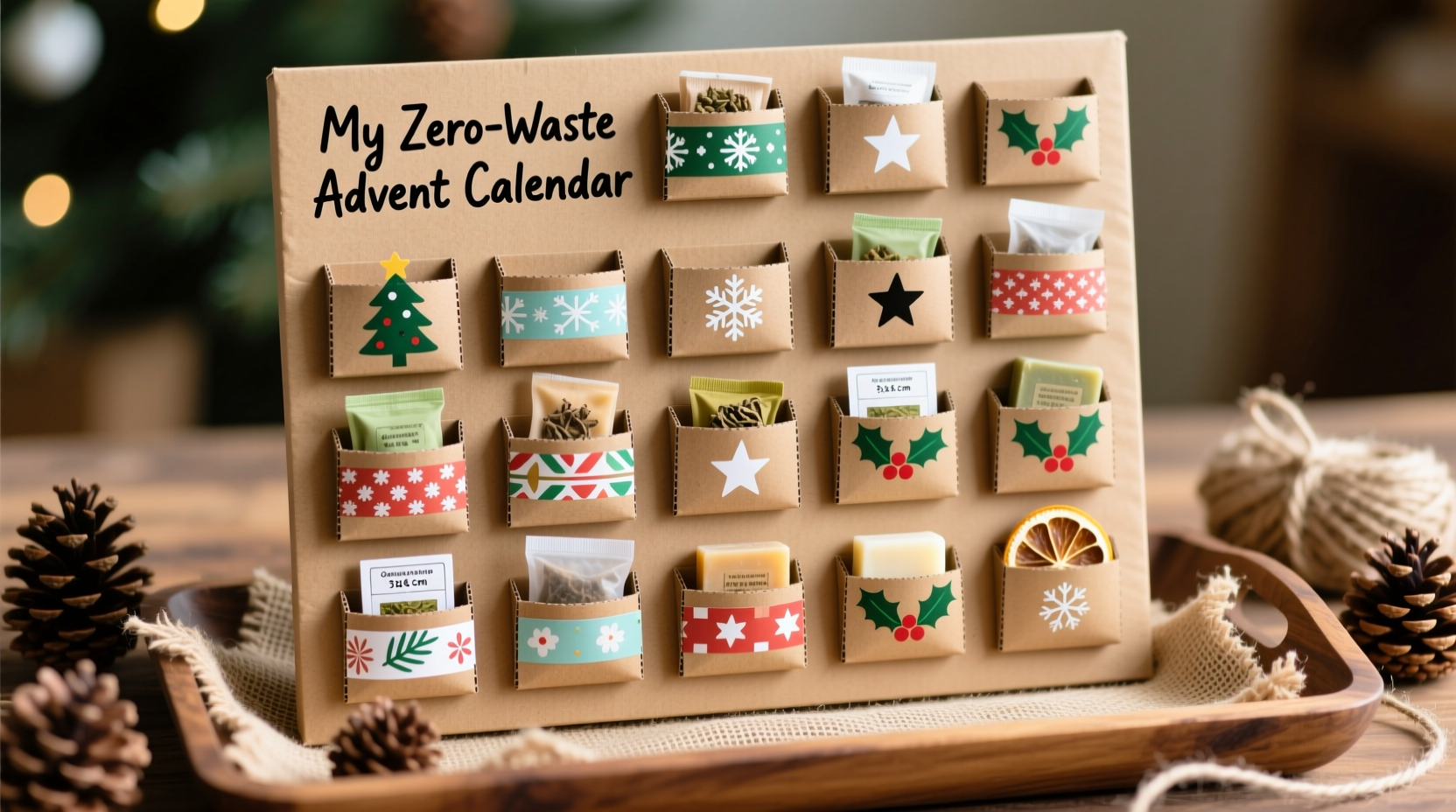
Washi tape is often mistaken for decorative masking tape—but its origins lie in traditional Japanese papermaking, where artisans used handmade fibers for delicate repairs and ceremonial wrapping. Modern washi tape retains those values: it’s acid-free, lignin-free, and typically dyed with plant-based or water-based pigments. Crucially, it adheres reliably yet releases without damaging walls, wood, or painted surfaces—a non-negotiable feature for reusable gifting systems. Its low-tack nature means it won’t yellow or leave ghost marks over time, unlike vinyl tapes or standard adhesives.
From a zero-waste perspective, washi tape outperforms alternatives in three measurable ways: First, most reputable brands (like MT, Kokuyo, or Rifle Paper Co.’s eco line) use FSC-certified paper backings and biodegradable acrylic adhesives. Second, because it’s designed for temporary application, it avoids the permanent bonding that leads to “adhesive waste”—the stubborn glue residue that forces disposal of otherwise sound materials. Third, its versatility eliminates the need for supplemental fasteners: no staples, no glue sticks, no double-sided tape rolls.
“Washi tape is one of the few widely available adhesives that truly honors circularity—designed for repeated use, not single-season obsolescence.” — Dr. Lena Park, Material Scientist & Founder of The Reuse Lab, Cambridge, UK
Your zero-waste materials checklist
Gathering supplies thoughtfully sets the ethical foundation. Prioritize local, secondhand, and upcycled sources before buying new—even for sustainable items. Below is a realistic, actionable checklist grounded in real-world accessibility:
- Base panel: One reclaimed wood board (e.g., an old picture frame backing, salvaged cabinet door, or sanded pallet slat), 18” × 24” minimum. Avoid MDF or particleboard due to formaldehyde binders.
- Washi tape: Minimum 6–8 rolls (3–4 cm wide). Choose brands with certified compostable backings and plastic-free packaging (e.g., MT’s “Eco Series” or independent makers like Paper Source’s recycled-content line).
- Number labels: Hand-cut tags from scrap cardstock, seed paper, or repurposed book pages. Avoid laminated or glossy stock.
- Gift anchors: Natural twine, linen ribbon scraps, or braided raffia—not polyester ribbons or metallic foil.
- Writing tools: Refillable fountain pen with plant-based ink or a pencil made from reclaimed cedar. Skip plastic-bodied markers.
- Optional embellishments: Dried botanicals (lavender, rosemary sprigs), vintage buttons, or hand-stamped fabric scraps—nothing glued permanently.
Designing your calendar: Layout, rhythm, and intention
A successful washi tape advent calendar balances visual rhythm with functional clarity. Avoid overcrowding: 24 numbered pockets require breathing room—not just for aesthetics, but for daily interaction. Begin by sketching your layout on scrap paper using a 1:10 scale (e.g., 1 cm = 1 inch). Standard spacing works best: 2.5 cm between rows, 3 cm between columns, with 5 cm margins all around.
Three proven layouts suit different spaces and skill levels:
| Layout Type | Ideal For | Key Considerations |
|---|---|---|
| Grid (4×6) | Wall-mounted boards; families with children | Most intuitive navigation. Use thicker washi tape (4 cm) for vertical dividers to create sturdy “pockets” when folded. |
| Vertical Strip | Narrow hallways or apartment doors | Single column of 24 numbers stacked top-to-bottom. Requires only two long horizontal washi strips per number to form “flaps.” Minimal tape usage. |
| Tree or Spiral | Tabletop displays; minimalist aesthetics | Numbers follow organic curves. Use thinner tape (2 cm) for flexibility. Anchor points must be reinforced with cross-tape braces at branch junctions. |
Intentionality matters more than symmetry. If gifting to a child who loves birds, place numbers 1–7 along a washi “branch” labeled “Feathers,” 8–14 along a “Nest” curve, and 15–24 spiraling into a “Sky” zone. Each section becomes a narrative arc—not just a countdown, but a story unfolding.
A 7-day build timeline: From concept to completion
Resist the urge to rush. A thoughtful washi tape calendar benefits from paced creation—allowing time for drying, reflection, and adjustments. This timeline assumes 30–45 minutes of focused work per day, with flexibility built in.
- Day 1 — Source & Prep: Collect base panel; sand rough edges; wipe with damp cloth and air-dry overnight. Sort washi tape by color family and test adhesion on a hidden corner.
- Day 2 — Layout & Mark: Lightly pencil grid lines using ruler and soft graphite. Confirm alignment with level. Erase excess marks gently—don’t smudge.
- Day 3 — Tape Foundation: Apply horizontal washi strips first (they anchor verticals). Press firmly with bone folder or spoon handle—no air bubbles. Let rest 2 hours before proceeding.
- Day 4 — Vertical Structure: Add vertical strips, overlapping horizontals by 3 mm to reinforce corners. Trim excess with sharp craft knife—never tear.
- Day 5 — Number Integration: Cut and adhere number labels. Use tweezers for precision. If using seed paper, apply with diluted methylcellulose paste (not glue stick) for compostability.
- Day 6 — Gift Anchors & Details: Tie twine loops beneath each number. Tuck in dried botanicals or handwritten notes. Photograph progress for future reference.
- Day 7 — Final Review & Ritual Setup: Check all tape adhesion. Write first 3 gift notes. Place calendar in designated spot with a small dish for collected notes or tokens.
Real example: Maya’s kitchen calendar for her grandmother
Maya, a textile designer in Portland, created a washi tape advent calendar for her 82-year-old grandmother, who lives with early-stage dementia. Rather than generic treats, Maya curated “memory anchors”: each number opened to a small envelope containing a tactile item tied to shared history—number 5 held a sprig of lavender from their childhood garden; number 12, a swatch of fabric from Grandma’s wedding dress; number 19, a pressed violet from her late husband’s favorite walking path. The calendar itself was mounted on a salvaged maple cutting board, stained with walnut ink. Maya used muted washi tape in ochre, sage, and charcoal—colors Grandma could distinguish clearly. Most importantly, she added Braille dots beside each number (learned in one afternoon using free online tutorials) so Grandma could locate dates independently. “It wasn’t about the tape,” Maya reflects. “It was about designing dignity into every layer—the texture, the contrast, the meaning behind what you peel back.” The board now hangs in Grandma’s kitchen year-round, repurposed as a recipe holder each January.
Zero-waste gifting philosophy: Beyond the calendar
A washi tape advent calendar succeeds only when aligned with deeper gifting ethics. It’s not enough to avoid plastic if gifts themselves generate waste. Prioritize offerings that fall into one of four zero-waste categories:
- Experiential: A handwritten voucher for “one hour of uninterrupted tea conversation,” “three walks in the neighborhood park,” or “a session sorting photo albums together.”
- Consumable & Local: Small jars of honey from a nearby apiary, homemade spice blends in reused glass, or baked goods wrapped in beeswax cloth—not parchment-lined plastic bags.
- Repairable or Upcyclable: A mended ceramic mug with gold kintsugi, a darning kit for wool socks, or a bundle of yarn spun from rescued textile waste.
- Seed-Based: Native wildflower seeds embedded in handmade paper, or herb starters in coconut coir pots—both fully home-compostable.
Avoid “greenwashed” traps: bamboo toothbrushes with plastic bristles, “eco” candles in soy wax with synthetic fragrance oils, or reusable tote bags made from recycled PET (which sheds microplastics). Authentic zero-waste gifting centers on relationship—not replacement.
FAQ: Practical questions answered
Can I reuse the same washi tape next year?
Yes—if stored properly. Gently peel tape from the board, roll it back onto its original core (or a clean cardboard tube), and store flat in a cool, dark drawer. Avoid stacking rolls or exposing to humidity. Most high-quality washi retains 80–90% adhesion for 2–3 seasons. Discard only if it feels brittle or leaves lint.
What if my wall surface is textured or painted with matte finish?
Test adhesion first on an inconspicuous area. For highly porous or uneven surfaces, apply a thin base layer of washi tape horizontally across the entire board first—this creates a uniform “canvas” for subsequent layers. Matte paint generally accepts washi well; avoid satin or semi-gloss finishes unless sealed with a light coat of water-based varnish first.
How do I prevent kids from pulling off numbers prematurely?
Use a gentle “lift-and-fold” technique: fold the top 1 cm of each number label backward, then secure it with a narrow strip of washi tape placed *only* across the folded edge—not the whole label. This creates a tab they can grip without disturbing the underlying structure. Pair this with a simple ritual: “We open only after breakfast, and we read the note aloud together.” Consistency matters more than physical barriers.
Conclusion: Your calendar is the first gift
Your washi tape advent calendar is never just a container for small things. It’s a declaration—that time can be honored slowly, that connection doesn’t require consumption, and that beauty resides in materials that return gracefully to the earth or circulate for generations. Every strip of tape you place is a stitch in a larger cultural repair. You’re not merely counting down to Christmas; you’re building a practice of presence, one deliberate, adhesive-free, deeply human act at a time. Start today—not with perfection, but with presence. Cut your first strip of tape. Write your first number. Fold your first note. Let the ritual begin. And when December ends, don’t dismantle your calendar—reimagine it. Turn it into a gratitude board for January, a goal tracker for spring, or a memory wall for summer birthdays. Its life isn’t seasonal. It’s yours to extend.




 浙公网安备
33010002000092号
浙公网安备
33010002000092号 浙B2-20120091-4
Comments
No comments yet. Why don't you start the discussion?