
Fragrance is more than just a finishing touch—it’s an extension of identity. Yet, many people find their favorite perfumes fading within hours, leaving them reaching for reapplications or settling for weaker scent experiences. While some blame their skin type or the quality of the fragrance, the real issue often lies in application technique and skincare compatibility.
Dermatologists increasingly emphasize that how you wear perfume—particularly how you layer it with skincare—can dramatically influence its longevity and interaction with your skin. Unlike generic tips like “spray on pulse points,” evidence-based layering strategies focus on hydration, pH balance, and product synergy. When done correctly, these methods can extend a fragrance’s lifespan from a few hours to a full 12-hour wear, all while protecting your skin barrier.
This guide explores the science-backed layering techniques recommended by dermatologists, offering practical steps, ingredient insights, and real-world applications to help you get the most out of every spritz.
The Science Behind Fragrance Longevity
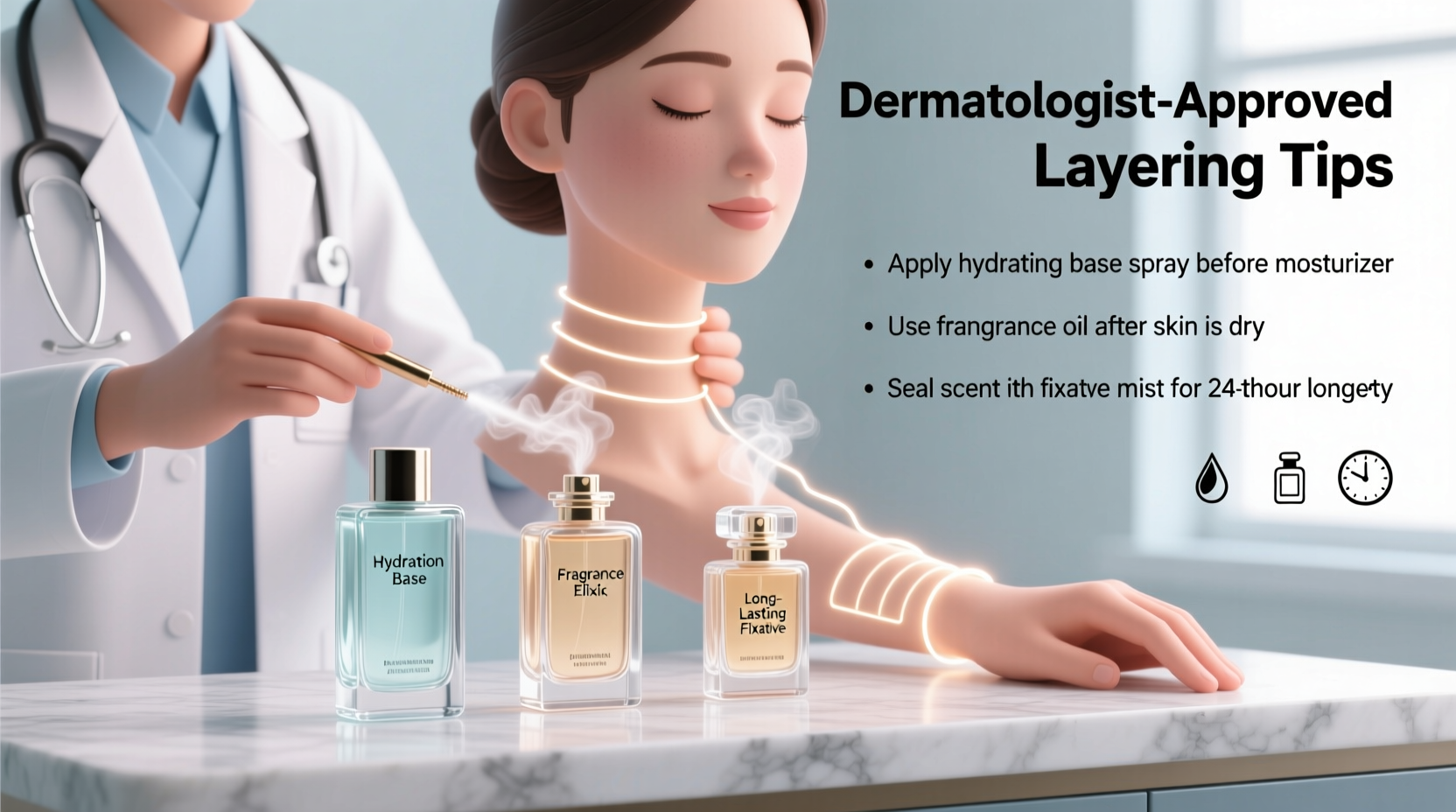
Perfume doesn’t evaporate at a fixed rate. Its staying power depends on several biological and environmental factors, including skin pH, moisture levels, sebum production, and even body temperature. Alcohol-based fragrances, which make up the majority of commercial perfumes, are volatile—they release scent molecules quickly but fade fast if not anchored properly.
Dermatologists explain that dry skin lacks the lipid barrier needed to trap fragrance molecules. As a result, scents applied to dehydrated skin tend to disappear rapidly. Conversely, well-moisturized skin acts as a better “canvas” for fragrance, slowing down evaporation and allowing top, middle, and base notes to unfold over time.
Dr. Lena Torres, a board-certified dermatologist specializing in cosmetic chemistry, explains:
“Fragrance performance is deeply tied to skin health. A compromised moisture barrier not only shortens scent duration but can also increase irritation risk. Layering with compatible emollients creates a reservoir that holds both hydration and aromatic compounds.”
This principle forms the foundation of dermatologist-recommended layering: treat your skin first, then apply fragrance in a way that maximizes adhesion and minimizes irritation.
Step-by-Step Layering Technique for Long-Lasting Scent
Effective layering isn’t about piling on products—it’s about strategic sequencing. Follow this dermatologist-endorsed routine to amplify your perfume’s staying power:
- Shower with a neutral or lightly scented cleanser. Avoid heavily fragranced soaps that compete with your perfume. Warm water opens pores slightly, enhancing absorption.
- Pat skin dry—do not rub. Towel friction can disrupt the skin barrier and reduce moisture retention.
- Apply a hydrating body oil or unscented moisturizer within 3 minutes of drying. This is the critical window for locking in moisture. Focus on pulse points: wrists, neck, décolletage, and behind the knees.
- Wait 60–90 seconds for the moisturizer to absorb slightly. You want a tacky surface, not greasy residue, to help the fragrance adhere.
- Spray or dab perfume directly onto moisturized areas. Hold the bottle 5–7 inches away and use one to two sprays per zone. Avoid rubbing wrists together, which breaks down top notes.
- Optional: Reapply a light mist to clothing (not silk or delicate fabrics). Fabric fibers hold scent longer than skin, providing a secondary diffusion source.
Choosing the Right Base Products: What Dermatologists Recommend
Not all moisturizers are created equal when it comes to fragrance layering. The ideal base should be occlusive enough to seal in scent but non-comedogenic and free of irritants. Here’s what to look for—and what to avoid:
| Recommended Ingredients | Why They Work | Avoid If… |
|---|---|---|
| Jojoba oil, squalane, shea butter | Mimic natural sebum; form a breathable barrier without clogging pores | You have nut allergies (check shea butter sources) |
| Hyaluronic acid (in creamy formulas) | Binds water to skin, increasing surface density for scent adherence | Used in dry environments without occlusives (can pull moisture out) |
| Glycerin (low to moderate concentration) | Humectant that draws moisture, improving skin texture and scent retention | Combined with alcohol-heavy products (can cause dehydration) |
| Ceramides | Reinforce skin barrier, reducing trans-epidermal water loss | No major contraindications; suitable for sensitive skin |
Avoid products containing high concentrations of alcohol, essential oils (unless part of your fragrance line), or exfoliants like glycolic or salicylic acid immediately before perfuming. These can destabilize the skin’s surface, leading to faster scent breakdown and potential stinging.
Dermatologist-Approved Layering Mistakes to Avoid
Even with good intentions, common habits can sabotage your fragrance’s performance. Dermatologists frequently observe these missteps in clinical practice:
- Applying perfume to dry skin. Without a moisture base, alcohol in perfume evaporates quickly, carrying scent molecules with it.
- Rubbing wrists after spraying. Friction generates heat and breaks down delicate top notes like citrus or bergamot.
- Using heavily fragranced lotions under perfume. Competing scent profiles distort the intended aroma and may trigger sensitization.
- Storing perfume in humid or sunlit areas. Heat and light degrade fragrance compounds, reducing potency over time.
- Over-applying to compensate for poor longevity. Excess perfume can overwhelm the senses and increase irritation risk, especially on compromised skin.
“Less is more when it comes to fragrance. A well-layered single application often outperforms multiple heavy sprays on bare skin.” — Dr. Arjun Patel, Cosmetic Dermatologist
Real-World Example: How Sarah Extended Her Perfume Wear Time
Sarah, a 34-year-old project manager, loved her signature floral-woody perfume but found it vanished by midday, despite reapplying twice. She visited a dermatology clinic concerned about sensitivity, noting redness around her wrists and neck.
After evaluation, her dermatologist identified two issues: severely dry skin and use of a petroleum-based hand cream with synthetic fragrances applied before perfume. The incompatible layers were causing micro-irritation and rapid scent dissipation.
The solution? Sarah switched to a ceramide-rich body lotion used immediately post-shower. She waited 90 seconds, then applied her perfume to dampened skin. Within days, she noticed the fragrance lasted through work meetings and evening outings—without irritation. She reduced reapplication from three times daily to zero, reporting improved skin texture and confidence in scent consistency.
This case illustrates how proper layering addresses both longevity and skin health—a dual benefit often overlooked in mainstream fragrance advice.
Checklist: Build Your Dermatologist-Approved Fragrance Routine
Use this checklist to implement a sustainable, skin-friendly layering system:
- ☐ Choose an unscented or co-branded moisturizer with occlusive properties
- ☐ Apply moisturizer within 3 minutes of bathing while skin is still damp
- ☐ Allow moisturizer to absorb slightly (skin should feel smooth, not greasy)
- ☐ Spray perfume on pulse points without rubbing
- ☐ Store perfume in a cool, dark place (e.g., inside a drawer or closet)
- ☐ Limit reapplication to once every 8–10 hours unless necessary
- ☐ Monitor skin for signs of irritation (redness, itching, flaking)
- ☐ Rotate perfumes seasonally—lighter scents in summer, richer bases in winter
FAQ: Common Questions About Perfume Layering
Can I use body spray instead of perfume with this method?
Body sprays are typically lighter in concentration (eau de toilette or lower) and contain more alcohol. While layering helps, they will still fade faster than eau de parfum or parfum extracts. For best results, reserve body sprays for casual use and rely on higher-concentration fragrances for long-day wear.
Is it safe to layer perfume with retinol or acne treatments?
It’s best to avoid applying perfume immediately after using active ingredients like retinoids, AHAs, or benzoyl peroxide. These compromise the skin barrier, increasing the risk of irritation and altering scent chemistry. Wait at least 30 minutes, or apply perfume to clothed areas only.
Does skin type affect which layering method works best?
Yes. Oily skin naturally holds scent longer due to sebum, so lightweight lotions may suffice. Dry or mature skin benefits from richer creams or oils. Sensitive skin should prioritize fragrance-free, hypoallergenic bases to prevent reactions. Always patch-test new combinations.
Conclusion: Elevate Your Scent Experience the Healthy Way
Long-lasting perfume isn’t about overpowering strength—it’s about intelligent layering that respects your skin’s biology. By aligning your fragrance routine with dermatologist-recommended practices, you achieve more than endurance; you create a harmonious relationship between scent and skin.
Start today: assess your current moisturizer, refine your application sequence, and observe how your favorite fragrance evolves over time. Small adjustments yield significant results—longer wear, fewer reapplications, and healthier skin. Perfume should enhance your presence, not irritate your body. Treat it as part of your skincare ritual, and you’ll experience scent in its fullest, most enduring form.




 浙公网安备
33010002000092号
浙公网安备
33010002000092号 浙B2-20120091-4
Comments
No comments yet. Why don't you start the discussion?