
Perfume is more than a scent—it’s an extension of identity, mood, and memory. Yet many people find their favorite fragrances fading within hours, leaving behind only faint traces of what once felt intoxicating. While synthetic fixatives in commercial perfumes can extend longevity, they often come with skin sensitivities or environmental concerns. A growing number of fragrance lovers are turning to natural layering techniques—methods that use the body’s chemistry and organic materials—to amplify and prolong scent in a clean, sustainable way.
Natural layering isn’t about overpowering your senses; it’s about building a harmonious scent profile that evolves throughout the day. By aligning your skincare, body oils, and application habits with your chosen fragrance, you create a foundation that supports longevity, depth, and sillage—the trail a scent leaves behind. This approach respects both your skin and the environment while unlocking the full potential of your perfume collection.
The Science Behind Scent Longevity
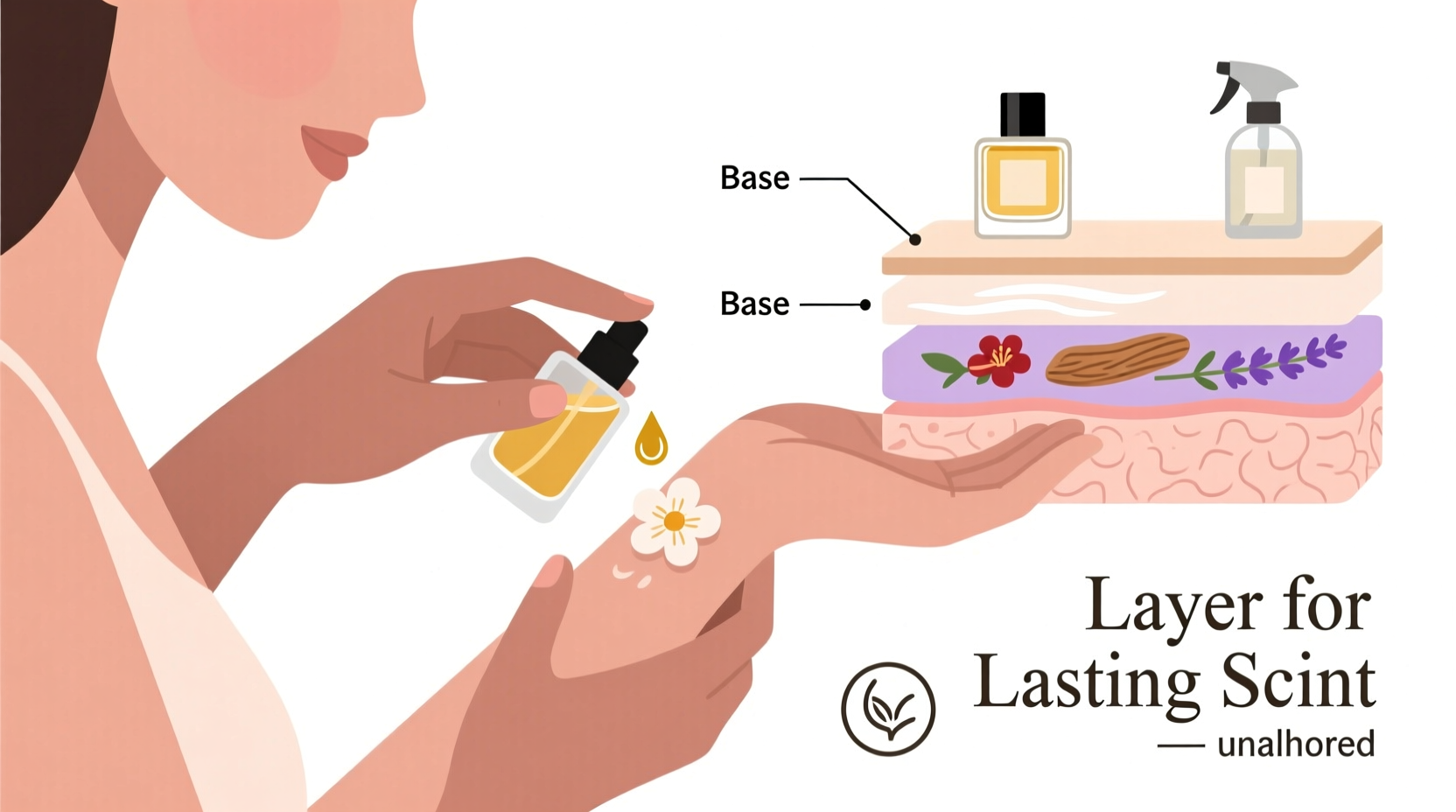
Fragrance longevity depends on three key factors: volatility, skin chemistry, and moisture retention. Perfumes are composed of top, middle (heart), and base notes, each evaporating at different rates. Top notes—often citrus or light florals—are the first to fade, sometimes within 15 minutes. Heart notes emerge next, lasting up to several hours. Base notes, such as woods, musks, or resins, are the slowest to unfold and can linger for 6–12 hours or more—if properly anchored.
Your skin plays a crucial role in this process. Dry skin lacks the lipid barrier needed to hold onto fragrance molecules, causing them to evaporate quickly. Conversely, well-moisturized skin acts like a sponge, trapping aromatic compounds and releasing them gradually. Natural layering works by enhancing this retention through compatible ingredients that don’t interfere with the scent’s integrity.
“Fragrance doesn’t just sit on the skin—it interacts with it. The right base can transform a fleeting scent into something that lasts all day.” — Dr. Lena Moreau, Cosmetic Chemist & Olfactory Consultant
Step-by-Step Guide: Building a Natural Fragrance Foundation
Creating a long-lasting scent begins before you even spray your perfume. Follow this five-step routine to maximize retention and olfactory complexity:
- Exfoliate gently: Remove dead skin cells 2–3 times per week using a natural scrub (e.g., sugar and almond oil). Smooth skin absorbs products more evenly and provides better adhesion for fragrance.
- Moisturize with unscented or complementary oils: Apply a lightweight body lotion or oil immediately after showering while skin is still damp. Look for carrier oils like jojoba, sweet almond, or fractionated coconut oil—they’re non-greasy and mimic the skin’s natural sebum.
- Use a matching or complementary scented balm: If your perfume has vanilla or sandalwood notes, apply a natural balm with similar accords. This creates a “scent anchor” that reinforces the base notes.
- Spray on pulse points over moisturized skin: Focus on wrists, inner elbows, neck, and behind ears—areas with higher blood flow that naturally radiate warmth and help diffuse scent.
- Layer lightly throughout the day: Carry a rollerball of your base oil or a solid perfume version of your fragrance for touch-ups, especially after handwashing or exercise.
Choosing the Right Carrier Oils and Bases
Not all oils are created equal when it comes to fragrance layering. Some have neutral profiles ideal for preserving your perfume’s original character, while others add depth and richness. Below is a comparison of common natural bases and their compatibility with different fragrance families.
| Carrier Oil | Scent Profile | Best Paired With | Caution |
|---|---|---|---|
| Jojoba Oil | Neutral, slightly nutty | All fragrance types, especially florals and citruses | None—excellent for sensitive skin |
| Sweet Almond Oil | Mildly sweet, warm | Vanilla, amber, gourmand scents | Avoid if allergic to nuts |
| Fractionated Coconut Oil | Odorless, silky | Light eau de colognes, fresh scents | Does not clog pores |
| Apricot Kernel Oil | Faint fruity nuance | Fruity-floral compositions | Less stable—use within 6 months |
| Safflower Oil | Very light, neutral | Clean musks, aquatic fragrances | High linoleic acid—may oxidize faster |
Selecting the right oil ensures that your base enhances rather than competes with your perfume. For example, pairing a bright bergamot fragrance with sweet almond oil may dull its crispness, whereas jojoba preserves its clarity. When in doubt, opt for odorless, fast-absorbing oils like fractionated coconut or safflower.
Do’s and Don’ts of Natural Layering
To avoid common pitfalls that shorten scent life or distort fragrance balance, follow this essential checklist:
| Do’s | Don’ts |
|---|---|
| Apply fragrance to moisturized skin | Apply perfume to dry, flaky skin |
| Use natural balms with similar scent notes | Mix strong essential oils haphazardly |
| Store oils in dark glass bottles away from heat | Leave carrier oils in direct sunlight |
| Reapply base oil during the day if needed | Over-spray perfume trying to compensate for fading |
| Test combinations on a small patch first | Assume all natural ingredients blend well together |
Real Example: Layering for a Full-Day Scent Experience
Consider Maria, a freelance writer who loves a niche floral-woody perfume but noticed it disappeared by midday. She began experimenting with natural layering. Each morning, she exfoliated her arms and décolletage, then applied a homemade body oil made from jojoba and a few drops of sandalwood essential oil—matching the base note of her fragrance. After drying off from her shower, she sprayed her perfume on her neck and inner elbows.
The results were immediate. Not only did the scent last past dinner, but colleagues commented on how “warm” and “inviting” she smelled. Over time, Maria refined her routine, switching to a vanilla-infused balm in winter and a lighter, citrus-friendly oil in summer. Her perfume transformed from a fleeting luxury into a consistent signature.
Expert-Backed Checklist for Lasting Fragrance
Follow this concise action plan to implement natural layering effectively:
- ✅ Exfoliate skin 2–3 times weekly to remove dead cells
- ✅ Use a neutral or complementary carrier oil daily
- ✅ Match base notes in your balm or oil to your perfume’s foundation
- ✅ Apply perfume to pulse points on damp, moisturized skin
- ✅ Avoid alcohol-based lotions that dry the skin
- ✅ Store oils in cool, dark places to prevent rancidity
- ✅ Reapply base oil or solid perfume midday if needed
- ✅ Keep a rollerball with diluted essential oil blend for touch-ups
“The most enduring fragrances aren’t always the strongest—they’re the ones supported by thoughtful preparation.” — Antoine Belliveau, Master Perfumer, Grasse Institute of Perfumery
Frequently Asked Questions
Can I use essential oils directly with my perfume?
Yes, but with caution. Dilute essential oils in a carrier oil before applying to skin. Direct use can cause irritation, and overly strong oils may clash with your perfume. Stick to complementary notes—like patchouli with earthy scents or lavender with fresh compositions—and test combinations first.
Will natural layering work with drugstore perfumes?
Absolutely. In fact, lower-concentration fragrances (like eau de toilette) benefit the most from layering because they lack the oil content of parfums. A good base can nearly double their wear time. Just ensure your skincare products are free of competing scents that might muddy the fragrance.
How do I know if my oil has gone bad?
Rancid oils develop a sharp, sour, or metallic smell and may change color. Most carrier oils last 6–12 months. Jojoba is an exception—it can last up to two years due to its stability. Always check the smell before use, and store in amber or cobalt glass bottles away from humidity and sunlight.
Final Thoughts: Elevate Your Scent Naturally
Extending your perfume’s lifespan doesn’t require synthetic additives or expensive sprays. Natural layering empowers you to work with your body’s biology, enhancing your fragrance through intelligent preparation and mindful choices. It transforms scent application from a fleeting ritual into a layered, evolving experience—one that deepens over time and reflects personal attention to detail.
By investing in quality carrier oils, aligning your skincare with your fragrance profile, and following a consistent routine, you unlock a new dimension of olfactory pleasure. The result isn’t just longer wear—it’s richer projection, smoother transitions between notes, and a scent that feels truly yours.




 浙公网安备
33010002000092号
浙公网安备
33010002000092号 浙B2-20120091-4
Comments
No comments yet. Why don't you start the discussion?