
Perfume is more than a scent—it’s an extension of identity. Yet few experiences are as frustrating as applying your favorite fragrance in the morning only to find it has vanished by noon. Many assume that longevity depends solely on price or brand, but the truth lies in how you use and care for your fragrance. With the right techniques, even moderately priced perfumes can project confidently and linger for hours. The key is understanding the chemistry of scent, your skin type, and strategic application.
Fragrance longevity isn’t magic; it’s method. From prepping your skin to choosing the right concentration, every step influences how long your scent stays detectable. Whether you're layering for a date night or seeking office-appropriate staying power, these practical, expert-backed strategies will transform how your perfume performs.
Understand Perfume Concentrations and Their Impact
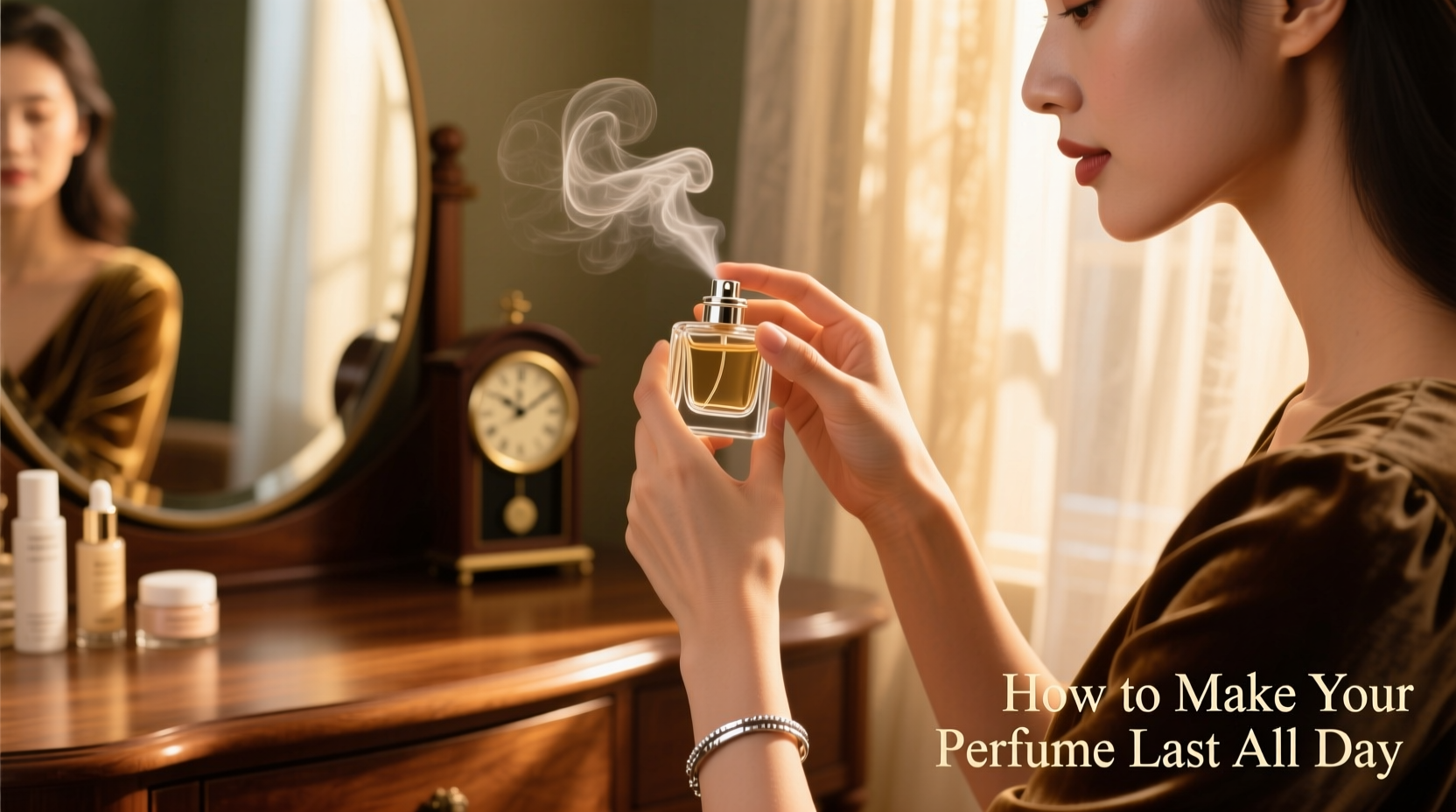
The foundation of long-lasting scent begins with the type of fragrance you choose. Perfumes come in varying concentrations of aromatic oils suspended in alcohol. The higher the oil concentration, the stronger and longer the scent tends to last.
| Type | Oil Concentration | Longevity | Best For |
|---|---|---|---|
| Parfum (Extrait) | 20–30% | 6–8+ hours | Evening wear, special occasions |
| Eau de Parfum (EDP) | 15–20% | 5–7 hours | Daily wear, moderate projection |
| Eau de Toilette (EDT) | 5–15% | 3–5 hours | Casual use, warmer climates |
| Eau de Cologne | 2–4% | 1–2 hours | Refreshers, summer spritzes |
If longevity is your priority, opt for parfum or EDP. These formulations release scent gradually, creating a trail that evolves over time. While EDTs are lighter and more refreshing, they often fade quickly—especially on dry skin. Investing in a higher-concentration version of a beloved scent can dramatically improve performance without changing your preferred fragrance profile.
Prep Your Skin for Maximum Scent Retention
Your skin is the canvas for fragrance. Dry, flaky skin absorbs and dissipates scent rapidly, while hydrated skin acts like a sponge, trapping aromatic molecules. This is why many people notice their perfume vanishing within an hour—especially in winter or if they have naturally dry skin.
To create a scent-friendly base:
- Moisturize before applying perfume. Use an unscented or lightly scented lotion to avoid clashing with your fragrance. Oily lotions work best—they form a barrier that slows evaporation.
- Apply immediately after showering. Warm, damp skin opens pores and enhances absorption. Lock in moisture and scent simultaneously by moisturizing and perfuming within five minutes of drying off.
- Avoid heavily exfoliated or irritated skin. Freshly scrubbed skin may absorb scent unevenly and increase irritation from alcohol-based perfumes.
“Fragrance adheres best to hydrated skin. Think of moisturizer as a primer—it creates a smooth, lasting surface for scent.” — Dr. Lena Moretti, Cosmetic Chemist & Fragrance Formulator
For enhanced results, consider using a matching body cream or lotion from the same fragrance line. These products contain similar base notes and help build a cohesive scent profile that evolves naturally throughout the day.
Strategic Application: Where and How to Apply Perfume
Location matters. Applying perfume haphazardly—such as spraying into the air and walking through it—wastes product and reduces control over intensity. To maximize both strength and longevity, target pulse points where blood flow heats the skin and gently diffuses scent.
Key pulse points include:
- Wrists
- Neck (sides and base)
- Behind the ears
- Inner elbows
- Behind the knees
- Chest (below collarbone)
Heat activates fragrance, so placing it near arteries ensures consistent diffusion. However, avoid rubbing wrists together after application—a common habit that breaks down top notes and alters the scent’s development.
Step-by-Step Guide to Optimal Application
- Shower and pat skin dry, leaving it slightly damp.
- Apply unscented body lotion or a matching fragrance balm.
- Wait 2–3 minutes for absorption.
- Hold the bottle 3–6 inches from your skin and spray once on each pulse point.
- Avoid overspraying—2 to 4 targeted sprays are sufficient.
- Let the scent settle naturally; do not rub.
For added projection, lightly mist hair or clothing. Fabric fibers hold scent longer than skin. However, test on an inconspicuous area first—alcohol can stain delicate fabrics or damage silk.
Layer Your Fragrance for Intensity and Depth
Layering is one of the most effective ways to amplify and prolong a scent. This technique involves using multiple products from the same fragrance family—such as shower gel, body lotion, and eau de parfum—to build a rich, multi-dimensional aroma.
When layered correctly, the base notes become more pronounced, and the overall sillage (the trail of scent left behind) increases significantly. Even subtle daily fragrances can achieve bold presence through layering.
Follow this checklist to layer effectively:
✅ Fragrance Layering Checklist
- Start with a matching shower gel or soap.
- Apply a concentrated body cream or balm to pulse zones.
- Use a roll-on perfume oil on wrists and neck for extra intensity.
- Finish with 1–2 sprays of your primary fragrance.
- Reapply a matching solid perfume during the day if needed.
For those who don’t own matching products, create a DIY layering base. Mix a few drops of your perfume with an unscented body oil or petroleum jelly and apply to pulse points. This traps volatile top notes and slows evaporation.
Real Example: Office Worker Seeks All-Day Scent
Sophie, a marketing executive in Chicago, loved her citrus-floral EDT but found it faded by 11 a.m., despite reapplying. She switched to a layering routine: using the line’s matching body wash in the morning, applying its thick body cream post-shower, and finishing with two sprays of EDP (upgraded from EDT). Within days, colleagues began commenting on her “expensive-smelling” aura. The fragrance now lasted until 6 p.m., even in heated office environments. Her secret? Consistent layering and upgrading concentration—not more frequent sprays.
Environmental and Lifestyle Factors That Affect Longevity
External conditions play a surprising role in how long your perfume lasts. Humidity, temperature, clothing material, and even diet influence scent behavior.
- Climate: Warm, humid air amplifies scent projection but can also cause faster top-note burn-off. In dry or cold climates, fragrance evaporates slowly but projects less.
- Clothing: Natural fibers like cotton, wool, and cashmere absorb and retain fragrance better than synthetics.
- Diet: Spicy foods and caffeine increase body temperature and perspiration, intensifying scent release. Hydration helps regulate skin pH, improving scent stability.
- Activity level: Exercise or stress raises body heat, accelerating evaporation. Consider lighter applications during active days.
Storage also impacts performance. Keep perfumes in a cool, dark place—ideally a drawer or cabinet. Exposure to sunlight and heat degrades essential oils and alters the scent profile over time. Never store perfume in the bathroom; humidity and temperature fluctuations degrade quality.
“Think of your perfume like wine. Light, heat, and air are its enemies. Store it properly, and it will age gracefully.” — Antoine Roussel, Master Perfumer at Grasse Institute
Common Mistakes That Weaken Your Scent
Even with high-quality fragrances, poor habits can sabotage performance. Avoid these common errors:
| Don’t | Why It Weakens Scent | Do Instead |
|---|---|---|
| Rubbing wrists together | Breaks down delicate top notes and accelerates evaporation | Let the scent dry naturally on skin |
| Spraying on dry skin | Dry skin absorbs and loses scent quickly | Moisturize first with unscented or matching lotion |
| Over-spraying | Can overwhelm and distort scent balance | Use 2–4 precise sprays on pulse points |
| Storing in the bathroom | Heat and humidity degrade fragrance compounds | Keep in a cool, dark drawer or closet |
| Using expired perfume | Old fragrance oxidizes, smells sour or flat | Check batch codes; replace after 3–5 years unopened, 1–2 years opened |
FAQ: Common Questions About Perfume Longevity
Why does my perfume disappear so quickly?
Your skin type, environment, and application method all affect longevity. Dry skin, warm climates, and low-oil fragrances (like EDTs) fade faster. Try moisturizing before use, switching to EDP, or layering with matching products.
Does drinking water help my perfume last longer?
Indirectly, yes. Hydrated skin holds scent better. Dehydration causes skin to flake and absorb fragrance unevenly. Drinking water supports overall skin health, which improves scent retention.
Can I make a weak perfume stronger without buying a new one?
Absolutely. Combine your current fragrance with a matching body cream, apply to moisturized skin, and layer with a roll-on oil. You can also store it properly to preserve potency and use strategic pulse-point application for maximum effect.
Conclusion: Elevate Your Scent Experience
Making your perfume last isn’t about using more—it’s about using smarter. By choosing the right concentration, preparing your skin, applying strategically, and avoiding common pitfalls, you can transform even fleeting fragrances into enduring signatures. The difference between a scent that vanishes and one that lingers lies not in luck, but in routine.
Start tonight: examine your current habits, upgrade your moisturizer, and plan your next application with intention. Small changes yield powerful results. Your signature scent deserves to be noticed—from morning until long after sunset.




 浙公网安备
33010002000092号
浙公网安备
33010002000092号 浙B2-20120091-4
Comments
No comments yet. Why don't you start the discussion?